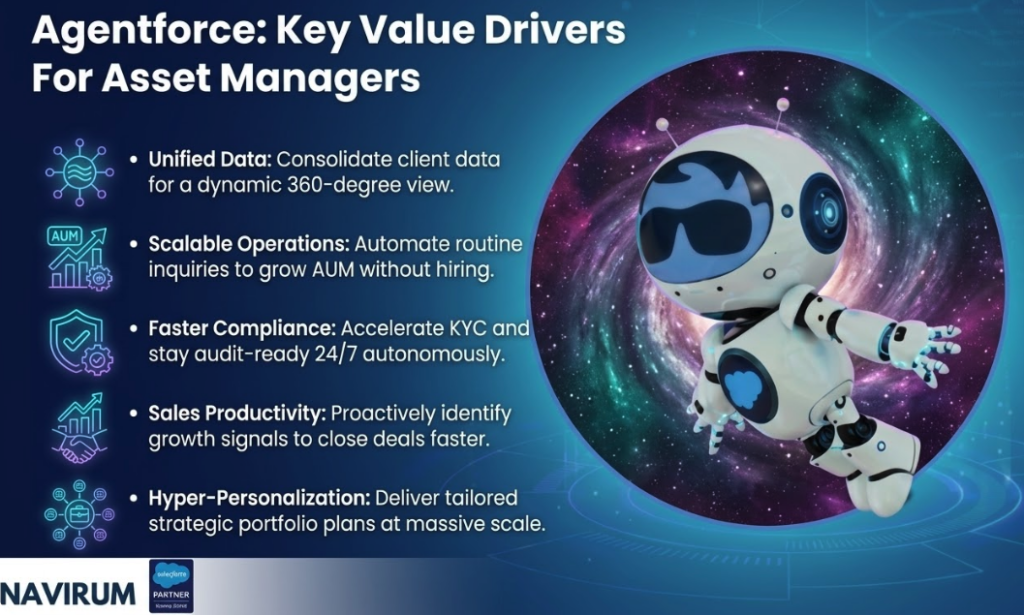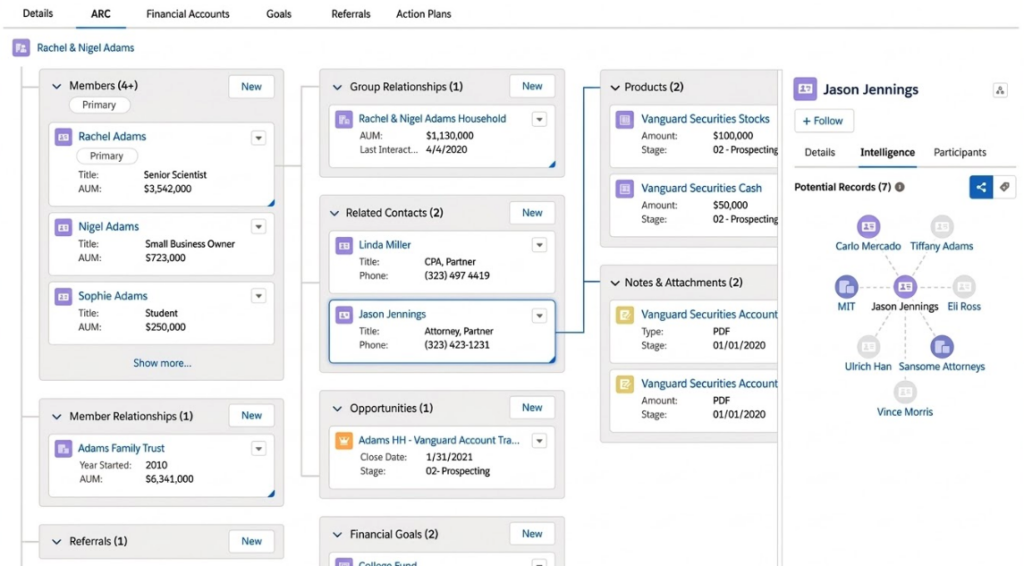
Discover how Salesforce can help building a 360-Degree View of Clients in Wealth Management
In the dynamic world of wealth management, every interaction is an opportunity to deepen relationships, provide personalized services, and drive business growth. However, achieving this level of insight can be challenging, especially when dealing with vast amounts of data scattered across multiple systems.
Salesforce, a powerhouse in customer relationship management (CRM) solutions, with its robust capabilities and customizable features, it empowers wealth management firms to build a comprehensive 360-degree view of their clients. This holistic perspective enables advisors to anticipate needs, deliver tailored recommendations, and ultimately, foster long-lasting client satisfaction.
Understanding the 360-Degree View
A 360-degree view of clients goes beyond surface-level information. It involves aggregating data from various touchpoints, including account holdings, transaction history, communication preferences, life events, and even external factors like market trends and regulatory changes. By consolidating these insights into a unified platform, advisors gain a panoramic understanding of each client’s financial landscape and personal aspirations.
Benefits of Salesforce in Wealth Management
Centralized Data Management: Salesforce serves as a centralized hub where all client-related information resides. Whether it’s capturing interactions from emails, meetings, or phone calls, advisors have real-time access to a comprehensive profile, eliminating the need to juggle multiple systems.
Personalized Engagement: Armed with a holistic view, advisors can personalize their interactions based on clients’ preferences, risk tolerance, and life goals. Whether it’s crafting tailored investment strategies or proactively addressing concerns, every engagement becomes more meaningful and impactful.
Streamlined Workflows: Salesforce streamlines workflows by automating routine tasks, such as scheduling appointments, updating records, and generating reports. This efficiency allows advisors to focus their time and energy on high-value activities, such as client engagement and strategic planning.
Data-Driven Insights: With robust analytics capabilities, Salesforce provides actionable insights derived from client data. Advisors can uncover patterns, identify opportunities, and mitigate risks, thereby enhancing decision-making and driving better outcomes for clients.
Scalability and Flexibility: As firms grow and evolve, Salesforce scales seamlessly to accommodate changing needs. Its flexible architecture allows for customization, ensuring that the platform aligns with the unique processes and workflows of each wealth management firm.
Implementing Salesforce for Client-Centric Success
While the benefits of Salesforce are undeniable, successful implementation requires careful planning and execution. Here are some best practices to maximize its effectiveness:
Define Objectives: Clearly outline the goals and objectives of implementing Salesforce, whether it’s improving client satisfaction, increasing efficiency, or driving revenue growth.
Data Integration: Ensure seamless integration with existing systems to facilitate data consolidation and avoid duplication. This includes integrating with core banking systems, portfolio management tools, and third-party data sources.
Customization and Configuration: Tailor Salesforce to meet the specific needs of wealth management firms, including custom fields, workflows, and reporting dashboards.
User Training and Adoption: Invest in comprehensive training programs to familiarize advisors and staff with Salesforce’s functionalities. Encourage adoption by highlighting its benefits and demonstrating its impact on daily workflows.
Continuous Improvement: Embrace a culture of continuous improvement by soliciting feedback from users and stakeholders. Regularly evaluate performance metrics and iterate on processes to drive ongoing success.
In the competitive landscape of wealth management, delivering exceptional client experiences is non-negotiable. Salesforce equips firms with the tools and insights needed to cultivate meaningful relationships, drive business growth, and stay ahead of the curve. By harnessing the power of Salesforce to build a 360-degree view of clients, wealth management firms can unlock new opportunities and chart a course towards lasting success.
Lavinia PicuConstruire une vision à 360 degrés des clients dans la gestion de patrimoine
In the fast-evolving landscape of the financial services industry, where customer expectations are constantly rising, building and maintaining strong relationships with clients is paramount. In this digital age, where technology is at the forefront of nearly every aspect of business, leveraging powerful Customer Relationship Management (CRM) tools has become a necessity for banks seeking to thrive in a competitive market.
Maximizing Customer Relationships in Banking: The Power of Salesforce
One such tool that has revolutionized CRM in the banking sector is Salesforce. Renowned for its versatility, scalability, and user-friendly interface, Salesforce offers an array of features specifically designed to enhance customer relationships in the banking sector. Let’s delve into how Salesforce is transforming the way banks manage their customer interactions and drive business growth.
360-Degree View of Customers
With Salesforce, banks can consolidate customer data from various sources into a single, comprehensive view. This 360-degree view provides bankers with valuable insights into customer preferences, behaviors, and transaction histories, enabling them to deliver personalized services and anticipate client needs effectively.
Tailored Marketing Campaigns
Salesforce’s marketing automation capabilities empower banks to create targeted marketing campaigns tailored to specific customer segments. By analyzing customer data and behavior patterns, banks can craft personalized messages and offers, increasing the effectiveness of their marketing efforts and driving customer engagement.
Streamlined Sales Processes
Salesforce streamlines sales processes by providing bankers with intuitive tools for managing leads, opportunities, and accounts. With features such as lead scoring, opportunity tracking, and sales forecasting, banks can optimize their sales pipelines, improve conversion rates, and ultimately drive revenue growth.
Exceptional customer service is crucial for building long-lasting relationships with clients. Salesforce’s Service Cloud equips banks with powerful tools for delivering personalized and efficient customer support across multiple channels, including phone, email, chat, and social media. By resolving inquiries and issues promptly, banks can enhance customer satisfaction and loyalty.
Compliance and Security
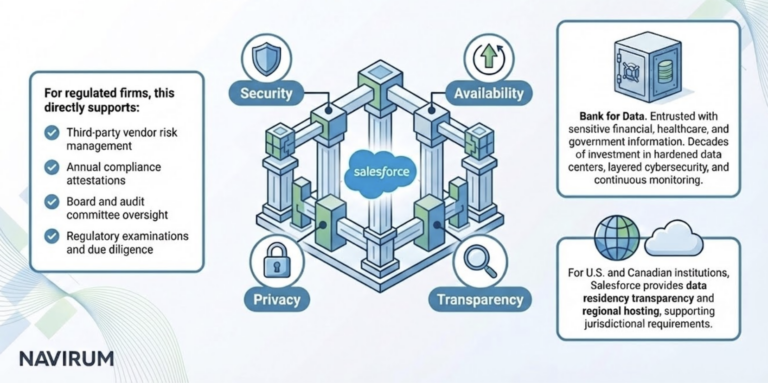
In the highly regulated banking industry, compliance with legal and security standards is non-negotiable. Salesforce offers robust security features and compliance controls, ensuring that customer data remains protected and that banks adhere to industry regulations.
Integration Capabilities
Salesforce seamlessly integrates with a wide range of third-party applications and systems, allowing banks to leverage existing technology investments and create cohesive workflows. Whether it’s integrating with core banking systems, payment gateways, or analytics platforms, Salesforce provides the flexibility to tailor solutions to the unique needs of each bank.
Analytics and Reporting
Data-driven decision-making is essential for staying ahead in the competitive banking landscape. Salesforce’s robust analytics and reporting tools enable banks to gain actionable insights from their customer data, identify trends, and track key performance indicators. By leveraging data analytics, banks can make informed decisions that drive business growth and enhance customer satisfaction.
In a nutshell, Salesforce has emerged as a game-changer in the realm of customer relationship management for banks. By leveraging its powerful features and capabilities, banks can gain a competitive edge, drive operational efficiency, and deliver superior customer experiences. In an industry where trust and relationships are paramount, Salesforce empowers banks to build stronger connections with their clients and navigate the evolving landscape of financial services with confidence.
Why should banks use Salesforce over other CRM platforms?
Salesforce is widely regarded as the #1 CRM platform due to its flexibility, scalability, and robust industry-specific solutions. For banks, it offers specialized tools for relationship management, regulatory compliance, data security, and seamless integration with core banking systems — all while supporting omnichannel customer engagement.
Is Salesforce Financial Services Cloud the right choice for banks?
Yes. Salesforce Financial Services Cloud (FSC) is purpose-built for financial institutions, including retail banks, commercial banks, and wealth management firms. It offers industry-specific features such as client financial profiles, life-event tracking, and compliance tools that help bankers deliver personalized and compliant service.
How does Salesforce help with regulatory compliance in banking?
Salesforce includes built-in features for audit trails, role-based access, data encryption, and compliance workflows. In addition, it supports integrations with third-party compliance tools and can be configured to meet the specific regulatory requirements of your institution (e.g., KYC, AML, GDPR, etc.).
What kind of customer insights can we expect from Salesforce?
Salesforce provides a 360-degree view of each customer, including their transaction history, product holdings, communication preferences, service interactions, and more. With built-in analytics, you can identify customer needs, predict behavior, and deliver tailored solutions that enhance satisfaction and loyalty.
How secure is Salesforce for handling sensitive banking data?
Salesforce is highly secure and compliant with global security standards. It offers features like multi-factor authentication, field-level encryption, IP restrictions, and advanced role-based permissions. Salesforce also undergoes regular third-party audits and maintains certifications such as ISO 27001, SOC 2, and more.
What’s the typical implementation timeline for Salesforce in a banking environment?
Implementation timelines vary based on complexity, but a typical Salesforce Financial Services Cloud deployment can range from 8 to 20 weeks. Our consulting team works closely with banks to create a phased roadmap, ensuring rapid adoption and minimal disruption to operations.
Can Salesforce improve both retail and commercial banking operations?
Yes. Whether you’re focused on high-volume retail banking or relationship-driven commercial banking, Salesforce supports both models. It enables scalable onboarding processes for retail clients and provides deep relationship mapping and deal tracking for commercial accounts.
Do bankers need technical skills to use Salesforce effectively?
No, Salesforce is designed to be user-friendly. Most users can navigate the system with minimal training. Our consulting team also offers customized onboarding sessions and role-based training to ensure your teams are confident and productive from day one.
How can we get started with Salesforce for our bank?
Getting started is simple. Book a discovery session with our Salesforce consultants to assess your current systems, identify opportunities, and define a clear roadmap. Whether you’re just exploring or ready to implement, we’re here to guide your digital transformation journey.
Streamline Loan Origination Processes with Salesforce
Lavinia Picu
In today’s fast-paced lending environment, Streamlined loan origination on Salesforce can be the difference between winning and losing business. As financial institutions face rising customer expectations and complex regulations, Salesforce Financial Services Cloud provides the tools to simplify origination, boost efficiency, and elevate the borrower experience. This post explores how lenders can leverage Salesforce to drive sustainable growth through smarter, faster loan origination.
One of the primary challenges in loan origination is managing vast amounts of data dispersed across disparate systems and departments. Salesforce serves as a centralized platform for consolidating customer information, credit profiles, collateral details, and transaction history. By capturing and organizing data in a single, unified repository, financial institutions gain a 360-degree view of borrowers, enabling more informed lending decisions and minimizing the risk of errors and duplication.
Automated Workflows and Processes
Manual loan origination processes are not only time-consuming but also prone to inefficiencies and bottlenecks. Salesforce enables financial institutions to automate workflows and standardize processes from application submission to loan approval. By defining rules, triggers, and approval pathways within Salesforce, lenders can expedite loan processing times, reduce administrative overhead, and ensure consistency and compliance across the organization.
Salesforce’s flexibility and customization capabilities empower financial institutions to tailor loan application and underwriting processes to their unique requirements. Through custom-built forms, wizards, and validation rules, lenders can capture relevant borrower information efficiently and accurately. Additionally, Salesforce’s integration with credit bureaus, document management systems, and risk assessment tools enables seamless data exchange and real-time decision-making, enhancing the speed and accuracy of underwriting processes.
Collaborative Communication Channels
Effective communication and collaboration are essential for successful loan origination. Salesforce provides built-in collaboration tools, such as Chatter, enabling lenders, underwriters, and relationship managers to communicate, share insights, and collaborate in real time. By centralizing communication channels within Salesforce, financial institutions foster transparency, accountability, and alignment across cross-functional teams, ultimately accelerating the loan origination lifecycle.
Comprehensive Reporting and Analytics
Data-driven insights are instrumental in optimizing loan origination processes and driving strategic decision-making. Salesforce’s robust reporting and analytics capabilities empower financial institutions to track key performance indicators (KPIs), monitor pipeline activity, and identify trends and patterns in loan origination. With customizable dashboards and predictive analytics, lenders can proactively identify opportunities, mitigate risks, and optimize resource allocation to maximize lending profitability.
In today’s competitive lending landscape, delivering exceptional customer experiences is paramount. Salesforce’s customer-centric approach enables financial institutions to engage borrowers throughout the loan origination journey. From personalized communications and self-service portals to automated status updates and proactive notifications, Salesforce facilitates meaningful interactions that build trust, loyalty, and satisfaction among borrowers.
In a nutshell, Salesforce offers a comprehensive suite of tools and capabilities to streamline loan origination processes and drive sustainable growth for financial institutions. By leveraging centralized data management, automated workflows, dynamic application and underwriting, collaborative communication channels, comprehensive reporting and analytics, and enhanced customer engagement, lenders can achieve operational excellence, mitigate risks, and capitalize on emerging opportunities in the lending market.
As a trusted partner in Salesforce consulting and advisory, we are committed to helping financial institutions unlock the full potential of Salesforce and accelerate their loan origination success. Contact us today to learn more about how we can support your organization’s digital transformation initiatives.
Navirum Client Success Stories
FAQs – Streamline Loan Origination Processes with Salesforce
How can Salesforce improve our current loan origination process?
Salesforce centralizes all borrower data, automates workflows, enhances team collaboration, and integrates with third-party tools (like credit bureaus and document systems). Salesforce is also used extensively for compliance process automation – the most popular financial process in our view (more here) as well as ESG process automation and reporting (more details here). This reduces manual effort, shortens approval timelines, and improves borrower satisfaction.
Can Salesforce integrate with our existing banking or core lending systems?
Yes. Salesforce offers robust integration capabilities using tools like MuleSoft, APIs, and AppExchange apps. Integrations with Fiserv, FIS, ID-Pal. Laser Credit, Equifax are very popular. We help financial institutions connect Salesforce with core banking, credit scoring, document management, and other mission-critical systems.

Is Salesforce secure enough to handle sensitive financial and customer data?
Absolutely. Salesforce is a highly secure platform with enterprise-grade compliance certifications, including GDPR, SOC 2, and ISO 27001. We also help customize security settings to match your institution’s compliance requirements.
What kind of automation can be set up for loan origination?
Salesforce can automate application intake, document collection, underwriting workflows, approval routing, and customer notifications. You can define business rules to handle processes consistently and reduce delays or human error.
How long does it take to implement Salesforce for loan origination?
Implementation timelines vary based on project scope and system complexity. A basic setup may take a few weeks, while a full-scale transformation (with integrations and custom workflows) could take several months. Our consultants provide a tailored implementation roadmap.
Do we need Salesforce Financial Services Cloud (FSC), or can we use Sales Cloud?
While Sales Cloud offers strong capabilities, Financial Services Cloud (FSC) provides industry-specific features designed for lenders and financial institutions. We can help assess your needs and recommend the right Salesforce edition for your goals. With FSC you get 3 automatic upgrade per year specific to financial services. More details here
How much does it cost to implement Salesforce for lending operations?
Costs vary based on user licenses, customization, third-party integrations, and consulting support. We offer flexible consulting packages and can provide a detailed quote based on your unique requirements during a discovery call.
Will our staff need extensive training to use Salesforce for loan origination?
Not at all. Salesforce has an intuitive interface, and we offer hands-on training tailored to your workflows. With guided onboarding and ongoing support, your teams can adopt the system quickly and confidently.
Still Have Questions?
Book a free consultation with our Salesforce experts to discuss your unique challenges and explore how we can help transform your loan origination process.
Salesforce Marketing Cloud enables wealth management firms to deliver highly personalized, compliant, and data-driven client engagement. By integrating with Financial Services Cloud, firms can unify client data, automate lifecycle journeys, and deliver targeted communications based on financial goals, life events, and engagement behavior. Successful implementation requires clear KPIs, strong data governance, and automated campaign workflows that support acquisition, onboarding, cross-selling, and retention. When properly deployed, Marketing Cloud helps wealth managers scale personalization, improve client experience, and drive measurable growth while maintaining regulatory compliance.
Unlocking Success: Expert Tips to Implement Marketing Cloud for Wealth Management
In the fast-paced world of wealth management, effective client engagement is paramount to success. With Salesforce Marketing Cloud, wealth management firms have a powerful tool at their disposal to personalize client interactions, drive engagement, and nurture lasting relationships. As a Senior Salesforce Consultant with extensive experience in implementing Marketing Cloud solutions for wealth management, I’m excited to share some expert tips to help firms harness the full potential of this transformative platform.
Before diving into implementation, it’s crucial to define clear objectives and key performance indicators (KPIs) for your Marketing Cloud initiatives. Determine what you aim to achieve—whether it’s increasing client acquisition, driving cross-selling opportunities, or enhancing client retention—and establish metrics to measure success. This clarity ensures alignment across stakeholders and guides decision-making throughout the implementation process.
Leverage Client Data for Personalization and Customization
Wealth management is inherently personal, and clients expect tailored experiences that resonate with their individual needs and preferences. Utilize the wealth of client data available within your organization to drive personalization initiatives in Marketing Cloud. Segment clients based on demographics, financial goals, risk tolerance, and engagement history to deliver targeted messaging that speaks directly to their interests and concerns.
Integrate Marketing Cloud with Financial Services Cloud
Seamless integration between Marketing Cloud and Financial Services Cloud is key to unlocking the full potential of both platforms. By connecting client data, interactions, and insights across systems, you create a unified view of each client’s journey and enable personalized, omnichannel experiences. Leverage out-of-the-box connectors and custom integrations to ensure smooth data flow and synchronization between the two platforms.
Time is a precious commodity in wealth management, and automation is your ally in maximizing efficiency. Leverage Marketing Cloud’s automation capabilities to streamline campaign workflows, from lead nurturing and onboarding to re-engagement and retention. Set up automated journeys based on client triggers, such as account openings, life events, or engagement milestones, to deliver timely and relevant communications at scale.
Ensure Compliance and Data Security
In the highly regulated landscape of wealth management, compliance and data security are non-negotiable. Prioritize adherence to industry regulations, such as GDPR and FINRA guidelines, when implementing Marketing Cloud initiatives. Implement robust data governance policies, encryption measures, and access controls to safeguard sensitive client information and maintain trust and confidentiality.
Measure and Iterate for Continuous Improvement
Measurement is essential for optimizing performance and driving ROI in Marketing Cloud initiatives. Establish a framework for tracking and analyzing key metrics, such as open rates, click-through rates, conversion rates, and client engagement scores. Leverage Marketing Cloud’s analytics capabilities to gain insights into campaign effectiveness, client behavior, and trends, and use these insights to refine your strategies and iterate for continuous improvement.
Implementing Marketing Cloud for wealth management is a strategic investment in enhancing client engagement, driving growth, and differentiating your firm in a competitive landscape. By following these expert tips—defining clear objectives, leveraging client data for personalization, integrating with Financial Services Cloud, automating workflows for efficiency, ensuring compliance and data security, and measuring and iterating for continuous improvement—you can maximize the impact of Marketing Cloud and deliver exceptional experiences that resonate with your clients. If you’re ready to embark on your Marketing Cloud journey, our team of experienced consultants is here to guide you every step of the way. Together, we can unlock new opportunities for success and propel your firm to new heights in the world of wealth management.
Frequently Asked Questions: Marketing Cloud for Wealth Management
How does Salesforce Marketing Cloud improve client engagement in wealth management?
Salesforce Marketing Cloud enables wealth management firms to move beyond generic communications and deliver highly personalized, lifecycle-based client engagement. By using behavioral data, financial goals, and engagement history, firms can create targeted journeys that adapt to each client’s needs.
Key engagement improvements include:
Personalized financial education campaigns
Automated onboarding journeys for new clients
Triggered communications based on life events or portfolio changes
Segmented campaigns for different investor profiles
Multi-channel engagement across email, SMS, and digital channels
This approach helps advisors maintain consistent, relevant communication with clients while scaling engagement across the entire client base.
Why is integration between Marketing Cloud and Financial Services Cloud critical?
Integration between Marketing Cloud and Financial Services Cloud creates a unified client view that allows firms to align marketing activities with advisor relationships and financial data.
This integration enables:
Real-time synchronization of client profiles
Marketing campaigns triggered by financial milestones
Personalized communications based on account activity
Improved collaboration between marketing and advisors
Better tracking of client engagement within Salesforce
Without integration, marketing teams operate with fragmented data, reducing the effectiveness of personalization and automation.
What types of client journeys should wealth management firms automate in Marketing Cloud?
Common automated journeys include:
Wealth management firms can automate multiple client lifecycle journeys to improve engagement and operational efficiency.
New client onboarding and welcome sequences
Prospect nurturing for high-net-worth leads
Retirement planning education journeys
Market update and portfolio insights communications
This level of segmentation allows firms to create marketing strategies that resonate with specific investor groups.
How can Marketing Cloud support compliant marketing in regulated financial environments?
Marketing Cloud can support compliance through governance frameworks, approval workflows, and data security controls designed for financial services organizations.
Compliance best practices include:
Pre-approved content libraries for advisors
Role-based access controls
Campaign approval workflows
Secure storage of client data
Audit trails for communications
Integration with compliance review processes
These controls help firms meet regulatory requirements while still maintaining effective client communication.
What data strategy should wealth management firms adopt before implementing Marketing Cloud?
A strong data foundation is essential for a successful Marketing Cloud implementation. Firms must ensure their client data is clean, structured, and accessible across systems.
Important data considerations include:
Data quality and standardization
Integration with CRM and financial systems
Client consent and communication preferences
Data governance policies
Identity resolution across channels
Without a strong data strategy, personalization and automation initiatives will deliver limited results.
How can Marketing Cloud help advisors scale personalized communication?
One of the biggest challenges in wealth management is maintaining personal relationships as client books grow. Marketing Cloud allows advisors to scale personalization without losing the human touch.
Key capabilities include:
Automated but personalized advisor-branded communications
Dynamic content tailored to client segments
Behavioral triggers that send timely messages
Advisor-specific campaign templates
AI-powered content recommendations
This allows advisors to maintain consistent engagement across hundreds or thousands of clients.
What metrics should wealth management firms track to measure Marketing Cloud success?
To evaluate ROI and campaign performance, firms should establish a measurement framework aligned with their strategic goals.
Key metrics include:
Email open and click-through rates
Client engagement scores
Lead-to-client conversion rates
Cross-sell and upsell campaign performance
Client retention and loyalty metrics
Campaign-attributed revenue
Tracking these metrics allows marketing teams to continuously optimize their engagement strategies.
How does Marketing Cloud support omnichannel engagement for wealth management clients?
Modern investors interact with financial institutions across multiple digital and physical channels. Marketing Cloud enables firms to orchestrate consistent messaging across these touchpoints.
Omnichannel capabilities include:
Email marketing campaigns
SMS and mobile notifications
Personalized web experiences
Social media engagement
Event and webinar communications
Advisor-driven outreach
By coordinating communications across channels, firms can create seamless client experiences.
What are the most common challenges when implementing Marketing Cloud in wealth management?
While Marketing Cloud offers significant benefits, implementation can be complex due to organizational, technical, and regulatory factors.
Common challenges include:
Data silos across financial platforms
Compliance and regulatory requirements
Limited marketing automation expertise
Integration complexity with CRM systems
Aligning marketing teams with advisors
Working with experienced Salesforce consultants and establishing a clear implementation roadmap can significantly reduce these risks and accelerate time-to-value.
Navirum Recommendations: Practical SME Tips for a Successful Marketing Cloud Implementation
From our experience supporting wealth and asset management firms with Salesforce implementations, success with Marketing Cloud often depends on operational alignment—not just technology deployment. Below are a few practical recommendations that help firms accelerate value and avoid common pitfalls
Start with a focused pilot before scaling.
Align marketing and advisors early in the process.
Create a reusable campaign architecture.
Use Marketing Cloud to support thought leadership—not just promotions.
Plan for ongoing optimization and governance.
Start with a focused pilot before scaling. Rather than launching multiple campaigns across all client segments, begin with one or two high-impact journeys—such as new client onboarding or prospect nurturing. This approach allows teams to validate data flows, test personalization strategies, and demonstrate early ROI before expanding the program.
Align marketing and advisors early in the process. In many wealth firms, marketing teams operate separately from advisors, which can limit adoption. Establishing advisor input on messaging, campaign timing, and client segmentation ensures communications remain relevant and strengthens advisor buy-in.
Create a reusable campaign architecture. Building standardized templates, data extensions, and automation frameworks allows marketing teams to launch campaigns faster and maintain consistency across regions, advisors, and client segments. A well-designed architecture significantly reduces operational complexity as programs scale.
Use Marketing Cloud to support thought leadership—not just promotions. Wealth clients respond strongly to educational and market insight content. Structuring campaigns around financial education, market commentary, and planning guidance often drives higher engagement than purely promotional messaging.
Plan for ongoing optimization and governance. Marketing Cloud is not a “set it and forget it” platform. Establish a cadence for reviewing campaign performance, refining segmentation strategies, and updating personalization rules to ensure the platform continues delivering measurable business value.
With the right strategy, governance framework, and advisor alignment, Marketing Cloud can become a powerful engine for scalable, personalized client engagement across the wealth management lifecycle.
Discover The Best Practices for Salesforce Implementation in Insurance Companies
In the ever-evolving landscape of the insurance industry, technological innovation has become a cornerstone of success. As insurance companies strive to adapt to changing customer expectations, regulatory requirements, and market dynamics, the implementation of robust CRM solutions like Salesforce has emerged as a strategic imperative.
However, a successful Salesforce implementation in insurance companies requires more than just software deployment—it demands careful planning, meticulous execution, and a commitment to best practices. In this blog post, we’ll explore key best practices for Salesforce implementation tailored to the unique needs of insurance companies.
Define Clear Objectives and Metrics
Before embarking on a Salesforce implementation journey, insurance companies must define clear objectives aligned with their business goals. Whether it’s improving customer engagement, streamlining claims processing, or enhancing agent productivity, articulating specific, measurable, achievable, relevant, and time-bound (SMART) objectives is essential. Additionally, identifying key performance indicators (KPIs) to track progress and measure success ensures accountability and drives continuous improvement throughout the implementation process.
One size does not fit all, especially when it comes to CRM solutions in the insurance industry. Customizing Salesforce to align with insurance-specific workflows, processes, and terminology is crucial for maximizing efficiency and user adoption. Whether it’s configuring custom objects for policy management, automating underwriting workflows, or integrating with third-party systems for claims adjudication, tailoring Salesforce ensures a seamless fit with existing operations and enhances overall system usability.
Empower Agents with Mobile Capabilities
In today’s digital age, insurance agents are often on the go, meeting clients, and closing deals outside the confines of the office. Empowering agents with mobile capabilities through Salesforce’s mobile app enables them to access critical information, manage leads, and collaborate with colleagues anytime, anywhere. By providing agents with real-time access to client data, policy details, and sales tools, insurance companies can drive productivity, responsiveness, and customer satisfaction.
A 360-degree view of customers is indispensable for insurance companies aiming to deliver personalized experiences and anticipate customer needs. Integrating disparate data sources—such as customer profiles, policy information, claims history, and interactions—into Salesforce provides a unified view of each customer’s journey. Leveraging Salesforce’s integration capabilities, insurance companies can break down data silos, enhance cross-functional collaboration, and unlock actionable insights to drive informed decision-making.
Prioritize Data Security and Compliance
With sensitive customer information at stake, data security and compliance are paramount concerns for insurance companies. Salesforce offers robust security features and compliance controls to safeguard sensitive data and meet regulatory requirements, such as GDPR and HIPAA. Implementing encryption, access controls, and audit trails within Salesforce ensures data confidentiality, integrity, and availability, instilling trust among customers and regulatory authorities alike.
The success of a Salesforce implementation hinges not only on technology but also on people. Investing in comprehensive user training and change management programs is essential for driving user adoption and maximizing ROI. Providing tailored training sessions, user guides, and ongoing support equips employees with the skills and confidence needed to leverage Salesforce effectively. Additionally, soliciting feedback, addressing concerns, and fostering a culture of continuous learning and improvement are critical components of successful change management initiatives.
Salesforce implementation holds immense potential for insurance companies seeking to modernize operations, enhance customer experiences, and drive growth. By adhering to best practices such as defining clear objectives, tailoring Salesforce to insurance workflows, empowering agents with mobile capabilities, integrating data sources, prioritizing data security and compliance, and investing in user training and change management, insurance companies can unlock the full potential of Salesforce and thrive in an increasingly competitive marketplace.
As a trusted partner in Salesforce consulting and advisory, we are committed to helping insurance companies navigate their Salesforce implementation journey with confidence and success. Contact us today to learn more about how we can support your organization’s digital transformation initiatives.
Unveiling the Benefits of Salesforce CRM Implementation In Financial Services
In the ever-evolving landscape of financial services, customer relationships lie at the heart of success. As financial institutions strive to meet the dynamic needs of clients, deliver personalized experiences, and drive growth, the adoption of robust Customer Relationship Management (CRM) solutions has become imperative. Among the leading CRM platforms, Salesforce stands out as a game-changer, offering a comprehensive suite of tools and capabilities tailored to the unique requirements of the financial services industry. In this blog post, we’ll explore the transformative benefits of implementing Salesforce CRM in financial services and how it empowers organizations to thrive in a digital-first world.
360-Degree View of Clients
Central to Salesforce CRM is its ability to provide a 360-degree view of clients, consolidating data from various touchpoints, channels, and interactions into a single, unified platform. Financial institutions can gain insights into client preferences, behaviors, and needs, enabling personalized engagement and targeted offerings. With a holistic understanding of clients, advisors can anticipate their requirements, deliver tailored recommendations, and foster long-lasting relationships built on trust and value.
Enhanced Sales and Marketing Effectiveness
Salesforce CRM equips financial institutions with powerful sales and marketing tools to drive revenue growth and market penetration. From lead generation and prospecting to campaign management and lead nurturing, Salesforce streamlines sales and marketing processes, enabling teams to identify, prioritize, and convert opportunities more efficiently. By leveraging data-driven insights and automation, financial institutions can optimize marketing spend, increase conversion rates, and accelerate sales cycles.
Improved Operational Efficiency
Manual and siloed processes are significant impediments to operational efficiency in financial services. Salesforce CRM offers a centralized platform for automating workflows, standardizing processes, and streamlining operations across departments. Whether it’s client onboarding, account management, or compliance monitoring, Salesforce enhances efficiency by eliminating redundant tasks, reducing errors, and enabling seamless collaboration among teams. As a result, financial institutions can reallocate resources to value-added activities, driving productivity and cost savings.
Data-Driven Decision-Making
In an era of data abundance, making informed decisions is critical for staying competitive in the financial services industry. Salesforce CRM provides robust reporting and analytics capabilities, enabling financial institutions to derive actionable insights from vast volumes of data. With customizable dashboards, interactive visualizations, and predictive analytics, decision-makers can track key performance indicators, identify trends, and forecast future outcomes. By leveraging data-driven intelligence, financial institutions can make strategic decisions that drive growth, mitigate risks, and enhance competitiveness
Compliance and Risk Management
Regulatory compliance and risk management are top priorities for financial institutions, with stringent requirements governing data security, privacy, and reporting. Salesforce CRM offers built-in compliance features and audit trails to help organizations meet regulatory obligations and adhere to industry standards. From data encryption and access controls to automated compliance monitoring, Salesforce provides the necessary tools to safeguard sensitive information, mitigate risks, and maintain trust and confidence among clients and regulators alike.
Scalability and Innovation
As financial institutions evolve and grow, scalability and innovation are essential for staying ahead of the curve. Salesforce CRM is a flexible and scalable platform that can adapt to evolving business needs and technological advancements. With a vast ecosystem of third-party apps, integrations, and customization options, financial institutions can extend the capabilities of Salesforce to meet their unique requirements. Whether it’s expanding into new markets, launching innovative products, or embracing emerging technologies, Salesforce empowers financial institutions to innovate and thrive in a rapidly changing environment.
In conclusion, the benefits of implementing Salesforce CRM in financial services are undeniable. From providing a 360-degree view of clients and enhancing sales and marketing effectiveness to improving operational efficiency, enabling data-driven decision-making, ensuring compliance and risk management, and fostering scalability and innovation, Salesforce CRM serves as a catalyst for transformation and growth. As a trusted partner in Salesforce consulting and advisory, we are committed to helping financial institutions unlock the full potential of Salesforce and achieve their business objectives. Contact us today to learn more about how we can support your organization’s digital transformation journey.
Lavinia PicuLes avantages de la mise en œuvre de Salesforce CRM dans les services financiers
How Can Financial Services Boost Their Revenue Streams With Salesforce? Cross-Selling and Upselling with Salesforce in Financial Services
In the ever-evolving landscape of finance, where customer expectations are soaring and competition is fierce, the ability to effectively cross-sell and upsell has become a cornerstone of sustainable growth. In this blog post, we’ll explore how leveraging the power of Salesforce can supercharge your cross-selling and upselling initiatives, propelling your financial services firm to new heights of success.
The Cross-Selling and Upselling Imperative
Cross-selling and upselling are not merely buzzwords; they are essential strategies for maximizing revenue and enhancing customer lifetime value. For financial institutions, the opportunities to cross-sell and upsell are abundant, ranging from introducing complementary products to existing customers to offering upgraded services tailored to their evolving needs.
Enter Salesforce: A Game-Changer in Financial Services
Salesforce, the world’s leading customer relationship management (CRM) platform, offers a comprehensive suite of tools and solutions specifically designed to empower financial services firms in driving growth through cross-selling and upselling.
Harnessing the Power of Salesforce for Cross-Selling and Upselling
360-Degree Customer View: Salesforce enables financial institutions to consolidate customer data from various sources into a single, unified view. This 360-degree view provides invaluable insights into customer behavior, preferences, and lifecycle stages, laying the foundation for targeted cross-selling and upselling strategies.
Predictive Analytics: Leveraging advanced analytics and machine learning capabilities, Salesforce helps financial services firms identify cross-selling and upselling opportunities with pinpoint accuracy. By analyzing historical data and customer patterns, Salesforce predicts which products or services are most likely to resonate with individual customers, enabling personalized recommendations at scale.
Automation and Personalization: Salesforce’s automation capabilities streamline the cross-selling and upselling process, allowing financial institutions to deliver timely and relevant offers to customers across multiple channels. Whether through email campaigns, targeted advertisements, or personalized recommendations on digital platforms, Salesforce ensures that every interaction is tailored to the unique needs and preferences of each customer.
Cross-Channel Integration: Salesforce seamlessly integrates with various marketing, sales, and service channels, enabling cohesive cross-selling and upselling experiences across touchpoints. Whether a customer interacts with your brand through your website, mobile app, or in-person at a branch, Salesforce ensures consistency and continuity, maximizing the impact of your cross-selling and upselling efforts.
Real-World Success Stories
From boutique wealth management firms to multinational banks, financial services institutions worldwide are leveraging Salesforce to drive tangible results in cross-selling and upselling. Whether it’s increasing product adoption rates, boosting customer satisfaction scores, or maximizing revenue per customer, the benefits of Salesforce are evident across the board.
Embrace the Power of Salesforce for Growth
In an era defined by digital disruption and shifting customer expectations, the ability to cross-sell and upsell effectively is no longer a luxury but a necessity for financial services firms seeking to thrive in a competitive landscape. With Salesforce as your trusted partner, you can unlock new revenue streams, deepen customer relationships, and stay ahead of the curve in an ever-changing market.
Ready to elevate your cross-selling and upselling game with Salesforce? Our team of experienced consultants is here to guide you on your journey to success.
Book A Revenue Growth Consultation With Navirum
Lavinia PicuComment les services financiers peuvent-ils stimuler leurs flux de revenus avec Salesforce ?
Maximizing returns: Customizing Salesforce for Investment Management Firms
Investment firms are constantly seeking ways to optimize their processes, enhance client experiences, and ultimately, drive higher returns. One powerful tool that has become indispensable in this quest for efficiency and effectiveness is Salesforce. With its robust suite of customizable features, Salesforce offers investment management firms the ability to tailor their CRM platform to suit their unique needs and workflows.
In this blog post, we will explore the myriad ways in which investment management firms can leverage Salesforce to streamline their operations, enhance client relationships, and ultimately, maximize returns.
Tailoring Salesforce for Client Relationship Management:
One of the primary functions of Salesforce for investment management firms is client relationship management (CRM). By customizing Salesforce to align with the specific requirements of the investment management industry, firms can effectively track interactions with clients, manage portfolios, and deliver personalized experiences.
Custom objects and fields can be created to capture essential client data such as investment preferences, risk tolerance, and financial goals. This enables investment managers to gain deeper insights into client needs and preferences, allowing for more targeted and personalized investment strategies.
Additionally, workflow automation features such as process builder and workflow rules can be utilized to automate routine tasks, streamline client onboarding processes, and ensure timely follow-ups, thereby enhancing operational efficiency and client satisfaction.
Optimizing Investment Workflows:
Investment management firms deal with vast amounts of data on a daily basis, ranging from market trends and portfolio performance to client communications and regulatory requirements. Customizing Salesforce allows firms to centralize this data within a single, integrated platform, providing investment managers with real-time insights and actionable intelligence.
Custom reports and dashboards can be tailored to track key performance indicators (KPIs), monitor portfolio performance, and identify investment opportunities. Integration with third-party data providers and financial analytics tools further enhances the capabilities of Salesforce, enabling investment managers to make data-driven decisions and stay ahead of market trends.
Moreover, Salesforce’s AppExchange marketplace offers a plethora of specialized apps and integrations specifically designed for investment management firms, providing additional functionality and scalability to meet evolving business needs.
Enhancing Compliance and Security:
Compliance with regulatory requirements is paramount for investment management firms, given the stringent regulations governing the industry. Salesforce’s robust security features and compliance capabilities make it an ideal platform for ensuring data privacy and regulatory compliance.
Customizable security settings allow firms to control access to sensitive information, ensuring that only authorized users have the appropriate level of access. Additionally, Salesforce Shield offers advanced encryption, monitoring, and auditing features to safeguard client data and maintain regulatory compliance.
Furthermore, custom-built compliance workflows can be implemented within Salesforce to automate compliance processes, track regulatory filings, and generate audit trails, thereby reducing the administrative burden associated with compliance management.
Customizing Salesforce for investment management firms offers a myriad of benefits, ranging from enhanced client relationships and optimized investment workflows to improved compliance and security. By leveraging the customizable features of Salesforce, investment management firms can stay ahead of the competition, drive higher returns, and deliver exceptional value to their clients in today’s dynamic market environment. Contact one of our Salesforce consultants and see how we can help you maximize your returns!
Lavinia PicuMaximiser les rendements : Personnaliser Salesforce pour les sociétés de gestion d'investissement
What are the similarities between Salesforce Sales Cloud and Marketing Cloud?
Salesforce is a powerful platform that offers a range of cloud-based solutions to help businesses manage their customer relationships and drive growth. Two of the most popular offerings from Salesforce are Sales Cloud and Marketing Cloud. While Sales Cloud and Marketing Cloud are designed to address different aspects of the customer journey, they share many similarities. In this blog post, we’ll explore how Sales Cloud and Marketing Cloud are similar and how they work together to help businesses succeed.
Customer Relationships. At their core, both Sales Cloud and Marketing Cloud are designed to help businesses build and maintain strong customer relationships. Sales Cloud focuses on managing the sales process, from lead generation to deal closure, while Marketing Cloud focuses on engaging with customers through personalized, data-driven marketing campaigns. However, both platforms share the common goal of helping businesses connect with their customers in meaningful and effective ways.
Personalization. Personalization is key to both Sales Cloud and Marketing Cloud. Sales Cloud allows sales teams to personalize their interactions with leads and customers by providing insights into their preferences, behavior, and purchase history. Marketing Cloud, on the other hand, allows marketers to create personalized, data-driven marketing campaigns across multiple channels, including email, social media, mobile, and web. By leveraging data and analytics, both Sales Cloud and Marketing Cloud help businesses deliver relevant and timely messages to their customers.
Insights and Analytics. Another similarity between Sales Cloud and Marketing Cloud is their focus on providing insights and analytics. Sales Cloud provides sales teams with valuable insights into their pipeline, performance, and forecasts, allowing them to make data-driven decisions and prioritize their efforts effectively. Similarly, Marketing Cloud provides marketers with insights into customer data and behavior, allowing them to better understand their audience and optimize their marketing campaigns for maximum impact.
Integration. One of the key benefits of using both Sales Cloud and Marketing Cloud is their seamless integration with each other. By integrating Sales Cloud and Marketing Cloud, businesses can create a unified view of their customers and streamline their sales and marketing processes. For example, sales teams can access customer data and insights from Marketing Cloud directly within Sales Cloud, allowing them to personalize their interactions with leads and customers more effectively. Similarly, marketers can leverage sales data from Sales Cloud to create more targeted and personalized marketing campaigns in Marketing Cloud.
Scalability and Flexibility. Finally, both Sales Cloud and Marketing Cloud are scalable and flexible, allowing businesses to grow and adapt over time. Whether you’re a small business just getting started or a large enterprise with complex needs, Sales Cloud and Marketing Cloud can scale to meet your requirements. Additionally, both platforms offer a range of customization options, allowing businesses to tailor their sales and marketing processes to suit their unique needs and requirements.
In conclusion, while Sales Cloud and Marketing Cloud are designed to address different aspects of the customer journey, they share many similarities. Both platforms focus on building and maintaining strong customer relationships, offer personalization, provide insights and analytics, integrate with each other, and offer scalability and flexibility. By leveraging Sales Cloud and Marketing Cloud together, businesses can create a unified view of their customers and drive growth more effectively.
Book a Consultation Today
Contact us today to learn more about how Salesforce Marketing Cloud can help your business succeed. Our team of experts is here to help you get started and make the most of your marketing efforts. Let’s connect and explore how Salesforce Marketing Cloud can help you engage with your customers in meaningful and effective ways.
Lavinia PicuExploration des similitudes entre Salesforce Sales Cloud et Marketing Cloud
In today’s dynamic business landscape, seamless collaboration and efficient communication are paramount for organizational success. Salesforce, the leading customer relationship management (CRM) platform, and Microsoft Teams, a hub for teamwork in Microsoft 365, stand out as indispensable tools in this regard. Combining the power of Salesforce with the collaborative prowess of Teams can revolutionize how businesses operate, but it’s not without its challenges.
Unlocking Synergy : Salesforce Integration with Microsoft Teams – Challenges and Solutions
Salesforce serves as the nerve center for managing customer interactions, sales processes, and business insights. On the other hand, Microsoft Teams provides a unified platform for chat, video meetings, file sharing, and more, facilitating seamless team collaboration. Integrating these two platforms holds the promise of streamlining workflows, enhancing productivity, and fostering cross-functional collaboration.
Challenges of Salesforce and Teams Integration
Data Synchronization: Ensuring that data flows smoothly between Salesforce and Teams without duplication or loss is a significant challenge. Discrepancies in customer information or sales data can lead to confusion and errors.
User Adoption: Introducing a new integration means users must adapt to a new workflow. Resistance to change or lack of understanding about the benefits of integration can hinder adoption rates.

Security Concerns: Integrating two powerful platforms also means integrating their security protocols. Ensuring that sensitive customer data remains secure throughout the integration process is crucial.
Customization Complexity: Both Salesforce and Teams offer extensive customization options. Aligning these customizations to work seamlessly together requires careful planning and execution.
Robust Integration Tools: Utilize robust integration tools like Microsoft Power Automate and Salesforce Connect to establish seamless data synchronization between Salesforce and Teams. These tools offer pre-built connectors and workflows that simplify integration.
Comprehensive Training: Invest in comprehensive training programs to educate users about the benefits of Salesforce and Teams integration. Highlight how the integration enhances their workflows and improves productivity.
Security Measures: Implement stringent security measures, including encryption, multi-factor authentication, and access controls, to safeguard data during integration. Regular security audits can help identify and address potential vulnerabilities.
Collaborative Planning: Involve stakeholders from both the Salesforce and Teams teams in collaborative planning sessions to align customization efforts. By fostering open communication and sharing best practices, you can ensure a smoother integration process.
Unlocking the Potential
Despite the challenges, the integration of Salesforce with Microsoft Teams holds immense potential for organizations seeking to optimize their operations. By addressing integration challenges head-on and implementing effective solutions, businesses can unlock synergies that drive growth, enhance customer experiences, and empower teams to collaborate more effectively than ever before.
Partnering with Experts
Navigating the complexities of Salesforce and Teams integration may seem daunting, but you don’t have to go it alone. Partnering with a seasoned Salesforce consulting company can provide the expertise and guidance needed to successfully integrate these platforms. From strategic planning to implementation and ongoing support, a trusted consulting partner can help you maximize the benefits of Salesforce and Teams integration while minimizing disruption to your business.
In a world where collaboration and communication are paramount, the integration of Salesforce with Microsoft Teams emerges as a game-changer for businesses seeking to stay ahead of the curve. By acknowledging the challenges and implementing the right solutions, organizations can harness the full potential of these platforms, driving innovation, efficiency, and success in the digital age. Contact us today and see how we can help!
Contact Navirum For Help!
Navirum Recommendations: Maximizing Salesforce and Microsoft Teams Integration
Integrating Salesforce with Microsoft Teams can dramatically improve collaboration, productivity, and decision-making—but success requires more than simply connecting the two platforms. Based on our experience implementing this integration for financial services firms, here are strategic recommendations:
Align Collaboration with Business Workflows
Enable Context-Rich Communication
Automate Notifications and Alerts
Empower Mobile and Remote Teams
Monitor Adoption and Continuous Improvement
1. Align Collaboration with Business Workflows Ensure Teams channels and Salesforce records are structured around real business processes—such as client accounts, opportunities, or cases. Map Salesforce objects to Teams channels for easy access to relevant discussions, documents, and updates.
Create dedicated channels for high-value accounts or projects
Link Salesforce records to Teams tabs for instant reference
Use Teams notifications to alert users about important CRM events
2. Enable Context-Rich Communication Teams should complement Salesforce workflows, not create duplication. Encourage users to share Salesforce record insights, reports, or dashboards directly in Teams chats.
Pin Salesforce dashboards to relevant Teams channels
Use @mentions to notify teams about critical updates in accounts or opportunities
Leverage Teams meetings for client reviews or internal opportunity discussions linked to Salesforce records
3. Automate Notifications and Alerts Avoid information overload by selectively automating alerts from Salesforce to Teams. Prioritize notifications that directly impact decisions or actions.
Set triggers for opportunity stage changes, contract approvals, or case escalations
Use adaptive cards in Teams for concise, actionable summaries
Integrate approval workflows so decisions can be executed within Teams
4. Empower Mobile and Remote Teams Teams + Salesforce integration should support users wherever they work. Ensure remote and field staff can access relevant Salesforce data and collaborate in real time.
Enable mobile Teams access to Salesforce records for on-the-go updates
Provide quick links from Teams to Salesforce for fast client or case review
Use Teams chat for immediate collaboration with advisors or account managers
5. Monitor Adoption and Continuous Improvement Integration is only effective if teams actually use it. Track usage patterns, gather feedback, and continuously optimize workflows to improve productivity.
Monitor Teams activity around Salesforce-linked channels
Conduct regular user training and share best practices
Iterate on channel structures, notification settings, and automation rules
By following these recommendations, firms can unlock the full value of Salesforce + Microsoft Teams integration—improving internal collaboration, accelerating decision-making, and enhancing client outcomes.
Navirum Client Success Stories in Financial Services
Salesforce Microsoft Teams Integration FAQ
What is the Salesforce and Microsoft Teams integration?
The Salesforce and Microsoft Teams integration allows users to access Salesforce records, collaborate on them, and share information directly within Microsoft Teams. It enables seamless communication between sales, service, and other teams by bringing CRM data into the chat and collaboration environment of Teams.
What are the main features of the integration?
Key features include: * Pinned Salesforce records to channels and chats * Real-time collaboration on records * Record previews and details within Teams * Notifications for Salesforce updates in Teams * Ability to search and share Salesforce records directly in Teams conversations
Do I need special licenses for the integration?
Yes. You need: * A valid Salesforce license (Enterprise edition or higher is typically required) * A Microsoft 365 license that includes access to Microsoft Teams Additional permissions may be required to install and authorize the integration on both platforms.
Is the integration secure and compliant with data policies?
Yes. The integration uses industry-standard authentication (OAuth 2.0) and adheres to Microsoft and Salesforce’s security protocols. Data shared through the integration is subject to your organization’s security and compliance settings in both platforms.
Is the integration available on mobile devices?
Yes. The Salesforce app in Microsoft Teams is available on the Teams mobile app as well. You can view and interact with pinned Salesforce records, receive notifications, and collaborate on the go.