Salesforce and Orion Integration for Wealth Management: 5 Hard-Won Lessons

Salesforce and Orion Integration for Wealth Management: 5 Hard-Won Lessons

Key Takeaways

  • A typical Salesforce + Orion integration takes 30 to 60 days to stand up the core bidirectional sync, and ships with the CRM go-live when paired with a wealth-firm migration.
  • Firms outgrowing Redtail at the 50–150 advisor band are increasingly migrating their CRM to Salesforce Financial Services Cloud while keeping Orion for portfolio management – most just don’t realise this path exists.
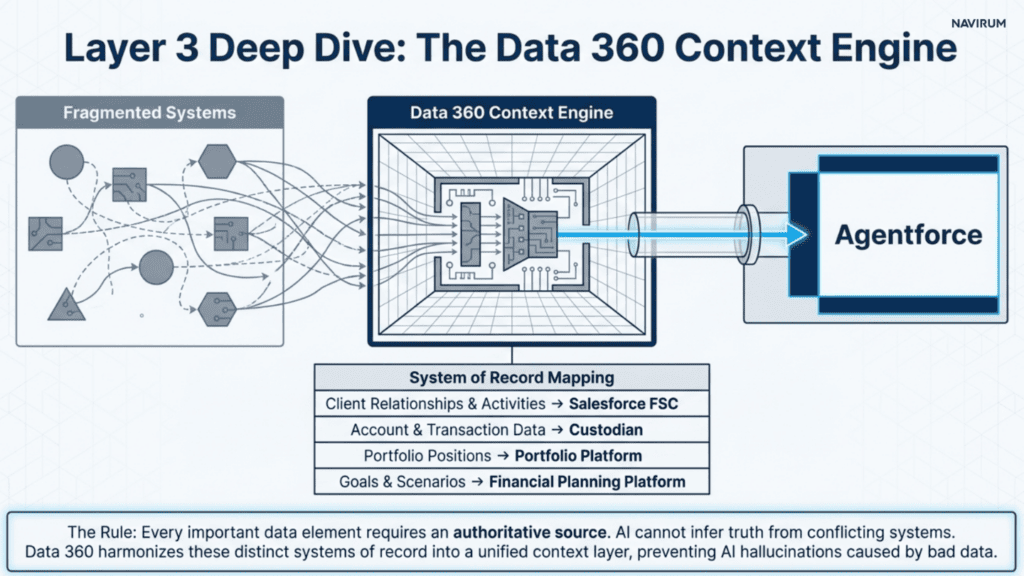
  • The cleanest architecture treats Salesforce as the system of record for relationships and workflows, and Orion as the system of record for accounts, positions, performance, and rebalancing – bidirectional sync, with explicit authority per field.
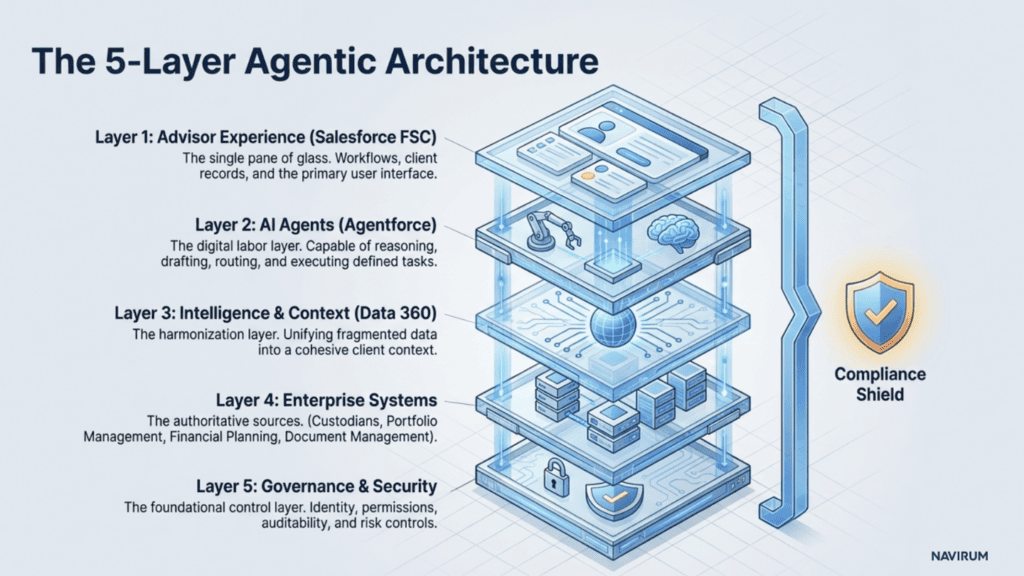
  • Agentforce is rapidly becoming the B2B standard for AI in regulated industries because it runs on your governed Salesforce data with your controls – Orion data exposed through the integration unlocks the most useful agent use cases (meeting prep, advisor research, compliance review).
  • The integration is far more straightforward than most wealth-management leaders assume – Orion’s APIs are well-documented, the architecture pattern is repeatable, and the work compounds across every future Agentforce agent the firm deploys.

Why Wealth Firms Are Integrating Salesforce and Orion in 2026

For most wealth-management firms, the question “what runs the practice?” used to have a simple answer: a CRM (often Redtail), a portfolio system (often Orion), and a stack of point tools bridged by hand. That answer worked at small scale. It stops working between roughly 50 and 150 advisors – the band where firms consistently outgrow Redtail’s configurability ceiling and start needing the next tier of platform. What firms typically migrate toward is Salesforce Financial Services Cloud (FSC), and they do it for four reasons:

Trust and security. Salesforce’s enterprise security model — granular sharing rules, field-level security, encryption, audit trails, and compliance certifications — is what regulated wealth-management firms can defend in front of auditors, custodians, and clients.

Configurability. FSC is built to be reshaped for the way each firm actually works – household models, custom workflows, advisor-specific layouts, role-based dashboards. Redtail’s configurability flattens out at scale; Salesforce’s keeps going.

Integration ceiling. Modern wealth practices touch ten or more systems. FSC’s API surface and ecosystem (AppExchange, MuleSoft, native connectors) clears the integration ceiling that constrains legacy CRMs.

AI strategy and Agentforce. Agentforce is rapidly becoming the B2B standard for AI in regulated industries because it runs natively on governed Salesforce data, with the firm’s existing security model intact. uilding an AI strategy on top of Redtail is fighting the tools; building it on top of FSC is using them.

Navirum Salesforce Ridge Partner

What firms typically don’t want to migrate is Orion. Orion is a strong, deeply-integrated wealth platform – portfolio accounting, performance reporting, rebalancing through ASTRO and Eclipse, custodian connections to Schwab, Fidelity, Pershing, Raymond James, integrated risk analytics through HiddenLevers, and an established advisor experience for the portfolio side of the practice. It works. The win is not replacing Orion — it is integrating Salesforce with Orion so the advisor gets a unified surface and the firm gets the next tier of platform without throwing away what works.

This is the path most firms in the outgrowth band end up choosing once they understand it exists. And in our experience, a meaningful proportion of wealth-management leaders are not yet aware that this is the path — they assume migrating the CRM means rebuilding the portfolio side, or that the integration work is harder than it actually is. Neither is true.

(For firms specifically looking at the Redtail-side migration, see our Complete Guide to Redtail Migration – this article is the integration-side companion.)

Here are five lessons that materially change the outcome of a Salesforce + Orion integration project.

Lesson 1 — The Bidirectional Sync Pattern: Define Authority Per Field, Not Per System

The most common architecture mistake is treating one system as the “master” for everything. It feels clean on the diagram and breaks every time real data flows.

The Bidirectional Sync Pattern treats Salesforce and Orion as co-equal systems of record, with explicit authority defined per data domain:

  • Salesforce is authoritative for: relationships, households, contacts, advisor workflows, tasks, opportunities, marketing engagement, document linkage, compliance workflows, communication history.
  • Orion is authoritative for: accounts, registrations, positions, holdings, transactions, performance returns, rebalancing instructions, custodian connections, billing.
  • Boundary fields (lives in both): addresses, phones, emails, beneficiaries, risk profile. One side writes; the other reads. Pick which.

Once authority is declared, the sync architecture becomes simple. Orion pushes account, position, and performance data into Salesforce on a scheduled cadence (typically nightly with selective intra-day updates for trade-driven changes). Salesforce pushes relationship and demographic updates back to Orion on a similar cadence. Boundary fields flow one direction only — drift is impossible by design.

Across our wealth-management integrations, the firms that get this right ship a stable production integration in 30 to 60 days. The firms that try to make one system the master for everything spend six months and never quite get it stable.

Lesson 2 — The Account-Household Mapping Workshop: Reconcile the Two Models Before Build

Orion’s account hierarchy and FSC’s household model are both rich, but they don’t natively mirror each other. Orion thinks in registrations, accounts, and groupings; FSC thinks in households, individuals, and entities. Between them sits the question that has to be answered before any code is written: how does an Orion account roll up to a Salesforce household?

The cases that need explicit mapping decisions:

  • Joint accounts – one Orion registration, two FSC contacts, one household
  • Trust accounts – one Orion registration, one FSC entity, one household relationship
  • Business / entity accounts – distinct from individual households
  • IRAs and retirement accounts – typically tied to one individual, rolling up to a household
  • Multi-generational households – multiple Orion accounts across multiple individuals, all rolling up to one FSC household
  • Split engagements – divorced or separating clients with shared accounts in transition
  • Closed accounts – keep linked? Detach? Archive?

The Account-Household Mapping Workshop is a structured pre-build session with your operations team, lead advisors, and (ideally) compliance. Walk through every accounttype-to-household scenario your firm encounters. Document the mapping rules. Get signoff in writing.

This is the same playbook we run for Junxure migrations et Redtail migrations — the workshop typically takes one afternoon and saves four to six weeks of late-stage rework. Skip it and you will be rebuilding the household model in production while advisors are trying to use it.

Lesson 3 — The Single-Source-of-Truth Boundary: Drift Is the Compliance Problem

For any data field that exists in both Salesforce and Orion — client address, phone number, email, beneficiary, risk tolerance, KYC status — declare authority and lock the direction of write.

The Single-Source-of-Truth Boundary is the compliance-grade discipline that separates well-architected integrations from those that trigger audit findings. Without it, an advisor updates a client address in Salesforce, an operations user updates the same address in Orion an hour later, and overnight the sync overwrites one of them. Now the records disagree. Three months later, a custodian sends statements to the wrong address, and the firm is explaining to a regulator why client demographic data is inconsistent across systems of record.

The fix is mechanical: pick one authoritative source per field, lock the other system to read-only for that field, and document the matrix. We typically end up with something like:

  • Address, phone, email- authoritative in Salesforce; Orion reads.
  • Risk tolerance and KYC- authoritative in Salesforce; Orion reads. – Beneficiaries authoritative in Salesforce; Orion reads (with custodian as the system of legal record).
  • Account number, registration type, performance, balances –authoritative in Orion; Salesforce reads.
  • Trade history –authoritative in Orion; Salesforce reads.

Done well, this becomes invisible to advisors — they edit in the right place and it just works. Done badly, this becomes the single biggest source of operational and compliance friction in the post-go-live period.

Lesson 4 — The Custodian-Through-Orion Architecture: Don’t DualSource

Orion already has battle-tested connections to Schwab Institutional, Fidelity Institutional, Pershing, Raymond James, and the long tail of broker-dealer custodial platforms. These connections are core to what Orion does, and they handle the messy reconciliation, transaction-type normalisation, and corporate-actions edge cases that take years of platform investment to get right.

The Custodian-Through-Orion Architecture keeps Orion as the single ingress point for custodian data. Salesforce reads positions, balances, and transactions from Orion — not directly from the custodians. One pipe, one reconciliation surface, one source of truth for portfolio numbers.

The temptation, especially for firms with Salesforce-savvy in-house teams, is to build direct Salesforce-to-custodian connections in parallel — the thinking being “more is better.” It is not. Dual-sourcing custodian data into two different systems creates two different versions of the same numbers, and reconciling them costs more than the integration ever saves. Let Orion do what Orion is good at, and let Salesforce read the answer.

If a use case genuinely needs intra-day custodian data that Orion does not yet expose, the right answer is to push Orion to expose it (they often will), or to subscribe to a real-time custodian feed and route it through Orion — not to bypass.

Lesson 5 — The Agentforce-on-Unified-Data Strategy: The AI Layer Lives Above the Integration

Once Salesforce and Orion are integrated, the natural next move is Agentforce. This is where the integration earns its return many times over — and it is also why Agentforce is becoming the B2B standard for AI in regulated industries. Agents that work on your unified, governed, audited data with your existing security model are usable in production. Agents that work on dirty, fragmented data behind a chatbot facade are not.

The agents wealth firms typically deploy first on top of a Salesforce + Orion integration:

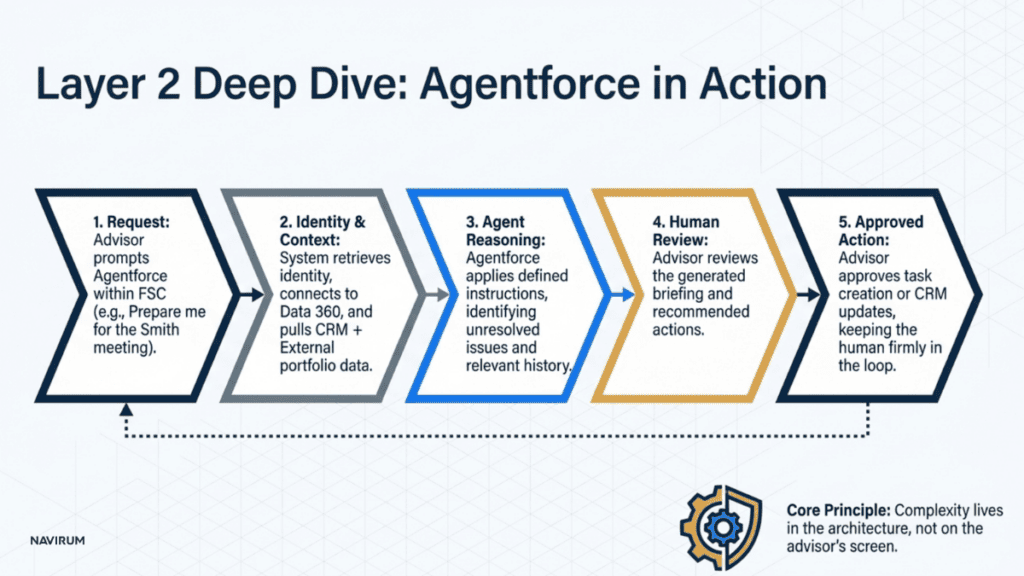
  • Meeting prep agent – pulls household composition, relationship history, and goals from Salesforce; current positions, performance, and rebalancing flags from Orion (via Salesforce); planning context from eMoney or MoneyGuidePro. Produces a structured advisor briefing pack in seconds.
  • Advisor research agent – surfaces life events, anomalies, and “next-best action” suggestions across the unified household record.
  • Compliance review agent – scans for review-due triggers across both relationship and account data, generates tasks, documents the audit trail.
  • Quarterly review prep agent – assembles the client-facing review pack from Salesforce + Orion + planning data.
  • Long-tail care agent – birthdays, seasonal touches, life-event nudges, renewalwindow prompts.

The Agentforce-on-Unified-Data Strategy is what turns the integration from a technical project into a strategic asset. Each agent is narrow, defined, and runs against the structured, governed data the integration created. Agentforce inherits Salesforce’s security model — sharing rules, field-level security, audit trails, encryption — which is what makes it deployable in regulated wealth-management environments where most generic AI tools cannot pass procurement.

The order matters: integration first, agents second. Agents on top of integrated, governed data are remarkable. Agents on top of fragmented data produce confident nonsense.

Salesforce vs Orion vs Salesforce + Orion Integrated: Capability Comparison

CapabilityOrion aloneSalesforce FSC aloneSalesforce + Orion Integrated
Client / household relationship
modelling
Limited (account
centric)
Rich, multi
generational, entity
aware
+ unified across
both systems
Portfolio accounting
+ performance
Native, deepLimited to custom
data
+ Orion data
surfaced inside FSC
Custodian data
ingestion
Native (Schwab,
Fidelity, Pershing,
RJ)
Possible but not
Orion’s strength
+ Orion remains the
ingress; FSC reads
Rebalancing (ASTRO
/ Eclipse)
NativeNoneTriggered from FSC
workflows where
appropriate
Advisor experiencePortfolio-focusedRelationship-focusedUnified single surface
Compliance workflowsAccount-levelRich, configurable+ Account-level signals flowing into FSC
Ai/Agentforce capabilityNone nativeFull Agentforce platformAgents work across unified data
ConfigurabilityConstrainedHighInherited from FSC
Marketing automation / engagementLimitedNative + ecosystemUnified to portfolio data for segmentation
Total cost of ownership trajectoryStable but ceiling-bound for advisor experienceHigher initial; scalableHighest initial;
lowest TCO at scale
+ AI-ready

Frequently Asked Questions

Why are wealth firms migrating their CRM from Redtail to Salesforce in 2026?

Firms typically outgrow Redtail in the 50–150 advisor band. They migrate to Salesforce Financial Services Cloud for four reasons: trust and enterprise security, configurability that scales beyond Redtail’s ceiling, the integration surface needed for a modern wealth-tech stack, and an AI strategy built on Agentforce. Both Redtail and Orion are part of the Orion family, so it is possible to migrate the CRM seat to Salesforce while keeping Orion as the portfolio platform.

Can I keep Orion when I move my CRM to Salesforce?

Yes – and this is the recommended path for most firms outgrowing Redtail. The pattern is: migrate the CRM to Salesforce Financial Services Cloud, keep Orion for portfolio accounting, performance reporting, rebalancing, and custodian connections, and integrate the two so advisors get a unified surface.

How does the Salesforce and Orion integration work technically?

The integration uses Orion’s APIs for account, position, performance, and household-grouping data, and Salesforce’s named credentials, custom objects, and queueable / scheduled processing for the sync layer. The cleanest architecture is bidirectional with explicit per-field authority — Salesforce as the system of record for relationships and workflows, Orion for accounts, positions, performance, and rebalancing.

Is the Salesforce and Orion integration bidirectional?

Yes. The Bidirectional Sync Pattern flows account, position, and performance data from Orion into Salesforce on a scheduled cadence, and flows relationship and demographic updates from Salesforce back to Orion. Boundary fields that exist in both systems flow one direction only, with authority declared explicitly to prevent drift.

What is the typical timeline for a Salesforce and Orion integration?

A core Salesforce + Orion integration typically takes 30 to 60 days to stand up the bidirectional sync. When paired with a CRM migration (Redtail or Junxure to Salesforce FSC), the integration ships with the go-live and adds approximately four to six weeks to the overall project plan.

How does Agentforce work with Orion data?

Once the Salesforce + Orion integration is in place, Agentforce agents run on the unified data set with Salesforce’s existing security model. Typical first agents include meeting prep, advisor research, compliance review, quarterly review prep, and long-tail care. Agentforce inherits Salesforce’s sharing rules, field-level security, and audit trails — which is what makes it deployable in regulated wealth-management environments.

Should custodian data flow through Salesforce or Orion?

Through Orion. Orion already has battle-tested connections to Schwab Institutional, Fidelity Institutional, Pershing, and Raymond James, and handles the custodial reconciliation that takes years of platform investment to get right. Salesforce should read custodian-derived data from Orion, not source it directly. This is The Custodian-Through-Orion Architecture.

What are the typical pain points with Redtail at scale?

Configurability ceiling, security and compliance limits, integration surface, mobile experience, and AI / agentic capability. Firms in the 50–150 advisor band consistently report that Redtail “still works” for individual advisors but does not scale to the firm-level workflows, audit, and AI strategy a growing wealth practice needs.

Do I need to be a Salesforce Ridge Partner to do this integration?

No, but working with one materially reduces project risk. A Ridge Partner has demonstrated repeated successful FSC and Agentforce delivery in the relevant industry. Navirum is a Salesforce Ridge Partner specialising in wealth management.

Can the Salesforce + Orion integration be done in parallel with the Redtail-to
Salesforce CRM migration?

Yes, and we recommend it. The Parallel Migration Pattern brings the CRM migration and the Orion integration into a single project — one cut-over weekend, one training cycle, one moment of advisor change. Sequencing them adds time, cost, and disruption without improving the result.

Glossary

  • Orion (Orion Advisor Solutions) – Wealth-management technology platform providing portfolio accounting, performance reporting, rebalancing (ASTRO, Eclipse), risk analytics (HiddenLevers), and CRM (Redtail, acquired in 2022).
  • Redtail – CRM software historically popular with U.S. wealth-management advisors. Owned by Orion since 2022.
  • Salesforce Financial Services Cloud (FSC) – Salesforce’s industry-specific platform for wealth management, banking, and insurance, with native household, financial account, goal, and asset/liability objects.
  • Agentforce – Salesforce’s enterprise AI agent platform, designed to deploy specialised AI agents on top of governed Salesforce data with the existing security model intact.
  • Bidirectional Sync Pattern – Integration architecture where two systems exchange data both directions, with authority declared per field rather than per system.
  • Single-Source-of-Truth Boundary – The explicit declaration of which system is authoritative for any given data field that exists in both.
  • Custodian-Through-Orion Architecture – Pattern where custodian data ingress remains in Orion and Salesforce reads from Orion rather than dual-sourcing.
  • Account-Household Mapping – The set of rules defining how Orion’s account hierarchy rolls up to Salesforce FSC’s household model.
  • Salesforce Ridge Partner – Salesforce’s partner-tier designation indicating demonstrated repeated successful delivery in a specialised cloud or industry.
  • Orbit Managed Services – Navirum’s predictable, retainer-based post-go-live support offering for Salesforce wealth-management implementations and integrations.

About the author

Rory Galvin_Navirum

Rory Galvin is the founder and CEO of Navirum, a boutique Salesforce, Agentforce, and AI consultancy focused exclusively on wealth management and financial services. Navirum is a Salesforce Ridge Partner and has delivered Financial Services Cloud migrations and Agentforce implementations to wealth advisors across North America for over seven years. Connect with Rory on LinkedIn or read more at navirum.com/blog.

Related reading

Rory GalvinSalesforce and Orion Integration for Wealth Management: 5 Hard-Won Lessons

Why Private Equity Firms Should Leverage Agentforce?

Why Private Equity Firms Should Leverage Agentforce?

Discover how Agentforce can drive operational efficiency, boost revenue, and enhance customer experience for private equity firms and their portfolio companies. Learn key benefits, real-world use cases, and NAVIRUM recommendations for maximizing ROI with Salesforce automation.

Agentforce is a Salesforce-native automation platform that helps private equity firms and their portfolio companies streamline workflows, reduce operational costs, and improve data accuracy. This guide explains how PE professionals can evaluate its value across portfolio companies, track measurable KPIs, and assess adoption impact. It highlights EBITDA growth levers, scalability, and customer experience improvements, provides real-world use cases, discusses risks and market positioning, and shares our recommendations for maximizing ROI through strategic implementation and expert Salesforce consulting.

Unlocking Operational Alpha Across Portfolio Companies

Private equity firms are under increasing pressure to deliver returns not just through financial engineering, but through operational excellence. As holding periods evolve and competition intensifies, firms are turning to technology as a lever to accelerate value creation and differentiate their portfolios.

Agentforce represents a new category of enablement—one that allows firms to standardize, scale, and optimize operations across multiple portfolio companies. Rather than treating each asset as a silo, PE firms can implement a unified approach to automation and data, unlocking efficiencies that compound across the portfolio.

This guide explores how Agentforce fits into a modern PE value creation strategy:

  • What Agentforce is and why it matters for private equity
  • The operational challenges it solves across portfolio companies
  • Key value drivers for PE firms
  • Measurable KPIs and performance indicators
  • Market positioning and competitive landscape
  • Risks and mitigation strategies
  • Key questions PE firms should ask before investing
  • Why Salesforce consulting expertise is critical

What Is Agentforce?

Agentforce is more than a workflow tool, it’s an operational backbone for organizations looking to scale efficiently within the Salesforce ecosystem. By centralizing automation, data, and process orchestration, it allows companies to move faster while maintaining control and consistency.

For private equity firms, this is particularly important. Portfolio companies often operate with fragmented systems and inconsistent processes, making it difficult to drive unified performance improvements. Agentforce provides a standardized layer that enables firms to deploy best practices at scale while maintaining flexibility at the company level.

For private equity firms, the key differentiator is standardization across portfolio companies. Rather than each company building fragmented systems, Agentforce provides a unified approach to automation, data, and reporting.

This allows PE firms to:

  • Deploy consistent operating models
  • Improve cross-portfolio visibility
  • Accelerate digital transformation across assets

Why Portfolio Companies Need Agentforce

Operational inefficiencies are one of the most common barriers to value creation in portfolio companies. While growth strategies may be sound, execution often breaks down due to manual processes, lack of integration, and limited visibility into performance.

These inefficiencies are not just operational issues—they directly impact EBITDA, scalability, and exit readiness. Without a structured approach to automation and data management, companies struggle to scale efficiently or respond to market demands.

Many portfolio companies struggle with the same operational inefficiencies:

  • Manual, time-consuming processes
  • Disconnected systems and siloed data
  • Limited reporting visibility
  • Inconsistent customer experience

Agentforce addresses these issues by:

  • Automating repetitive workflows
  • Standardizing processes across teams
  • Integrating Salesforce with other systems
  • Enabling scalable, low-code automation

For PE firms, this translates into faster operational improvements and more predictable performance across investments.

Key Value Drivers for Private Equity Firms

Key Value Drivers for Private Equity Firms_Agentforce_Navirum

Private equity firms evaluate every initiative through the lens of value creation. Technology investments must demonstrate clear, measurable impact on financial performance, not just incremental improvements in efficiency.

Agentforce stands out because it directly influences key drivers of enterprise value—revenue growth, cost optimization, and scalability. These are the same levers PE firms use to improve EBITDA and maximize exit multiples.

Private equity firms evaluate technology based on its ability to drive measurable financial outcomes. Agentforce delivers value across multiple dimensions:

1. EBITDA Growth Through Productivity Gains

Productivity is one of the most immediate levers for improving financial performance. When teams spend less time on administrative work, they can focus on higher-value activities that directly contribute to revenue.

Agentforce enables this shift by automating routine tasks and streamlining workflows, allowing organizations to operate more efficiently without increasing headcount.

  • Faster sales cycles
  • Increased deal throughput
  • Reduced operational bottlenecks

2. Cost Reduction and Margin Expansion

Cost control is critical in driving profitability, especially in competitive or margin-sensitive industries. Manual processes, duplicated work, and inefficient approvals often create hidden costs that accumulate over time.

By introducing automation and standardization, Agentforce helps eliminate these inefficiencies, resulting in leaner and more predictable operations.

  • Reducing manual intervention
  • Automating approvals and workflows
  • Minimizing errors and rework

3. Standardization Across the Portfolio

One of the biggest challenges in private equity is managing a diverse set of portfolio companies with varying levels of maturity and operational discipline. Without standardization, it becomes difficult to replicate success or scale improvements.

Agentforce allows firms to implement consistent processes and frameworks, enabling a more unified and strategic approach to portfolio management.

  • Deploy repeatable playbooks
  • Standardize workflows and reporting
  • Scale best practices across assets

4. Real-Time Data and Visibility

Timely and accurate data is essential for effective decision-making at both the company and fund level. However, many portfolio companies lack the infrastructure needed to deliver reliable insights.

Agentforce ensures that data flows seamlessly across systems, enabling real-time reporting and improved transparency.

  • Data consistency across systems
  • Real-time dashboards and reporting
  • Improved performance visibility

5. Exit Readiness and Valuation Uplift

Exit readiness is a key priority for any private equity firm. Buyers are increasingly looking for companies with modern systems, clean data, and scalable operations.

By implementing Agentforce, portfolio companies can position themselves as well-run, efficient, and future-ready organizations.

  • Scalable and standardized systems
  • Clean, reliable data
  • Efficient, automated processes

Strategic KPIs Private Equity Firms Should Track

To effectively evaluate the success of Agentforce, private equity firms need to move beyond qualitative benefits and focus on measurable outcomes. Clear KPIs provide visibility into whether automation is delivering real value.

Tracking the right metrics also enables firms to benchmark performance across portfolio companies and identify opportunities for further optimization.

To evaluate Agentforce adoption, PE firms should focus on measurable performance indicators:

Metric CategoryWhat to TrackWhy It Matters
ProductivityTasks automated per employeeIndicates operational efficiency
Cycle TimeSales or approval cycle durationReflects process optimization
Cost EfficiencyOperational cost reductionImpacts EBITDA directly
Data QualityError rates and data consistencyEnsures reliable reporting
AdoptionActive user ratesMeasures platform utilization
Revenue ImpactRevenue per employeeSignals scalability

Market Positioning and Competitive Landscape

The automation and workflow orchestration space is evolving rapidly, with increasing demand for platforms that can deliver both flexibility and scalability. Private equity firms need to understand where Agentforce fits within this broader landscape.

Its positioning is particularly compelling because it aligns with macro trends such as digital transformation, low-code adoption, and the need for integrated systems.

Agentforce sits at the intersection of several high-growth technology categories:

  • Low-code automation
  • Workflow orchestration
  • Salesforce-native platforms

Private equity firms are increasingly prioritizing digital transformation as a core component of their value creation strategies. Platforms like Agentforce enable faster implementation and quicker realization of benefits.

  • Faster deployment cycles
  • Reduced reliance on engineering resources
  • Scalable process improvements

Salesforce Ecosystem Advantage

Integration is often one of the biggest challenges in technology adoption. Agentforce’s native connection to Salesforce significantly reduces this friction.

  • Seamless data integration
  • Lower implementation risk
  • Faster time to value

Competitive Landscape

Understanding the competitive environment is key to assessing long-term viability and differentiation.

  • RPA tools
  • Custom-built solutions
  • Other low-code platforms

Risks and Mitigation Strategies

While the benefits of Agentforce are substantial, successful implementation requires careful planning and execution. Private equity firms must consider potential risks to ensure expected outcomes are achieved.

A proactive approach to risk management can significantly improve the likelihood of success and maximize return on investment.

1. Inconsistent Adoption Across Portfolio Companies

Not all companies may adopt the platform effectively.

Mitigation:
Implement centralized governance and standardized rollout strategies.

2. Change Management Challenges

Teams may resist new workflows.

Mitigation:
Invest in training, leadership alignment, and clear ROI communication.

3. Over-Reliance on Salesforce Ecosystem

Dependency on a single ecosystem can introduce strategic risk.

Mitigation:
Ensure alignment with long-term Salesforce strategy and maintain flexibility where needed.

High-Impact Use Cases in Private Equity

Use cases are critical for translating strategy into execution. They help private equity firms understand how Agentforce can be applied in real-world scenarios to drive measurable outcomes.

These examples highlight how automation can directly impact performance across key operational areas.

Use Case 1: Portfolio-Wide Sales Process Standardization

Agentforce can unify lead management, deal tracking, and reporting across companies, improving pipeline visibility and forecasting accuracy.

Use Case 2: Quote-to-Cash Optimization

Automating approvals, contracts, and invoicing reduces delays and improves cash flow predictability.

Use Case 3: Investor and LP Reporting Automation

Streamlining reporting processes enables faster, more accurate communication with stakeholders.

Use Case 4: Compliance and Audit Readiness

Automated audit trails reduce risk and simplify due diligence during exit.

What Private Equity Firms Should Ask Before Investing

Evaluating an Agentforce initiative requires more than understanding the technology—it requires assessing how it will be implemented and measured.

Asking the right questions ensures that the investment is aligned with value creation goals and not just a technology upgrade.

Before backing an Agentforce initiative, PE professionals should ask:

  • What operational inefficiencies are being targeted?
  • What baseline metrics exist today?
  • How will success be measured post-implementation?
  • Is there a standardized rollout plan across the portfolio?
  • How quickly can value be realized?
  • Who owns adoption and optimization?

Why Salesforce Consulting Expertise Matters

The success of any technology initiative depends heavily on execution. Without the right expertise, even the most powerful platforms can fail to deliver expected results.

Salesforce consulting partners play a critical role in ensuring that Agentforce is implemented strategically and aligned with business objectives.

Strategic Implementation . Ensures alignment with value creation goals.

Process Optimization. Redesigns workflows for efficiency and impact.

Scalable Deployment. Enables repeatable success across portfolio companies.

Continuous Improvement. Drives long-term ROI through ongoing optimization.

Final Thoughts: A Scalable Value Creation Lever

Private equity firms that successfully leverage technology gain a significant competitive advantage. Agentforce represents an opportunity to move beyond fragmented improvements and toward a scalable, repeatable model for operational excellence.
By standardizing processes, improving data visibility, and automating workflows, firms can unlock value across their entire portfolio—not just individual companies.

When deployed effectively, Agentforce enables:

  • Faster growth
  • Lower costs
  • Better data visibility
  • Stronger exit positioning
Navirum Salesforce Ridge Partner

Maximizing the value of Agentforce in a private equity portfolio is not just about implementing technology—it’s about using automation as a strategic lever for value creation, risk reduction, and scalable growth. The most successful firms embed it directly into their investment thesis and operating model.

Based on Navirum’s experience with Salesforce and complex operations, here’s how PE firms can ensure Agentforce delivers measurable results across their portfolio:

1. Embed Agentforce Into Your Value Creation Plan

Automation should be tied directly to financial objectives: revenue growth, cost optimization, and EBITDA expansion. Integrate Agentforce initiatives into each portfolio company’s 100-day plan to accelerate impact and make operational improvements measurable from the start.

2. Standardize Operations Across Portfolio Companies

Agentforce allows you to roll out consistent processes, reporting, and governance frameworks across multiple companies. Standardization reduces variability, improves predictability, and enables quicker, repeatable operational improvements—ultimately creating portfolio-wide efficiencies and transparency.

3. Focus on High-Impact Use Cases First

Target initiatives that drive tangible financial outcomes, such as deal-to-cash workflows, sales process automation, and customer onboarding. Early wins build momentum, demonstrate measurable ROI, and reduce implementation risk.

4. Define and Track Portfolio-Level KPIs

Establish metrics that matter to PE decision-makers: productivity, operational cost savings, revenue per employee, and adoption rates. Consistent KPIs across portfolio companies allow leadership to monitor impact, benchmark performance, and identify opportunities for additional value creation.

5. Prioritize Adoption and Change Management

Even the best technology fails without adoption. Structured change management—training, executive sponsorship, and clear ROI communication—is essential to ensure teams embrace automation and it drives measurable results.

6. De-Risk Execution With Expert Partners

Execution risk is one of the top threats to value creation. Partnering with experienced Salesforce consultants ensures Agentforce is deployed efficiently, integrated with existing systems, and aligned with strategic goals—reducing time-to-value and protecting ROI.

7. Build Scalability and Exit Readiness Into Day One

Automation should not only improve current operations but also prepare companies for exit. Scalable workflows, reliable reporting, and clean data increase buyer confidence and can contribute to higher valuation multiples.

8. Commit to Continuous Improvement

Value creation doesn’t stop after go-live. Regularly review workflows, adoption metrics, and KPIs to identify new opportunities for efficiency, scalability, and revenue growth. This ensures Agentforce continues to compound value throughout the hold period.

Bottom Line:
For private equity decision-makers, Agentforce is more than an operational tool—it’s a portfolio-wide value creation engine. When implemented strategically, it drives faster growth, lower costs, better data visibility, and stronger exit positioning, all while reducing execution risk and increasing predictability.

Private Equity & Portfolio Value Creation

Accelerate Portfolio Growth with Agentic AI

Discover how Agentforce can streamline deal flow analysis, optimize portfolio operations, and reduce manual overhead across your investment lifecycle.

Book PE Strategy Call
30-Minute AI Audit for PE Firms

FAQ: Salesforce & Agentforce for Private Equity Professionals

How can Agentforce be incorporated into a private equity value creation plan?

Agentforce should be positioned as an operational lever within the value creation plan (VCP), specifically targeting efficiency, scalability, and data visibility. Rather than treating it as a standalone IT initiative, PE firms should align its deployment with EBITDA improvement goals—such as reducing SG&A costs, accelerating revenue cycles, and improving customer retention. When embedded early (during onboarding or within the first 100 days), it can create compounding value throughout the hold period.

What role does Agentforce play in standardizing operations across portfolio companies?

Agentforce enables PE firms to implement repeatable operating models by standardizing workflows, reporting structures, and data governance across portfolio companies. This reduces variability in execution and allows firms to scale best practices more efficiently. Over time, this standardization creates a more cohesive portfolio, making it easier to benchmark performance and implement cross-company initiatives.

How should private equity firms measure ROI from Agentforce beyond cost savings?

While cost reduction is a clear benefit, ROI should also be measured through revenue acceleration, improved conversion rates, and enhanced customer lifetime value. Additional indicators include reduced cycle times, increased productivity per employee, and improved data accuracy. PE firms should also assess qualitative improvements such as decision-making speed and management visibility, which contribute to long-term enterprise value.

Can Agentforce accelerate exit timelines or improve valuation multiples?

Yes. Companies with automated workflows, strong data governance, and scalable systems are more attractive to buyers. Agentforce enhances operational maturity, which can reduce perceived risk during due diligence. This often translates into stronger buyer confidence, faster exit processes, and in some cases, higher valuation multiples due to improved scalability and transparency.

How does Agentforce impact due diligence and audit readiness?

Agentforce creates structured, traceable workflows and maintains detailed audit trails within Salesforce. This improves transparency and simplifies the due diligence process by ensuring that key operational and financial data is accurate, accessible, and consistent. For PE firms, this reduces the time and friction typically associated with exit preparation and regulatory reviews.

What types of portfolio companies benefit most from Agentforce implementation?

Portfolio companies with complex workflows, high transaction volumes, or fragmented systems benefit the most. This includes businesses in financial services, SaaS, healthcare, and B2B services. Companies that rely heavily on Salesforce or have significant customer interaction points are particularly well-positioned to realize rapid ROI.

What are the biggest risks of deploying Agentforce across a portfolio, and how can they be mitigated?

The primary risks include inconsistent adoption, lack of alignment with business objectives, and insufficient change management. These can be mitigated by establishing centralized governance, defining clear KPIs, and ensuring executive sponsorship at both the fund and portfolio company level. Partnering with experienced Salesforce consultants also reduces implementation risk and accelerates time to value.

How can private equity firms ensure consistent adoption across multiple portfolio companies?

Consistency requires a structured rollout strategy, including standardized playbooks, training programs, and performance tracking. PE firms should also designate internal champions within each portfolio company and monitor adoption metrics closely. Aligning incentives with usage and outcomes can further drive engagement and ensure long-term success.

How does Agentforce support data-driven decision-making at the fund level?

By centralizing and standardizing data across portfolio companies, Agentforce enables real-time reporting and improved visibility into operational performance. This allows PE firms to make faster, more informed decisions, identify underperforming assets, and uncover opportunities for improvement. Enhanced data accuracy also increases confidence in forecasting and strategic planning.

What is the role of Salesforce consulting partners in maximizing Agentforce ROI?

Salesforce consulting partners play a critical role in translating strategy into execution. They help design scalable architectures, optimize workflows, and ensure alignment with business objectives. Beyond implementation, they provide ongoing support, performance monitoring, and continuous improvement strategies—ensuring that Agentforce delivers sustained value throughout the investment lifecycle.

Read More About Agentforce & AI Solutions

Lavinia PicuWhy Private Equity Firms Should Leverage Agentforce?

Agentforce Client Account Onboarding Agent

What is Agentforce Client Account Onboarding Agent?

Agentforce Client Onboarding Agent is Navirum’s AI-driven onboarding solution built on Salesforce Agentforce, designed to help you reach 80% reduction in manual coordination effort.

It standardizes and automates client onboarding directly from the Account record, helping financial institutions reduce risk, improve efficiency, and deliver a consistent, compliant client experience. The agent orchestrates onboarding steps, documentation, and follow‑up tasks within Salesforce, providing a single source of truth for front‑office, operations, and compliance teams.

Why It Matters For Financial Services?

In most wealth management firms, account onboarding still takes 7–14 business days on average, with more complex structures (trusts, HNW clients, or cross-border accounts) extending to 10–20+ days. Unfortunately it is often a slow, manual process that frustrates both staff and new clients.

Delays are typically caused by:

  • Manual KYC/AML and compliance reviews
  • Fragmented document collection and follow-ups
  • Multiple internal handoffs between advisors, operations, and compliance teams
  • Incomplete or missing client information
  • Disconnected systems across CRM, custodians, and identity verification tools

Client Onboarding Agent_WM_Navirum

The result is a slow, resource-intensive process that impacts both client experience and time-to-revenue.This lack of technology and reliance on fragmented systems leads to massive inefficiencies.

Meet Your AI Assistant: The Client Account Onboarding Agent

Client Onboarding Agent_WM_Navirum

Agentforce Client Onboarding Agent addresses these challenges by:

Enforcing a standardized onboarding journey for every client

Structuring KYC and documentation checks via a Document Checklist

Reducing manual hand‑offs and emails with auto‑created Tasks

Our custom Agentforce agent blends sales and service skills to orchestrate the full end-to-end client intake process. The agent continuously monitors the workflow in real-time, automatically prompting clients for missing documents and assigning compliance tasks, surfacing only the 10% of cases that require human intervention.

Client Account Onboarding Agent Demo

Watch our demo to see how the Salesforce Agentforce Client Account Onboarding Agent streamlines onboarding end-to-end—reducing manual work, accelerating approvals, and delivering a seamless client experience.

Before vs After: AI-Powered Onboarding

See how Agentforce transforms the most critical stage of the client lifecycle.

Stage Traditional Onboarding Client Account Onboarding Agent
Time to onboard 7–14+ days 2–4 days
Manual effort High (coordination-heavy) Reduced by 85%+
Client follow-ups Advisor-driven AI-automated smart nudges
Document handling Manual tracking & validation Automated extraction & routing
Visibility Fragmented systems Real-time unified dashboard
Client drop-off 20–30%+ < 10%

Key Benefits For Financial Firms

KYC & Documentation Control

Capture and track required documents (e.g., ID proof, address verification) using a structured Document Checklist linked to the Account.

Regulatory & Audit Readiness

Maintain a clear record of onboarding steps, documentation status, and verification tasks – all within Salesforce.

Operational Efficiency

Auto‑create Tasks for onboarding and operations teams, reducing manual data entry and follow‑ups.

Consistent Onboarding Journey

Apply the same process across wealth, lending, and corporate clients, tailored by segment if required.

Salesforce- and Agentforce-native

Built on Salesforce standard objects and Agentforce Flow Automation Agents – no additional infrastructure or external system required.

Stop chasing paperwork and start building relationships.

With Navirum’s Agentforce Account Onboarding Agent, you can completely transform your intake workflow, achieving an 85%+ reduction in manual coordination effort.

Key Capabilities

Automated Workflow Orchestration

The agent collects client info, opens accounts, routes documents for e-sign (like DocuSign), schedules introductions, and triggers welcome journeys.

Smart Nudges

Automatically generates and sends welcome emails, onboarding checklists, and missing-information nudges to keep the process moving.

Unified Data View

Powered by Salesforce Data Cloud, the agent has a live, unified view of where each client is across multiple Salesforce objects (Individual, Household, Financial Account).

Seamless Integrations

Connects directly with your Core CRM, custodian APIs, e-sign platforms, email, calendar, and identity vendors.

Client Account Onboarding Agent Interface

Enterprise-Grade Trust & Compliance

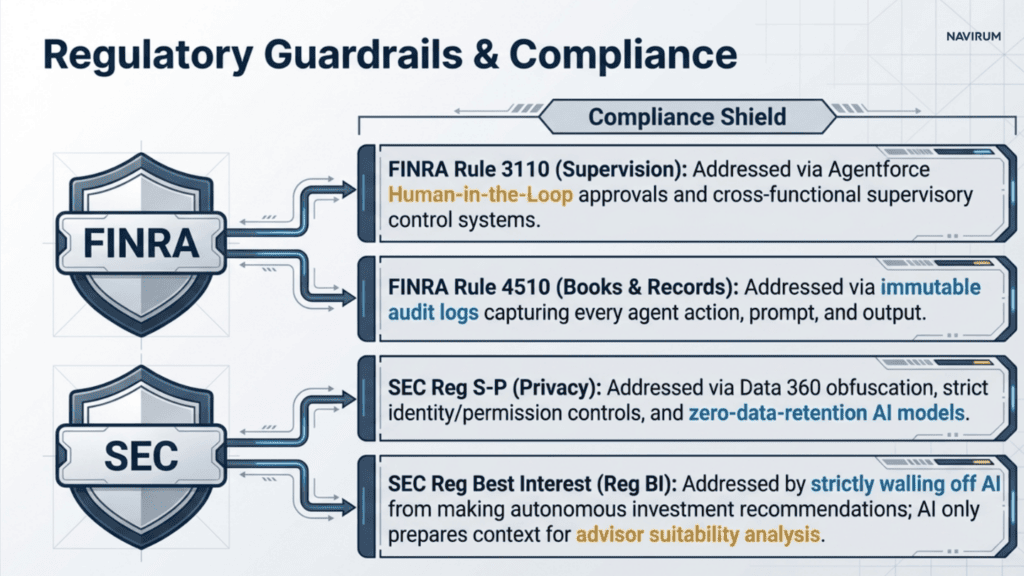
Navirum builds AI you can trust. Our onboarding agent embeds your compliance policies directly into the journey:

Human-in-the-Loop

The AI does the heavy lifting, but an advisor must always approve the final account opening package before submission. There is no outbound client messaging without advisor sign-off.

Strict Guardrails

Built with PII masking in prompts, zero-retention LLM calls, and a full audit log for every action taken. Your data remains secure and private throughout the entire process.

Regulator-Ready

Captures logged consent and provides hallucination checks, significantly reducing the risk of reputational damage or regulatory penalties.

Unlock quicker time to revenue and turn low-value prospects into high-value clients with a competitive digital onboarding experience.

Book Strategy Session

Schedule Your Session

Let’s find a time to chat about your Salesforce strategy and AUM growth.

Continue to Calendar
Lavinia PicuAgentforce Client Account Onboarding Agent

Agentforce World Tour NYC 2026: From AI Trends to Measurable Results

Navirum at Agentforce World Tour NYC 2026

At Navirum, we don’t just follow trends—we go where innovation is happening. That’s why our team is heading to the Agentforce World Tour NYC, one of the most important gatherings in the Salesforce and AI ecosystem today.

Events like this aren’t just showcases—they’re where the future of financial services, automation, and AI-powered operations takes shape in real time.

Beyond the Hype: What We’re Watching

AI is everywhere, but most wealth managers are still thinking about it like it’s 2022—stuck with chatbots and pilots that never scaled. Our focus is different: we look for what’s proven, scalable, and impactful.

At Agentforce World Tour, we’ll be digging into:

  • How AI agents are reducing operational costs by up to 90%
  • Integrating Salesforce and AI for measurable results
  • Lessons learned from firms successfully scaling autonomous agents

Because for our clients, insight without action isn’t enough.

Our Navirum team—bringing the latest AI insights directly from Agentforce World Tour to help clients succeed.

Exploring emerging AI solutions at last year’s Agentforce World Tour in New York, seeing what works in practice, not just on paper.

Analyzing AI agents and real-world use cases—turning conference insights into actionable strategies for our clients.

Agentforce NYC World Tour - Navirum

From Event Insights to Practical Guidance

Last year, we saw firsthand how firms were experimenting with AI—but few were moving beyond pilots. This year, the conversation is shifting toward execution.

Ready to Turn Agentforce & AI into Real Results?

Don’t let disconnected systems and underutilized AI hold you back. Build a scalable, high-impact Salesforce environment designed for growth.

Book Your Free AI Strategy Call 30-MINUTE CONSULTATION

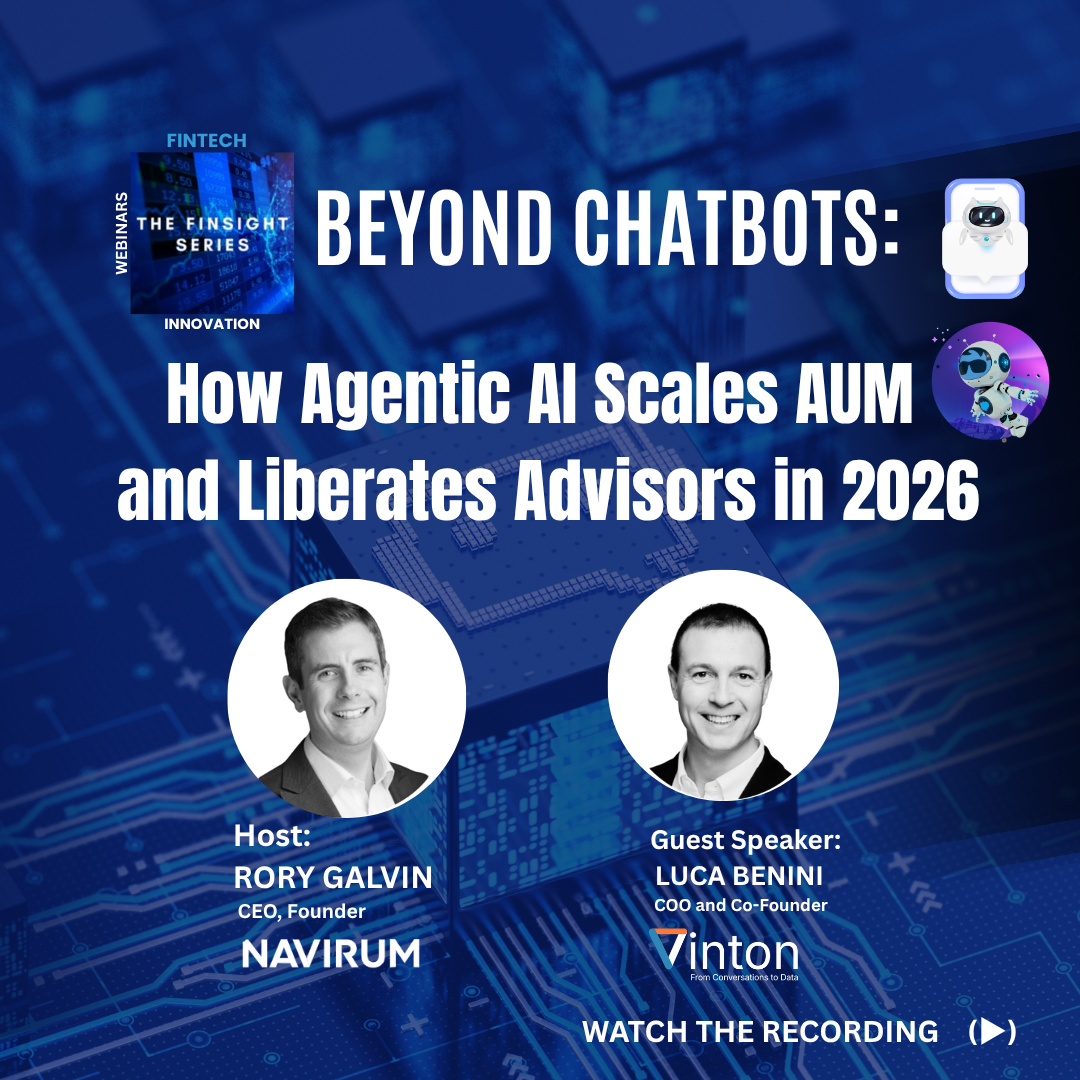
We bring these insights back to our clients—helping them turn what’s possible into what’s practical. That’s why we’re hosting a webinar to share our perspective with financial leaders like you.

Live Webinar

Beyond Chatbots: Scaling AUM with Agentic AI

April 24, 2026 11:00–11:45 AM EST LinkedIn Live

What we’ll cover:

01

<strong class="text-white block">The 2026 Inflection Point</strong> Why Agentic AI is moving from experiment to industry standard.

02

<strong class="text-white block">Real-World Case Studies</strong> Measurable results from firms deploying autonomous agents at scale.

03

<strong class="text-white block">Live Demo: Agents in Action</strong> Onboarding and compliance handled autonomously.

04

<strong class="text-white block">Interactive Q&A</strong> Solve your AI implementation hurdles with our expert panel.

Why attend:

  • Reduce manual operational processes by up to 90%

  • Scale AUM without adding headcount

  • Learn practical insights from firms actually doing it

Reserve My Free Webinar Seat 45-MINUTE LIVE STRATEGY SESSION

Why This Matters for You

Events like Agentforce World Tour give us direct access to the technology, use cases, and industry leaders driving real results. The webinar extends this insight into your hands—practical, actionable, and grounded in real-world experience.

Because staying ahead isn’t about following every new AI tool—it’s about knowing what works and how to apply it in your business.

The Finsight Series_Navirum_Beyond Chatbots Scaling AUM with Agentic AI

Let’s Turn Insight into Action

If you’re exploring how AI and Salesforce can help reduce cost, improve efficiency, and scale AUM, this webinar is designed to give you clarity—not theory.

Reserve your spot today and see how agentic AI is transforming wealth management.

Ready to scale AUM with autonomous AI agents?

Don’t let manual processes and siloed data limit your growth. See how Agentic AI can streamline operations and accelerate results for your firm.

Reserve My Free Webinar Seat 45-MINUTE LIVE SESSION

Lavinia PicuAgentforce World Tour NYC 2026: From AI Trends to Measurable Results

AgentExchange AI Agents & Actions for Financial Services

AgentExchange AI Agents & Actions for Financial Services: A Guide For Financial Advisors

Salesforce AgentExchange offers AI agents like FinDoc, InvestorFlow, and Certinia to help financial advisors automate tasks, improve client engagement, and proactively manage portfolio risk.

Salesforce’s AgentExchange provides pre-built AI agents and actions designed to help financial services organizations automate workflows, improve operational efficiency, and deliver more personalized client experiences. For financial advisors, these tools can transform day-to-day operations, reduce administrative burden, and enable data-driven, client-centric advice.

Below, we highlight the 10 AI agents and actions relevant to financial advisors, explaining how they can streamline workflows, improve client engagement, and enhance portfolio management.

1. FinDock (Payment & Financial Data Integration)

FinDock agents integrate payment systems directly with Salesforce CRM, streamlining financial operations and reducing manual data entry.


Advisor Benefits:


By automating payment capture, reconciliation, and reporting, these agents allow advisors to focus on strategic financial planning rather than administrative tasks.

  • faster response times for customer support
  • consistent reduction in costs and manual overhead
  • smarter decision-making powered by data-driven insights
  • focus on high-value tasks that drive growth

Financial Services Use Cases:

Ideal for processing client payments, automating invoicing, and producing audit-ready reports. Wealth management teams benefit from real-time transaction visibility, ensuring portfolio recommendations are based on accurate, current financial data.

2. InvestorFlow


InvestorFlow agents aggregate and analyze financial datasets, helping advisors identify high-value prospects and prioritize opportunities.

Advisor Benefits:


These agents improve deal origination and pipeline management, allowing advisors to focus on clients who require the most attention.

  • Speeds up opportunity identification.
  • Helps analysts focus on high‑value targets.
  • Integrates insights with Salesforce records.

Financial Services Use Cases:

Simplifies prospect targeting and opportunity aggregation for financial deals. Perfect for targeting potential investors, prioritizing portfolio clients, and identifying opportunities in capital markets for proactive outreach.

3. OpenText Document Agent / Content Aviator for Agentforce

OpenText automates document management, reducing storage costs and errors, for better efficiency and management agents extract structured insights from unstructured documents, such as PDFs, contracts, and statements, feeding them into Salesforce workflows.

OpenText _Appexchange

Advisor Benefits:


Advisors save time on manual data entry while ensuring compliance. Data quality is improved, and regulatory reporting is streamlined.

  • Reduces manual data entry from documents.
  • Improves compliance data accuracy.
  • Enables better document search and automation.

Financial Services Use Cases:

Used for contract extraction, KYC updates, and regulatory submissions. Compliance and legal teams can rely on these agents to minimize errors and maintain audit readiness.

4. Agentic Project Management: TaskRay AI (Project & Workflow Management)


TaskRay streamlines project management and task workflows with an AI assistant, improving team productivity and organization.

Agents that enable AI-driven project management and workflow orchestration directly within Salesforce, helping teams plan, execute, and monitor complex initiatives with greater efficiency and visibility.

By combining structured project tracking with intelligent automation, TaskRay AI enhances how teams manage timelines, tasks, and dependencies across client engagements.

Advisor Benefits:

  • Improves visibility into project progress and resource allocation.
  • Automates task creation, assignment, and follow-ups.
  • Enhances collaboration across teams within Salesforce.

Financial Services Use Cases:

  • Managing client onboarding and account opening workflows.
  • Coordinating multi-step compliance and KYC processes.
  • Overseeing implementation of financial products or advisory services.

5. GoMeddo Agentforce (AI-Driven Scheduling)


These AI agents automate scheduling for both advisors and clients, managing calendars and booking meetings autonomously.

Advisor Benefits:


Eliminates back-and-forth emails and reduces scheduling errors, giving advisors more time for high-value client interactions.

  • Eliminates manual coordination of events.
  • Improves team and client experience.
  • Integrates scheduling with Salesforce records.

Financial Services Use Cases:

GoMeddo Agentforce

Booking client meetings, internal review sessions, or investor events efficiently, helping advisors maintain strong client relationships.

6. Docusign for Agentforce


This agent integrates DocuSign e‑signature and document workflows directly into Salesforce. It automates the creation, sending, and status tracking of signed agreements without leaving the platform

Advisor Benefits:


Simplifies document workflows, accelerates agreement execution, and ensures all documentation is audit-ready.

Financial Services Use Cases:

Executing loan agreements, onboarding documents, NDAs, and compliance forms. Advisors and operations teams can close client actions faster with reduced risk of errors.

  • Automating loan agreement execution.
  • Managing account opening documents for new clients.
  • Digitizing compliance forms and consent signatures.


7. SalesWings – Intent Data for Agentforce

SalesWings integrates customer intent data to enhance prospect engagement and sales performance. It brings behavioral and intent data into Salesforce to help teams engage with leads or accounts showing high engagement signals.

Advisor Benefits:


Improves lead conversion and ensures advisors spend time on high-value, actionable prospects.

  • Prioritizes leads based on real engagement signals.
  • Enhances CRM with intent insights. Improves conversion focus for sales teams.

Financial Services Use Cases:

Lead scoring for wealth management, re-engagement campaigns, and prioritizing outreach for high-potential investment clients.

  • Identifying interested prospects for wealth products.
  • Triggering outreach based on digital engagement behavior.
  • Scoring leads for referral or cross‑sell campaigns.


8. Seismic for Agentforce (AI-Powered Sales EnablementAgent)


Seismic agents deliver personalized sales and marketing content based on client stage and preferences. They recommend assets or messaging dynamically within Salesforce.

Advisor Benefits:


Enables highly tailored communications, improving client engagement and trust, while saving time on manual content curation.

Financial Services Use Cases:

Personalized investment recommendations, targeted marketing campaigns, and dynamic client-facing content for relationship managers.

9. Highspot for Agentforce

AI-powered agent that recommends the most relevant sales and client materials directly within Salesforce, helping advisors quickly access the right content for each interaction.

Highspot for Agentforce

Advisor Benefits:

  • Reduces time spent searching for approved materials.
  • Quickly find and deliver compliant, relevant content to clients.
  • Improves communication efficiency and client engagement.

Financial Services Use Cases:

  • Presenting investment products or portfolio recommendations.
  • Sharing compliance-approved disclosures or client education materials.
  • Providing timely documents during client meetings or onboarding workflows.

10. Box for Agentforce


An AI-powered agent that extracts insights and metadata from unstructured content stored in Box, making documents and files searchable and actionable within Salesforce workflows.

Advisor Benefits:

  • Supports workflow automation and improves team productivity.
  • Quickly access client documents and historical files without manual searching.
  • Turns unstructured content into structured, actionable data.

Financial Services Use Cases:

Reviewing client contracts, statements, and regulatory filings.

Supporting KYC and compliance audits by surfacing key information.

Managing historical financial records for account reviews and advisory reporting.

📊 Comparison Table – Financial Services AgentExchange Solutions

Agent / SolutionPrimary FunctionKey BenefitsFinancial Services Use Cases
FinDockPayment & CRM integrationAutomates billing & reconciliationPayments, invoicing, audit-ready reports
InvestorFlowProspect & pipeline insightsSpeeds deal originationInvestor targeting, opportunity prioritization
OpenText Document AgentDocument intelligenceImproves compliance & data qualityContract extraction, regulatory reporting
HighspotAI-driven content recommendations for sales and client interactions.Quick access to relevant materials; improves client communication.Presenting financial products, compliance-approved collateral, client education.
TaskRayProject & workflow AIReduces coordination timeOnboarding, reporting, cross-functional projects
GoMeddo / PractivoAI schedulingCuts manual scheduling tasksClient/advisor meetings, internal sessions, events
DocuSign Contract & eSign workflowFaster agreements, audit-readyLoan docs, onboarding, NDAs
SalesWingsIntent-driven engagementPrioritizes high-value prospectsLead scoring, re-engagement campaigns
Seismic Content & messaging AIPersonalized engagement at scaleInvestment recommendations, campaigns
BoxExtracts insights from unstructured content stored in BoxImproves access to client documents; supports workflow automation.Client document analysis, compliance audits, historical record review.

These agents and actions are partner‑built solutions available via Salesforce’s AgentExchange marketplace, designed to help organizations deploy AI automation and workflows in context with Salesforce data and processes.

Navirum Recommendations for Financial Advisors

To get the most value from Salesforce AgentExchange:

Navirum Salesforce Ridge Partner

Start with high-impact agents: Focus on automation tools like FinDoc, InvestorFlow, and TaskRay to reduce admin workload.

Layer personalization and insights: Add Seismic and SalesWings to improve client engagement and relationship management.

Prioritize risk and compliance: Use Certinia and OpenText agents to proactively monitor client accounts and meet regulatory obligations.

Iterate and optimize: Gather advisor feedback to refine workflows and dashboard visibility, ensuring the platform supports day-to-day decision-making.

By leveraging AgentExchange effectively, financial advisors can streamline operations, enhance client experiences, and free up time to focus on high-value advisory work.

FAQ

What is Salesforce AgentExchange?

AgentExchange is a marketplace within Salesforce that provides pre-built AI agents, actions, and components designed to accelerate the deployment of Agentforce solutions. It allows organizations to quickly integrate trusted third-party capabilities into their Salesforce environment.

How are agents different from actions in Agentforce?

Agents are end-to-end AI-powered workflows that can perform complex tasks autonomously, while actions are individual capabilities (e.g., sending a document, extracting data) that agents use to complete those tasks. In financial services, agents often combine multiple actions to automate processes like onboarding or compliance.

How can financial services firms benefit from AgentExchange?

Financial institutions can use AgentExchange to automate manual processes, improve data accuracy, enhance client engagement, and ensure compliance. Common benefits include faster onboarding, streamlined document processing, and more personalized client interactions.

Are AgentExchange solutions secure and compliant for financial services?

Yes — solutions listed on AgentExchange are vetted by Salesforce and designed to operate within Salesforce’s secure infrastructure. Many partners also build capabilities aligned with financial services requirements such as data privacy, auditability, and regulatory compliance.

Can AgentExchange agents be customized for specific business needs?

Absolutely. Organizations can customize agents by combining different actions, integrating additional data sources, and configuring workflows to match specific financial services processes such as lending, wealth management, or insurance operations.

How do AgentExchange agents integrate with existing Salesforce implementations?

AgentExchange components are designed to work natively within Salesforce, making integration seamless. They can leverage existing CRM data, workflows, and automation tools without requiring extensive redevelopment.

What are some common use cases for Agentforce in financial services?

Common use cases include client onboarding, KYC and compliance automation, document processing, payment workflows, advisor scheduling, and client engagement optimization.

⭐⭐⭐ DISCOVER NAVIRUM ⭐⭐⭐

Lavinia PicuAgentExchange AI Agents & Actions for Financial Services

Agentforce for RIAs: Boost Advisor Productivity and Client Engagement

Agentforce for RIAs

Registered Investment Advisors (RIAs) face rising client expectations, operational complexity, and strict compliance requirements. Traditional CRMs often fall short in scaling advisory operations and delivering personalized client experiences. Agentforce, integrated with Salesforce Financial Services Cloud (FSC), offers RIAs a solution to automate workflows, enhance compliance, and empower advisors to focus on high-value client engagement.

  • Automates repetitive advisor tasks
  • Provides AI-driven insights for proactive client engagement
  • Integrates seamlessly with FSC and RIA systems

The RIA Productivity Challenge

Advisors spend significant time on administrative tasks such as preparing reports, updating client records, and scheduling meetings. This reduces time spent on revenue-generating activities and strategic client engagement. Without intelligent automation, RIAs struggle to scale efficiently.

  • Advisors spend 30–40% of time on non-revenue tasks
  • Manual workflows create bottlenecks in client service
  • Compliance documentation can be time-consuming and error-prone

What is Agentforce?

Agentforce is an AI and automation layer that works on top of Salesforce FSC. It transforms data into actionable insights, orchestrates multi-step workflows, and enables predictive client engagement. For RIAs, it turns a CRM into a dynamic operational platform.

  • Automates repetitive tasks and workflows
  • Provides AI-driven recommendations for advisors
  • Enhances compliance and risk management
  • Delivers hyper-personalized client experiences

Key Benefits of Agentforce for RIAs

Agentforce for RIAs_key Benefits_Navirum

1. Streamlined Advisor Workflows

Agentforce automates essential workflows, reducing manual effort and improving efficiency. Advisors can spend more time on strategic client interactions instead of administrative tasks.

  • Prepares quarterly review materials automatically
  • Schedules follow-ups and client reminders
  • Triggers compliance approvals without manual intervention

2. Enhanced Client Experience

Clients expect personalized, timely, and proactive communication. Agentforce enables RIAs to deliver consistent experiences across all channels while maintaining a high-touch relationship.

  • Sends proactive alerts on portfolio changes or milestones
  • Automates reporting and personalized communications
  • Ensures consistent messaging across email, portal, and mobile

3. Intelligent Task Prioritization

Agentforce helps advisors focus on high-value opportunities by prioritizing tasks based on predictive insights. AI identifies clients who need attention and recommends next steps.

  • Flags clients with unusual activity or high churn risk
  • Suggests next-best actions based on client behavior
  • Improves efficiency and strategic decision-making

4. Compliance and Risk Management

Compliance is embedded into every workflow. Agentforce ensures all interactions meet regulatory standards while maintaining audit trails.

  • Enforces approvals for communications and trades
  • Logs every interaction for audit readiness
  • Reduces operational risk and human error

5. Multi-System Integration

RIAs use multiple platforms, including portfolio management, planning, and document storage. Agentforce connects these systems, providing a unified workflow and a complete view of clients.
  • Updates client records across all systems automatically
  • Consolidates workflows and reporting
  • Maintains a unified client profile for advisors

Practical Use Cases for RIAs

Agentforce_Practical Use Cases For RIAs_Navirum

Use Case 1: Quarterly Client Reviews

Preparing for quarterly reviews can be labor-intensive. Agentforce streamlines the process, allowing advisors to focus on strategy rather than data compilation.

  • Consolidates account balances, transactions, and notes
  • Generates automated review decks
  • Schedules meetings and sends reminders

Use Case 2: Lead Nurturing and Client Expansion

Agentforce helps identify cross-sell and upsell opportunities by monitoring client needs and life events. This enables targeted, personalized outreach.

  • Detects clients with additional investment needs
  • Triggers personalized messages based on client behavior
  • Prepares advisor briefs for high-value interactions

Use Case 3: Compliance Automation

Agentforce ensures all client communications and documentation are compliant and auditable, reducing regulatory risk.

  • Automates approval workflows
  • Tracks and logs interactions for audits
  • Validates documentation in real-time

Implementation Best Practices

Agentforce for RIAs _Implementation Best Practices_Navirum

1. Start with Process Mapping

Map out existing workflows to identify areas for automation. This ensures that Agentforce is deployed strategically.

  • Identify repetitive manual tasks
  • Highlight advisor and operations handoffs
  • Define compliance checkpoints

2. Clean and Centralize Data

Data integrity is critical. Clean, normalized, and centralized data ensures that AI-driven recommendations are accurate.

  • Remove duplicates and normalize records
  • Consolidate data from multiple systems
  • Implement ongoing data quality monitoring

3. Segment Advisors by Operating Model

Not all advisors operate the same way. Tailoring workflows for high-touch vs. scaled advisory models ensures adoption and efficiency.

  • Customize dashboards for different advisor roles
  • Adjust workflows to match client segmentation
  • Align automation with advisor productivity goals

4. Establish Governance and Continuous Improvement

A governance framework ensures workflows evolve with business needs and remain compliant.

  • Implement a CRM governance board
  • Monitor adoption and workflow performance
  • Adjust AI recommendations based on outcomes

5. Measure Performance and ROI

Track key metrics to demonstrate value and optimize workflows continuously.

  • Advisor time saved from administrative tasks
  • Client engagement and satisfaction
  • Workflow completion rates and compliance adherence
  • Revenue impact from proactive engagement

The Future of RIAs with Agentforce

Agentforce positions RIAs for the future of wealth management. With AI-driven advisory, hyper-personalized client engagement, and operational resilience, RIAs can scale without compromising service quality.

  • Predictive insights for proactive client engagement
  • Automated workflows for operational efficiency
  • Scalable and compliant processes supporting growth

Takeaway

Agentforce is a game-changer for RIAs, enabling advisors to focus on high-value client relationships while automating repetitive tasks. Integrated with Salesforce FSC, it delivers operational efficiency, regulatory compliance, and hyper-personalized client engagement. RIAs adopting Agentforce today are positioning their firms for scalable growth, competitive differentiation, and long-term success.

Navirum Recommendations: Maximizing Agentforce for RIAs

At Navirum, we view Agentforce adoption as more than a technology upgrade—it’s a strategic opportunity to modernize advisory operations and elevate client engagement. RIAs that approach implementation thoughtfully can unlock efficiency, compliance, and growth simultaneously.

  • Redesign Workflows Before Automating
  • Focus on Predictive Insights, Not Just Task Automation
  • Tailor Adoption to Advisor Operating Models
  • Establish a CRM Governance Framework
  • Measure Strategic Value, Not Just Time Savings

1. Redesign Workflows Before Automating

Before deploying Agentforce, review all key processes from client onboarding to portfolio review. Identify repetitive tasks, decision points, and compliance touchpoints to ensure automation supports the business rather than replicating inefficiencies.

  • Eliminate redundant approval steps
  • Standardize client lifecycle stages
  • Embed compliance and quality checks directly into workflows

2. Focus on Predictive Insights, Not Just Task Automation

Agentforce’s AI capabilities are most powerful when data is used to anticipate client needs. Use predictive analytics to guide outreach, prioritize client interactions, and surface opportunities for upsell or risk mitigation.

  • Set up alerts for milestone achievements, portfolio changes, and client behavior patterns
  • Align AI recommendations with advisor objectives and client goals
  • Integrate predictive insights with client engagement planning

3. Tailor Adoption to Advisor Operating Models

RIAs have diverse advisory models. Customize dashboards, alerts, and workflows based on advisor style—high-touch versus scaled advisory teams—to maximize adoption and efficiency.

  • Create role-based dashboards and task prioritization
  • Align automation intensity with advisor capacity and client portfolio complexity
  • Monitor adoption metrics and provide ongoing support

4. Establish a CRM Governance Framework

Long-term success requires governance. Assign responsibility for workflow updates, compliance monitoring, and AI tuning to ensure the system evolves with business needs.

  • Implement a CRM board or center of excellence
  • Schedule quarterly reviews for workflow and AI performance
  • Provide ongoing training and support for advisors

5. Measure Strategic Value, Not Just Time Savings

ROI should include operational, compliance, and client engagement metrics. Track advisor efficiency, client retention, and revenue impact alongside traditional time savings to evaluate the full impact of Agentforce.

  • Monitor workflow completion rates and compliance adherence
  • Track client engagement, satisfaction, and retention
  • Quantify revenue generated from proactive advisor actions

Navirum Perspective: By approaching Agentforce as a strategic platform rather than a tool, RIAs can create a scalable, compliant, and client-centric advisory model—positioning their firms for growth, differentiation, and long-term success.

Frequently Asked Questions: Agentforce for RIAs

How does Agentforce differentiate itself from basic RIA automation tools?

Agentforce goes beyond simple task automation. It is context-aware, integrates with Salesforce FSC, orchestrates multi-step workflows, leverages AI for predictive insights, and ensures compliance is embedded in all processes—transforming CRM from a static database into an intelligent operational platform.

Can Agentforce improve both advisor productivity and client satisfaction simultaneously?

Yes. By automating repetitive tasks and generating actionable insights, advisors can focus on strategic engagement while clients receive timely, personalized interactions. This dual impact enhances retention, deepens relationships, and increases revenue opportunities.

What data prerequisites are necessary for Agentforce to function effectively in an RIA environment?

Success depends on clean, normalized, and centralized client data across all systems—CRM, portfolio management, financial planning, and document storage. Poor-quality or siloed data can lead to inaccurate AI recommendations, compliance gaps, and reduced client trust.

How does Agentforce support compliance in highly regulated RIA workflows?

Compliance is embedded into workflows via automated approvals, real-time validation of client communications, audit logging, and alerts for regulatory exceptions. This ensures advisors maintain adherence without manual oversight, reducing risk and operational burden.

How can Agentforce identify growth opportunities for RIAs?

AI-driven analytics can flag cross-sell and upsell opportunities, detect dormant relationships, and suggest next-best actions based on client portfolios, behavior, and lifecycle events. This ensures advisors focus on high-value opportunities strategically.

What are the key considerations when integrating Agentforce with multiple RIA systems?

Integration strategy must account for data consistency, API compatibility, latency, and workflow continuity. Properly connecting CRM, financial planning, custodial platforms, and marketing systems ensures a seamless, real-time view of clients.

How can firms measure the ROI of Agentforce adoption?

ROI can be measured by tracking:

  • Advisor time freed from administrative work
  • Increased client engagement and satisfaction
  • Workflow completion and compliance adherence
  • Revenue impact from proactive engagement

Regular measurement ensures continuous optimization and demonstrates tangible business value.

How should RIAs segment advisors when deploying Agentforce?

Not all advisors operate the same way. Firms should tailor workflows and dashboards for:

  • High-touch advisors managing fewer, high-net-worth clients
  • Scaled advisory teams with higher client volumes and automated processes
  • Segmentation maximizes adoption, efficiency, and client service quality.

How does Agentforce future-proof RIA operations?

With AI-driven insights, predictive alerts, and scalable automation, Agentforce positions RIAs to adapt to evolving client expectations, regulatory changes, and growth strategies. It supports M&A integration, operational resilience, and proactive advisory models.

What organizational changes are necessary to maximize Agentforce value?

Successful adoption requires executive sponsorship, a CRM governance board, ongoing training programs, and clearly defined metrics for advisor performance and compliance. Cultural alignment ensures technology becomes a growth enabler rather than a static tool.

Lavinia PicuAgentforce for RIAs: Boost Advisor Productivity and Client Engagement

Building the Agentic Financial Enterprise

The 2026 Roadmap: Building the Agentic Financial Enterprise

If 2025 was the year the financial sector explored the “vision” of AI, 2026 will be the year of operational reality. The shift is no longer about deploying chatbots to deflect queries; it is about architecting an Agentic Enterprise where digital workers operate alongside humans to drive revenue, ensure compliance, and deepen client loyalty.

Drawing on insights from the Navirum ecosystem, here are four pillars for Canadian firms to navigate 2026 successfully. 

1. The Foundation: Data 360 and “Intelligent Context”

The era of fragmented data is over. As highlighted in our analysis of the Agentforce World Tour, the engine of the future is Data 360 (formerly Data Cloud). For 2026, the priority is activation, not just storage.

  • Context is King: AI agents cannot function on hallucinations. They require “Intelligent Context”—the ability to ingest unstructured data (PDFs, product manuals, trust deeds) and map it to structured CRM data.
  • Zero Copy Architecture: You no longer need to move data to use it. The roadmap involves connecting Snowflake or Databricks directly to Salesforce, allowing agents to access a “Golden Record” of the client without creating security risks.

2. The Workforce: Deploying the “Hybrid” Team

In 2026, firms will continue to move from “human-only” workflows to hybrid teams where agents handle the heavy lifting.

  • Wealth Management: Advisors will utilize Prep Agents to synthesize hours of research into 360-degree meeting briefings instantly. Nurturing Agents will manage “middle-of-the-pack” leads, engaging in two-way conversations until a prospect is ready to buy.
  • Marketing: The boundary between sales and marketing will blur. Agents will not just blast emails; they will craft personalized responses based on client intent and behavioral data, effectively nurturing leads 24/7.

3. The Guardrails: Proactive Compliance

A major theme for 2026 is shifting compliance from a reactive “cleanup” function to a proactive design feature.

  • Deterministic AI: Financial firms cannot afford probabilistic guesses. Tools like Agentforce Script allow you to hard-code strict rules into agents, ensuring they follow regulatory processes exactly.
  • Process Compliance Navigator: As seen in the Dreamforce event in October, this innovation maps regulations directly to workflows. Instead of auditing for errors after the fact, the system prevents non-compliant actions in real-time.

4. The Growth Engine: Loyalty and Ecosystems

Growth in 2026 will come from breaking down silos between organizations.

  • Clean Rooms: Using Data 360 Clean Rooms, financial firms can securely partner with other brands (e.g., an airline or accounting firm) to identify shared high-value customers without ever exposing PII. This unlocks precise co-marketing opportunities previously impossible due to privacy concerns.
  • Total Cost Reporting (CRM3): In Canada, new transparency regulations are an opportunity, not a burden. By using Salesforce FSC to centralize fee and performance data, advisors can proactively demonstrate value, turning a regulatory hurdle into a trust-building conversation.

Conclusion

The roadmap for 2026 is clear: Unify your data, agentify your workflows, and automate your compliance. The technology is no longer theoretical—it is ready to be implemented.


References & Further Reading

For a deeper dive into these concepts, please refer to our original analysis:

Disclaimer: This article draws on information provided by Navirum regarding Salesforce capabilities and industry trends. Readers should verify specific regulatory requirements regarding CRM3 and TCR independently.

Roger HernandezBuilding the Agentic Financial Enterprise

Agentforce: How Data 360 and Agents are Rewriting the Marketing Playbook

Agentforce NYC Update

The Agentforce World Tour in New York highlights how Salesforce Data 360 and Agentforce are transforming marketing from campaigns into real-time, personalized conversations. Data 360 enables marketers to activate structured and unstructured data, bridging context gaps, while Clean Rooms allow secure, privacy-compliant collaboration with partners to create high-value audience segments.

AI-powered Agents act as lead nurturers, handling personalized interactions, automating follow-ups, and ensuring no opportunity is overlooked—turning traditional funnels into dynamic, automated dialogues. For wealth managers and financial institutions, integrating these tools with Salesforce Financial Services Cloud enables intelligent, hyper-personalized client engagement, driving loyalty, operational efficiency, and data-driven growth.

How Data 360 and Agents are Rewriting the Marketing Playbook

In our recent analysis, we explored how Salesforce Marketing Cloud and Agentforce are converging to redefine customer loyalty. The Agentforce World Tour in New York has provided us with a tactical playbook to elaborate upon the overarching strategy.

The headline from NYC isn’t just about “better bots”—it’s about a fundamental shift in how customer data is activated. With the introduction of Data 360 (the evolution of Data Cloud) and live examples from Salesforce customers, we now have a clearer picture of how marketers can move from “campaigns” to “conversations.”

Here is your update on what Agentforce means for the future of marketing, based on the latest reveals from New York.

1. Data 360: The New Engine for Marketing Cloud

The biggest branding shift in New York was the evolution of Data Cloud into Data 360. While the core “Zero Copy” architecture remains—allowing you to access data in Snowflake or Databricks without moving it—the focus has shifted aggressively toward activation.

For marketers, this solves the “context gap.” As Salesforce’s Paul Cordasco noted, “If you don’t provide the right data, the prompts aren’t going to get you there”. AI needs trusted data to ground its queries so responses are appropriate and free of hallucinations.

Why this matters for CX: You can now bring in unstructured data—like product manuals or PDFs—using Intelligent Context. This means your marketing and service agents can “read” complex documents (preserving charts and tables) to answer detailed customer questions instantly, ensuring your brand voice is consistent and accurate.

2. The Loyalty Game-Changer: Data 360 Clean Rooms

In our previous article, we discussed loyalty ecosystems. The New York event showcased the ultimate tool for this: Data 360 Clean Rooms.

Imagine a wealth manager wanting to partner with an accounting firm to target high-value customers. Historically, sharing lists was a privacy nightmare. With Clean Rooms, these brands can now collaborate in a secure “vault” where data is encrypted and Personal Identifiable Information (PII) is never shared.

The process involves both parties agreeing on data segments for exchange, followed by the system querying to find the overlapping audience. The outcome is a highly precise, jointly branded audience segment ready for immediate marketing activation, ensuring optimized spending by targeting only relevant travelers.

For Navirum clients looking to expand loyalty partnerships, this feature allows you to unlock second-party data insights without risk.

3. Agents as the New Lead Nurturers

Perhaps the most striking example of “Agentic Marketing” came from PepsiCo. They are using Agentforce not just for support, but to ensure “no lead is left behind”.

In a typical B2B scenario, sales teams ignore smaller leads to focus on big accounts. PepsiCo is flipping this by having AI agents handle the initial nurturing.

  • Beyond Templates: These agents aren’t just sending canned emails. They are crafting personalized messages based on the prospect’s intent, business size, and region.
  • Two-Way Conversations: The agent engages in a back-and-forth conversation. It only hands off to a human seller when the lead is qualified and ready to book a meeting, complete with a prepared briefing for the sales rep.

This blurs the line between Marketing Cloud and Sales Cloud, turning the “funnel” into an active, automated dialogue.

Furthermore, a great example of hyper-personalization across channels came from Williams-Sonoma. If a customer buys a Dutch oven, their agent, “Olive” remembers this and later recommends recipes tailored for that specific pot. Agentforce Voice ensures agents retain complete customer history and context. This capability facilitates a smooth transition to a human designer when addressing more complex inquiries.

The Takeaway

The Agentforce World Tour in NYC confirmed that the tools to build a “Customer Company” are ready today.

  1. Unify your data with Data 360.
  2. Collaborate securely with partners using Clean Rooms.
  3. Automate the conversation with Agents that act as an extension of your marketing team.

Want to activate Data 360 in your marketing strategy? Contact Navirum today.

The Navirum Advantage: Powering the Agentic Financial Enterprise

Since 2018, Navirum has been delivering outstanding customer satisfaction, resulting in repeat business and accelerated success for our clients.

At Navirum, we specialize in helping wealth managers and banks activate their data and modernize client engagement. Our founders bring deep experience from investment firms and Salesforce’s Financial Services team to help you navigate the shift to the Agentic Enterprise. On every project, we engage our:

  • Strategic Consulting – Align Salesforce to your business goals, compliance needs, and Data 360 activation strategies to drive client loyalty.
  • Technical Implementation – Deep expertise in FSC, Marketing Cloud, and Agentforce setup, ensuring your AI agents are grounded in trusted data and integrated with banking admin systems.
  • Managed Services – Continuous optimization and adoption support to ensure your agents perform effectively and your data remains actionable.

Contact us for an initial consultation to explore the ways Navirum can help your organization reach new heights with the combined power of Data 360, Agentforce, and Salesforce Financial Services Cloud.

Roger HernandezAgentforce: How Data 360 and Agents are Rewriting the Marketing Playbook

Agentic Enterprise in Financial Services: Insights from the Agentforce World Tour in New York

Beyond the Hype: Making the Agentic Enterprise Real in Financial Services

In our coverage of Dreamforce 2025, we explored the blueprint for a new era where digital agents work alongside humans to drive efficiency. If Dreamforce was the vision, the recent Agentforce World Tour in New York was the proof of concept.

The theme of the NYC event was clear: moving from “visionary demos” to “practical reality” For wealth management firms and financial institutions grappling with the “overwhelming sea of AI options”, Salesforce demonstrated that the Agentic Enterprise is not a future state—it is happening now.

Here is what the Navirum community needs to know about the latest updates from New York, and how they apply to the wealth management mega-trends we are seeing in the market.

1. The End of “Black Box” AI: Predictability and Compliance

One of the most significant barriers to AI adoption in Canadian and US financial sectors is the fear of the “hallucinating” bot. Financial services require deterministic outcomes, not probabilistic guesses.

At the NYC event, Salesforce tackled this head-on with the introduction of Agentforce Script and the Process Compliance Navigator.

  • Agentforce Script: This allows firms to configure deterministic rules directly into the agent. Instead of relying solely on an LLM to “figure it out,” you can code specific guardrails. This ensures that when an agent interacts with a client, it follows business processes to the letter of the law.
  • Process Compliance Navigator: This innovation maps regulations directly to the workflows they impact. The goal is to “flip the script” from reactive risk assurance (cleaning up spills) to proactive risk avoidance (preventing spills entirely).
  • Auditability: As mentioned by different experts at the event, regulators want a “glass box,” not a black box. The new tools provide audit trails for agent actions, allowing firms to prove compliance with detailed records of every transaction.

For wealth firms, this answers the critical question: How can we automate without compromising our regulatory standing?

2. Real-World Success: The Hybrid Workforce

We have previously written about use cases for the agentic firm, such as client onboarding and meeting prep. The NYC event showcased live examples of this “hybrid workforce” in action.

Baxter Credit Union (BCU) shared how they deployed “Frida,” a financial freedom agent. Unlike legacy chatbots that hit dead ends with complex questions, Frida uses contextual knowledge to answer member questions about nuances like Power of Attorney requirements.

  • The Result: BCU saw a 10-15% improvement in human escalation rates (meaning the bot solved the issue without human help).
  • Lead Nurturing: BCU is also building agents to handle the “middle of the pack” leads that loan officers don’t have time to call. The agent nurtures the lead via email and text, and only loops in the human officer when the client is ready to book a meeting.

CMG Financial highlighted how agents are reducing the “manufacturing cost” of loans. Their goal isn’t to replace Loan Officers, but to make them “omnipresent” by automating rote tasks so they can focus on high-value advisory work.

3. Data is the Fuel: The “Data 360” Advantage

A recurring theme in our analysis of Salesforce FSC for Canadian firms is the importance of unified data. In NYC, Salesforce doubled down on this with Agentforce 360 and the integration of Informatica.

Agents are only as good as the data they can access. The new Intelligent Context capabilities allow agents to ingest unstructured data—like PDF product manuals or regulatory documents—without losing the meaning of charts, tables, and headers.

For a wealth firm, this means an agent could theoretically read a complex PDF of a new investment product and accurately answer advisor questions about it immediately, without manual data entry. With the Informatica partnership, Salesforce is ensuring that this data is governed, traced, and trusted.

4. Accelerating Deployment with “Agentforce Vibes”

Speed to market is critical. Salesforce introduced Agentforce Vibes, a tool that allows developers and admins to conversationally build prototypes in minutes.

  • Instead of writing code from scratch, teams can upload a Product Requirements Document (PRD), and the agent helps generate the necessary code, metadata, and dashboards grounded in the firm’s actual schema.
  • This significantly lowers the barrier to entry for firms looking to test AI concepts before a full rollout.

The Navirum Takeaway

The Agentforce World Tour in New York confirmed the rapid pace of industry change. As Matthew McConaughey’s voice suggests, the central question has evolved from speculating on “What if?” to determining “How soon?”

However, the event also reinforced that data maturity and governance are prerequisites for success. As Salesforce noted, legacy technology and fragmented data are merely “fodder” for this new agentic capability.

For our clients, the path forward involves three steps:

  1. Unify Your Data: Leverage Data Cloud (Data 360) to ensure your agents have a “Golden Record” of the client.
  2. Define Your Guardrails: Use Agentforce Script to ensure your agents stay within compliance boundaries.
  3. Start Small, Scale Fast: Like BCU, which started with 5% of interactions and grew to 50%, pick a high-impact use case (like lead nurturing or meeting prep) and iterate.

The Agentic Enterprise is open for business. Are you ready to build?

Ready to explore how Agentforce can transform your firm? Contact Navirum today.

The Navirum Advantage: Expertise that achieves results

Since 2018, Navirum has been delivering outstanding customer satisfaction, resulting in repeat business and accelerated success for our clients.

At Navirum, we specialize in implementing and optimizing Salesforce FSC for wealth managers and banks. Our founders bring deep experience from investment firms, and Salesforce’s Financial Services team. On every project, we engage our:

  • Strategic Consulting – Align Salesforce to your business goals, compliance needs, and client engagement strategy.
  • Technical Implementation – Expertise in FSC setup, AI, automation, and integrations with banking admin systems.
  • Managed Services – Continuous optimization and adoption support to maximize your Salesforce ROI.

Contact us for an initial consultation to explore the ways Navirum can help your organization reach new heights, with the combined power of Salesforce Financial Services Cloud and Agentforce.

Roger HernandezAgentic Enterprise in Financial Services: Insights from the Agentforce World Tour in New York

Salesforce Marketing Cloud and Agentforce for Customer Experience and Loyalty

Modernizing Canadian Finance: Leveraging Salesforce Marketing Cloud and Agentforce for Customer Experience and Loyalty

The Canadian financial services sector, much like its global counterparts, is facing intense competition and higher customer demands for interactions that are personalized, relevant, and secure. As the hurdles to switching financial institutions decrease, clients are more willing to seek out alternatives that offer a superior customer experience.

To foster loyalty and build trust, Canadian financial institutions must bridge the gap between their traditionally strong internal systems for capital and risk management and the evolving digital demands of today’s consumers. The key to this transformation is the strategic integration of Salesforce Marketing Cloud (SFMC), Financial Services Cloud (FSC), and sophisticated AI solutions such as Einstein and Agentforce.

Here are the three great uses for a financial services firm leveraging these technologies to drive growth, compliance, and loyalty.

#1 The Trust-Building Onboarding Journey

First impressions are always important, and a dry “thank you” email is no longer sufficient when competing with agile fintech challengers. A very effective use of SFMC is to automate smart onboarding journeys that educate rather than just confirm.

Using Journey Builder, banks can trigger multi-step flows the moment a new account is opened. Instead of a generic blast, the system delivers educational content tailored to the customer’s specific product usage—such as setting up auto-transfers for a new savings account or explaining treasury services to a new business client.

The AI & Agentforce Edge: This process is accelerated by Agentforce for Financial Services, which is designed to streamline banking and wealth management operations. By integrating Agentforce, banks can deploy autonomous agents to handle routine inquiries during the onboarding phase, while Einstein AI analyzes engagement in real-time. If a high-value client stops engaging with the onboarding emails, the system can automatically pivot to other touchpoints that the advisor decides, such as an SMS with a personal callback offer or an invitation to connect with the advisor.

#2 The Hyper-Relevant Cross-Sell with Lifecycle Logic

Cross-selling is often viewed as intrusive because it is frequently mistimed. A customer who just paid off a student loan does not want another loan promo; they are more likely to need investment advice. SFMC transforms cross-selling by using lifecycle awareness to ensure offers are relevant and timed correctly.

Through Customer 360 Integration, banks can unify data from website interactions, mobile app usage, and transaction history to see the full context of a client’s financial life. This enables precise segmentation, moving beyond broad demographics (e.g., “Millennials”) to behavioural segments (e.g., “Active mobile users who viewed mortgage rates this week”),.

The AI & Agentforce Edge: This is where Data Cloud and Einstein Analytics become essential. They move marketing from “reactive” to “predictive.” Einstein can identify customers likely to respond to specific offers and recommend the “next best action” instantly,. Furthermore, Agentforce solutions can be employed to autonomously draft personalized outreach for advisors based on these predictive insights, ensuring the communication feels human and contextually aware.

#3 Proactive Churn Prevention and Retention

In the competitive Canadian market, insights and proactive actions can help identify and retain disengaged customers. SFMC allows banks to set up retention workflows that detect early warning signs, such as low interaction with emails, websites and apps. If a previously active user hasn’t logged in for 45 days, the system can automatically trigger a re-engagement path, starting with a gentle check-in email and escalating to a tailored incentive, such as a waived fee.

The AI & Agentforce Edge: By utilizing Agentforce, financial institutions can automate the remediation of these at-risk accounts more efficiently. For instance, Agentforce agents can independently manage service inquiries or navigate complex data strategies to uncover why churn is happening, allowing the company to implement effective measures to retain their clients.

The Bottom Line for Canadian Financial Institutions

Implementing this integrated solution is like moving from a generic loudspeaker announcement to giving every client a personal concierge who knows their destination, taps them only when relevant, and hands them exactly the right ticket. 

Partner with Navirum to Activate Your Intelligence Strategy

The integration of Salesforce Marketing Cloud, Financial Services Cloud, Einstein AIet Agentforce is more than just a technological upgrade and Navirum is your specialized partner, ready to help you convert these powerful innovations into real, measurable business value. 

Contact Navirum today for an initial consultation. Let us explore how we can architect a personalized, intelligent, and scalable client experience strategy that drives loyalty and positions your organization for sustained growth.

⭐⭐⭐ DISCOVER NAVIRUM ⭐⭐⭐

CSAT 5/5 – Salesforce AppExchange

Salesforce Expertise

Histoires de réussite

Roger HernandezSalesforce Marketing Cloud and Agentforce for Customer Experience and Loyalty