Navirum partners with CloudFiles to enhance document management on Salesforce, enabling better file handling without using CRM storage.
Organizations can manage files, generate documents from live data, and automate workflows using CloudFiles in conjunction with Navirum’s Salesforce expertise.
This partnership simplifies critical processes in financial services, improving operational efficiency and client experience through better document connectivity.
CloudFiles utilizes AI to extract relevant information from documents, allowing for improved data usability and integration with Salesforce processes.
Navirum helps organizations integrate CloudFiles into their Salesforce strategy, identifying document-heavy processes suitable for automation.
Navirum Partners with CloudFiles
Navirum is proud to announce our official partnership with CloudFiles, a document management platform that helps organizations manage files directly on Salesforce records without relying on CRM storage.
CloudFiles enables organizations to manage every file on the record, generate documents from live data, extract information with AI, and automate document-driven workflows in Salesforce.
By combining CloudFiles’ capabilities with Navirum’s deep Salesforce and financial services expertise, we can help organizations simplify document-intensive processes, reduce manual work, and build more efficient Salesforce workflows.
Why This Partnership Matters
Documents are at the centre of many critical financial services processes — from client onboarding and account opening to compliance, contracts, reporting, and ongoing client service.
Yet documents and the data associated with them are often managed across disconnected systems. This can create manual work, limited visibility, and unnecessary complexity.
CloudFiles helps bring these processes closer to Salesforce, allowing organizations to manage documents in the context of the records and workflows they already use.
For organizations looking to get more value from Salesforce while controlling CRM storage, improving automation, and exploring practical applications of AI, this can provide a powerful addition to their technology ecosystem.
Key Capabilities for Salesforce Users
With CloudFiles and Navirum, organizations can leverage:
Document management without CRM storage: Manage files directly from Salesforce records without using Salesforce CRM storage for the files.
Document generation from live data: Generate documents using current Salesforce data, reducing manual data entry and document preparation.
AI-powered data extraction: Extract relevant information from documents using AI and bring that data into Salesforce processes.
Automated document workflows: Automate repetitive document-related activities, including document generation, processing, and workflow steps.
Connected Salesforce processes: Keep documents, data, and business workflows connected within the Salesforce environment.
Supporting Smarter Financial Services Workflows
For financial services organizations, document management is closely connected to operational efficiency, compliance, and client experience.
Whether the process involves onboarding a new client, collecting required documentation, preparing agreements, or extracting information from incoming files, organizations can benefit from reducing the number of manual steps involved.
CloudFiles provides the technology layer, while Navirum brings the financial services expertise, Salesforce consulting, and implementation experience needed to translate that technology into practical business solutions.
Together, we can help organizations identify document-heavy processes that are good candidates for automation and determine how they can be integrated into a broader Salesforce strategy.
Looking Ahead
Navirum is excited to welcome CloudFiles to our ecosystem of technology partners.
As financial services organizations continue to modernize their operations and adopt AI and automation, connecting documents, data, and workflows will become increasingly important.
Through this partnership, Navirum and CloudFiles can help organizations move beyond simply storing documents toward using documents as part of intelligent, automated Salesforce workflows.
Interested in exploring what CloudFiles could enable within your Salesforce environment?Connect with Navirumto learn more.
<strong class="schema-faq-question">What is CloudFiles?</strong>
CloudFiles is a Salesforce document management platform that enables organizations to manage files on Salesforce records, generate documents from live data, extract information using AI, and automate document workflows.
<strong class="schema-faq-question">Does CloudFiles use Salesforce CRM storage?</strong>
CloudFiles is designed to manage files on Salesforce records without using Salesforce CRM storage for those files, helping organizations manage document volumes while keeping files connected to their Salesforce processes.
<strong class="schema-faq-question">Can CloudFiles generate documents from Salesforce data?</strong>
Yes. CloudFiles can generate documents using live data from Salesforce, helping reduce manual document preparation and improve consistency.
<strong class="schema-faq-question">How does AI help with document management?</strong>
CloudFiles can use AI to extract relevant information from documents, helping organizations turn unstructured document content into usable data that can support Salesforce workflows and business processes.
<strong class="schema-faq-question">How can CloudFiles support Salesforce automation?</strong>
By connecting documents and extracted data with Salesforce records and workflows, CloudFiles can help automate repetitive document-related processes and reduce manual intervention.
<strong class="schema-faq-question">How can Navirum help with CloudFiles?</strong>
Navirum combines Salesforce consulting expertise with deep financial services knowledge to help organizations identify suitable use cases, design workflows, and integrate CloudFiles into their broader Salesforce strategy.
Learn About the AI Governance Gap in Financial Services
Key Takeaways
This webinar focuses on the AI Governance Gap in Financial Services, emphasizing security and governance.
Jari Salomaa, CEO of Valo.ai, discusses managing AI in a headless CRM environment.
Key topics include managing shadow AI, implementing least-privilege security, and post-deployment monitoring.
Participants will gain practical steps for securing AI agents and sensitive data.
The session provides a roadmap for balancing productivity with disciplined risk management.
This webinar dives into the critical intersection of AI, security, and governance within the Salesforce ecosystem, specifically tailored for financial services organizations. As AI adoption accelerates, so does the risk of “shadow AI,” compromised integrations, and data breaches.
In this session, we sit down with Jari Salomaa, the CEO and co-founder of Valo.ai, and we break down the challenges of maintaining control in a “headless CRM” environment and provide a practical roadmap for securing your AI agents and data.
Access the Webinar
Watch the full conversation with Jari Salomaa to learn how financial services can better manage the AI Governance Gap.
Get Access to the Webinar Recording!
What This Webinar Covers
On this on-demand session, you’ll discover:
The Governance Gap: Why treating AI agents like employees—with clear roles, limited permissions, and ongoing oversight, is essential.
Managing Shadow AI: Strategies for identifying and auditing every AI assistant, app, and extension accessing your sensitive business data.
Least-Privilege Security: Implementing granular access controls to minimize the blast radius of potential breaches.
Post-Deployment Monitoring: Moving beyond initial configuration to monitor for unusual API usage, unexpected data extraction, and AI behavior drift.
Platform Consolidation: The benefits of centralizing governance around trusted enterprise platforms rather than managing disparate, high-risk tools.
Practical Roadmap: Actionable steps to classify sensitive data, secure development environments, and automate your incident response.
Whether you are managing Salesforce security or looking to scale your AI initiatives safely, this webinar offers a blueprint for balancing enterprise productivity with disciplined risk management.
Navirum Partners with Intellistack to Deliver Smarter Salesforce Workflows
Navirum is proud to announce our official partnership with Intellistack, formerly known as FormStack. Intellistack is a leading Salesforce-native platform that empowers organizations to automate workflows, create advanced forms, and manage data efficiently — all within the Salesforce ecosystem.
This partnership brings together Navirum’s deep expertise in Salesforce consulting with Intellistack’s powerful automation capabilities, enabling organizations to streamline processes, reduce manual tasks, and improve data accuracy and compliance.
Why This Partnership Matters
Modern organizations face increasing pressure to operate efficiently while maintaining accurate, secure, and accessible data. Many processes, from client intake forms to internal approvals, rely on manual work or disconnected systems, which can lead to errors, delays, and poor user experiences.
By integrating Intellistack with Salesforce, Navirum can help clients eliminate these inefficiencies and build automated workflows that save time, reduce errors, and improve business outcomes.
Key Benefits for Clients
With Intellistack and Navirum, clients can now leverage:
Automated Forms and Workflows: Simplify data collection and approval processes, reducing manual entry and human error.
Secure and Compliant Data Management: Ensure all data is captured, stored, and processed securely within Salesforce.
Operational Efficiency: Free teams from repetitive administrative tasks so they can focus on higher-value work.
Enhanced Decision-Making: Access reliable, centralized data that powers better insights and business decisions.
Driving Real Results
This partnership is more than technology — it’s about transforming how organizations operate. By combining Intellistack’s automation tools with Navirum’s Salesforce expertise, clients can deliver faster processes, more consistent data, and a better overall experience for both employees and customers.
Looking Ahead
Navirum is excited to expand its ecosystem of trusted Salesforce partners and continue delivering innovative solutions that drive tangible results. In the coming months, we’ll share case studies, client success stories, and insights demonstrating how Intellistack enables smarter workflows and improved productivity within Salesforce.
Discover how Navirum + Intellistack can transform your Salesforce workflows and data management today!
Navirum Partners with SumoScheduler to Unlock Limitless Scheduling Capabilities Directly in Salesforce
Navirum is thrilled to announce our official partnership with SumoScheduler, a leading Salesforce-native scheduling and appointment automation platform. This partnership combines Navirum’s deep Salesforce consulting expertise with SumoScheduler’s intelligent technology, allowing organizations to streamline scheduling, automate workflows, and improve overall operational efficiency — all within the Salesforce ecosystem.
Why This Partnership Matters
Scheduling is a critical component of client engagement and operational productivity. Many organizations struggle with manual coordination, double bookings, and inconsistent processes that slow down business operations. By integrating SumoScheduler into Salesforce implementations, we can now offer clients a fully automated, intelligent scheduling solution that eliminates these pain points.
Key Benefits for Our Clients
Through this partnership, Navirum clients can now leverage:
Automated Booking: Reduce the back-and-forth of manual scheduling by allowing clients and employees to book appointments directly through Salesforce.
Real-Time Availability: Ensure scheduling accuracy with live updates, avoiding conflicts and improving efficiency.
Enhanced Customer Experience: Provide a seamless, professional experience from the first touchpoint through ongoing interactions.
Centralized, Secure Data: Maintain all scheduling data securely within Salesforce, ensuring compliance and easy reporting.
Operational Efficiency: Free up teams from administrative tasks so they can focus on higher-value work.
Transforming How Organizations Work
This partnership isn’t just about scheduling — it’s about transforming the way organizations engage with clients and manage internal processes. Faster, smarter scheduling leads to improved productivity, more satisfied clients, and a more connected organization overall. With Navirum’s expertise and SumoScheduler’s technology, businesses can fully leverage Salesforce to its potential.
Looking Ahead
We’re proud to expand our ecosystem of trusted partners and continue delivering innovative solutions to our clients. In the coming months, we’ll be sharing use cases, insights, and best practices to showcase how SumoScheduler helps organizations unlock maximum value from Salesforce.
Ready to see how Navirum + SumoScheduler can transform your scheduling workflows? Contact us today to learn more.
Discover Leadfeeder for Financial Services: Transforming Website Traffic Into Warm Leads
Key Takeaways
Leadfeeder for financial services turns anonymous website visitors into actionable leads, enhancing sales intelligence.
It integrates seamlessly with Salesforce, providing real-time visitor insights to improve conversion rates.
Key benefits include identifying anonymous visitors, better lead qualification, and privacy-friendly lead generation.
Leadfeeder helps unify sales and marketing efforts, aligning teams around website engagement data.
The tool is essential for financial firms to maximize lead quality, shorten sales cycles, and grow revenue.
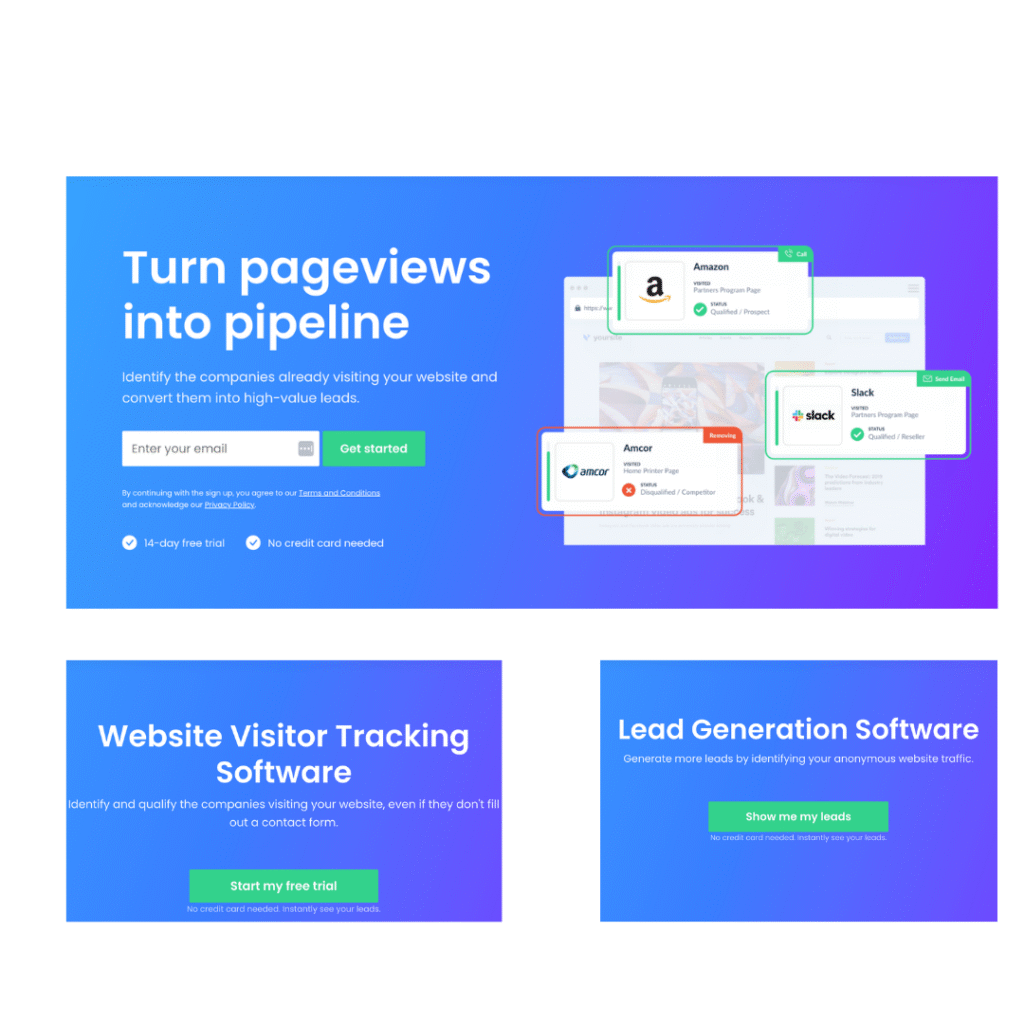
In a highly competitive and regulation-driven industry, generating quality leads is a constant challenge. That’s where Leadfeederfor financial services steps in—helping firms transform anonymous website visitors into actionable sales intelligence.
Whether you’re a private equity firm, wealth advisor, fintech company, or commercial lender, Leadfeeder (now part of Dealfront) offers powerful website visitor tracking that integrates seamlessly with Salesforce to supercharge your lead generation and account-based marketing strategies.
In this guide, we’ll break down how Leadfeeder helps financial professionals identify intent, prioritize prospects, and close more deals—with data-backed confidence.
What Is Leadfeeder (Now Dealfront)?
Leadfeeder, now operating under the Dealfront platform, is a B2B website visitor identification tool that reveals which companies are visiting your site, what content they engage with, and how often they return. It empowers financial firms to understand buyer intent even when visitors don’t submit forms.
By integrating with your Salesforce CRM, Leadfeeder ensures that sales and marketing teams get real-time visibility into high-value visitor behavior—helping financial organizations improve conversion rates, shorten sales cycles, and increase pipeline visibility.
Why Leadfeeder Is a Game-Changer for Financial Services
Financial services firms face a unique set of challenges:
Long, relationship-driven sales cycles
Regulatory limitations on cold outreach
Limited insight into digital buyer behavior
High-value but low-volume deals
Leadfeeder for financial services solves these issues by uncovering invisible buying signals from your web traffic and turning them into prioritized leads your team can act on right away.
Key Benefits of Using Leadfeeder in Financial Services
1. Identify Anonymous Website Visitors
Over 95% of website visitors never fill out a form. For financial services professionals, that’s a lot of missed opportunities.
Leadfeeder identifies which companies are visiting your website—even if they remain anonymous—by matching IP addresses with its proprietary database. It surfaces company names, industries, employee counts, locations, and the specific pages they viewed.
Example: A mid-sized hedge fund visits the “investment strategy” page of your asset management firm’s website multiple times in one week. Leadfeeder flags the company, and your sales team is now empowered to reach out before competitors do.
2. Seamless Salesforce Integration
One of the biggest advantages of Leadfeeder for financial services is its native integration with Salesforce. This allows visitor data to flow directly into your CRM, providing:
Automatic lead or account creation
Lead scoring based on engagement
Workflow triggers and alerts for sales reps
This integration ensures that your business development and relationship managers are always equipped with real-time behavioral data when reaching out to prospects or nurturing existing clients.
3. Supercharge Account-Based Marketing (ABM)
For commercial banks, investment firms, and fintech vendors practicing ABM, Leadfeeder delivers laser-focused visibility into target account engagement.
You can segment site visitors by:
Industry (e.g., real estate, manufacturing, healthcare)
Company size (e.g., 100+ employees for mid-market deals)
Specific content viewed (e.g., case studies, whitepapers, pricing pages)
This allows financial marketers to tailor their outreach and sales enablement content to match the prospect’s interests and stage in the buying journey.
4. Better Lead Qualification and Sales Prioritization
Instead of chasing every visitor or contact, financial professionals can use Leadfeeder’s engagement filters and lead scoring to focus only on high-intent leads.
Sales reps can prioritize leads based on:
Number of visits
Time spent on critical product or service pages
Recent repeat visits
Specific financial product interest (e.g., “business lending” or “retirement planning”)
This improves sales efficiency and increases conversion rates across the board.
5. Compliant and Privacy-Friendly Lead Generation
Unlike tools that rely on cookies or capture personal data, Leadfeeder only tracks company-level information, keeping your lead generation efforts compliant with privacy laws like GDPR and CCPA—essential in the financial sector.
You can uncover warm prospects without invasive tactics or questionable data sources—an important consideration for regulated industries like finance, insurance, and banking.
6. Unify Sales and Marketing Teams Around Website Data
By feeding website intelligence into Salesforce dashboards and marketing automation platforms, Leadfeeder helps align sales and marketing on what’s actually working.
Both teams can track:
Which campaigns drive the most engagement
Which companies return frequently without converting
What kind of content correlates with closed deals
This helps marketing prove ROI while empowering sales with actionable, context-rich data.
Using Leadfeeder and Salesforce for Real-Time Prospecting
Let’s imagine for example that a commercial bank wants to expand into the healthcare sector in the Southeast. The process below describes how you can turn a lead into a qualified opportunity and eventually convert it.
Process:
A healthcare technology company visits the bank’s “business credit lines” and “industry expertise” pages.
Leadfeeder identifies the company and its location.
Salesforce updates the company’s record and notifies the assigned relationship manager.
An email or call is triggered with messaging focused on healthcare lending solutions.
The lead is nurtured into a qualified opportunity and eventually converted.
This kind of real-time, data-informed outreach is what sets financial leaders apart in a saturated market.
Why Choose a Salesforce Partner for Leadfeeder Integration?
While Leadfeeder for financial services is powerful on its own, integrating it with Salesforce and aligning it with your workflows is where the real magic happens.
As a Salesforce consulting company, we help financial institutions:
Integrate Leadfeeder with Salesforce seamlessly
Set up automated workflows and scoring models
Customize dashboards for marketing and sales
Ensure compliance with data handling standards
Our team ensures that your investment in intent data turns into pipeline growth, faster conversions, and measurable ROI.
Leadfeeder for Financial Services Is a Growth Catalyst
In an industry where trust, timing, and relevance are everything, Leadfeeder for financial services provides the data-driven insights needed to reach the right prospects at the right moment.
By combining website intent data with Salesforce CRM workflows, your financial services team can:
Maximize lead quality
Shorten the sales cycle
Improve team alignment
Grow revenue—faster and smarter
LEAD GENERATION STRATEGY
Get Started Today
Want to learn how Leadfeeder and Salesforce can transform your lead generation strategy? Use the button below to book your FREE Leadfeeder Salesforce consultation. We’ll help you integrate, optimize, and get results—fast.
In today’s fast-paced world, productivity hinges on seamless collaboration. That’s why more and more financial services firms and enterprises are turning to Salesforce Slack integration.
By connecting Salesforce and Slack, teams can share data, automate workflows, and make faster decisions without switching between platforms.
Whether you call it Slack and Salesforce integration, Salesforce to Slack integration, or simply Salesforce integration Slack, the result is the same: less friction, more focus, and better outcomes.
When you integrate Slack with Salesforce, updates on new leads, opportunity stage changes, or deal approvals show up instantly in Slack channels. Instead of refreshing dashboards, sales teams respond in real time—shortening the path from prospect to closed deal.
#2 – Streamlined Collaboration Across Teams
With Slack and Salesforce connected, every account, opportunity, or case can have its own dedicated Slack channel. This keeps conversations, files, and context together. Whether you’re in sales, service, or marketing, the integration eliminates silos and helps everyone stay aligned.
What is Slack Anyway?
#3 – Automated Workflows That Save Time
The Salesforce app for Slack allows you to automate routine tasks—such as escalating cases, reminding reps of follow-ups, or assigning handoffs. Notifications arrive directly in Slack, ensuring that nothing slips through the cracks.
#4 – Smarter Decisions with Data on Demand
Leaders no longer have to wait for weekly reports. With sales force and Slack connected, pipeline metrics, forecasts, and service dashboards can be pulled into Slack with a quick command. This provides decision-makers with live data to act faster.
#5 – Enhanced Customer Support
Service Cloud users can set up Salesforce to Slack integration so high-priority cases trigger immediate alerts. Support teams can then swarm the issue in Slack, loop in subject matter experts, and resolve it quickly—boosting customer satisfaction.
#6 – A Unified Platform for Growth
From slack sales force notifications to executive-level snapshots, the integration brings CRM data into Slack where people are already working. The connect Slack to Salesforce setup creates transparency, accountability, and better alignment across the business.
Salesforce Slack Demo (Credits to Salesforce Ben)
No Slacking, The Summary
Investing in Salesforce Slack integration is more than just a technical upgrade. It’s about creating a unified digital workspace where deals move faster, support becomes proactive, and teams stay aligned.
With Salesforce continuing to enhance its ecosystem – including the fast-growing Salesforce app for Slack – organizations that adopt early gain a competitive edge.
Contact Us for Salesforce Slack Integration Consultation Today
Navirum Client Success Stories
Salesforce Slack Integration FAQ
<strong class="schema-faq-question">Where can I get the integration?<br/></strong>
<strong class="schema-faq-question">How long does the integration take to setup?</strong>
For a Salesforce professional, about 2-4 hours with testing. This doesn’t include template design, workflows, approvals. A proper implementation can be any from 20 to 50 hours so the RoI needs to start up!
<strong class="schema-faq-question">What is a Salesforce partner?</strong>
A Salesforce partner is a company or organization that has been officially recognized by Salesforce for its expertise in delivering Salesforce-related services, solutions, or products. Salesforce partners may provide consulting, implementation, customization, integration, or third-party applications (AppExchange apps) to help clients maximize the value of the Salesforce platform. They are part of the Salesforce Partner Program, have access to specialized training and resources, and are recognized for meeting Salesforce’s standards for quality, technical capability, and customer success. Navirum is a certified Salesforce partner.
<strong class="schema-faq-question"><strong>How do financial advisors use S</strong>lack<strong> within Salesforce?</strong>
Financial advisors use Slack integrated with Salesforce to collaborate in real time, coordinate client tasks across teams, and receive automated updates on deals and accounts. This streamlines workflows, reduces email traffic, and ensures faster, more efficient client service by keeping conversations and Salesforce data in one place.
<strong class="schema-faq-question"><strong>How does the integration improve compliance?</strong>
The integration provides automated audit trails, status tracking, and secure storage of signed documents within Salesforce, ensuring that regulatory requirements are consistently met and easily verifiable.3
Navirum is a certified Salesforce and Slack partner, specializing in delivering integrated solutions that streamline digital workflows for financial services and other industries. With deep expertise in both platforms, Navirum helps clients automate processes, accelerate agreements, and maximize value from their Salesforce and Slack investments.
The Salesforce DocuSign Integration streamlines document processes, allowing financial services firms to send, sign, track, and manage client documents directly within Salesforce.
It simplifies workflows by connecting electronic signature functionalities with client records, reducing manual processing steps significantly.
Typical implementation takes 1–3 weeks for basic setups, while complex configurations may take 4–8 weeks or longer.
This integration enhances visibility into document signature status and improves client onboarding experiences through automation.
Firms must evaluate their document volume and complexity to determine if they need DocuSign eSignature or the more comprehensive DocuSign CLM.
Integrating DocuSign with Salesforce allows financial services firms to send, sign, track, and manage client documents directly from Salesforce.
Instead of downloading documents, sending emails, tracking signatures manually, and updating Salesforce records afterward, firms can connect the signature process to their existing CRM workflows.
For financial advisors, RIAs, wealth management firms, banks, insurance companies, and other regulated organizations, this can simplify processes such as client onboarding, advisory agreements, account applications, disclosures, and compliance documentation.
A straightforward DocuSign eSignature implementation may take approximately 1–3 weeks, while more complex implementations involving DocuSign CLM, custom automation, multiple document types, or integrations with other financial systems can require 4–8 weeks or longer.
Setup, Benefits, Costs & Best Practices
This guide explains how DocuSign Salesforce integration works, what it can be used for, how DocuSign eSignature compares with DocuSign CLM, what implementation involves, potential costs, and what financial services firms should consider before getting started.
Question
Answer
What does the integration do?
Connects DocuSign electronic signature workflows with Salesforce records and processes.
Who uses it?
Financial advisors, RIAs, wealth managers, banks, insurance firms, and other organizations using Salesforce.
What documents can be supported?
Client agreements, onboarding documents, applications, disclosures, compliance forms, and other documents requiring signatures.
Can Salesforce data populate documents?
Yes, depending on the configuration and document workflow.
Can Salesforce trigger signature requests?
Yes. Workflows and automation can be configured to initiate document processes.
How long does implementation take?
Approximately 1–3 weeks for straightforward implementations; complex projects may take 4–8 weeks or longer.
Do you need DocuSign CLM?
Not necessarily. eSignature is generally sufficient for straightforward signature workflows, while CLM is designed for more complex contract lifecycle requirements.
Can it support financial-services workflows?
Yes, although the exact configuration depends on the firm’s Salesforce architecture, document requirements, compliance processes, and other systems.
What Is DocuSign Salesforce Integration?
DocuSign Salesforce integration connects electronic signature functionality with Salesforce so users can initiate and monitor document workflows from their CRM.
Without an integration, an advisor or operations employee may need to:
Find the client in Salesforce.
Download or prepare a document.
Open DocuSign separately.
Upload the document.
Enter recipient information.
Send the document.
Monitor the signature separately.
Download the completed document.
Update Salesforce manually.
An integrated workflow can reduce many of these manual steps.
For example, an advisor could open a client record in Salesforce, initiate the appropriate document process, send the document for electronic signature, and then track the status from the CRM.
This creates a connection between the client record, document, signature process, and subsequent Salesforce workflow.
How Does DocuSign Integrate With Salesforce?
A typical Salesforce and DocuSign workflow can look like this:
Salesforce client record → document/template → DocuSign envelope → client signature → status returned to Salesforce → signed document associated with the record → next Salesforce workflow
The exact process depends on how the integration is configured.
A financial services firm might configure a workflow such as:
A new client or household is created in Salesforce.
Required onboarding information is entered.
Salesforce identifies the documents that need to be completed.
A document template is populated with available Salesforce information.
The documents are sent through DocuSign.
The client receives and signs the documents electronically.
DocuSign returns the signature status to Salesforce.
The completed documents and relevant information are associated with the appropriate Salesforce record.
Salesforce automation creates the next task or moves the onboarding process forward.
The goal is not simply to replace a paper signature with an electronic signature. The larger opportunity is to connect document completion with the firm’s broader CRM workflow.
How Financial Services Firms Use DocuSign With Salesforce
Digital Agreement Workflows
How Financial Services Firms Use DocuSign With Salesforce
Document workflows are particularly important in financial services because client onboarding and account servicing often require multiple forms, approvals, disclosures, and signatures.
DocuSign and Salesforce can be used together to support several common financial processes—reducing manual coordination for advisors and operations teams while reinforcing compliance.
Workflow 1 • Automated Onboarding
L'accueil du client
New-client onboarding often involves multiple documents and multiple participants. Connecting DocuSign and Salesforce streamlines required paperwork and reduces manual coordination.
💡 Operational Value: Significantly reduces advisor and operations workload while giving clients a modern, digital onboarding experience.
Workflow 2 • Wealth Management
Advisory Agreements
RIAs and wealth management firms can use electronic signature workflows for advisory agreements and related documentation, replacing slow email attachment exchanges.
Connect to Salesforce Client Record Track Signature Status Real-Time Eliminate Email Attachments Seamless Advisor Onboarding Flow
💡 Operational Value: Links agreement execution directly to the client relationship history in Salesforce for total visibility.
Workflow 3 • Account Servicing
Account Applications & Paperwork
Depending on technology architecture and custodian processes, Salesforce and DocuSign manage a wide range of account servicing and client paperwork.
Account Applications Client Agreements Regulatory Disclosures Authorization Forms Beneficiary Designation Investment Management Forms
💡 Operational Value: Tailors document generation and signing directly to regulatory, operational, and custodian requirements.
Workflow 4 • Governance & Audit
Compliance Documentation
Financial organizations must maintain reliable audit trails. Connecting document flows with Salesforce creates a consistent, verifiable tracking system.
Document Dispatch Timestamps Recipient Open Verification Signature Status & Complete Logs Client & Account Binding
💡 Operational Value: Supports the firm’s broader recordkeeping and regulatory compliance framework through automated audit trails.
1
L'accueil du client
Automate required forms, signatures & CRM tasks.
2
Advisory Agreements
Connect RIA agreement flows to client accounts.
3
Account Applications
Streamline disclosures, beneficiaries & forms.
4
Compliance Records
Maintain consistent audit trails for sent/signed docs.
Connecting Salesforce Financial Services Cloud with DocuSign automates client creation, template generation, e-signatures, real-time status tracking, and downstream operational tasks—eliminating printing and manual paper chasing.
Phase 1 • Initial Entry
Step 1: Create the Client in Salesforce
The advisor creates the client or household record in Salesforce Financial Services Cloud and enters all required personal, financial, and account information.
Primary System: Salesforce FSC
💡 Advisor Benefit: Establishes the single source of truth for household data before generating formal legal documentation.
Phase 2 • Package Selection
Step 2: Determine Required Documents
Based on the client’s specific situation, investment strategy, and account type, the firm identifies the exact set of required advisory agreements, custodian applications, disclosures, and authorizations.
Action: Automated Document Checklist
💡 Advisor Benefit: Prevents missing disclosures or wrong application forms by matching document requirements to account criteria.
Phase 3 • Auto-Population
Step 3: Generate the Documents
Relevant client information stored in Salesforce is automatically mapped to populate configured document templates—eliminating repetitive re-keying and manual data entry errors.
Integration: Salesforce Field Mapping
💡 Advisor Benefit: Ensures complete accuracy across complex onboarding packages with zero manual typing on PDF forms.
Phase 4 • Secure Dispatch
Step 4: Send Documents Through DocuSign
The populated documents are bundled into a secure electronic signature envelope and dispatched to the client and any co-signers with configured signing orders and roles.
Execution: DocuSign eSignature Engine
💡 Advisor Benefit: Dispatches multi-party packages in one click without leaving the Salesforce client page.
Phase 5 • Client Execution
Step 5: Client Signs Electronically
The client receives the secure envelope on any mobile or desktop device and completes the intuitive signing process without printing, scanning, or mailing physical paper.
Client Experience: Mobile-Friendly E-Sign
💡 Advisor Benefit: Delivers a seamless, modern experience that accelerates turnaround time from days to minutes.
Phase 6 • Real-Time Tracking
Step 6: Salesforce Receives the Status
Envelope status updates flow back into Salesforce automatically. Advisors and operations teams monitor whether packages are sent, viewed, signed, or requiring attention.
Sync: Automated Status Write-Back
💡 Advisor Benefit: Gives ops teams complete visibility into outstanding paperwork with full audit trails.
Phase 7 • Automated Completion
Step 7: Complete the Onboarding Workflow
Once all required documents are signed, Salesforce automatically attaches completed PDFs to the record and triggers downstream tasks, custodian notifications, or billing setup.
Automation: Salesforce Flow Triggers
💡 Advisor Benefit: Moves new accounts smoothly from agreement signing directly into active portfolio servicing.
1
Create Client
Enter client details into Salesforce FSC.
2
Required Docs
Identify required forms & disclosures.
3
Generate Docs
Auto-populate templates using CRM data.
4
Send via DocuSign
Package & dispatch envelope to signers.
5
Client Signs
Client completes e-signature digitally.
6
Status Update
Salesforce tracks envelope progress.
7
Complete Flow
Trigger follow-up tasks & ops setup.
Key Benefits of Salesforce and DocuSign Integration
1. Reduce Manual Document Processing
Integrating DocuSign with Salesforce can eliminate many repetitive steps associated with printing, scanning, uploading, emailing, and manually updating records.
Instead of moving information between separate systems, users can manage more of the process from the CRM.
2. Connect Documents to Client Records
When document workflows are connected to Salesforce records, advisors and operations teams can more easily understand the status of client documentation without searching through email threads or separate systems.
3. Improve Visibility Into Signature Status
A connected workflow can provide visibility into whether documents are:
Draft
Sent
Viewed
Signed
Completed
Declined
Waiting for another recipient
This can help teams identify outstanding documents and follow up more efficiently.
4. Accelerate Client Onboarding
Electronic signatures can reduce the delays associated with paper-based processes.
When combined with Salesforce automation, firms can create a more continuous onboarding experience instead of treating document signing as a separate administrative process.
5. Create More Consistent Processes
Reusable templates, standardized workflows, permissions, and automation can help firms reduce variation between employees and departments.
This is particularly important for organizations with defined onboarding and compliance procedures.
6. Support Remote Client Interactions
Clients can generally complete electronic signature workflows without being physically present in an office.
For financial advisors working with geographically distributed clients, this can make onboarding and document completion easier.
Discover The Power of Salesforce Integration with DocuSign!
Are you evaluating the best way to streamline your organization’s document workflows? Here’s why choosing Salesforce and DocuSign integration stands out among leading document management solutions:
Salesforce DocuSign Integration – Credits to Salesforce Ben
1. Superior Efficiency Compared to Manual or Other Tools
Integrating DocuSign with Salesforce eliminates the need to print, sign, scan, or email documents back and forth. Unlike standalone e-signature tools or traditional methods, this integration lets users send, sign, and manage documents entirely within Salesforce. The result: shorter turnaround times and major productivity gains versus competing processes.
2. Best-In-Class Collaboration and User Experience
Salesforce and DocuSign enable multiple stakeholders (sales, legal, operations) to review, edit, and sign contracts or NDAs right from your CRM. This is much more efficient than file-based approaches or endless email threads. With real-time notifications and activity tracking, everyone stays aligned and projects move forward faster.
3. Unmatched Visibility and Real-Time Document Tracking
Unlike generic document platforms, DocuSign Salesforce integration gives users full transparency: track every document’s status (sent, signed, returned) directly in Salesforce. This live dashboard approach helps you spot delays, identify bottlenecks, and keep deals on track, advantages you won’t find in disconnected tools.
4. Enterprise-Grade Compliance and Security
DocuSign’s industry-leading security and compliance solutions (including robust audit trails and encryption) are embedded right into Salesforce workflows. This reduces risk compared to less-secure signing tools and supports regulatory requirements in finance, insurance, and other regulated sectors.
5. Seamless Digital Customer Journey
Customers today expect fast, hassle-free digital interactions. Salesforce and DocuSign deliver a seamless, branded experience (whether for onboarding, contracts, or order processing), improving satisfaction and giving your business a competitive edge over slower, less integrated processes.
DocuSign eSignature vs. DocuSign CLM: Which Do You Need?
Not every Salesforce-DocuSign integration is the same, and picking the wrong one is a common mistake for financial services firms. Standard DocuSign eSignature connects Salesforce records to a simple send-for-signature workflow, ideal for routine forms like account applications or basic client agreements.
DocuSign CLM (Contract Lifecycle Management) goes further: it manages the entire contract process inside Salesforce, from clause-level templates and approval routing to obligation tracking after signature, which matters for RIAs and broker-dealers managing advisory agreements, IPS documents, or custodial paperwork with recurring compliance requirements.
For most independent advisory firms and RIAs, standard eSignature inside Salesforce covers client onboarding and routine paperwork. Firms with more complex approval chains, custodial relationships (for example with LPL Financial or Fidelity), or heavier compliance documentation typically get more value from CLM’s workflow automation and audit trail depth. Navirum can help you evaluate which tier fits your firm’s actual document volume and compliance profile before you commit to a licensing tier.
One of the most important decisions when planning a Salesforce and DocuSign implementation is determining whether standard DocuSign eSignature is sufficient or whether the organization needs DocuSign CLM.
These products address related but different requirements.
Capability
DocuSign eSignature
DocuSign CLM
Electronic signatures
✓
✓
Send documents for signature
✓
✓
Reusable templates
✓
✓
Basic document workflows
✓
✓
Salesforce integration
✓
✓
Complex contract workflows
Limited
✓
Contract lifecycle management
—
✓
Clause management
—
✓
Advanced approval processes
Limited
✓
Post-signature contract management
Limited
✓
Best suited for
Routine signature workflows
Complex contract processes
When Is DocuSign eSignature Enough?
Standard eSignature is often appropriate when the firm’s primary requirement is to:
Send documents for signature.
Collect electronic signatures.
Track signature status.
Use repeatable templates.
Associate completed documents with Salesforce records.
Automate straightforward processes.
For many RIAs and advisory firms, this may be sufficient for routine client onboarding and document workflows.
When Should You Consider DocuSign CLM?
DocuSign CLM becomes more relevant when an organization needs to manage the broader contract lifecycle, rather than simply obtain a signature.
For example, a larger organization may need:
Complex approval chains
Contract authoring
Clause management
Version control
Contract repositories
Obligation tracking
More sophisticated lifecycle workflows
Greater control over contract processes
In these situations, CLM may provide capabilities beyond a standard eSignature implementation.
The right choice depends on the firm’s document volume, contract complexity, approval requirements, compliance processes, and existing technology architecture.
How Much Does DocuSign Salesforce Integration Cost?
The total cost of a Salesforce and DocuSign implementation depends on more than the integration itself.
Potential cost components include:
DocuSign licensing
Salesforce licensing
Integration configuration
Salesforce configuration
Document template development
Workflow automation
Custom development
Testing
User training
Ongoing administration
DocuSign CLM licensing, if required
Integration with other systems
A simple implementation involving a limited number of users and document types can require substantially less effort than a large financial-services deployment involving multiple workflows, approval paths, and external systems.
For this reason, firms should evaluate total implementation scope rather than focusing only on the software license price.
A useful first step is to document:
Number of document types
Number of Salesforce objects involved
Number of users
Number of signature recipients
Required approval paths
Required automation
Storage requirements
Compliance and audit requirements
Other systems that must participate in the workflow
This provides a better basis for estimating implementation effort.
How Long Does DocuSign Salesforce Integration Take to Set Up?
Industry benchmarks put a straightforward AppExchange install, managed package, envelope templates, field mapping, at roughly 1-3 weeks. This applies broadly across Salesforce implementations for financial services firms, from RIAs to broker-dealers.
Firms adding custom workflow automation, CLM, or integrations with a broker-dealer’s existing tech stack more commonly see 4-8 weeks, depending on the number of document types and approval paths involved. Treat these as planning ranges, not guarantees; actual timelines depend on your Salesforce org’s complexity and existing document workflows.
Working with a certified DocuSign implementation partner generally shortens this timeline and reduces rework. For firms layering AI-driven workflows on top of Salesforce, Navirum’s Agentforce consulting practice can extend DocuSign-triggered processes into agentic automation.
Typical Implementation Activities | Navirum
Professional Delivery Roadmap
Typical Implementation Activities
A professional can install and configure a basic integration relatively quickly. However, installation is not the same as implementation.
Template development, workflow design, automation, testing, and governance represent the majority of project effort required to deliver true operational value.
Activity 1 • Scope & Discovery
1. Requirements Discovery
The implementation team collaborates with business stakeholders to thoroughly map out technical boundaries, user roles, and compliance expectations before building components.
🎯 Phase Goal: Build a clear functional blueprint aligning legal compliance, CRM architecture, and end-user requirements.
Activity 2 • Environment Setup
2. Salesforce & DocuSign Configuration
The technical team installs, provisions, and configures the appropriate Salesforce packages and DocuSign admin settings tailored to the firm’s specific security and operational model.
🎯 Phase Goal: Establish a robust, secure technical connection between Salesforce FSC and DocuSign engines.
Activity 3 • Template Engineering
3. Template Development
Standardized, reusable document templates are engineered and mapped directly to Salesforce fields for seamless automated population.
Reusable Template Creation Dynamic Salesforce Data Mapping Anchor Tags & Field Positioning Conditional Logic & Dynamic Form Clauses
🎯 Phase Goal: Eliminate double data entry by auto-generating client documents instantly from CRM data.
Activity 4 • Routing Design
4. Workflow Configuration
The project team establishes precise rules dictating when documents are created, recipient routing order, conditional signers, and post-signing actions.
🎯 Phase Goal: Turn signature completion into automated operational progress across your CRM.
Activity 6 • Quality Assurance
6. Testing
Rigorous end-to-end testing across diverse user profiles, document edge-cases, recipient roles, and permissions in a Salesforce Sandbox.
Multi-User Role Validation Complex Signature Scenarios Field Level Security & Sharing Rules Exception & Rejection Case Handling
🎯 Phase Goal: Guarantee zero technical or compliance glitches before exposing workflows to clients.
Activity 7 • Enablement & Go-Live
7. Training and Deployment
End-users and operations personnel receive hands-on role-based training and documentation prior to production rollout to ensure high adoption.
Role-Based User Enablement Operations & Admin Playbooks Production Migration & Go-Live Post-Launch Hypercare Support
🎯 Phase Goal: Empower team members to confidently execute digital document packages from day one.
1
Requirements
Map docs, objects, roles & compliance scope.
2
Configuration
Setup Salesforce & DocuSign environment settings.
3
Templates
Develop reusable templates & field mapping.
4
Workflows
Establish generation, routing & completion rules.
5
Automation
Configure Salesforce Flow for background tasks.
6
Testing
Validate across users, permissions & edge cases.
7
Deployment
Train users & rollout production environment.
How Does Salesforce + DocuSign Stack Up?
When compared to alternative document management strategies, Salesforce and DocuSign integration consistently delivers:
Faster document turnaround and approval cycles
Centralized tracking and transparency
Higher security and compliance (vs. email or simple e-signature apps)
Improved collaboration across teams and with clients
Ready to see how this integration outperforms other options for your organization? Here below are a few things to keep in mind!
DocuSign Salesforce Integration: Implementation Challenges to Consider
Risk & Process Governance
DocuSign Salesforce Integration: Implementation Challenges to Consider
Connecting two applications is usually easier than designing a reliable business process around them.
Financial services firms should proactively plan for document variations, multi-party routing, data hygiene, security models, and edge-case exceptions before configuration begins.
Challenge 1 • Scope & Variability
Document Complexity
A firm with five standard documents has a very different implementation requirement from one with dozens of documents and numerous conditional variations.
💡 Mitigation Insight: Build automated alerts and clear operational procedures to resolve stuck or voided envelopes instantly.
Can DocuSign Salesforce Integration Support Financial Services Cloud?
Salesforce Financial Services Cloud Compatibility
Can DocuSign Salesforce Integration Support Financial Services Cloud?
Yes, DocuSign workflows can be incorporated into Salesforce environments used by financial services organizations, including implementations built around Salesforce Financial Services Cloud (FSC).
However, the exact solution depends on how the firm’s Salesforce org is configured. A financial-services-specific architecture influences how the DocuSign workflow should be designed.
FSC Core Structure
Person Accounts & Households
Financial Services Cloud heavily utilizes Person Accounts and Household groupings. DocuSign workflows must be engineered to correctly map signer details across individual clients and household entities.
💡 Architectural Note: Ensures e-signatures are bound accurately to both individual Person Account records and overall Household rollup summaries in FSC.
FSC Data Model
Financial Accounts & Custom Objects
FSC tracks specialized Financial Accounts (e.g., investment, banking, trust accounts) and Relationships. Document generation must pull dynamic data from standard and custom objects seamlessly.
💡 Architectural Note: Connects DocuSign envelopes directly to financial account opening and servicing objects within your CRM schema.
FSC Automation Engine
Salesforce Flow & Existing Integrations
Orchestrate automated document generation and dispatch using native Salesforce Flow, seamlessly connecting DocuSign status updates with custodian and back-office platforms.
💡 Architectural Note: Triggers follow-up actions and updates back-office financial platforms instantly upon document execution.
FSC Lifecycle & Governance
Client Lifecycle & Security Architecture
Rather than treating DocuSign as a standalone add-on, integrate e-signatures directly into client lifecycle stages, compliance protocols, and strict FSC permission models.
Embed e-signatures into CRM data models & FSC security.
DocuSign, Salesforce, and Custodian Workflows
Multi-System Integration Architecture
DocuSign, Salesforce, and Custodian Workflows
Financial advisors use Salesforce alongside custodial and portfolio technology (e.g., LPL Financial, Fidelity), creating multi-platform operational ecosystems.
In these environments, DocuSign should not be evaluated in isolation. Implementation teams must map the end-to-end flow of data and agreements across all platforms.
End-to-End Client & Account Integration Lifecycle
STEP 1Prospect
→
STEP 2Salesforce
→
STEP 3Documents & Sign
→
STEP 4Custodian Sync
→
STEP 5Account Service
Stage 1 • Lead Capture
1. Prospect Identification
Initial prospect engagement begins in marketing or referral channels before structured onboarding starts. Intake details are gathered to evaluate account readiness.
Stage 2 • CRM Record & Data Prep
2. Salesforce Household Creation
Advisors establish Person Accounts or Household records in Salesforce FSC, populating client details that serve as the primary source of truth for all paperwork.
Stage 3 • Generation & E-Signature
3. Document Package & DocuSign Signature
Salesforce auto-populates required account packages and dispatches DocuSign envelopes. Clients sign digitally, and completion status updates write back into Salesforce automatically.
Stage 4 • Platform Syndication
4. Custodian Platform Integration
Executed agreements and validated client attributes are transmitted from Salesforce into custodial systems (e.g., LPL Financial, Fidelity) to trigger formal account opening.
Stage 5 • Lifecycle Management
5. Account Opening & Ongoing Service
The account becomes active for trading and portfolio management. Ongoing service requests, maintenance forms, and disclosures continue through connected Salesforce + DocuSign flows.
❌ The Narrow Question
“Can DocuSign integrate with Salesforce?”
✅ The Strategic Question
“How should document signing fit into our complete client and account workflow?”
How Does Salesforce + DocuSign Compare With Manual Processes?
The biggest difference is connectivity.
With a manual process, document activity may be distributed across email, shared drives, DocuSign, spreadsheets, and Salesforce.
With an integrated approach, more of the process can be connected to the CRM.
Manual approach
Salesforce + DocuSign
Email documents manually
Initiate structured document workflows
Track signatures in email
Track status through the CRM workflow
Update Salesforce manually
Return relevant status information to Salesforce
Search for completed documents
Associate documents with client records
Follow up manually
Automate reminders and subsequent tasks
Manage separate processes
Connect document completion to client workflows
The objective is not simply to eliminate paper.
It is to reduce disconnected work and make document activity part of the firm’s broader client lifecycle.
Where Can You Get the DocuSign Salesforce Integration?
The DocuSign solution is available through Salesforce’s AppExchange, although the specific package and product requirements should be confirmed before implementation.
An AppExchange installation, however, should not be confused with a complete implementation. Organizations with complex document workflows may need additional Salesforce configuration, template development, automation, testing, and training.
Do You Need a DocuSign Implementation Partner?
A DocuSign implementation partner is a consulting firm or service provider with expertise in deploying DocuSign solutions and integrating them with systems such as Salesforce.
A partner can help with:
Requirements analysis
Salesforce configuration
DocuSign configuration
Document templates
Workflow design
Automation
Security and permissions
Testing
User training
Deployment
Ongoing optimization
For a simple implementation, internal Salesforce expertise may be enough.
For a financial services organization with multiple document types, complex onboarding workflows, or several connected systems, experienced implementation support can reduce configuration errors and rework.
Is DocuSign Salesforce Integration Right for Your Organization?
Workflow Fit Assessment
Is DocuSign Salesforce Integration Right for Your Organization?
DocuSign and Salesforce form a powerful combination when electronic signatures are treated as part of a broader business workflow rather than a standalone document process.
For financial services firms, the biggest opportunity lies in connecting client data, documents, signatures, compliance, and CRM automation. Evaluate your readiness across these 10 core workflow dimensions.
0 / 10
Initial Assessment (0%)
Check off the workflow requirements your firm has resolved.
0 requirements resolved
|
Scope & Routing1. Which documents need signatures?
Scope & Routing2. How many document types are involved?
Scope & Routing3. Who needs to approve or sign each document?
CRM & Storage4. Which Salesforce records should be associated with documents?
CRM & Storage5. What should happen after a document is signed?
CRM & Storage6. How should signed documents be stored?
Ecosystem & Security7. Does the firm need eSignature or CLM?
Ecosystem & Security8. Are custodian or portfolio platforms part of the workflow?
Ecosystem & Security9. What security and compliance requirements apply?
Scope & Routing10. Which processes stay manual and which are automated?
Navirum Workflow Design Recommendations
Tailored next steps based on your current readiness score.
Recommendation 1
Map Document Types & Signers
Inventory your active forms (advisory agreements, account applications, disclosures) and define signing sequences (client, spouse, advisor, compliance) before configuring DocuSign templates.
Recommendation 2
Define CRM Object Relationships
Determine whether envelopes attach to Person Accounts, Financial Accounts, or Opportunities, and plan Salesforce Flow triggers to automate post-signing tasks and status updates.
Recommendation 3
Evaluate Custodian & CLM Fit
Assess whether standard eSignature handles your needs or if complex redlining requires DocuSign CLM. Map data handoffs between Salesforce, DocuSign, and custodial platforms (e.g., LPL, Fidelity).
Transform Your Company Now | Navirum, Salesforce & DocuSign Integration
Digital Workflow & Agreement Automation
Streamline Agreements with DocuSign & Salesforce
Navirum is a certified Salesforce and DocuSign partner, specializing in delivering integrated solutions that streamline digital workflows for financial services and other industries. With deep expertise in both platforms, Navirum helps clients automate processes, accelerate agreements, and maximize value from their Salesforce and DocuSign investments.
Transform manual signing flows into automated, secure, and compliance-ready digital experiences.
Automate Digital Processes
Trigger e-signatures directly from Salesforce FSC records and custom workflows.
Accelerate Agreement Cycles
Reduce document execution turnaround times from days to minutes.
Maximize CRM Investment
Ensure auditability, security, and full compliance for financial transactions.
<strong class="schema-faq-question">Can DocuSign integrate directly with Salesforce?</strong>
Yes. DocuSign provides Salesforce integration capabilities that allow organizations to connect electronic signature workflows with Salesforce records and processes. The exact functionality available depends on the DocuSign products and Salesforce configuration being used.
<strong class="schema-faq-question">How long does the integration take to setup?</strong>
For a Salesforce professional, about 2-4 hours with testing. This doesn't include template design, workflows, approvals. A proper implementation can be any from 20 to 50 hours so the RoI needs to start up!
<strong class="schema-faq-question"><strong>Is the DocuSign Salesforce integration secure and compliant with regulatory requirements?</strong>
DocuSign provides robust security, encryption, and audit trails for all documents processed through its platform. The integration with Salesforce maintains these standards and helps you comply with industry regulations such as eIDAS, ESIGN Act, and GDPR, depending on your organizational needs.
<strong class="schema-faq-question">Can Salesforce automatically send documents through DocuSign?</strong>
Yes, depending on the integration and configuration. Salesforce automation can be used to initiate document processes based on defined business events or workflow conditions.
<strong class="schema-faq-question">What is a Salesforce partner?</strong>
A Salesforce partner is a company or organization that has been officially recognized by Salesforce for its expertise in delivering Salesforce-related services, solutions, or products. Salesforce partners may provide consulting, implementation, customization, integration, or third-party applications (AppExchange apps) to help clients maximize the value of the Salesforce platform. They are part of the Salesforce Partner Program, have access to specialized training and resources, and are recognized for meeting Salesforce’s standards for quality, technical capability, and customer success.
<strong class="schema-faq-question"><strong>How do financial advisors use DocuSign within Salesforce?</strong>
Financial advisors send, track, and manage client agreements (such as onboarding forms, investment mandates, or compliance documents) for electronic signature directly from Salesforce, streamlining client interactions and accelerating paperwork.
<strong class="schema-faq-question"><strong>How does the integration improve compliance?</strong>
The integration provides automated audit trails, status tracking, and secure storage of signed documents within Salesforce, ensuring that regulatory requirements are consistently met and easily verifiable.
<strong class="schema-faq-question"><strong>Does the integration support mobile use for advisors and clients?</strong>
Absolutely. Both advisors and clients can initiate and complete signature processes from any device, providing the flexibility needed for remote or on-the-go client service.
<strong class="schema-faq-question">Can DocuSign automatically populate documents using Salesforce data?</strong>
Salesforce data can be used to populate configured document templates and workflows, depending on the specific DocuSign solution and implementation. Firms should carefully define field mappings and data requirements before automating document generation.
<strong class="schema-faq-question">Where are signed documents stored?</strong>
The exact document-storage architecture depends on the firm's DocuSign and Salesforce configuration. Organizations should define how completed documents, signature information, and related records should be stored and accessed as part of the implementation.
DocuSign provides security features including encryption and audit trails. However, overall security depends on the complete Salesforce and DocuSign configuration, including permissions, access controls, document storage, integrations, and organizational policies.
<strong class="schema-faq-question">Is DocuSign eSignature or CLM better for an RIA?</strong>
There is no universal answer. An RIA primarily looking to send advisory agreements, onboarding documents, and other routine paperwork for signature may only need eSignature. Firms managing complex contracts, approvals, clauses, obligations, and contract lifecycles may benefit from CLM.
<strong class="schema-faq-question">Can financial advisors use DocuSign with Salesforce for client onboarding?</strong>
Yes. A common use case is connecting client records and onboarding workflows in Salesforce with DocuSign signature processes. This can help advisors and operations teams send documents, track signature status, and connect completed documentation to the client's CRM workflow.
<strong class="schema-faq-question">Can DocuSign work with Salesforce Financial Services Cloud?</strong>
DocuSign can be incorporated into Salesforce environments used by financial services organizations, but the implementation should account for the firm's Financial Services Cloud configuration, Salesforce data model, security requirements, workflows, and other integrations.
Main Navigation CTA Showcase | Navirum
Next Steps & Impact
Explore Navirum Success, Culture & Team
Discover real-world outcomes, learn about our collaborative company culture, and meet the financial technology specialists leading your digital transformation.
Proven Results & Impact
Explore Our Success Stories
See how we help financial institutions, wealth managers, and fintechs turn Salesforce and AI into measurable business outcomes and operational growth.
Subscribe to the Navirum Newsletter | Financial Services Tech Insights
Financial Tech Insights
Sign Up for the Navirum Newsletter
Get the latest perspectives on Salesforce Financial Services Cloud, Agentforce AI, data strategy, and compliance frameworks delivered directly to your inbox.
Delivering Seamless Customer Onboarding with TaskRay
We’re excited to announce a new partnership between Navirumet TaskRay, the leading customer onboarding and project management solution built entirely on the Salesforce platform.
This partnership brings together TaskRay’s powerful, Salesforce-native onboarding tools with our deep expertise in Salesforce consulting, implementation, and process optimization. Together, we’re creating even more value for clients who want to streamline post-sale processes, drive retention, and scale efficiently within their Salesforce ecosystem.
What This Means for Our Clients
By partnering with TaskRay, we can help our clients take control of their onboarding and project delivery workflows like never before. Whether you need to operationalize customer handoffs, improve visibility across teams, or scale onboarding for long-term success, TaskRay paired with our Salesforce solutions delivers a complete, scalable system for customer success — all without leaving the Salesforce environment.
We’re proud to work with TaskRay to help our clients turn first impressions into lasting relationships.
👉 Want to learn how TaskRay can enhance your onboarding and project delivery process?
Navirum and Intercom partner to deliver AI Customer Support in Financial Services
At Navirum, we’re excited to announce a strategic partnership with Intercom, the industry leader in AI-powered customer support platforms. Together, we’re bringing a new era of smart, automated, and compliant customer engagement to the wealth management, banking, and insurance sectors.
Through our strategic, solution implementation, and support services combined with Intercom’s market leading customer support platform, Navirum helps financial institutions streamline operations, resolve inquiries faster, and enhance engagement – driving productivity, compliance, and growth.
This collaboration empowers firms to deliver personalized, compliant, and scalable client experiences—built for the digital era.
We’re proud to be working alongside Intercom to transform how financial services engage with their customers through smart automation and intelligent support tools.
This partnership represents a major step forward in digital transformation for financial services. We’re committed to helping firms harness the power of AI to:
Future-proof client engagement
Improve customer satisfaction
Reduce friction and cost
Stay ahead in an increasingly competitive market
Let’s shape the future of financial services—together!
Ready to Transform Your Customer Support? Learn how Navirum and Intercom can help your firm deliver faster, smarter, and more compliant service.
The Dakota Marketplace Salesforce Integration enhances investment sales and fundraising by embedding institutional investor intelligence directly into Salesforce.
This integration eliminates manual data entry and provides real-time updates, creating a more connected and efficient workflow for investment firms.
Users can access relevant investor information without switching platforms, resulting in cleaner data management and improved prospecting capabilities.
By maintaining accurate and up-to-date records, the integration supports better decision-making and faster actions on investment opportunities.
Overall, Dakota Marketplace Salesforce Integration transforms how teams manage relationships and drive growth through actionable intelligence.
Dakota Marketplace Salesforce Integration: Turn Investor Intelligence Into a Growth Engine
Estimated reading time: 16 minutes
Investment firms have access to more data than ever—but having the data is only half the challenge.
For investment sales, fundraising, and investor relations teams, the real competitive advantage comes from being able to access the right investor intelligence at the right time and act on it directly within the systems where work happens.
That is where the Dakota Marketplace Salesforce integration can make a significant difference.
By connecting Dakota Marketplace for Salesforce App with Salesforce, firms can bring institution-level investor intelligence directly into their CRM environment. Instead of switching between Salesforce and external research platforms, teams can access relevant investor information, market signals, relationship data, and fundraising intelligence within their existing Salesforce workflows.
For investment managers, private equity firms, real estate managers, hedge funds, and other alternative investment organizations, this creates an opportunity to transform Salesforce from a system of record into a more intelligent platform for prospecting, relationship management, fundraising, and growth.
What Is the Dakota Marketplace Salesforce Integration?
Dakota Marketplace provides institutional investor intelligence designed to help investment professionals research prospects, understand investment activity, and identify fundraising opportunities.
The Salesforce integration brings that intelligence into the CRM.
Rather than requiring users to manually research an investor in Dakota, copy information into Salesforce, update records, and then repeat the process as information changes, the integration creates a more connected workflow between the two platforms.
Relevant Dakota Marketplace information can be surfaced directly within Salesforce, giving users greater visibility into investor accounts, contacts, investment activity, and other intelligence while they manage their relationships.
The result is a more centralized environment where teams can:
Research institutional investors
Identify and prioritize prospects
Monitor changes in investor organizations
Track fundraising opportunities
Manage contacts and relationships
Analyze pipeline activity
Build more targeted outreach campaigns
Automate follow-up activities
Use investor intelligence to support AI-powered workflows
Instead of treating investor intelligence and CRM data as separate resources, firms can connect the two to create a more complete picture of their institutional relationships.
Why Connect Dakota Marketplace to Salesforce?
For many investment organizations, investor intelligence is spread across multiple systems, making it difficult for fundraising and investor relations teams to access the information they need when they need it. A typical fundraising workflow may involve researching an institution in one platform, finding the right contact in another, reviewing recent investment activity somewhere else, and then manually transferring relevant information into Salesforce.
As a result, valuable time is spent moving information between systems rather than acting on it.
Moreover, this fragmented approach can create a range of operational challenges, including:
Duplicate or inconsistent records
Outdated contact and account information
Incomplete investor profiles
Repetitive manual data entry
Inconsistent or duplicated research
Delays in following up on relevant opportunities
Lower Salesforce adoption among fundraising teams
Limited visibility into pipeline activity
Increasing data administration and maintenance costs
Over time, these challenges can affect more than operational efficiency. When investor intelligence is disconnected from CRM data, teams may also miss important signals, struggle to prioritize opportunities, and spend valuable time piecing together information that should already be available in one place.
From Fragmented Data to Actionable Intelligence
Connecting Dakota Marketplace with Salesforce helps address this disconnect by bringing external investor intelligence into the CRM environment where fundraising teams already manage their relationships, opportunities, and activities.
However, the value of the integration goes beyond simply displaying Dakota data inside Salesforce. The real opportunity lies in combining Dakota’s institutional investor intelligence with the firm’s own CRM data to create a more complete and actionable view of each account.
For example, a fundraising professional may already have an established relationship with an institutional investor recorded in Salesforce. Salesforce can provide the firm’s history of interactions, meetings, opportunities, activities, and contacts. At the same time, Dakota Marketplace can add relevant intelligence about the institution, including available information about investment activity, organizational changes, and other market signals.
When these sources of information are brought together, fundraisers no longer have to piece together an investor’s story across multiple platforms. Instead, they can access a richer account view directly within Salesforce and use that context to determine what action should come next.
This shifts the question from:
“Who is this investor?”
to a much more valuable set of questions:
“What do we already know about this investor? What has changed? What is the history of our relationship? Is there a relevant opportunity? And what should we do next?”
Ultimately, connecting Dakota Marketplace to Salesforce helps transform investor data from a collection of disconnected information into actionable intelligence that can support prospecting, relationship management, pipeline development, and more timely decision-making.
A Single Source of Truth for Investor Relationships | Navirum
Marketplace & CRM Sync
A Single Source of Truth for Investor Relationships
Connecting Dakota Marketplace intelligence with Salesforce Financial Services Cloud (FSC) keeps institutional accounts, contact roles, allocations, and market signals updated automatically—eliminating manual research and stale CRM data.
The Data Stale-Out Risk
1. The Investor Data Challenge
One of the biggest challenges facing investment sales and investor relations teams is maintaining accurate CRM data over time. Institutional relationships are dynamic, not static.
What changes constantly across your LP universe:
✕
Investor Organizations: Mergers, name shifts & mandates
✕
People & Roles: Key decision-makers move frequently
✕
AUM & Allocations: Portfolio rebalancing & capital shifts
✕
New Opportunities: Emerging RFPs & searches
⚠️ Manual Danger: Maintaining records manually causes Salesforce data to become quickly outdated, wasting fundraiser hours on stale contacts.
Automated CRM Enrichment
2. Dakota Marketplace + Salesforce FSC
Connecting Dakota Marketplace directly into Salesforce Financial Services Cloud incorporates live, verified institutional market intelligence right into your team’s everyday workspace.
Operational advantages for sales teams:
✓
360° LP Profile: Maintains a current, complete view of institutional accounts
✓
Zero Research Drag: Eliminates manual copying, pasting, and web searches
✓
Automatic Contact Sync: Keeps job roles, phone numbers, and emails live
✓
Proactive Alerts: Triggers notifications when key LP allocations shift
💡 Strategic Impact: Gives fundraisers a real-time single source of truth without spending hours on administrative data entry.
13 Synchronized Data Signals
3. 13 Key Investor Intelligence Points
Depending on integration configuration and Dakota data availability, sales and IR teams can access and work with rich investor intelligence natively inside Salesforce:
Market Signals: Fund presentations, public plan activity, RFPs & news
💡 Strategic Impact: Replaces fragmented web portals with a unified, enriched CRM database.
Downstream Excellence
4. Why Data Quality Matters
Clean CRM data is not merely an administrative checkbox. Data quality directly dictates the accuracy and performance of every sales and marketing initiative.
High-quality data elevates 9 critical business functions:
Relationship Management, Executive Reporting & AI Workflows
💡 Strategic Impact: Clean data transforms Salesforce from a passive archive into an active, high-return revenue engine.
Enterprise Growth Engine
5. Maximizing Platform Utility
The better the underlying data, the more useful Salesforce becomes as a core business platform. High-integrity data fuels advanced automation, Agentforce AI agents, and executive forecasting.
✓
AI Agent Grounding: Powers Agentforce with clean, verified LP contexts
✓
Board-Level Clarity: Reliable pipeline reporting for C-suite decision making
✓
Advisor Adoption: Fundraisers trust the CRM when contact data is guaranteed fresh
💡 The Core Bottom Line: “The better the underlying data, the more useful Salesforce becomes as a business platform.”
13 Key Investor Intelligence Data Signals Integrated into Salesforce
Investment opportunities can be highly time-sensitive.
A contact may move into a new role. An institution may announce a new allocation. A public plan may publish information relevant to an investment strategy. An RFP may create a new opportunity.
When teams discover these signals days or weeks after they occur, the opportunity to engage at the right moment may already be gone.
Dakota Marketplace’s data and update capabilities can help bring relevant changes into Salesforce so teams can incorporate them into their existing workflows.
The integration can support automatic synchronization of relevant information, including updates associated with areas such as:
New allocations
Consultant coverage
13F filings
Fund presentations
Public plan minutes
RFP alerts
Job and role changes
Fundraising news
For organizations using the integration’s available automatic synchronization capabilities, updates can be delivered as frequently as every 15 minutes.
This creates a fundamentally different prospecting model.
Instead of asking:
“Who should we contact?”
teams can begin asking:
“Which accounts have changed, and which changes require action?”
That distinction is important because it moves fundraising from a static list-management process toward a more signal-driven approach to business development.
A major advantage of the integration is that users do not necessarily need to leave Salesforce to access relevant Dakota Marketplace functionality.
The embedded experience can provide access to native Salesforce tabs and views for areas such as:
Accounts
Contacts
Metro Areas
Investments
Searches
News
This creates a more seamless user experience for teams that already rely on Salesforce as their primary CRM.
Instead of switching between applications, users can work within the Salesforce environment they already know.
Why this matters for Salesforce adoption
CRM adoption often suffers when users perceive Salesforce as an administrative system rather than a tool that helps them do their jobs.
If a fundraiser has to leave Salesforce to conduct research, find investor intelligence, or validate account information, Salesforce becomes only one part of the workflow.
Embedding relevant intelligence directly into Salesforce changes that dynamic.
The CRM becomes more useful because it contains not only the firm’s own relationship history but also the external intelligence required to make better decisions.
The goal is simple:
Make Salesforce the place where fundraising professionals work, not another system they have to work around.
5 Ways Dakota Marketplace and Salesforce Can Support Growth | Navirum
Marketplace & CRM Sync
5 Ways Dakota Marketplace & Salesforce Support Growth
Connecting Dakota Marketplace intelligence with Salesforce Financial Services Cloud empowers fundraising, relationship management, and sales teams to scale institutional capital raising.
Institutional Sourcing
1. Improve Institutional Prospecting
Finding the right institutional investors is fundamental to fundraising. However, prospecting is not simply about building a large list of potential investors. Teams need to understand which organizations are relevant, what they invest in, who influences decisions, and when there may be a reason to engage.
By bringing Dakota intelligence into Salesforce, sales teams can:
Prioritize accounts based on available market signals
💡 Strategic Impact: Transforms generic list-building into a targeted, highly informed prospecting engine.
Signal Intelligence
2. Identify High-Intent Opportunities
Not every investor represents the same opportunity at the same time. A change in investment activity, a new role, an RFP, or another market signal may indicate that an account deserves immediate attention.
When Dakota intelligence is available inside Salesforce, teams turn data into action:
✓
Dakota Intelligence: An institutional investor shows a relevant change in investment activity.
✓
Salesforce FSC Data: Your firm already has an established relationship with a decision-maker at that institution.
✓
Automated Workflow: Salesforce creates an immediate follow-up task for the appropriate fundraiser.
✓
Business Outcome: The team acts on the high-intent signal while it is still fresh and relevant.
💡 Strategic Impact: Bridges external market signals with internal relationship context so fundraisers never miss a window of opportunity.
Relationship Engagement
3. Personalize Investor Outreach
Generic outreach is rarely the most effective way to build institutional relationships. Fundraising teams need context. Salesforce contains previous interactions, meetings, opportunities, activities, and relationships, while Dakota provides crucial market context.
Tailor institutional outreach based on rich, combined context:
✓
Investor allocation preferences and asset class interests
Salesforce is the central platform for managing fundraising pipelines, but reporting is only as reliable as the data behind it. Connecting Dakota Marketplace intelligence with Salesforce provides additional data points for segmentation, reporting, and executive analysis.
Helps sales leaders answer critical questions with confidence:
✓
Which prospects are truly active and progressing?
✓
Which accounts require immediate attention or escalation?
✓
Which relationship networks are evolving or shifting?
✓
Which market segments generate the highest fundraising activity?
💡 Strategic Impact: Gives leaders real-time executive dashboards combining live CRM activity with investor market intelligence.
Agentforce & AI
5. Create a Foundation for AI-Powered Fundraising
One of the most compelling opportunities comes from combining connected investor data with Salesforce’s AI capabilities. AI is only as useful as the data it can access. Connecting Dakota Marketplace with Salesforce creates a richer data foundation for AI-driven workflows.
<strong class="schema-faq-question">How does Dakota Marketplace Salesforce integration improve institutional investor data management?</strong>
A Dakota Marketplace Salesforce integration helps investment firms bring institutional investor intelligence into the CRM environment where their teams already manage accounts, contacts, opportunities, and relationships. Instead of manually researching investor information and updating Salesforce records, teams can connect relevant Dakota data with their existing CRM data. This can help reduce duplicate records, minimize manual data entry, improve data consistency, and provide fundraisers with a more complete view of institutional accounts. The integration can also help organizations establish a stronger data foundation for Salesforce reporting, automation, and AI-powered workflows.
<strong class="schema-faq-question">How can investment firms use Dakota Marketplace data to improve Salesforce prospecting and fundraising workflows?</strong>
Investment firms can combine Dakota Marketplace’s institutional investor intelligence with Salesforce account, contact, opportunity, and activity data to create more targeted prospecting workflows. For example, teams can identify relevant investors, monitor changes in roles or investment activity, and use those signals to prioritize accounts for outreach. Salesforce automation can then be used to create tasks, notifications, or follow-up activities based on defined business rules. This allows fundraising teams to move from manually researching large lists of prospects toward a more proactive, signal-driven approach to identifying and engaging potential investors.
<strong class="schema-faq-question">Can Dakota Marketplace Salesforce integration support AI and Agentforce use cases?</strong>
Yes. Connecting Dakota Marketplace data with Salesforce can provide a stronger data foundation for AI-powered workflows, including Salesforce Agentforce. AI agents require access to relevant, reliable, and contextual data to generate useful recommendations and take appropriate actions. With investor intelligence available alongside Salesforce relationship and pipeline data, organizations can explore use cases such as investor account summaries, prospect prioritization, meeting preparation, personalized outreach, follow-up recommendations, and identifying accounts that may require attention. Before deploying these use cases, firms should establish appropriate data governance, permissions, security controls, and human oversight.
<strong class="schema-faq-question">What should investment firms consider when implementing a Dakota Marketplace Salesforce integration?</strong>
A successful implementation requires more than installing an AppExchange application. Firms should first determine which Dakota data is most valuable to their business processes and how that information should relate to existing Salesforce accounts, contacts, opportunities, and custom objects. Other considerations include data mapping, duplicate management, synchronization rules, user permissions, security, reporting requirements, automation, and Salesforce governance. It is also important to define how users will incorporate Dakota intelligence into their daily workflows. A well-designed implementation should improve the user experience rather than simply add another source of information to Salesforce.
<strong class="schema-faq-question">How can Navirum help organizations maximize the value of their Dakota Marketplace Salesforce integration?</strong>
Navirum can help investment and financial services organizations move beyond basic integration and build a Salesforce environment that makes Dakota Marketplace data actionable. This can include integration planning, Salesforce architecture, data mapping, configuration, workflow automation, dashboards and reporting, data governance, and user adoption. Navirum can also help firms identify opportunities to extend the connected data environment into Salesforce AI and Agentforce use cases. The goal is to ensure Dakota Marketplace becomes part of a scalable Salesforce strategy that supports prospecting, fundraising, relationship management, analytics, and long-term growth.