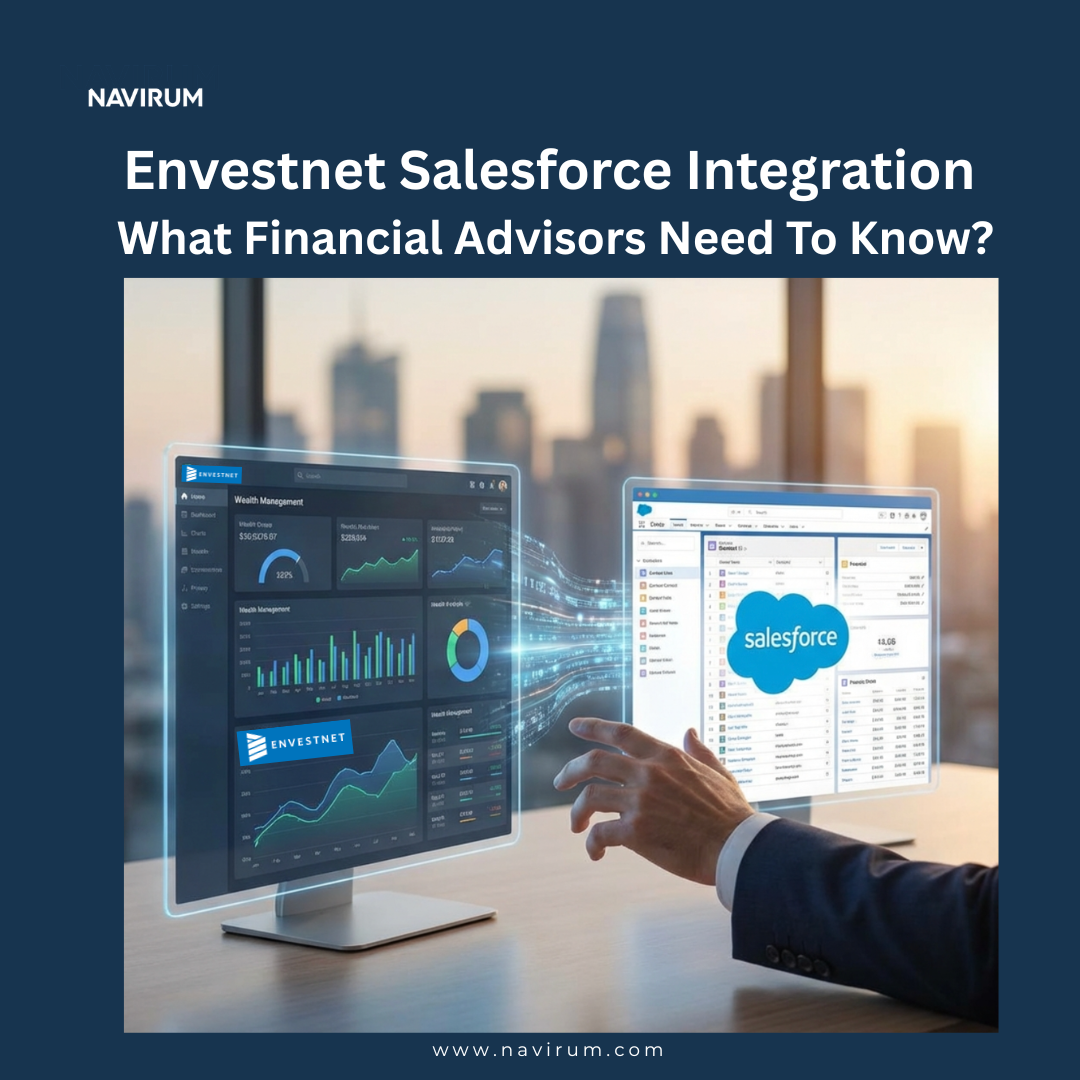

Key Decisions Behind Your Envestnet–Salesforce Integration
Integrating Envestnet with Salesforce isn’t just a technology upgrade. It’s a strategic move for wealth management firms and financial advisors looking to streamline workflows, improve client insights, and deliver personalized advice more efficiently.
A successful Envestnet–Salesforce integration reduces time spent on administrative tasks, ensures reliable client data, and creates a centralized advisor workspace where dashboards, accounts, and insights all live in one place.
Here’s a brief guide for financial advisors and wealth management teams on how to get the most from this integration.
1. A Single, Trusted Client Record
The integration starts with a simple principle: every client should have one central record in Salesforce. By linking Envestnet accounts to the Salesforce Person Account, you get a complete view of each client’s individual accounts and total household assets, without manual calculations or switching between systems.
This means answers to questions like “What are my client’s total investable assets?” or “Which accounts need attention today?” are instantly visible, giving you more time for strategic advice rather than data hunting.
2. The Right Information at the Right Time
Not all Envestnet data is needed daily, and clutter can reduce efficiency. Integration allows financial advisors to structure data for maximum usability:
- Operational Layer (Advisor-Facing): Key balances, account status, liquidity alerts, everything you need for daily client conversations. Fast, simple, and mobile-ready.
- Analytical Layer (Management & Risk): Deep-dive insights like performance trends, asset allocation, and risk metrics. Available on dashboards or embedded views for when you need to analyze portfolios.
- Supervisory & Compliance Layer: Data required for audits, KYC, and suitability reviews, ensuring your advice meets regulatory standards without cluttering your view.
By layering the information, advisors access exactly what they need when they need it, improving workflow efficiency and client responsiveness.
3. Reliable Data You Can Trust
Confidence in your data is non-negotiable. The integration shows where numbers come from and when they were last updated, so you never have to second-guess your insights. For example:
- Metrics like AUM are consistent across Salesforce, Envestnet, and reports
- Metadata such as “Last refreshed from Envestnet: 09:15 EST” ensures you know the data is current
- You can rely on these numbers in client meetings, performance reviews, and compliance checks
A solid data strategy turns Salesforce into your single source of truth, freeing you to focus on client relationships instead of reconciling spreadsheets or switching platforms.
4. A Workspace Built Around Advisor Workflow
Your client record should be the single place where all critical information is front and center. A core Envestnet component should sit prominently on the Person Account page, ideally in a highly visible spot, think top left, right under the client’s basic info.

Why it matters for you:
- Instant insights: Open a client record, and the data you need (balances, allocations, goals) is right there.
- Seamless workflow: Salesforce feels like the natural workspace for advice, not a patchwork of disconnected tools.
- No more context switching: You don’t have to “just log into Envestnet” and risk losing focus or missing key details.
Small UI choices like this can dramatically improve adoption, making your day-to-day work faster, easier, and more prod
5. Reliable Data Equals Better Client Outcomes
Complete and accurate client data directly impacts investment strategy and service quality. With a properly configured Envestnet–Salesforce integration:
- All accounts and transactions are reflected accurately
- Data gaps are identified and resolved promptly
- Dashboards represent true client portfolios
Advisors can focus on providing actionable recommendations, proactive planning, and risk management, enhancing client satisfaction.
6. Dashboards That Drive Advisor Action
Sometimes, certain accounts, transactions, or time periods may not appear correctly in Salesforce. These gaps can quickly erode your confidence in the system. To prevent that:
- Work through a prioritized list of missing or inconsistent data rather than tackling issues randomly.
- Compare Envestnet records with what appears in Salesforce to spot discrepancies early.
- Document patterns of impact (e.g., certain account types or custodians) so fixes can be targeted and permanent.
By proactively addressing these gaps, you avoid frustration and keep Salesforce your trusted client-facing workspace.
7. Less Admin, More Client Time
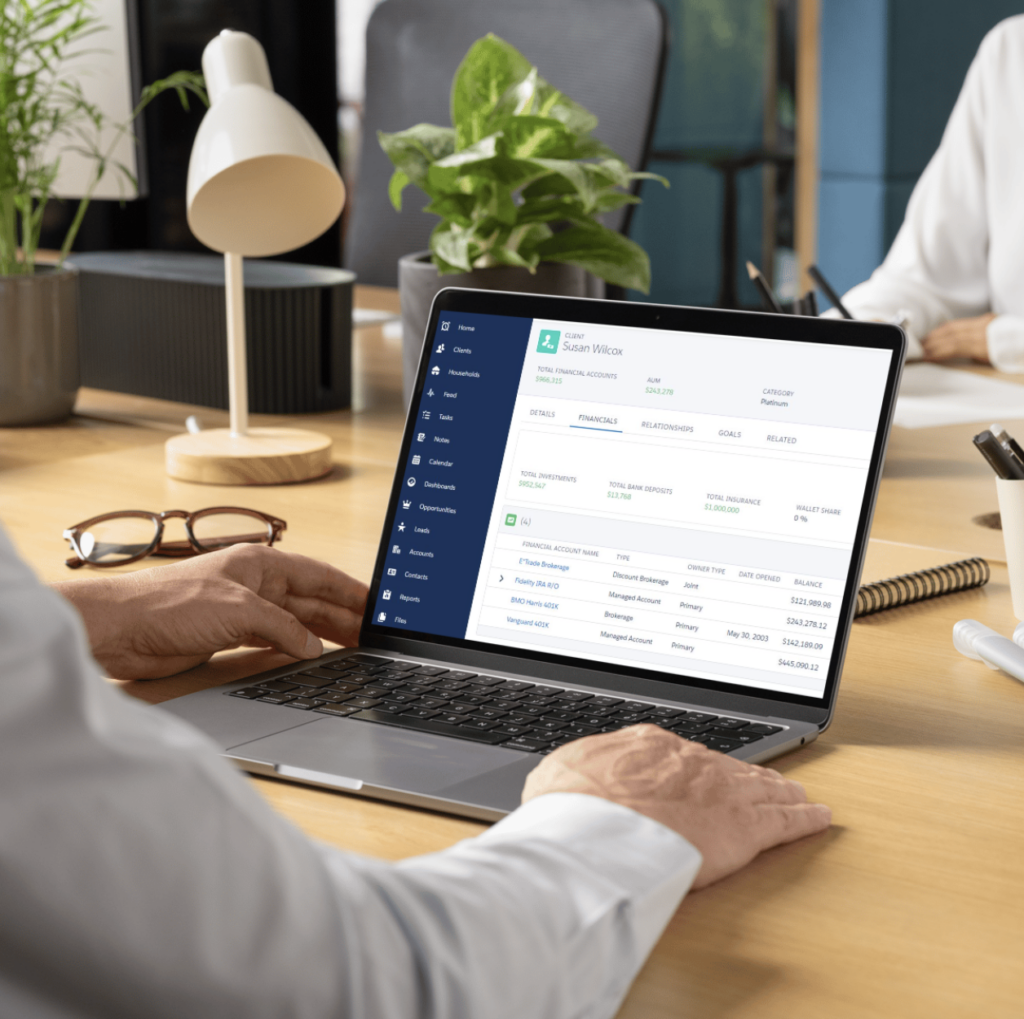
Integrating Envestnet and Salesforce reduces repetitive administrative tasks:
- Eliminates the need to switch between systems
- Reduces manual data reconciliation
- Speeds report generation
This frees advisors to focus on strategic planning, personalized recommendations, and strengthening client relationships.
8. Measuring ROI from Envestnet–Salesforce Integration
Measuring the return on integration is essential for justifying investment and guiding future decisions. However, ROI in this context is not always straightforward.
Some benefits, such as time savings, can be quantified relatively easily. Others, such as improved client satisfaction or stronger relationships, are more difficult to measure but equally important.
To get a complete picture, firms should combine quantitative and qualitative metrics. This might include tracking advisor productivity alongside client feedback and retention rates.
It is also important to take a long-term view. While some benefits are immediate, others, such as increased AUM or improved client loyalty, may take time to fully materialize.
To maintain executive investment, tie the integration to business-level KPIs that leadership cares about. Track:
- Improved time-to-detect for supervisory exceptions.
- Reductions in advisor preparation time per client review.
- Increases in Salesforce adoption (e.g., fewer “swivel chair” logins between systems).
- AUM growth, client acquisition rates, and operational efficiency.
9. Preparing for the Future: AI and Automation
A unified Envestnet–Salesforce ecosystem enables advisors to leverage AI and automation:
- AI-driven insights predict client needs and recommend actions
- Routine workflows are automated for efficiency
- Advisors can focus on high-value, strategic decisions
Integration lays the foundation for advanced wealth management technology, helping firms stay competitive and forward-looking.
Navirum Recommendations

To maximize the value of an Envestnet–Salesforce integration, firms should draw on a proven track record and:
- Design the experience around advisors: Place the most important client data front and center to drive adoption and efficiency.
- Invest in data quality: Resolve gaps early and ensure consistent, accurate account information.
- Iterate continuously: Use advisor feedback to refine dashboards, workflows, and visibility.
- Partner with experienced integration specialists: Ensure system reliability, scalability, and future-ready capabilities, including AI and automation.
Following these steps ensures the integration becomes a true advisor productivity and client engagement tool, not just a backend system.
Your Envestnet–Salesforce Integration Questions, Answered
Wondering about data accuracy, dashboards, ROI, compliance, or where AI fits? The questions advisors ask most, answered in one place.
View all 10 questions
How does integration improve household-level insights?
It consolidates all client accounts into Salesforce, providing a complete view of household assets and enabling more proactive financial planning.
What ensures data accuracy between Envestnet and Salesforce?
Strong data governance, scheduled syncs, exception reporting, and continuous monitoring keep advisor data consistent and reliable. We apply the same discipline to governing AI access to Envestnet data.
How should dashboards balance operational efficiency and compliance?
Layered dashboards provide operational insights for daily decisions, analytical metrics for portfolio management, and compliance overlays for audit purposes.
What are the most common integration challenges?
Account mapping, sync delays, and data inconsistencies; mitigated through careful planning, testing, and collaboration with Envestnet.
How can ROI be quantified?
Measure advisor time saved, Salesforce adoption, AUM growth, client retention, and operational efficiency to evaluate the integration’s impact.
How can AI and automation be leveraged?
Unified data allows AI to predict client needs, suggest actions, and automate routine follow-ups.
How should advisors prioritize Envestnet data in Salesforce?
Focus on actionable metrics like balances, alerts, and goal progress; deeper or compliance-heavy data can be layered for optional access.
How does integration support compliance monitoring?
Embed compliance alerts within workflows to ensure advisors are informed in context without disrupting daily operations.
How should firms approach workspace improvements?
Start with a minimum viable layout, collect advisor feedback, iterate dashboards and field placements, and optimize performance over time.
How does integration support scalability?
A centralized, accurate system reduces admin burden and allows advisors to manage larger client bases without sacrificing service quality. Ongoing platform support is what keeps that service quality consistent over time.