
What is the Envestnet Salesforce Integration?
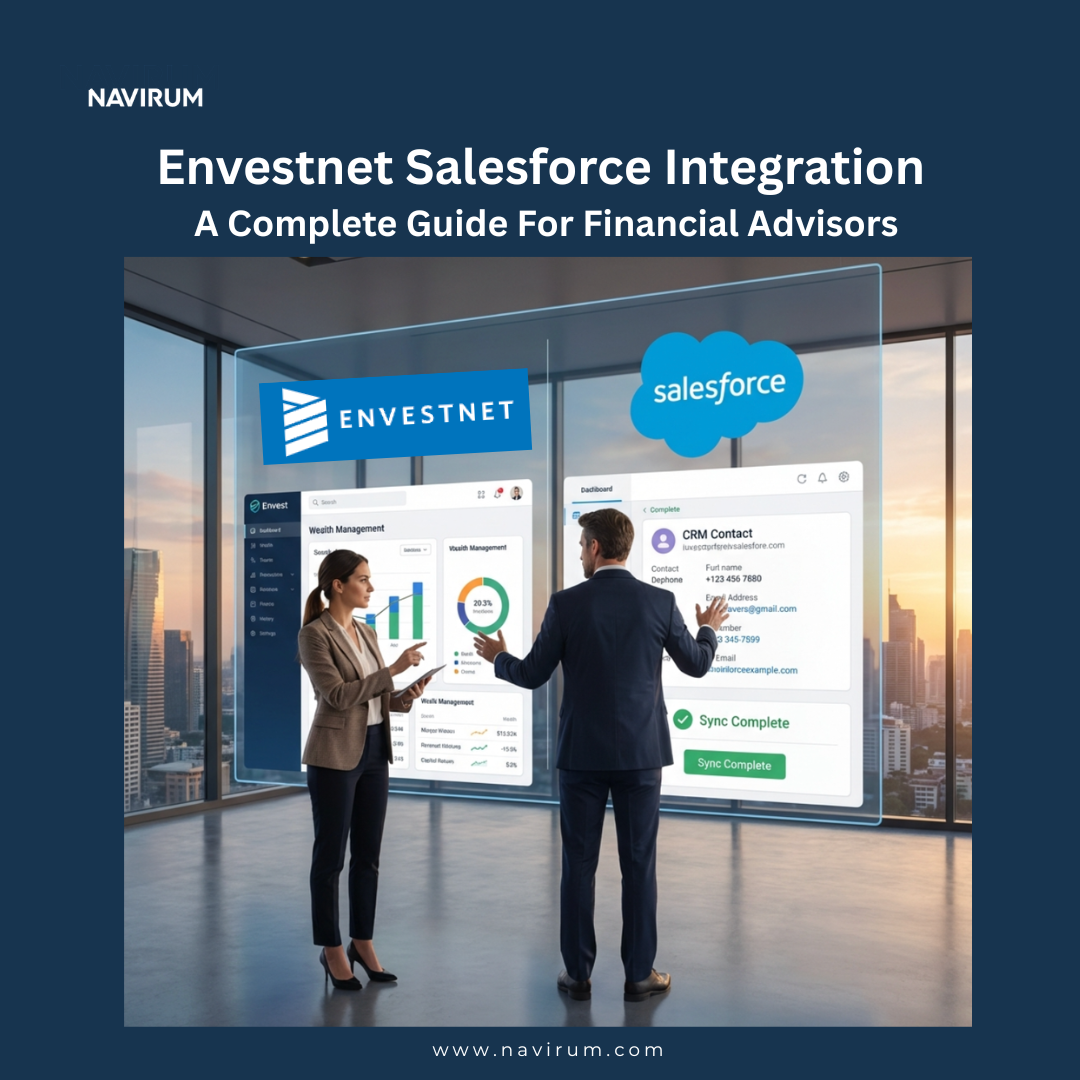
The Envestnet Salesforce integration helps financial advisors unify CRM, portfolio management, and financial planning into a single platform. This guide focuses on integrating Salesforce with the broader Envestnet platform (including portfolio data, aggregation, and investment infrastructure), rather than specific advisor-facing tools like Tamarac or financial planning tools like MoneyGuide.
1. The Integration Imperative
Wealth management firms thrive or fail based on the quality, timeliness, and accessibility of their data. For many advisors, Envestnet serves as the powerful engine behind portfolio management, while Salesforce acts as the ultimate system of record for managing client relationships. However, many financial advisors still operate across disconnected platforms—switching between CRM, portfolio management, and financial planning tools.
The core challenge in wealth management today is data fragmentation. Advisors are expected to deliver holistic advice, yet the systems they rely on often operate in silos.

In practice, this means advisors constantly switch between tools—one for CRM, another for portfolio management, and another for planning. Each switch introduces friction, increases the risk of errors, and reduces the time available for meaningful client engagement.
When these systems do not communicate seamlessly, the impact is immediately felt: advisors waste valuable time hunting for data, lose trust in the accuracy of their client-facing metrics, and struggle with stalled workflows. To deliver the scalable, personalized, and efficient experience modern clients expect, firms must treat the integration between Envestnet and Salesforce not just as a technical point-connection, but as a strategic enterprise architecture decision.
The Envestnet–Salesforce integration addresses this by establishing a single source of truth. Instead of navigating multiple systems, advisors can operate from a centralized interface where all relevant data is accessible and actionable.
Beyond efficiency, integration is also about competitiveness. Firms that unify their data can respond faster to client needs, identify opportunities earlier, and deliver a more seamless digital experience—capabilities that are quickly becoming table stakes in the industry.
2. Why Envestnet-Salesforce Integration matters?
Most advisory firms already use both Envestnet and Salesforce, but the connection is often an overlooked afterthought. This forces you to bounce between two systems:
- You log into Envestnet for up-to-the-minute portfolio details.
- You log into Salesforce for your notes, tasks, and household context.
The impact of this separation is subtle, but it’s fundamentally inefficient:
- Fragmented Advisor Workflows: Answering simple client questions like “What’s my total investable assets?” requires multiple clicks and systems.
- Low Trust in Data: If a portfolio balance in Salesforce doesn’t match what you see in Envestnet, you—and your clients—stop trusting Salesforce as the single source of truth.
- Manual Workarounds: You or your staff waste time creating spreadsheets, ad-hoc reports, and one-off dashboards to reconcile data behind the scenes.
A thoughtful, advisor-centric integration aims to:
- Make Envestnet data visible, contextual, and reliable inside Salesforce.
- Turn Salesforce into the single pane of glass for all client interactions.
- Maximize your client-facing time by eliminating unnecessary data searches.
3. What does the Envestnet–Salesforce integration include?
The integration is not a single feature but a layered set of capabilities that connect CRM, planning, and investment management into a unified experience.

At its core, it enables data to flow between systems in a way that feels seamless to the advisor. Client information entered in one system becomes instantly available in another, eliminating duplication and ensuring consistency across the firm.
Another important aspect is contextual visibility. Advisors don’t just see raw data—they see insights in context. For example, portfolio performance can be viewed alongside client goals, making it easier to have meaningful conversations that tie investments back to outcomes.
This integration also supports end-to-end workflows, from prospecting to onboarding to ongoing relationship management. Rather than treating each stage as separate, the platform connects them into a continuous journey, improving both advisor efficiency and client experience.
4. Integration methods: How it works technically
From a technical perspective, the integration relies on APIs, data mapping, and middleware to connect systems that were not originally designed to work together.
While the underlying architecture can be complex, the goal is simple: ensure that the right data is available in the right place at the right time. This requires careful planning around data structures, synchronization frequency, and system dependencies.
One of the most critical components is data mapping. Wealth management data is inherently complex, with relationships between households, accounts, and beneficiaries. Mapping this accurately between Envestnet and Salesforce is essential to maintaining data integrity.
Additionally, firms must decide how data should flow—whether in real time or in scheduled batches. Real-time integrations support immediate insights but require more robust infrastructure, while batch processes are simpler but may introduce delays.
Ultimately, the technical implementation should align with business priorities. A well-designed integration is not just technically sound—it is optimized for how advisors actually work.
5. The Core Business Benefits of Integration
Integrating these two powerful platforms transforms Salesforce into a true “advisor workstation” powered by real-time portfolio data. The most immediate benefit of integration is improved efficiency. By eliminating manual data entry and reducing system switching, advisors can reclaim significant amounts of time.
However, the impact goes far beyond productivity. Integration enables a more holistic approach to advice, where decisions are informed by a complete view of the client’s financial situation.
This leads to stronger client relationships. Advisors can proactively reach out with relevant insights, rather than reacting to events after the fact. Over time, this shift from reactive to proactive service becomes a key differentiator.
There is also a clear link to revenue growth. With better data and insights, advisors can identify opportunities to expand relationships, increase wallet share, and improve client retention—all of which contribute to long-term AUM growth.
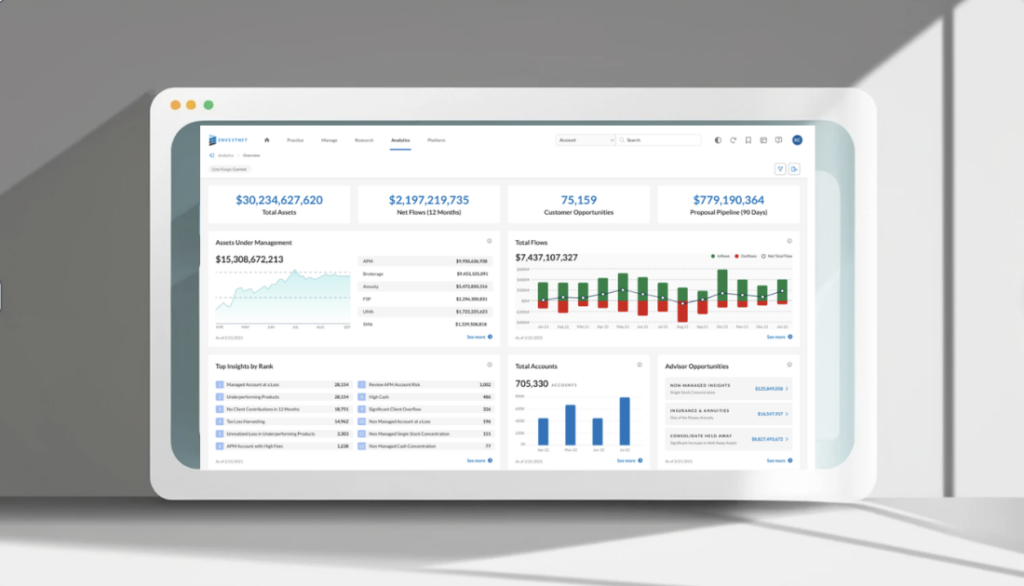
6. Common Integration Challenges
Even with a powerful Envestnet–Salesforce integration, there are hurdles advisors need to be aware of. Understanding these challenges early helps you plan smarter, avoid workflow disruptions, and maintain client trust.
6.1 Complexity of Financial Data
Wealth management data is inherently complex. You’re dealing with households, multiple accounts, custodians, beneficiaries, and constantly changing transactions. For advisors, this complexity can manifest as:
- Missing or delayed account updates in Salesforce.
- Inconsistent balances across systems.
- Difficulty answering client questions quickly without double-checking multiple platforms.
A well-planned integration addresses these challenges by mapping data accurately, defining a canonical client model, and using layered data strategies so the numbers you see are reliable every time.
6.2 Organizational Alignment
Integration projects often span IT, operations, compliance, and advisory teams. Without clear ownership, decisions can stall and adoption suffers. For advisors, misalignment shows up as:
- Confusion about which system holds the “truth.”
- Workarounds and manual spreadsheets creeping back into your workflow.
- Delayed access to critical client data.
Ensuring a clear RACI (Responsible, Accountable, Consulted, Informed) and collaborative governance model keeps advisors focused on clients, not administrative headaches.
6.3 Human Factors and Adoption
Even the best technical integration fails if advisors aren’t using it. Resistance can stem from:
- Comfort with legacy workflows.
- Frustration with incomplete or confusing dashboards.
- Lack of training or visibility into new features.
Address this with advisor-focused UX design, embedded Envestnet components, and iterative feedback loops. The goal is for Salesforce to feel like the natural hub of your client work, not a separate tool you have to check.
6.4 Don’t Underestimate Small Fixes
Sometimes, the biggest impact comes from small adjustments:
- Fixing a sync issue affecting one account type.
- Repositioning a dashboard component for easier visibility.
- Adjusting field mappings for a handful of clients.
Individually, these seem minor—but collectively, they remove friction, build trust, and increase adoption, letting you spend more time on client strategy instead of troubleshooting.
6.5 Continuous Maintenance Builds Trust
Integration isn’t a one-time project. Advisors need ongoing reliability:
- Data refreshes and account syncs must be monitored continuously.
- Minor issues need immediate resolution to prevent erosion of confidence.
- Dashboards and reports should be regularly reviewed to reflect changing client needs and portfolios.
A system you can trust day-to-day allows you to focus on advice, proactive client engagement, and portfolio growth, rather than double-checking numbers across platforms.
7. Use cases by firm type
Every advisory firm is different, and the ways you use Envestnet–Salesforce integration should reflect your team size, client base, and service model. Here’s how advisors across different firm types can leverage the integration to streamline workflows, deliver personalized advice, and grow AUM.
17.1 RIAs: Efficiency and Scalability
For Registered Investment Advisors (RIAs), time is your most valuable resource. Integration helps you:

- Manage more clients without sacrificing service quality by syncing key account balances, holdings, and household data directly into Salesforce.
- Reduce manual work—no more exporting spreadsheets or toggling between platforms to answer client questions.
- Deliver personalized advice at scale by combining Envestnet portfolio insights with client goals and risk profiles in a single view.
By embedding critical Envestnet data into Salesforce, RIAs can operate leaner teams while still providing a high-touch client experience.
7.2 Broker-Dealers: Standardization and Compliance
For broker-dealer firms, consistency across large networks of advisors is essential. Integration enables you to:
- Enforce standardized workflows for onboarding, portfolio reviews, and reporting, ensuring all advisors follow compliance requirements.
- Centralize data from multiple offices or advisors, giving management a single source of truth for client accounts and performance.
- Simplify compliance monitoring by surfacing audit-ready metrics, supervisory flags, and account histories directly in Salesforce.
This ensures advisors can focus on client relationships, while management maintains control and compliance across the firm.
7.3 Private Banks & Enterprise Firms: Premium Client Experience
Large private banks and enterprise advisory teams prioritize delivering a high-touch, personalized client experience. Integration allows you to:
- Provide holistic client views by combining Envestnet investment data, financial plans, and household information in one interface.
- Enable proactive outreach using portfolio triggers and client goals to suggest timely recommendations.
- Maintain consistency across teams by ensuring all advisors see the same data and can act on it reliably.
For advisors in these firms, the integration turns Salesforce into a true workstation, helping you strengthen relationships, retain high-net-worth clients, and differentiate your service offering.
7.4 Common Thread Across All Firms
Regardless of firm type, the integration connects your workflows, data, and insights, enabling advisors to:
- Reduce time spent on administrative tasks.
- Increase confidence in client data.
- Focus more on strategic conversations and portfolio advice.
No matter the size or structure of your firm, a well-implemented Envestnet–Salesforce integration becomes the hub for all client engagement and portfolio management activities, empowering advisors to deliver more value in less time.

8. Understanding the Envestnet Ecosystem
To successfully integrate Envestnet with Salesforce, it is crucial to understand the broader Envestnet ecosystem, which is a connected network of platforms, data, and integrations powering the entire wealth management lifecycle.
The ecosystem consists of several key layers:
- The Core Platform: This is the engine managing investment data, operations, billing, trading, and performance reporting.
- Advisor Platforms (Front-End Systems): Tools that sit on top of the data to make it actionable, including Salesforce for relationship management and Envestnet | Tamarac for RIAs.
- Data Aggregation & Intelligence Layer: Provides the full household financial picture by pulling in held-away assets, multiple custodians, and financial planning data.
- Investment Marketplace: Allows advisors to research and implement solutions like Managed Portfolios, SMAs, ETFs, and Alternative Investments.
- Client Experience Tools: Enhances transparency through client portals and performance reports.
- Services & Consulting Layer: Offers managed services, outsourced CIO (OCIO) services, and implementation support.
In this ecosystem, Salesforce acts as the CRM layer, and integrations/APIs connect everything so the systems communicate seamlessly.
8.1 Where Navirum fits in the Envestnet eco-system?

Navirum functions as the essential integration and enablement layer, positioned directly between the Salesforce CRM and the broader Envestnet ecosystem. Its core mission is to connect these systems, translating data into efficient workflows to significantly boost advisor productivity.
Navirum’s value is structured around four pillars: Orchestrating the complex integration between Envestnet and Salesforce, designing the underlying data model for clean and scalable data, creating an optimized Advisor Experience that transforms Salesforce into a true workstation, and driving Process Automation and Adoption to convert technology investments into measurable business outcomes.
In essence, Navirum acts as the crucial translator that unifies systems and data that would otherwise be connected but misaligned, ensuring advisors move from manual work to being more productive.
Takeaway
The integration between Envestnet and Salesforce represents a significant opportunity for wealth management firms to modernize their operations and enhance client service.
By connecting systems, data, and workflows, firms can move beyond fragmented processes and deliver a more seamless, personalized experience.
For financial advisors, this means less time on administrative tasks and more time focusing on what matters most: building relationships and helping clients achieve their financial goals.
As the industry continues to evolve, integration will no longer be optional—it will be a fundamental requirement for staying competitive in a digital-first world.
Ready to evaluate your Envestnet–Salesforce integration?
If you recognise some of the challenges described in this guide—fragmented advisor workflows, data discrepancies between Envestnet and Salesforce, or underused dashboards—Navirum can help.
A successful Envestnet–Salesforce integration is more than a technical connection—it is a competitive advantage for your advisory practice. Done well, it gives you:
- A single view of the client where Envestnet data is front and center on the client record.
- Complete and reliable financial account data that you can trust instantly.
- Reporting and dashboards aligned with how you actually run your business.
Ready to transform your practice? Our expertise in wealth management technology and end-to-end Salesforce-Envestnet integration ensures you lay a strong foundation, design an advisor-centric experience, and achieve the data reliability you need.
Stop managing two systems and start managing more clients.
Contact Navirum today to discuss your integration needs and take the first step toward a flawless advisor workflow.
FAQ – Envestnet Salesforce Integration
How can predictive analytics be applied to Envestnet–Salesforce data for proactive client management?
By unifying Envestnet’s portfolio and transactional data with Salesforce’s CRM and interaction history, advisors can implement predictive models to identify clients at risk of churn, detect cross-selling opportunities, and forecast cash flow needs. Using AI-driven insights directly in Salesforce, firms can deliver timely recommendations without manual data consolidation, turning integration into a strategic client-growth tool.
What is the impact of integration on regulatory audit readiness and compliance automation?
A robust Envestnet–Salesforce integration establishes a single source of truth with explicit data lineage, timestamps, and audit trails. Firms can automate compliance reporting and best-interest reviews by surfacing supervisory data and risk metrics in real time. This minimizes human error, accelerates internal audits, and simplifies regulatory submissions for SEC, FINRA, or MiFID II compliance.
How does an enterprise-wide integration strategy support multi-custodian and multi-platform environments?
Wealth management firms often manage client assets across multiple custodians and third-party platforms. A strategic integration ensures that Salesforce aggregates and normalizes these disparate datasets into a unified view, reducing fragmentation, enabling cross-custodian performance reporting, and maintaining data consistency across front-office and back-office systems.
Can integration drive personalized financial planning at scale, and if so, how?
Yes. By merging Envestnet financial planning data, portfolio holdings, and risk analytics with Salesforce client profiles, advisors can generate individualized plan recommendations programmatically. Scalable automation workflows can trigger alerts for rebalancing, goal milestones, or tax-loss harvesting, ensuring consistent personalized advice across hundreds of clients.
How should firms balance real-time versus batch data synchronization for different advisory use cases?
Real-time sync is critical for operational data like cash positions, account balances, and client interactions, enabling immediate advisory decisions. Batch processing is more efficient for historical performance reporting, analytical dashboards, and large-scale portfolio aggregates. Strategic design involves defining SLIs/SLOs for each use case to balance performance, cost, and system load.
How can integration enhance advisor adoption of Salesforce without disrupting client-facing workflows?
Adoption is maximized by embedding Envestnet insights directly into workflows advisors already use, minimizing “context switching.” Dynamic components, pre-populated fields, and contextual dashboards ensure that the advisor spends more time with clients rather than reconciling systems. Iterative UX testing with power users and skeptics ensures adoption across all experience levels.
What role does data governance play in scaling the integration for multi-office advisory firms?
In large firms, inconsistent definitions of accounts, household AUM, or risk scores can compromise trust. Integration design should include centralized governance frameworks, shared data dictionaries, and role-based access controls. This ensures that every office and advisor sees consistent, validated data and that supervisory requirements are uniformly enforced.
How can firms leverage Envestnet–Salesforce integration to accelerate M&A or advisor onboarding?
Integration provides a clear, structured client and account model, making it easier to assimilate acquired portfolios into Salesforce without manual reconciliation. Automated mapping, data validation, and workflow alignment allow new advisors to access consistent client data immediately, shortening onboarding cycles and preserving client experience during transitions.
What are best practices for integrating advanced analytics or AI tools on top of Envestnet–Salesforce data?
Advanced analytics and AI models require clean, canonical datasets. A layered data strategy ensures operational data is reliable for real-time decision-making, analytical layers feed dashboards and KPIs, and compliance layers feed regulatory analytics. Firms should integrate AI solutions in sandbox environments first, validate outputs against Envestnet records, and then embed insights into advisor workflows within Salesforce.
How does integration future-proof the advisory technology stack?
A well-designed Envestnet–Salesforce integration creates a modular, API-driven architecture that accommodates new tools, custodians, or fintech services. By defining canonical data models and layered synchronization strategies, firms can adopt new AI tools, financial planning software, or client experience platforms without rebuilding core workflows—ensuring long-term scalability, flexibility, and competitive advantage. That is the same long-term thinking behind Orbit’s ongoing managed services model.