Transforming Policyholder Experience for North American Insurers

Transforming Policyholder Experience for North American Insurers. A Bridge Too Far?

The insurance industry is at a tipping point. #insurtech disruptors, the “Uberization” of financial services, and the Venmo effect have reset customer expectations. Policyholders now expect insurance to feel as easy as sending money on Venmo – instant, transparent, and frictionless.

Yet, for many insurers, policies still arrive as hard copies or static PDFs, creating a massive information asymmetry between carrier and client. In an era where trust is table stakes, this gap erodes relationships and puts traditional players at risk.

McKinsey research makes the case for transformation:

  • AI will define the winners – insurers who deeply integrate AI “will conduct more business, faster, in a more personalized manner.”
  • Customer experience is non-negotiable – investing in CX boosts both satisfaction and operational efficiency.
  • The industry is shifting from “detect and repair” to “predict and prevent,” leveraging data and advanced tech to anticipate risk and deliver proactive value.

Read more from McKinsey here: The Future of AI in the Insurance Industry


My View: To close this trust gap and stay competitive, insurers must embrace three imperatives:

  1. Digitize and Unify Data – Move beyond PDFs and siloed systems to deliver a real-time, 360° client view. A significant opportunity for carrier and brokers. AI is making this possible.
  2. Speed and Transparency – Make policy servicing as effortless as a Venmo transaction through automation and self-service. Advances in CRM and AI mean policies and can be updated in real time.
  3. Proactive Engagement – Use AI to predict needs and deliver personalized solutions before clients even ask. Seeing and addressing problems before they happen is a growing tread across the board.

As it turns out technology is bridging the digital divide…those who lead on AI, digital experience, and trust-building transparency will define the next decade of insurance. This is not not science fiction, its a reality.

– Rory – Founder – NAVIRUM Helping financial services firms lead with CRM, AI, and digital transformation. For more details on why insurance companies choose Salesforce see

Interested in discussing solutions further ? We would be delighted to help!

Lavinia PicuTransforming Policyholder Experience for North American Insurers

Top Challenges Facing North American Credit Unions in 2025

Discover the Top Challenges Facing North American Credit Unions in 2025!

Credit unions are entering 2025 in a high-stakes environment. Here are three key challenges shaping their future:

1. Financial Pressures Intensify

Loan growth is slowing to 5–6% in 2025 while funding costs remain elevated. Rising delinquencies and charge-offs in credit cards and auto lending put additional pressure on margins (NCUA, CUNA). Managing liquidity, interest-rate risk, and credit loss reserves is critical for financial stability.

If margin pressure is pushing your credit union to finally fix fragmented systems, a Salesforce strategy engagement is usually the right first step, mapping the roadmap before committing to a full build.

2. Digital Transformation Is No Longer Optional

Member expectations are evolving rapidly. Legacy systems and fragmented vendor stacks are slowing innovation. With open banking frameworks gaining momentum in the U.S. and Canada, credit unions need integrated platforms, AI-driven workflows, and seamless omnichannel experiences to stay competitive (The Financial Brand, WOCCU).

If fragmented systems are part of what is slowing your credit union down, this is worth a look: how a unified Salesforce Financial Services Cloud foundation changes member onboarding and lending turnaround times.

3. Cybersecurity and Compliance Take Center Stage

Cyberattacks are growing in frequency and sophistication, while BSA/AML enforcement and data privacy mandates continue to tighten. Credit unions must implement strong governance, vendor risk management, and secure infrastructure. Meanwhile, AI adoption introduces exciting possibilities – but also new compliance and ethical risks (Comply-Yes, NCUA Supervisory Priorities).

This is exactly where AI risk governance becomes a board-level issue, not just an IT one. Credit unions layering Agentforce or other AI tools onto Salesforce Financial Services Cloud need deterministic guardrails, hard limits on what an AI agent can see or act on, before those tools touch member data. We cover the full architecture, KYC, AML, audit trails, and governance-ready AI, in our guide to compliance in Salesforce Financial Services Cloud, if that is the piece keeping your team up at night.

The Bottom Line

The next two years present a pivotal opportunity for credit unions to modernize operations, enhance member value, and build resilience. Those who embrace digital innovation, proactive risk management, and regulatory readiness will lead the future of financial services.

Getting there usually takes two things working together: a Salesforce consulting partner to build the foundation, and ongoing managed support to keep it running well after go-live.

What’s your credit union’s top priority for 2025 – digital transformation, compliance, or managing financial risk?

📩 Subscribe for more insights

– Rory – Founder – NAVIRUM Helping financial services firms lead with CRM, AI, and digital transformation.

Lavinia PicuTop Challenges Facing North American Credit Unions in 2025

How Salesforce Helps Commercial Banks Modernize and Grow

Commercial Banking · Salesforce

How Salesforce Helps Commercial Banks Modernize and Grow

Salesforce Financial Services Cloud helps commercial banks unify client data, automate workflows, support compliance and improve relationship management. The result is faster execution, more connected teams and a more consistent client experience.

By Lavinia Picu Reviewed by Navirum Published May 17, 2025 Updated July 18, 2026 9 min read
Salesforce Partner
since 2018
5.0 rating
Salesforce AppExchange
Hundreds of projects
delivered
FSC, integrations & AI
specialists

What are the benefits of using Salesforce for banks?

Salesforce gives banks a single, 360-degree view of every customer and automates the work around it, from loan origination and KYC onboarding to compliance and AI-driven cross-selling, all on one governed data platform. Banks that implement Salesforce Financial Services Cloud typically report these benefits:

  • A unified 360-degree customer view: retail, commercial and wealth relationships live on one record, so every banker sees the full picture instead of siloed data.
  • Faster loan origination: industry implementations report roughly 40 to 50% faster loan processing by digitizing origination and centralizing application tracking.
  • Automated KYC and onboarding compliance: automated identity verification, credit checks and disclosures can cut approval times by up to 70% while keeping a full audit trail.
  • Higher productivity and satisfaction: firms report around 35% higher employee productivity and 30% higher customer satisfaction after automating manual workflows.
  • AI-driven cross-selling: a connected data foundation surfaces next-best-product opportunities, lifting cross-sell performance by roughly 15 to 29%.
  • Lower cost and measurable ROI: around 25% lower operational cost, with most banks realizing measurable ROI within the first 12 months.

Navirum is a Salesforce Ridge Partner rated 5.0 on the Salesforce AppExchange, and builds and governs the data foundation these benefits depend on for banks and financial services firms.

Why Commercial Banks Are Rethinking Their Technology Stack

Commercial banks face increasing pressure from fintech competitors, changing client expectations and a growing regulatory burden. Legacy systems and siloed data make it harder to respond quickly, serve clients proactively and maintain operational efficiency.

Salesforce, with Financial Services Cloud at its core, provides a modern foundation to unify data, automate processes and strengthen compliance workflows. It can also support AI and analytics initiatives that help teams make better decisions and identify growth opportunities.

Ponce Bank Enhances Experiences With a 360-Degree View of Customers

Interactive Explorer

Where Salesforce Creates Value Across Commercial Banking

Select a banking priority to compare today’s operational challenge with the connected, automated approach enabled by Salesforce Financial Services Cloud.

Core Challenge

Fragmented Data Silos

In traditional commercial banks, data is trapped across disconnected departments and legacy systems. This fragmentation slows decision-making, hampers collaboration, and creates disjointed customer experiences.

Salesforce-Enabled Approach

Salesforce FSC connects customer, financial, and operational data in real time, providing a unified 360-degree view of the client across all commercial, retail, and wealth units.

  • Consolidate complex client profiles and product holdings.
  • Ensure relationship managers and underwriters view the exact same data.
Core Challenge

Managing Complex Portfolios

Relationship managers struggle to manually track hundreds of corporate accounts across multiple geographies, leading to missed touchpoints, reactive servicing, and lost cross-sell opportunities.

Salesforce-Enabled Approach

Elevate client engagement with automated workflows and interaction tracking. Salesforce provides a performance cockpit to prioritize high-value actions and streamline outreach.

  • Automatically track emails and meetings via Salesforce Inbox.
  • Uncover complex corporate hierarchies and household networks.
Core Challenge

Fragmented, Manual Origination

Traditional loan processing relies on physical paperwork, endless email chains, and manual data entry. This leads to slow turnaround times, compliance gaps, and frustrated borrowers.

Salesforce-Enabled Approach

Digitize and automate end-to-end credit workflows. Use pre-built origination templates and digital intake portals to accelerate decision-making without sacrificing due diligence.

  • Seamlessly pass data from front-office RMs to back-office credit teams.
  • Securely collect borrower documents via automated portals.
Core Challenge

Manual, Time-Consuming Knowledge Work

Bankers spend hours preparing for client meetings, summarizing credit reviews, chasing missing documents, and triaging service cases. This manual effort limits capacity and slows response times.

Salesforce-Enabled Approach

Agentforce brings governed AI into daily banking work, grounded in your trusted Salesforce data and guardrails. It assists teams without replacing human judgment or oversight.

  • Draft relationship-manager meeting prep and credit-review summaries.
  • Automate missing-document follow-up, case triage, and compliance reminders.
Core Challenge

Manual Compliance and Audit Preparation

Ensuring KYC and AML compliance across disjointed systems requires massive administrative overhead. Preparing for audits means weeks of manual data gathering, increasing the risk of costly fines.

Salesforce-Enabled Approach

FSC can embed configured compliance checks, approvals and evidence collection into daily workflows. Built-in tools support continuous audit readiness, secure data encryption, and role-based access controls.

  • Automate compliance checks with integrated risk rules.
  • Maintain a traceable history of client interactions, approvals and workflow activity.
Core Challenge

Rip-and-Replace Risk

Modernizing the front office often feels like it requires replacing core banking systems, a costly and high-risk undertaking most banks want to avoid.

Salesforce-Enabled Approach

Salesforce connects to your existing core banking, loan-origination, treasury, and risk systems through APIs, MuleSoft, and governed integration patterns, so you modernize the client experience without ripping out back-end infrastructure.

  • Integrate core banking, treasury, and risk platforms via MuleSoft and APIs.
  • Adopt governed, secure integration patterns that preserve back-end investments.

A Single Source of Truth Across the Bank

In most commercial banks, data lives in silos – between departments, lines of business, and systems. This fragmentation hampers collaboration, slows decision-making, and leads to inconsistent customer experiences.

Salesforce Financial Services Cloud (FSC) solves this by offering a centralized platform that connects customer, financial, and operational data in real time. From relationship managers to underwriting teams, everyone gains a shared 360-degree view of the client.

C-suite Insight: For CIOs and COOs, this enables better system interoperability and IT cost reduction. For CEOs, it improves cross-sell potential and strategic decision-making.

Relationship Management at Scale

In commercial banking, relationships are everything. But managing hundreds or thousands of complex relationships across multiple geographies and products is a challenge – especially in a hybrid work environment.

Salesforce enables banks to elevate client engagement with automation, intelligent workflows, and real-time collaboration tools like Slack and Salesforce Inbox.

Smarter, Faster Loan Origination and Underwriting

Traditional loan processing is manual, error-prone, and time-consuming – leading to delays, poor client experiences, and compliance risks. With Salesforce, commercial banks can digitize and automate end-to-end credit workflows.

Using pre-built loan origination templates, digital intake forms, and automated document management, banks can streamline underwriting and decision-making without sacrificing due diligence.

C-suite Insight: For Heads of Credit, Risk, and Operations, this means lower cost of service, fewer compliance gaps, and a better borrower experience.

From Predictive Analytics to Governed AI Agents

AI is not a buzzword anymore – it’s a business necessity. Salesforce’s native AI, Einstein, provides predictive intelligence such as risk scoring, opportunity spotting and trend forecasting. Agentforce adds governed AI agents that assist teams in everyday banking work, grounded in trusted Salesforce data and guardrails.

In practice that means relationship-manager meeting preparation, credit-review summaries, missing-document follow-up, service-case triage and compliance reminders, alongside predictive risk and opportunity insights. Every action stays subject to permissions, human review and a traceable record, so oversight and accountability remain with your people.

Compliance, Security, and Audit-Readiness

Commercial banks operate in one of the most regulated environments. Ensuring compliance, managing audit trails, and securing sensitive data are not optional – they’re mission-critical.

Salesforce provides built-in tools to support audit readiness, KYC/AML workflows, data encryption, and access controls. Custom dashboards help teams stay ahead of regulatory requirements and internal policies.

C-suite Insight: For CROs and General Counsel, Salesforce reduces regulatory exposure and ensures data governance standards are met without manual overhead.

Standard Bank’s Customer-Centric Transformation 

Flexible Integrations with Core Banking Systems

One of the biggest myths about Salesforce is that it can’t integrate with legacy banking systems. In reality, Salesforce is built to integrate with core banking platforms, third-party fintech APIs and open banking, and even mainframe systems via MuleSoft or custom middleware.

This makes it possible for banks to modernize front-office operations while preserving back-end investments.

Actionable Dashboards and Executive-Level Reporting

Data is only valuable if you can act on it. Salesforce offers customizable dashboards and reporting tools tailored to the needs of different stakeholders – from branch managers to the C-suite.

Leadership can monitor KPIs across the organization, evaluate team performance, and make real-time strategic decisions based on clean, live data.

Faster Time-to-Market for New Products and Services

In today’s market, being first often means winning. With Salesforce, banks can quickly roll out new services, digital channels, or client on-boarding experiences using low-code tools like Salesforce Flow and App Builder.

Need to launch a digital small business lending portal? Build a relationship scorecard? Customize onboarding journeys for new commercial clients? Salesforce can deliver, all without lengthy IT roadmaps.

FinSight Series
A banking leader’s briefing on Salesforce, FSC and AI
Practical guidance for commercial banking transformation, delivered twice monthly.

Navirum’s Strategic Recommendation For Commercial Banking Leaders

Navirum Salesforce Partner since 2018

The transition to a connected, customer-centric commercial bank is not just about adopting Salesforce Financial Services Cloud. It’s about fundamentally redesigning your operating model. As a specialized Salesforce consulting partner with a proven track record in financial services, Navirum’s expertise lies in transforming the insights from this article into actionable, measurable results.

We strongly advise C-suite leaders to move beyond siloed CRM adoption and focus on a holistic implementation that strategically integrates a single source of truth across all business units (Relationship Management, Loan Origination, Risk). To truly future-proof your bank, we recommend engaging a partner who can align FSC with your core banking systems, operationalize Agentforce and governed AI for well-supervised decision-making, and support the bank’s compliance and audit requirements, turning Salesforce into a lasting advantage for your commercial bank’s core competitive advantage.

Real-World Results: Salesforce in Action for Commercial Banks

Many of the world’s leading commercial banks – large and mid-size alike – are already leveraging Salesforce to modernize client engagement and drive business outcomes. Reported benefits include:

  • Improved relationship-manager productivity
  • Faster loan origination and underwriting
  • Stronger client satisfaction across corporate relationships
  • Lower operational costs and improved regulatory readiness

As a Salesforce consulting partner specialized in financial services, we can help banks across North America deploy tailored solutions aligned to their growth and compliance goals.

Why Work with a Salesforce Partner ?

While Salesforce offers immense value out of the box, its real power comes to life when implemented with deep industry knowledge and a strategic lens. That’s where we come in to help:

  • Design scalable architectures aligned with their growth strategies
  • Customize Salesforce FSC and integrations to fit banking workflows
  • Drive user adoption with training, enablement, and ongoing support
  • Optimize performance with data analytics, automation, and AI

Final Thoughts: Make Salesforce Your Strategic Advantage

Salesforce isn’t just a CRM – it’s a catalyst for business transformation. For commercial banks, it offers a practical and powerful way to connect operations, empower teams, and put the customer at the center of everything.

The next generation of banking leaders will be those who embrace intelligent technology and reimagine the way they work.

Planning a Salesforce Transformation for Your Bank?

No commitment. We respond within one business day.

Salesforce for Commercial Banks: What Leaders Need to Know Before Investing

Straight answers on core-system integrations, compliance, AI, implementation and where Salesforce fits within the banking technology stack.

Does Salesforce replace a commercial bank’s core banking system?
No. Salesforce Financial Services Cloud sits alongside your core banking system, not in place of it. It becomes the relationship and engagement layer, unifying client data and workflows on top of the core, while the core continues to run accounts, ledgers and transactions.
How does Salesforce connect with loan-origination, treasury and risk platforms?
Through APIs and MuleSoft-based integration patterns. Salesforce connects to loan-origination, treasury, risk and other back-office systems so data flows both ways, letting front-office teams act on real-time information without manual re-keying or replacing existing systems.
What client and operational data should a bank manage in Salesforce?
Relationship and engagement data: client and household profiles, corporate hierarchies, interactions, pipeline, service cases, referrals and compliance activity. Systems of record such as the core and ledgers stay where they are and are surfaced in Salesforce through integration.
Can Salesforce support banking compliance and audit preparation?
Yes. Salesforce provides audit-ready dashboards, KYC and AML workflows, data encryption, and role-based access controls, and it maintains a traceable history of client interactions, approvals and workflow activity, which simplifies audit preparation.
How can commercial banks introduce Agentforce safely?
Start with governed, low-risk use cases grounded in trusted Salesforce data, such as meeting preparation, credit-review summaries, missing-document follow-up and compliance reminders. Keep people in the loop, apply clear guardrails and permissions, and expand scope as confidence and controls mature.
Which banking workflow should be modernized first?
Usually the one with the most manual effort and the clearest payback, often loan origination or client onboarding. Starting with a high-friction, high-visibility workflow delivers measurable results quickly and builds momentum for broader transformation.
How long does a typical Salesforce banking transformation take?
It depends on scope, integrations and change management, but most banks see value in phases rather than a single big-bang project. A focused first phase can go live in a few months, with further capabilities and integrations added in later phases.
What should a bank look for in a Salesforce implementation partner?
Financial-services specialization, real banking and FSC experience, a track record of integrations with core and back-office systems, and strength in governance and change management. Delivery is not about Salesforce alone; the right partner aligns technology, data and operating-model change.
Lavinia PicuHow Salesforce Helps Commercial Banks Modernize and Grow

iA Salesforce Services - Résumé des services

Discover Navirum’s iA Salesforce Services

Transform the way your organization leverages Salesforce Financial Services Cloud with Navirum’s iA Salesforce services, meticulously designed for the financial services industry.

At Navirum, we understand the unique challenges financial services professionals face—from managing intricate workflows to exceeding client expectations and driving operational efficiency. Our solutions are tailored to address these complexities, empowering organizations like iA Private Wealth and the broader iA Financial Group to achieve exceptional results.

Why Choose Navirum?

Our iA Quickstart for Financial Services Cloud provides a streamlined approach to help your organization optimize processes, enhance user adoption, and elevate the client experience. Beyond the Quickstart, we offer a comprehensive suite of add-ons and components designed to improve productivity and deliver measurable value.

Our Areas of Expertise Include:

  • Salesforce Financial Services Cloud: Tailored solutions for financial advisors and wealth management professionals.
  • Salesforce Marketing Cloud: Enhancing engagement with data-driven marketing strategies.
  • Salesforce Experience Cloud: Creating seamless, personalized client portals.
  • Artificial Intelligence: Leveraging AI to enable smarter, data-driven decision-making.

Navirum specializes in delivering solutions for the unique requirements of iA Advisors, insurance providers, and corporate organizations. We also excel in AX360 integrations, providing a seamless connection between Salesforce and essential compliance, financial planning, and back-office systems.

Ongoing Support and Expertise

Our commitment doesn’t stop at implementation. Navirum offers ongoing support for Salesforce, AppExchange solutions, and system integrations to ensure your organization remains agile and ahead of the curve.

Take the Next Step

Ready to elevate your Salesforce strategy? Download our iA Salesforce Services Overview to discover how Navirum’s expertise can help transform your business. Let us partner with you to unlock the full potential of Salesforce and drive success in the financial services industry.

Download Navirum’s iA Salesforce Services Overview!

Download our iA Salesforce Services Overview Now!

Nom
Nom
Première
Dernière
Lavinia PicuiA Salesforce Services - Résumé des services

Utilisation éthique de l'IA dans les services financiers : Considérations relatives à la mise en œuvre de Salesforce

In recent years, the financial services industry has undergone a profound transformation driven by advancements in artificial intelligence (AI) and machine learning (ML). These technologies, particularly when integrated into platforms like Salesforce, offer immense potential for enhancing customer experience, operational efficiency, and decision-making processes. However, with this potential comes a responsibility to ensure that AI is implemented ethically and responsibly.

The Promise of AI in Financial Services

AI and ML technologies are revolutionizing how financial institutions operate. They enable predictive analytics, personalized customer interactions, fraud detection, risk assessment, and compliance monitoring at a scale and speed previously unimaginable. Salesforce, as a leading CRM platform, plays a pivotal role in harnessing these technologies to drive innovation and competitiveness in the financial sector.

Ethical Considerations in AI Implementation

  • Transparency and Explainability: One of the foremost ethical considerations in AI is ensuring transparency and explainability. Financial institutions must understand how AI algorithms make decisions and be able to explain those decisions to customers and regulatory authorities. When implementing AI solutions through Salesforce, it’s crucial to choose models that can provide insights into their decision-making process.
  • Fairness and Bias Mitigation: AI systems can inadvertently perpetuate biases present in historical data, leading to unfair outcomes. Financial services companies must proactively mitigate bias by regularly auditing data sources, refining algorithms, and ensuring diversity in the teams developing AI solutions. Salesforce’s AI capabilities should be leveraged with these considerations in mind to promote fairness and equity.
  • Data Privacy and Security: Financial data is highly sensitive, necessitating stringent data privacy and security measures. AI implementations must comply with regulations such as GDPR and CCPA. Salesforce provides robust data protection features and compliance tools that should be configured appropriately to safeguard customer information and ensure ethical use of AI.
  • Accountability and Governance: Establishing clear accountability and governance frameworks is essential for ethical AI use. Financial institutions using Salesforce for AI implementations should have policies in place for monitoring AI performance, handling errors or biases, and continuously assessing ethical implications. Regular audits and reviews can help maintain ethical standards over time.

Best Practices for Ethical AI Implementation with Salesforce

  • Cross-functional Collaboration: Involve stakeholders from compliance, legal, IT, and business units early in the AI implementation process to address ethical concerns comprehensively.
  • Continuous Monitoring and Evaluation: Implement mechanisms to monitor AI performance, detect biases, and evaluate outcomes regularly. Salesforce’s analytics and reporting tools can facilitate ongoing evaluation and adjustment of AI models.
  • Ethics Training: Provide ethics training to employees involved in AI development and deployment to raise awareness of ethical considerations and foster a culture of responsible AI use.
  • Customer-Centric Approach: Prioritize customer interests and expectations when designing AI-driven solutions on Salesforce. Seek feedback and ensure transparency about how AI is used to enhance customer trust.

As financial services organizations embrace AI technologies through platforms like Salesforce, they must navigate complex ethical considerations to foster trust, ensure fairness, and comply with regulatory requirements. By prioritizing transparency, fairness, data privacy, and accountability, companies can harness the full potential of AI while mitigating risks and promoting ethical practices. Ultimately, ethical AI implementation with Salesforce not only enhances operational efficiencies but also reinforces customer confidence and regulatory compliance in the financial services sector.

Interested in discussing solutions further ? We would be delighted to help!

Nous contacter
Première
Lavinia PicuUtilisation éthique de l'IA dans les services financiers : Considérations relatives à la mise en œuvre de Salesforce

Automatisation des flux de travail financiers avec Salesforce

Découvrez comment l'automatisation des flux financiers avec Salesforce peut révolutionner vos finances !

Revolutionizing Finance: Unleashing the Power of Automation with Salesforce

In the fast-paced world of finance, where every second counts and accuracy is paramount, manual processes are no longer sustainable. The demand for efficiency, agility, and compliance necessitates a paradigm shift towards automation. Enter Salesforce – the leading CRM platform renowned for its robust automation capabilities. In this blog post, we’ll explore how Salesforce revolutionizes financial workflows by streamlining processes, enhancing productivity, and driving business growth.

The Imperative for Automation in Finance

Finance departments are tasked with a myriad of responsibilities, including budgeting, invoicing, financial reporting, and compliance. However, manual execution of these tasks is not only time-consuming but also prone to errors, delays, and inefficiencies. With the increasing complexity of financial operations and the relentless pace of business, automation emerges as a strategic imperative for finance teams to thrive in today’s digital era.

Salesforce Automation: A Game-Changer for Finance

  • Workflow Automation: Salesforce’s workflow automation capabilities enable finance teams to automate repetitive tasks, such as invoice processing, approvals, and payment reminders. By defining rules and triggers within Salesforce, finance professionals can streamline workflows, reduce manual intervention, and accelerate transaction cycles, thereby enhancing operational efficiency and productivity.
  • Integration with Financial Systems: Salesforce seamlessly integrates with leading financial systems, such as ERP (Enterprise Resource Planning) platforms and accounting software. Through bidirectional data synchronization, finance teams can eliminate data silos and ensure data consistency across systems, enabling real-time visibility into financial performance and facilitating informed decision-making.
  • Automated Reporting and Dashboards: Salesforce’s reporting and dashboard functionalities empower finance professionals to create customized reports, analyze financial data, and track key performance indicators (KPIs) in real time. By automating report generation and distribution, Salesforce enables stakeholders to gain actionable insights into financial metrics, trends, and forecasts, facilitating proactive decision-making and strategic planning.
  • Revenue Recognition Automation: Revenue recognition is a critical aspect of financial management, particularly for subscription-based businesses and those operating under ASC 606 or IFRS 15 standards. Salesforce offers revenue recognition automation solutions that streamline the calculation, allocation, and reporting of revenue, ensuring compliance with accounting standards and enhancing transparency in financial reporting.
  • Compliance Automation: Compliance with regulatory requirements, such as GDPR, SOX, and PCI-DSS, is a top priority for finance teams. Salesforce’s compliance automation tools help finance professionals enforce data security policies, monitor access controls, and maintain audit trails, ensuring adherence to regulatory mandates and safeguarding sensitive financial information.

Case Study: Transforming Financial Operations with Salesforce Automation

Let’s take an example, one of our recent clients, a financial corporation, that now leverages Salesforce to automate its financial workflows:

  • Challenge: The company’s finance department grappled with manual invoice processing, disparate systems, and limited visibility into financial performance.
  • Solution: By implementing Salesforce’s workflow automation and integration capabilities, the company now creates a centralized platform for invoice management, expense tracking, and financial reporting. Custom-built workflows automate invoice approval processes, while integration with the ERP system enables seamless data exchange between Salesforce and the company’s financial infrastructure.
  • Result: The company experiences significant improvements in operational efficiency, with streamlined invoice processing, reduced cycle times, and enhanced data accuracy. Real-time reporting and dashboards provide finance executives with actionable insights into cash flow, revenue trends, and profitability, enabling informed decision-making and driving business growth.

Conclusion

In an era defined by digital transformation and data-driven decision-making, automation emerges as a cornerstone of success for finance departments seeking to stay ahead of the curve. Salesforce’s robust automation capabilities empower finance professionals to streamline workflows, optimize processes, and elevate the strategic role of finance within their organizations.

By embracing Salesforce as a catalyst for automation, finance teams can unlock new opportunities for efficiency, agility, and innovation, propelling their organizations towards sustained growth and competitive advantage in today’s dynamic business landscape.

Lavinia PicuAutomatisation des flux de travail financiers avec Salesforce

Le rôle de Salesforce dans les services financiers

Did you ever wonder why Salesforce is world’s leading CRM, or what is its role in the financial services transformation? Digital transformation has become imperative in the financial industry, reshaping the way institutions operate and interact with their clients. Salesforce stands out as a pivotal player in this transformation journey, offering a suite of innovative tools and solutions designed to revolutionize financial services. From automation to data analytics, Salesforce provides a comprehensive platform that empowers financial institutions to adapt to evolving market dynamics and customer expectations.

Salesforce Driving Digital Transformation

Salesforce serves as a catalyst for digital transformation in the financial sector by enabling institutions to embrace automation, data-driven decision-making, and enhanced customer experiences. Through Salesforce’s robust CRM capabilities, financial institutions can streamline processes, gain deeper insights into customer behaviors, and deliver personalized services at scale. Moreover, Salesforce’s ecosystem of apps and integrations empowers organizations to leverage cutting-edge technologies like AI and IoT to drive innovation and stay ahead in a rapidly evolving landscape.

Regulatory Compliance in Financial Services with Salesforce

Navigating the complex regulatory landscape is a top priority for financial institutions. Salesforce offers a range of features and tools to help organizations stay compliant with industry regulations. From built-in compliance controls to customizable workflows for regulatory reporting, Salesforce provides a secure and auditable environment for managing sensitive financial data. Additionally, Salesforce’s continuous updates and adherence to industry standards ensure that institutions can maintain compliance with confidence.

Enhancing Customer Engagement in Finance with Salesforce

In today’s competitive landscape, delivering exceptional customer experiences is paramount for financial institutions. Salesforce equips organizations with powerful tools to enhance customer engagement across various touchpoints. With features like personalized client portals, omnichannel communication, and AI-driven recommendations, financial institutions can build deeper relationships with their clients, anticipate their needs, and deliver tailored solutions that drive satisfaction and loyalty.

Salesforce Financial Services Cloud Overview

Salesforce Financial Services Cloud is a tailored solution designed to meet the unique needs of financial institutions. It provides a comprehensive view of clients, enabling advisors to deliver personalized recommendations and proactive service. With features like wealth management tools, advisor dashboards, and compliance controls, Financial Services Cloud empowers organizations to drive growth, build trust, and deliver value to their clients.

Automating Financial Workflows with Salesforce

Automation is key to improving efficiency and reducing operational costs in financial services. Salesforce offers robust automation capabilities that streamline financial workflows, from account opening to loan origination and claims processing. By automating routine tasks and eliminating manual errors, financial institutions can focus their resources on high-value activities, enhance productivity, and accelerate business processes.

 Salesforce Integration for Banking Systems

Integrating Salesforce with core banking systems is essential for seamless data flow and operational efficiency. Salesforce provides a range of integration tools and APIs that enable organizations to connect Salesforce with their existing banking systems. Whether it’s CRM data integration, API management, or real-time synchronization, Salesforce ensures that financial institutions can access accurate and up-to-date information across their entire ecosystem, driving better decision-making and customer experiences.

Data Security in Financial Services: Salesforce Best Practices

Maintaining data security and compliance standards is a top priority for financial institutions. Salesforce offers a robust set of security features and best practices to safeguard sensitive financial data. From role-based access controls to data encryption and compliance monitoring, Salesforce ensures that data is protected at every stage of the customer journey. Additionally, Salesforce’s commitment to trust and transparency provides organizations with the confidence they need to securely manage their data and meet regulatory requirements.

 Salesforce Analytics for Financial Reporting

Data-driven insights are essential for informed decision-making in financial services. Salesforce provides powerful analytics tools that enable organizations to gain deeper insights into their business performance, customer behaviors, and market trends. With customizable dashboards, predictive analytics, and AI-driven insights, financial institutions can unlock hidden opportunities, mitigate risks, and drive strategic growth initiatives.

Implementing Salesforce for Wealth Management

Wealth management requires personalized solutions and proactive client engagement. Salesforce offers specialized tools and features tailored for wealth management, including client profiling, portfolio management, and financial planning. By centralizing client information and automating routine tasks, financial advisors can focus on building relationships, delivering tailored advice, and driving better outcomes for their clients.

Mobile Banking Solutions with Salesforce

In today’s mobile-first world, offering mobile banking solutions is essential for meeting customer expectations. Salesforce enables financial institutions to deliver seamless mobile experiences through mobile apps, SMS notifications, and mobile-responsive portals. By providing clients with anytime, anywhere access to their accounts and services, financial institutions can enhance convenience, improve satisfaction, and drive loyalty.

Salesforce AI in Predictive Analytics for Finance

Predictive analytics powered by AI is revolutionizing how financial institutions forecast market trends and customer behaviors. Salesforce offers advanced AI capabilities that enable organizations to predict market trends, identify opportunities, and anticipate customer needs. Whether it’s predictive lead scoring, risk assessment, or investment recommendations, Salesforce’s AI-driven insights empower financial institutions to make smarter decisions and stay ahead of the competition.

Client Onboarding Excellence with Salesforce

Efficient client onboarding is critical for delivering a seamless customer experience and accelerating time to value. Salesforce provides tools and workflows that streamline the client onboarding process, from automated document generation to e-signatures and workflow automation. By digitizing and automating manual tasks, financial institutions can reduce errors, improve compliance, and enhance the overall onboarding experience for their clients.

Salesforce and Blockchain Integration for Finance

Blockchain technology has the potential to transform various aspects of financial services, from payments to securities trading and beyond. Salesforce enables organizations to integrate blockchain technology into their existing processes and workflows. Whether it’s smart contracts, distributed ledgers, or tokenization, Salesforce provides the infrastructure and tools needed to harness the power of blockchain and drive innovation in finance.

Salesforce Lightning for Financial Advisors

Financial advisors rely on tools and technology to deliver value-added services and insights to their clients. Salesforce Lightning Experience provides financial advisors with a modern and intuitive platform for managing client relationships, accessing real-time data, and collaborating with colleagues. With customizable dashboards, productivity tools, and built-in compliance controls, Salesforce Lightning empowers financial advisors to deliver exceptional service and drive better outcomes for their clients.

Multi-Channel Marketing Strategies for Financial Services with Salesforce

Effective marketing is essential for attracting and retaining customers in the highly competitive financial services industry. Salesforce offers powerful tools and capabilities for executing multi-channel marketing strategies, including email campaigns, social media integration, and personalized marketing automation. By leveraging Salesforce’s marketing automation features, financial institutions can deliver targeted and relevant messages to their customers across multiple channels, driving engagement and loyalty.

Managing Financial Data Governance in Salesforce

Financial institutions must adhere to strict data governance standards to protect sensitive financial information and maintain regulatory compliance. Salesforce provides a range of tools and best practices for managing financial data governance, including data lineage tracking, data quality management, and regulatory compliance controls. By implementing robust data governance processes within Salesforce, organizations can ensure data integrity, mitigate risks, and maintain trust with their customers.

Salesforce CPQ for Financial Products

Configuring, pricing, and quoting financial products can be complex and time-consuming. Salesforce CPQ (Configure, Price, Quote) streamlines this process by automating the generation of accurate quotes and proposals. With Salesforce CPQ, financial institutions can simplify pricing structures, bundle products, and generate quotes quickly and efficiently, enabling sales teams to close deals faster and improve overall productivity.

 Salesforce Community Cloud for Financial Institutions

Collaboration is essential for driving innovation and delivering exceptional customer experiences in financial services. Salesforce Community Cloud provides financial institutions with a platform for fostering collaboration among employees, partners, and customers. Whether it’s client communities, partner portals, or internal collaboration hubs, Salesforce Community Cloud enables organizations to connect, communicate, and collaborate more effectively, driving better outcomes for all stakeholders.

AI-Powered Chatbots for Financial Customer Support

Providing timely and personalized customer support is critical for building trust and loyalty in financial services. Salesforce integrates AI-powered chatbots into its platform, enabling organizations to deliver intelligent and proactive support to their customers. With AI-powered chatbots, financial institutions can automate routine inquiries, provide instant responses, and offer personalized recommendations, improving the overall customer support experience and driving satisfaction.

Whether it’s enhancing operational workflows, refining client relationship management, or driving revenue growth, our consultants specialize in tailoring Salesforce solutions to suit your specific needs. Don’t let uncertainties hinder your progress; take the proactive step toward unlocking the full potential of Salesforce for your financial services firm. Reach out to us today and let’s collaborate to navigate the complexities of the industry together, driving sustainable success and growth.

Nous contacter
Première
Lavinia PicuLe rôle de Salesforce dans les services financiers

Best Practices For Integrating Clearwater Analytics with Salesforce in 2025

Integrating Clearwater Analytics with Salesforce can significantly enhance your organization’s efficiency by streamlining data flow between these two crucial platforms. However, given the complexity of both systems, it’s essential to approach this integration with a well-thought-out plan. Below is a comprehensive guide done by our consultants, covering best practices, dos, and don’ts for Clearwater Salesforce integration:

Best Practices:

Define Clear Objectives: Clearly outline what you aim to achieve through the integration. Whether it’s improving sales processes, enhancing customer service, or optimizing marketing campaigns, having well-defined goals will guide your integration strategy.

Map Data Flow: Understand the data flow between Clearwater and Salesforce. Identify the key data points that need to be synchronized and establish a clear mapping between the fields in both systems.

Use Reliable Integration Tools: Leverage reliable integration tools or platforms that offer robust connectivity between Clearwater and Salesforce. Salesforce’s native integrations or third-party middleware solutions like MuleSoft can simplify the integration process.

Ensure Data Accuracy: Prioritize data accuracy throughout the integration process. Implement data validation rules and data cleansing procedures to prevent duplicates, errors, or inconsistencies in your Salesforce records.

Implement Security Measures: Maintain data security and compliance standards during integration. Utilize encryption, authentication protocols, and role-based access controls to safeguard sensitive information transferred between Clearwater and Salesforce.

Automate Workflows: Identify repetitive tasks and automate them using workflow rules, process builder, or Salesforce automation tools. Automation not only saves time but also minimizes manual errors and improves overall efficiency.

Monitor Performance: Regularly monitor the performance of your integration to ensure smooth data synchronization and identify any issues promptly. Set up monitoring alerts and logging mechanisms to track integration activities and troubleshoot potential problems.

Provide Training and Support: Offer comprehensive training and support to users who will be interacting with the integrated system. Ensure they understand how to navigate between Clearwater and Salesforce and effectively utilize the integrated features.

Dos:

Start with a Pilot: Begin with a pilot integration project involving a small subset of data and users. This allows you to test the integration in a controlled environment before scaling it up across the organization.

Document Integration Processes: Document all integration processes, including data mappings, workflows, configurations, and troubleshooting procedures. This documentation serves as a valuable reference for future maintenance and enhancements.

Collaborate Across Teams: Foster collaboration between IT, sales, marketing, customer service, and other relevant teams involved in the integration. Solicit feedback from stakeholders to ensure the integration meets their specific requirements and objectives.

Regularly Update Integration: Keep your integration solution up-to-date with the latest releases and updates from both Clearwater and Salesforce. This ensures compatibility, performance optimization, and access to new features and functionalities.

Test Thoroughly: Conduct comprehensive testing at each stage of the integration process, including unit testing, integration testing, and user acceptance testing. Test various scenarios, including data migration, real-time synchronization, and error handling.

Don’ts:

Overcomplicate the Integration: Avoid overcomplicating the integration by trying to synchronize unnecessary data or implementing complex workflows that add little value. Keep the integration simple, focused, and aligned with your business objectives.

Neglect Data Governance: Don’t overlook data governance principles during integration. Establish data ownership, data quality standards, and data retention policies to maintain the integrity and confidentiality of your Salesforce and Clearwater data.

Ignore User Feedback: Don’t disregard user feedback and concerns regarding the integrated system. Actively solicit feedback from users and address any usability issues, performance bottlenecks, or functionality gaps to ensure user adoption and satisfaction.

Skip Training and Documentation: Avoid skipping training sessions or neglecting documentation efforts. Proper training and documentation are essential for user adoption, troubleshooting, and knowledge transfer, especially for complex integrations like Clearwater Salesforce.

Underestimate Maintenance: Don’t underestimate the ongoing maintenance efforts required for the integration. Regularly review and update integration processes, address any issues or bugs promptly, and allocate resources for continuous support and improvement.

By following these best practices, dos, and don’ts, you can ensure a successful Clearwater Salesforce integration that enhances your organization’s operational efficiency, data accuracy, and decision-making capabilities. Remember to adapt these guidelines to suit your specific business needs and processes.

Contact us today to learn more about our team of experts is here to help you get started!

Nous contacter
Première
Lavinia PicuBest Practices For Integrating Clearwater Analytics with Salesforce in 2025

Guide Navirum : Processus d'accueil des clients dans Salesforce

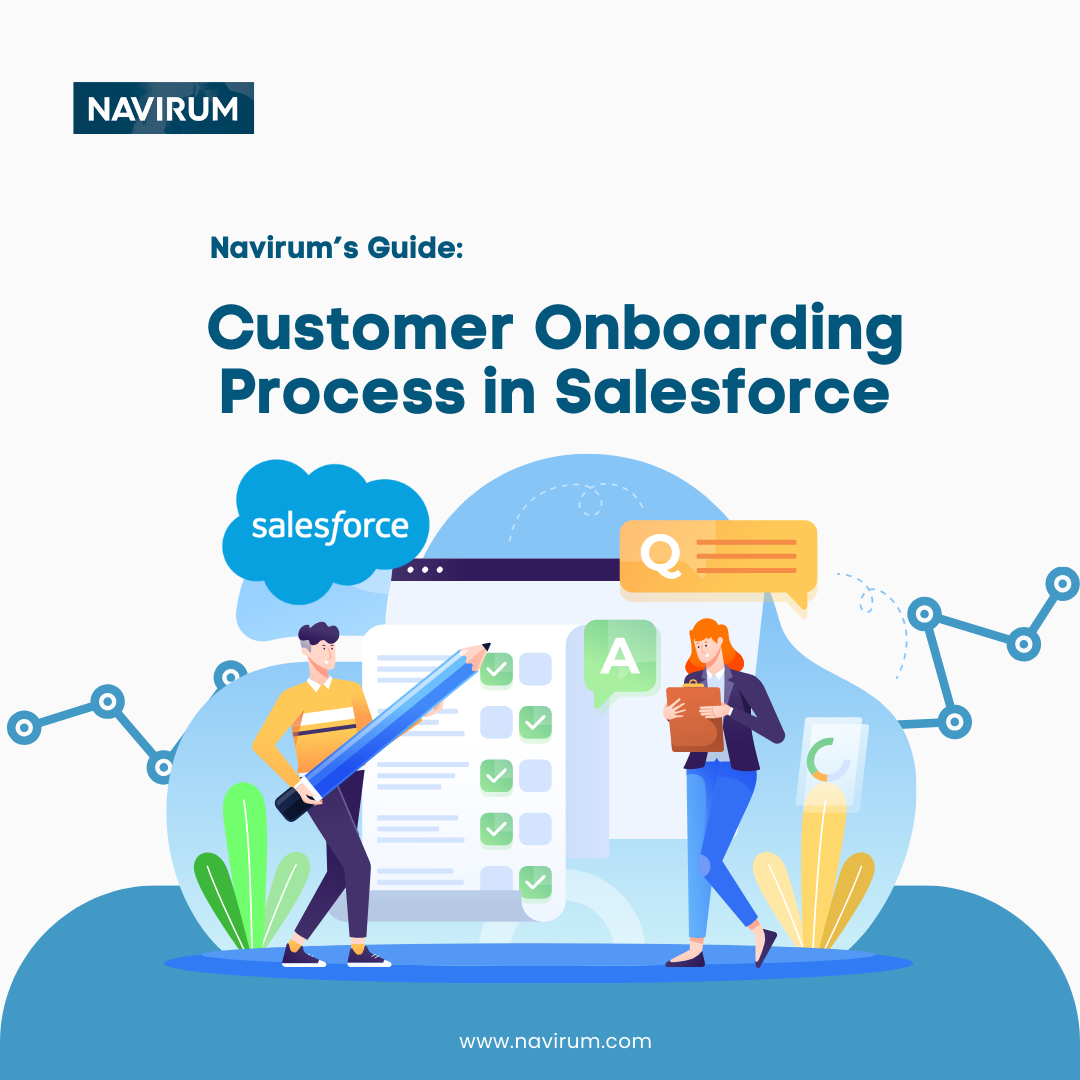
An in-Depth Guide to Customer Onboarding Process in Salesforce

Ready to Improve Your Customer Onboarding Process?

Discover how Salesforce can help you streamline onboarding, automate manual tasks, centralize customer information, and give your teams greater visibility throughout the customer journey.

Download the free guide: An In-Depth Guide to Customer Onboarding Process in Salesforce and learn how to build a more efficient, consistent, and scalable onboarding experience.

Customer onboarding is a critical phase in establishing a fruitful and enduring relationship with your clients. A well-designed onboarding experience can improve customer satisfaction, accelerate time to value, reduce administrative work, and create a strong foundation for long-term engagement. However, without a clearly defined process, onboarding can quickly become fragmented across teams, systems, spreadsheets, and manual tasks.

Salesforce, with its robust suite of tools and customizable features, offers a comprehensive platform to streamline and enhance the customer onboarding process. By centralizing customer information, automating key workflows, standardizing processes, and giving teams greater visibility into onboarding progress, Salesforce can help organizations deliver a more consistent and efficient experience.

This guide will walk you through the key steps to create an effective customer onboarding process within Salesforce—from defining your onboarding workflow and capturing the right customer data to automating tasks, coordinating teams, tracking milestones, and measuring performance. Whether you are building an onboarding process from scratch or looking to optimize an existing Salesforce environment, this guide provides practical insights to help you create a scalable, customer-focused approach.

Schedule Your Session

Let’s find a time to chat about your Salesforce strategy and AUM growth.

Continue to Calendar
Navirum Discover Block
Lavinia PicuGuide Navirum : Processus d'accueil des clients dans Salesforce

How To Optimize Client Onboarding Process with Salesforce

Introduction

Welcome to our thought leadership guide on optimizing the client onboarding process with Salesforce. As a leading Salesforce consulting and advisory company, we understand the importance of delivering a seamless onboarding experience to drive client success and satisfaction. In this guide, we’ll explore what Salesforce onboarding is, why it matters, how it helps, and best practices for designing an effective onboarding process.

What Is Salesforce Onboarding?

Salesforce onboarding typically refers to the process of introducing new users or employees to the Salesforce platform. It involves providing them with the necessary training, resources, and support to effectively use Salesforce for their specific roles or responsibilities within the organization. This can include tasks such as setting up user accounts, configuring Salesforce according to their needs, teaching them how to navigate the platform, and showing them how to perform key tasks such as managing leads, opportunities, or cases. Additionally, Salesforce onboarding may involve educating users on best practices, customization options, and integrations with other systems to maximize their productivity and effectiveness within the Salesforce ecosystem.

Onboarding is often adapted for for regulatory compliance across banking, wealth management and insurance. This is one of the most popular use cases along with KYC and AML workflows

Why Does It Matter?

Client onboarding sets the tone for the entire client journey and plays a crucial role in determining long-term success and satisfaction. A well-executed onboarding process can:

  • Build Trust: By demonstrating expertise and commitment to client success from the outset.
  • Accelerate Time to Value: By helping clients realize the benefits of Salesforce quickly and efficiently.
  • Reduce Churn: By addressing client needs and concerns early on, reducing the likelihood of attrition.
  • Drive Adoption: By equipping users with the knowledge and resources they need to leverage Salesforce effectively.

Why Is It Important to Have an Onboarding Process?

Having a structured onboarding process is essential for ensuring consistency, scalability, and effectiveness in welcoming and guiding customers onto the Salesforce platform. Without a formal onboarding process, organizations risk:

  • Inconsistency: In the way clients are onboarded, leading to confusion and dissatisfaction.
  • Missed Opportunities: To educate clients on the full capabilities of Salesforce and maximize their value.
  • Churn: As clients struggle to adopt and derive value from the platform due to inadequate support and guidance.

How Does Salesforce Onboarding Help?

Salesforce onboarding helps organizations deliver a personalized and impactful experience to clients by:

  • Customization: Tailoring Salesforce to meet the specific needs and goals of each client.
  • Training: Providing comprehensive training and resources to empower users to navigate Salesforce confidently.
  • Support: Offering ongoing support and assistance to address questions, concerns, and challenges.
  • Adoption: Facilitating the adoption of Salesforce across the organization through targeted initiatives and engagement.

What Value Does It Bring?

Effective Salesforce onboarding delivers tangible value to both clients and organizations, including:

  • Client Success: By enabling clients to achieve their business objectives and derive maximum value from Salesforce.
  • Client Satisfaction: By exceeding client expectations and building strong, enduring relationships.
  • Business Growth: By driving adoption, retention, and advocacy among clients, leading to increased revenue and market share.

Phases of the Onboarding Process

The Salesforce onboarding process typically consists of the following phases:

  • Discovery: Understand the client’s business objectives, challenges, and requirements.
  • Planning: Develop a customized onboarding plan outlining objectives, timelines, and responsibilities.
  • Configuration: Configure Salesforce to meet the specific needs and preferences of the client.
  • Training: Provide comprehensive training to users on how to navigate and utilize Salesforce effectively.
  • Deployment: Roll out Salesforce across the organization, ensuring a smooth transition and minimal disruption.
  • Support: Offer ongoing support and assistance to address questions, concerns, and optimization opportunities.

Subtasks of Each Phase

  • Discovery: Conduct needs assessment, gather requirements, and define success criteria.
  • Planning: Develop a project plan, assign roles and responsibilities, and establish key milestones.
  • Configuration: Customize Salesforce fields, objects, layouts, and workflows to align with client requirements.
  • Training: Create training materials, conduct training sessions, and provide access to self-paced learning resources.
  • Deployment: Perform user acceptance testing, data migration, and go-live activities with minimal downtime.
  • Support: Set up helpdesk services, provide access to knowledge resources, and offer proactive assistance.

Expert Recommendations and Best Practices

Based on our experience and industry expertise, here are some expert recommendations and best practices for optimizing the client onboarding process on Salesforce:

  • Personalization: Tailor the onboarding experience to each client’s unique needs, preferences, and goals.
  • Communication: Maintain open and transparent communication with customers throughout the onboarding journey.
  • Empowerment: Empower users with the knowledge, skills, and resources they need to succeed with Salesforce.
  • Iteration: Continuously iterate and improve the onboarding process based on feedback, insights, and evolving needs.
  • Collaboration: Foster collaboration and alignment between internal teams and external stakeholders involved in the onboarding process.

Conclusion

Optimizing the client onboarding process on Salesforce is essential for driving client success, satisfaction, and business growth. By understanding the importance of onboarding, leveraging Salesforce’s capabilities, and following best practices, organizations can deliver a seamless and impactful onboarding experience that sets the stage for long-term success.

As your trusted Salesforce consulting partner, we are here to help you unlock the full potential of Salesforce and maximize the value it brings to your organization and clients.

Nous contacter
Première
Lavinia PicuHow To Optimize Client Onboarding Process with Salesforce