Wealth management is transforming in 2026, with firms needing to integrate technology to enhance advisor productivity and client interactions.
Advisors spend too much time on administrative tasks; AI can help automate these processes to free up more time for client-facing activities.
Fragmented technology hinders advisors from getting a complete view of clients, leading to inefficiencies and errors.
Clients increasingly expect personalized service, making it essential for advisors to maintain context and understanding of their complex financial lives.
AI enhances financial information accessibility, but the human advisor’s role remains crucial for interpreting that information and maintaining client relationships.
Wealth Management Trends Overview
Wealth management is entering a new phase of transformation in 2026. Advisors are being asked to manage increasingly complex client relationships, deliver more personalized advice, improve productivity, and demonstrate greater value, all while dealing with fragmented technology, rising compliance expectations, and the rapid adoption of artificial intelligence.
The challenge is no longer simply whether wealth management firms should invest in technology. The bigger question is how firms can make their technology work together to give advisors better information, automate repetitive work, and create more meaningful client interactions.
The urgency is reflected in recent industry research. MSCI’s 2026 Wealth Trends research found that 95% of firms expect to increase their investment in AI, yet only 27% believe wealth management is leading other financial-services segments in AI adoption. This gap suggests that firms recognize the potential of AI but are still working out how to translate that potential into practical improvements in advisor productivity, scale, personalization, and client engagement.
At the same time, Advisor360°’s 2026 Connected Wealth Report found that nearly three in four advisors say their firm’s technology is outdated or needs an upgrade. The report surveyed 300 advisors across RIAs, broker-dealers, and banks, highlighting a fundamental problem: wealth management firms may have plenty of technology, but that technology does not always work together in the way advisors need.
For wealth management organizations, this creates an opportunity to rethink the role of Salesforce, data, integrations, and AI. Salesforce Financial Services Cloud (FSC), Data 360, and Agentforce can help firms move toward a more connected operating model—but the greatest value comes when these technologies are built around real advisor and client needs.
Wealth Management Trends 2026 | Navirum
Wealth Management Trends 2026
Key Industry Forces Reshaping Advisory Practices
An overview of the 7 defining macro trends impacting wealth managers, advisor capacity, technology stacks, and AI governance in 2026.
01 / Administrative Burden
Advisors Spending Too Much Time on Admin Work
Advisors spend up to 70% of their workday on manual administrative duties, operational tasks, and rekeying data across applications instead of engaging clients.
02 / Tech Fragmentation
Difficult to Obtain a Complete Client View
Fragmented tech stacks spanning disconnected CRM, portfolio, and planning systems make obtaining a unified 360-degree household profile extremely difficult.
03 / Client Expectations
Rising Demands for Personalization
Investors expect hyper-personalized, real-time advice spanning wealth, tax, and estate goals rather than standardized quarterly reports.
04 / Growth Bottleneck
Advisor Capacity as a Strategic Growth Issue
Firm AUM growth is strictly bound by advisor time constraints. Automation is essential to scale client book sizes without inflating operational overhead.
05 / Shifting Behavior
Clients Already Using AI for Financial Info
Investors actively leverage retail AI tools for financial research. Advisors must validate insights and provide institutional-grade context clients trust.
06 / AI Foundation
Data Quality & Governance Becoming Critical
AI reliability depends entirely on data health. Robust data governance, permissioning, security, and human-in-the-loop oversight are mandatory.
07 / Strategic Pillar
Scaling Without Losing the Human Relationship
Technology handles routine operational workflows so advisors can double down on high-touch empathy, complex family governance, and building deep client trust—scaling the firm without sacrificing relationship quality.
1. Advisors Are Spending Too Much Time on Administrative Work
Advisors are expected to spend their time advising clients, developing relationships, identifying opportunities, and providing guidance. In practice, however, a considerable amount of their day can be consumed by administrative and information-management tasks.
Preparing for a client meeting may require reviewing CRM records, portfolio information, previous emails, service requests, financial plans, documents, and notes from previous conversations. After the meeting, the advisor may need to document the interaction, update records, create tasks, send follow-up communications, and coordinate with other teams.
The problem is not necessarily that any individual task is particularly difficult. The problem is the cumulative time and cognitive load created by dozens of small tasks.
Why this matters for wealth managers
Administrative work directly affects advisor capacity.
If an advisor spends less time on administrative work, the firm can potentially increase the amount of time available for client-facing activities without proportionally increasing headcount.
Recent research shows why firms are paying attention. In the Bank of Canada’s 2026 Financial System Survey, nearly all respondents reported using AI, with information gathering, analysis, and internal operations among the most common applications. Respondents generally viewed AI as a way to complete existing tasks faster rather than replace human judgment. They cited efficiency and productivity improvements as important benefits.
This is particularly relevant to wealth management. AI does not need to make investment decisions to create value. It can first take on the repetitive work surrounding the advisor’s decision-making process.
How Salesforce and AI Can Help | Navirum
Salesforce & AI Integration
How Salesforce & AI Empower Advisors
Salesforce provides a centralized workspace containing client relationships, activities, opportunities, and service histories. AI then automates and accelerates the operational tasks surrounding that intelligence.
Create and assign operational tasks to support teams
Update financial profiles and relevant CRM fields automatically
The Core Objective
The goal is not to automate the advisor out of the relationship. It is to eliminate the administrative friction surrounding the relationship so advisors can dedicate more time to high-value, relationship-building activities.
2. Fragmented Technology Is Making It Difficult to Get a Complete Client View
Wealth management firms have accumulated technology over many years. Advisors may use one system for CRM, another for portfolio management, another for financial planning, another for custody, and additional applications for documents, communications, compliance, reporting, and operations.
Each application may perform its job well. The challenge arises when these systems do not communicate effectively.
An advisor may need to switch between multiple applications simply to answer a basic question:
What has changed in this client’s financial life since our last conversation?
That creates application fatigue, duplicate data entry, inconsistent records, and unnecessary administrative work.
The scale of the problem
Advisor360°’s 2026 Connected Wealth Report found that nearly three in four advisors believe their firm’s technology is outdated or needs an upgrade. Its research also highlights disconnected systems as a major source of daily friction for advisors.
This is important because adding another standalone application does not necessarily solve the underlying problem.
If an advisor already has ten systems, giving them an eleventh AI tool may simply create another place to look for information.
The goal should instead be to create a connected advisor experience.
How Salesforce Can Help | Navirum
Connected Wealth Architecture
How Salesforce Can Help
Salesforce FSC acts as the relationship and workflow layer while integrating with specialized systems wealth management firms already use. This architecture connects critical information without requiring firms to replace existing infrastructure.
A Unified Advisor View
Connecting specialized systems into Salesforce FSC creates a single, comprehensive pane of glass for advisors across:
Households
Service interactions
People and relationships
Opportunities
Financial accounts
Goals
Activities
Planning information
Client communications
AI
The Foundation for Artificial Intelligence: A connected architecture is essential for AI adoption. An AI assistant cannot provide meaningful client intelligence or proactive recommendations if critical client information remains trapped in disconnected systems.
3. Client Expectations for Personalization Are Rising
Clients increasingly expect their wealth manager to understand more than their investment portfolio.
A client relationship may involve retirement planning, family relationships, education funding, estate planning, tax considerations, business ownership, liquidity needs, charitable giving, and major life events.
The more complex the client’s financial life becomes, the more difficult it is for an advisor to maintain all of that context manually.
This is particularly challenging as advisors manage larger books of business.
From data to context
Having more client data does not automatically create a better client experience.
The real challenge is turning data into usable context.
An advisor does not necessarily need to see hundreds of CRM fields before a meeting. They need to understand what matters.
For example:
“The Thompson household has experienced a significant increase in investable assets during the past six months. Their last financial planning review was more than a year ago, and there are outstanding tasks related to their recent account activity.”
That type of insight can help an advisor decide where to focus.
AI Workflow Personalization | Navirum
Salesforce & AI Intelligence
How AI Can Help Personalize Advisor Workflows
AI analyzes information across connected wealth systems to surface actionable, relevant signals—allowing advisors to deliver deeply personalized service based on real client relationships.
Beyond “Personalized Marketing”
The true value of AI in wealth management is not simply generating marketing content. It is delivering tailored advice and proactive service grounded in the client’s actual, full relationship history with the firm.
MSCI 2026 Wealth Trends Research
MSCI’s research highlights that wealth advisors evaluate AI success through scale, efficiency, personalization, and client engagement—rather than solely through investment performance or raw automation.
4. Advisor Capacity Is Becoming a Strategic Growth Issue
Wealth management firms want to grow assets under management and expand their client base. But growth creates a fundamental operational challenge: more clients require more advisor capacity.
Hiring additional advisors is one answer, but it can be difficult to scale indefinitely. Firms also face the challenge of transferring relationships and institutional knowledge as experienced advisors retire or transition out of the business.
Technology therefore has an increasingly important role to play in helping advisors serve more households without reducing the quality of the client experience.
How AI Creates Advisor Leverage | Navirum
Strategic Advisor Efficiency
How AI Can Create Advisor Leverage
AI helps advisors prioritize where human attention is most valuable. Rather than replacing human judgment, AI filters signal from noise across large client books to scale high-touch wealth advice.
Empowering Human Decision-Making
The AI does not make the advisor’s decisions or replace human judgment. Instead, it systematically helps the advisor answer a critical daily question:
“Where should I focus my attention today?”
This distinction ensures advisors maintain complete control while eliminating hours of manual account review.
Bank of Canada 2026 Survey Insights
The Bank of Canada’s 2026 survey found that financial-sector participants view AI as a tool for completing existing tasks faster rather than replacing human judgment. Respondents expect expanded AI adoption across investment research, operational workflows, customer service, and employee productivity.
What this means for wealth management: Advisor leverage. Reducing meeting prep, documentation, and admin allows advisors to spend more time on relationships without simply scaling headcount.
5. Clients Are Already Using AI for Financial Information
AI is no longer confined to the technology department.
Clients are using it.
A 2026 NerdWallet survey reported that 43% of Americans use AI for some form of financial guidance, including budgeting, retirement planning, and investment questions.
That changes the advisor-client dynamic.
Clients can now arrive at meetings having already researched investment strategies, retirement questions, tax concepts, or financial products using AI.
This does not necessarily reduce the need for advisors. Instead, it changes what clients may expect from them.
Information is becoming cheaper. Judgment becomes more valuable.
AI can generate an explanation of a financial concept in seconds.
What it cannot reliably provide is the full context of a client’s life.
A financial decision may depend on:
Family circumstances
Risk tolerance
Business ownership
Tax considerations
Estate plans
Personal priorities
Behavioral tendencies
Timing
Regulatory considerations
Two clients with similar portfolios may therefore require very different advice.
Recent research published in August 2026 found that expert financial advice was rated more favorably than AI advice across most measured outcomes in an experiment involving 285 participants.
This reinforces an important point for wealth managers:
AI may make financial information more accessible, but human advisors remain critical for interpretation, context, judgment, and trust.
Strengthening the Advisor’s Role | Navirum
Human-Centered AI Synergy
How Salesforce & AI Strengthen the Advisor’s Role
Rather than competing with AI-generated information, advisors can use AI to become significantly better prepared, combining automated intelligence with human professional judgment.
History Analysis
Conversation Summaries
Summarize complex notes and key details a client has discussed in previous meetings to ensure complete continuity.
Gap Detection
Identify Inconsistencies
Uncover logical gaps, missing data points, or unanswered questions across financial planning documents before meetings.
Client Education
Complex Concept Prep
Generate clear, plain-language explanations for intricate wealth, estate, or tax planning strategies tailored to client literacy.
Modeling
Alternative Scenarios
Model multiple prospective financial scenarios rapidly to present interactive “what-if” choices during planning sessions.
Intelligence
Research Summarization
Digest extensive market commentary, fund performance metrics, and economic updates into concise actionable briefs.
Execution
Draft Client Communications
Instantly compose draft follow-ups, meeting summaries, and personalized outreach emails for advisor review and approval.
Accountability & Professional Judgment
The advisor remains fully accountable for every final recommendation. AI serves as the assistant that improves preparation and productivity, not the replacement for professional fiduciary judgment.
6. Data Quality and AI Governance Are Becoming Critical
The rapid adoption of AI creates another challenge that wealth managers cannot ignore: the quality, security, and governance of the data feeding AI systems.
AI does not eliminate poor data.
If client records are incomplete, household relationships are inaccurate, information is duplicated, or important data exists outside the CRM, AI may produce incomplete or misleading outputs.
For financial services firms, this is more than a technology problem. It can become a compliance, privacy, operational, and reputational issue.
The 2026 Data and Governance Challenge | Navirum
Responsible AI Deployment
The 2026 Data & Governance Challenge
Deploying AI in wealth management requires far more than selecting a software vendor. Realizing sustainable AI value demands robust data foundations, strict security controls, and clear governance.
Bank of Canada 2026 Financial System Survey Highlights
5Who can access which specific client information?
6What should an AI agent be allowed to do autonomously?
7When should mandatory human approval be required?
8How are AI actions logged for compliance auditing?
9How will errors or hallucinations be detected?
10What happens if an AI-enabled system fails?
Salesforce Provides Part of the Foundation
FSC establishes structured households and security controls, Data 360 unifies sources, and Agentforce operates within strict boundaries.
7. Wealth Managers Need to Scale Without Losing the Human Relationship
Perhaps the biggest challenge facing wealth management is the tension between scale and personalization.
Firms need to become more efficient, but clients do not want to feel like another account number.
They want their advisor to know them.
They expect timely responses, relevant recommendations, proactive communication, and an understanding of their broader financial situation.
This means technology should not make wealth management feel more automated.
It should make the human relationship easier to deliver at scale.
The Advisor of the Future | Navirum
Wealth Management Evolution
What the Advisor of the Future May Look Like
The human advisor remains central to wealth management. As AI eliminates manual administrative friction, advisors pivot toward high-touch relationship building and strategic, judgment-based guidance.
74%
of advisors believe AI technology will measurably help their business grow.
93%
demand final say and oversight over all AI-generated client outputs.
55%
identify compliance and governance as the primary hurdle to AI adoption.
The Operating ModelAI Assists. The Advisor Decides.
Spending Less Time On
Automated Friction
Searching for scattered client information
Manual data rekeying, copying, and pasting
Updating routine CRM records and fields
Writing routine client follow-up emails
Summarizing lengthy meeting transcripts
Chasing internal operational & back-office tasks
Manually transferring data across disconnected tools
Spending More Time On
High-Value Advisory
Directly advising and guiding wealth clients
Interpreting complex financial signals & trends
Building multi-generational household relationships
The technology becomes less visible to the client while making the advisor dramatically more effective. By eliminating administrative noise, Salesforce and AI empower advisors to deliver high-touch advice rooted in human trust.
Where Salesforce and AI Create Value Across the Advisor Lifecycle | Navirum
Connected Workflow Intelligence
Where Salesforce & AI Create Value Across the Advisor Lifecycle
The strongest Salesforce and AI use cases are not isolated features. They connect together across the advisor’s entire workflow. Click through the lifecycle stages below to explore specific value drivers.
Before the Client Meeting
Stage 01 / Automated Preparation
An advisor begins the day with an AI-generated view of the households scheduled for meetings. Instead of manually searching through multiple disconnected systems, the advisor receives a concise summary covering recent interactions, account activity, outstanding issues, relevant goals, and key financial changes.
Substantially less meeting preparation time
Deeper, better-informed client conversations
More consistent preparation across team members
Greater visibility into holistic household needs
During the Client Relationship
Stage 02 / Proactive Guidance
Salesforce provides the advisor with a connected relationship view while AI surfaces critical context in real-time. For example, AI can highlight that a client recently contacted the support team, experienced a liquidity event, or hasn’t reviewed their financial plan in 12 months. The advisor retains full authority on how to steer the conversation.
More proactive, timely client service
Rich, unified relationship context
Highly relevant, personalized conversations
Significantly improved client experience
After the Meeting
Stage 03 / Post-Meeting Execution
Post-meeting administration is streamlined through automated intelligence. AI converts raw meeting transcripts into structured notes, extracts follow-up commitments, drafts client follow-up emails, and routes operational tasks to support staff—allowing the advisor to review and approve before logging.
Accelerated, same-day client follow-up
Comprehensive, compliant documentation
Elimination of manual CRM rekeying
Greater operational tracking & consistency
L'accueil du client
Stage 04 / Multi-Stakeholder Orchestration
Onboarding involves multiple stakeholders, documents, approvals, data requests, and follow-up communications. Salesforce workflows coordinate the end-to-end orchestration while AI identifies missing information, parses statement PDFs, drafts welcome communications, and routes tasks automatically.
AI continuously monitors connected data feeds to surface critical signals requiring human attention—such as major deposits/withdrawals, engagement shifts, planning milestones, or service tickets. The objective is not automated selling, but highlighting where the advisor can deliver timely human value.
Instant notification of significant asset changes
Proactive tracking of upcoming estate milestones
Early warning flags for uncontacted households
Identification of high-value planning opportunities
What Should Wealth Managers Do in 2026? | Navirum
Practical AI Action Plan
What Should Wealth Managers Do in 2026?
For wealth management firms considering AI, the first step is not purchasing an AI product—it is understanding where AI can solve a measurable business problem. Follow this practical five-step framework for sustainable adoption.
01Discovery
Assess the Current Technology Environment
Map where client data actually lives today
Identify duplicate manual data entry points
Highlight application switching fatigue
Understand real advisor experience vs paper architecture
Streamline onboarding document parsing and work routing
Evaluate AI based on business ROI rather than novelty
05Risk Management
Introduce AI With Appropriate Governance
Define explicit permissions: what AI accesses, recommends & executes
Enforce mandatory human approval for client recommendations
Log all AI activity for compliance auditing & error detection
Mitigate privacy, compliance, and reputational risk
Strategic Value First
Successful AI deployment in wealth management is not about rushing to launch an AI chatbot. It is about systematically addressing data health, workflow integration, and human-in-the-loop governance to deliver compounding, measurable advisor value.
The Future of Wealth Management Is Not Human vs. AI
The most important transformation taking place in wealth management isn’t that AI is replacing advisors.
It is that AI is changing what advisors can accomplish with the same amount of time.
The Bank of Canada’s 2026 research captures this direction well: financial-sector participants generally view AI as a way to complete existing tasks faster rather than as a replacement for human judgment.
That distinction is particularly important in wealth management.
AI can make information easier to find.
It can summarize thousands of pieces of information.
It can automate repetitive processes.
It can identify patterns.
It can prepare recommendations and drafts.
But the advisor remains responsible for understanding the client, interpreting information, applying professional judgment, and helping the client make important decisions.
The opportunity is therefore not:
Human OR AI
It is:
Human + AI + trusted data + connected workflows.
The Value Realization Architecture | Navirum
Ecosystem Architecture
How Salesforce, Data 360, Agentforce & Claudeforce Fit Into the Picture
For wealth management firms, Salesforce provides the foundation for a connected operating model. Specialized systems integrate seamlessly to transform raw data into intelligent, advisor-led workflows.
Core Foundation
Salesforce FSC
Provides the relationship and workflow foundation, establishing structured household entities, compliance controls, and operational workflows.
Unification Engine
Data 360
Brings relevant information together across custodians, portfolio management, and financial planning systems into a single unified client view.
Autonomous AI
Agentforce
Embeds AI directly into advisor and back-office workflows, automating administrative tasks within permissioned security boundaries.
Advanced Reasoning
Claudeforce
Powers deep contextual reasoning, complex document analysis, and sophisticated financial synthesis for advisor preparation.
The Value Realization Architecture
A structured six-step progression converting raw enterprise data into trusted client action
Step 01 / Input
Data
Raw holdings, transactions, and custodian feeds
Step 02 / Unified
Client Context
Data 360 household profiles and histories
Step 03 / Intelligence
AI Assistance
Agentforce & Claudeforce signal extraction
Step 04 / Enablement
Advisor Workflow
Embedded FSC tasks and meeting briefs
Step 05 / Oversight
Human Judgment
Advisor approval & fiduciary decision-making
Step 06 / Outcome
Client Action
High-touch advice execution & trust building
The Technology Is Not The Strategy
Technology alone does not solve wealth management challenges. The strategy is creating a more scalable, connected, and intelligent way for advisors to serve clients—empowering wealth professionals with tools that elevate human trust.
How Navirum Can Help Wealth Management Firms | Navirum
Salesforce & AI Strategic Execution
How Navirum Helps Wealth Managers Prepare for AI
The first step toward AI does not always need to be deploying an AI agent. For many wealth management firms, the true first step is ensuring their Salesforce environment, data architecture, integrations, and governance are built for success.
Phase 01 / Audit
AI Readiness Evaluation
Understanding whether your environment and governance are ready for autonomous AI deployment.
Salesforce FSC Setup Review
Household Data Architecture
Security & Compliance Audit
Phase 02 / Unify
Connected Ecosystems
Connecting specialized applications so advisors never have to leave their central Salesforce workspace.
Financial Services Cloud (FSC)
Data 360 & Custodian Feeds
Portfolio & Planning Integrations
Phase 03 / Automate
Agentforce & Advisor AI
Deploying AI agents within defined permission boundaries to automate administrative friction.
Agentforce AI Workflow Build
Automated Meeting Briefs
Human-in-the-Loop Guardrails
Ready to Identify Where Salesforce & AI Create the Most Value?
Talk to Navirum’s digital transformation consultants to evaluate your Salesforce setup, data architecture, and AI readiness.
Discover how leading wealth management practices partnered with Navirum to implement Financial Services Cloud, streamline advisor operations, and accelerate growth.
Explore our latest research, strategic frameworks, and practical guides on Salesforce Financial Services Cloud, Agentforce, Data 360, and enterprise AI transformation.
Whether you are getting to know our team, evaluating our Salesforce and AI offerings, or ready to discuss your firm's growth goals, we are here to guide your journey.
About Navirum
Discover our story, mission, and the experienced financial technology specialists guiding your digital transformation.
Navirum attended the Envestnet Insights Council in Boston on August 26–27, 2026, focusing on the future of wealth management technology.
Discussions highlighted how AI can evolve beyond experimentation into practical workflows for financial services firms.
The Adaptive WealthTech ecosystem was a key topic, emphasizing the need for efficient platforms that meet changing client expectations.
Open dialogues at the council created valuable feedback loops, helping tech providers understand industry needs better.
Navirum values these conversations to adapt quickly to advancements in wealth management technologies.
Overview
On August 26–27, 2026, Navirum joined industry leaders, consultants, and advisors in Boston for the Envestnet Insights Council.
The gathering focused on the future of wealth management technology.
A key question shaped many of the conversations:
How can technology better support advisors, wealth management firms, and their clients?
For Navirum, the discussions offered valuable insight into how the industry is approaching AI, WealthTech, and the changing needs of wealth professionals.
AI and the Future of Wealth Management
Artificial intelligence was a major focus of the Council.
The conversation is moving beyond AI experimentation. Wealth management firms are now looking at how AI can become part of practical, production-ready workflows.
For regulated financial services organizations, that shift comes with important considerations.
AI adoption must account for:
Data quality and access
Governance and oversight
Security and privacy
Regulatory requirements
Responsible implementation
These considerations closely reflect what we see in our work at Navirum.
AI is becoming a strategic priority for many wealth management firms. The goal is not simply to adopt new technology. It is to use AI in ways that deliver meaningful business value.
That can include improving advisor productivity, streamlining operations, and creating better client experiences.
Exploring Adaptive WealthTech
The Council also explored the evolution of Envestnet’s Adaptive WealthTech ecosystem.
The discussion looked at what advisors, consultants, and enterprise firms need from technology as the wealth management industry continues to evolve.
The focus went beyond technology features.
The conversation centered on practical outcomes:
Helping wealth professionals work more efficiently
Responding to changing client expectations
Connecting technology across the wealth management experience
Creating greater value for firms and their clients
As wealth management becomes increasingly digital, technology needs to be both powerful and practical.
It needs to support the people using it every day.
Connecting Industry Feedback With Innovation
One of the most valuable aspects of the Envestnet Insights Council was the opportunity for open dialogue.
The Council brought together people working across different parts of the wealth management ecosystem.
That diversity of perspectives matters.
Industry conversations can create a valuable feedback loop. Technology providers gain a clearer understanding of what firms and advisors need today.
At the same time, those insights can help shape the solutions that will support the industry tomorrow.
We’re grateful to Envestnet for bringing together such a strong group of industry voices. We also appreciate the opportunity to participate in meaningful conversations about the future of wealth management technology and AI.
From Industry Conversations to Practical Solutions
At Navirum, we believe staying close to these conversations matters.
The technologies shaping wealth management are evolving quickly. AI, Salesforce, data platforms, and intelligent automation are changing how firms think about technology and business operations.
Understanding where the industry is heading helps us prepare our clients for what comes next.
Our focus remains practical: helping financial services organizations turn emerging technologies into solutions that support their business, their teams, and their clients.
The future of wealth management will be shaped by technology. But it will also be shaped by how effectively that technology is applied.
Discover how leading wealth management practices partnered with Navirum to implement Financial Services Cloud, streamline advisor operations, and accelerate growth.
Salesforce Ridge Partner ·★★★★★ 5.0 on Salesforce AppExchange · 1,000+ Projects · North American Financial Services Specialists
May 11, 2026
Lavinia Picu
Wondering about AI governance in wealth management? Compliance strategy? How to scale Agentforce adoption with your advisors? Find answers below on designing responsible AI workflows for your firm.
Adoption patterns and high-impact use cases from firms that have already deployed Agentforce.
This comprehensive guide explores how financial institutions can transition into ‘agentic enterprises’ using Salesforce Financial Services Cloud (FSC) and Agentforce. With Navirum as your transformation partner, learn why unified data is the non-negotiable foundation for scalable AI, and discover the core FSC features that empower AI to move from merely assisting work to executing it autonomously.
A critical insight: AI does not solve a messy data problem. It makes the mess faster. The firms that unlock Agentforce value are those that first build a trusted, governed data foundation in FSC: normalized client records, deduplicated contacts, and compliant data lineage. This foundation is not optional. It's the prerequisite for any AI agent to operate safely and trustworthily.
Agentforce will not fix a fragmented wealth management operating model on its own. The firms that get value from AI are the ones that connect trusted client data, advisor workflows, collaboration, governance, and change management before they scale agents.We wrote a full breakdown of how to govern Claude, Slack and Salesforce together as one governed system.
Wealth Management’s Operational Bottleneck
Wealth management firms have invested heavily in CRM, portfolio systems, and digital channels, yet many advisors still spend more time preparing for client conversations than having them. In the fast-paced, highly regulated world of financial services, staying ahead of the curve is crucial, but many firms are held back by fragmented systems, manual processes, and disconnected communication.
Advisors and relationship managers are overwhelmed by data silos. They spend significant time on routine administrative tasks, such as meeting preparation, onboarding new clients, and navigating complex systems. This operational bottleneck leads to steep inefficiencies, increased costs-to-serve, and ultimately, a less-than-optimal client experience. While Artificial Intelligence presents a massive opportunity, AI alone is not enough to solve these systemic issues. True value comes from embedding intelligence directly into the daily workflows of advisors. Firms require a unified platform that acts as an “advisor operating system” to streamline workflows, scale personalization, and maintain strict compliance.
Agentforce Readiness
Planning Agentforce for your wealth firm?
Assess your Salesforce data, FSC setup, Slack operating model, governance, and AI readiness before scaling Agentforce.
Layer
Role
Function
Financial Services Cloud
System of Record
Household, relationship, and account data foundation
Automates meeting prep, onboarding, and next-best-action surfacing
The Modern Wealth Management Stack: Why These 3 Technologies Matter
Not sure which of these three does what? Our Data Cloud vs. Snowflake vs. Databricks guide breaks down exactly where each platform fits in a wealth management data stack, and when firms typically need more than one.
To overcome these bottlenecks, leading consultancies like Navirum are combining three powerful platforms to deliver exceptional client value. It is vital to understand that this stack is complementary; these technologies are not standalone solutions, but interconnected layers of a complete system.
Salesforce Financial Services Cloud acts as the foundational data layer. FSC provides a 360-degree view of the client by seamlessly modeling households, relationships, and financial accounts. It offers clear visibility into assets under management (AUM) and ongoing opportunities, whether they are related to investments, insurance, or specific financial projects. By centralizing lead generation, referral and lifecycle tracking, and Action Plans for onboarding and reviews, FSC ensures a compliant, standardized service model that boosts overall advisor productivity. For trust companies weighing platform options, our comparison of WealthHub versus Salesforce FSC breaks down where each fits.
If FSC is the brain, Slack is the nervous system. Slack serves as the central hub for team collaboration, enabling cross-team communication around clients and opportunities. By connecting directly with Salesforce, Slack can automate alerts from the CRM, notifying teams instantly of lead assignments, KYC status changes, or custodian sync errors. Slack channels serve as high-net-worth onboarding war rooms or spaces for real-time service escalation and investment committee collaboration.
The impact of Slack in financial services is profound. For example, Lincoln Investment utilized Slack channels to replace a 90-minute weekly technical meeting with highly efficient thrice-weekly 15-minute scrums. Furthermore, file sharing in Slack reduced the time it took advisors in the field to access critical files from four minutes down to 20 seconds, saving precious time during client interactions. At the Royal Bank of Canada (RBC), Slack helped break down hierarchical barriers, allowing developers to quickly crowdsource solutions and reduce issue resolution times from hours to minutes.
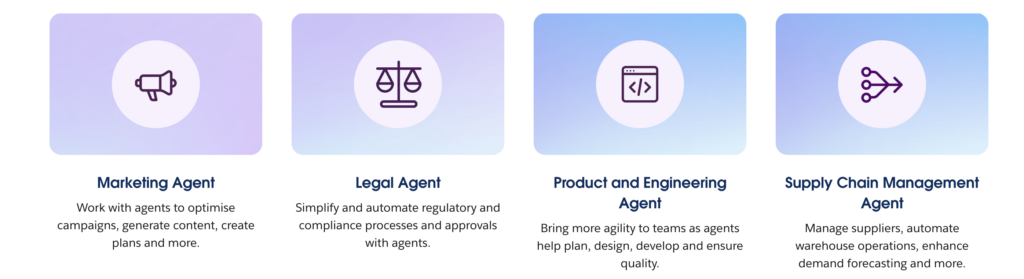
Agentforce layers cutting-edge AI directly into this ecosystem to reduce the administrative burden on advisors. By deploying production-ready AI agents, firms can automate repetitive, high-value work. Key agents include:
How They Work Together: Delivery Architecture in Practice
Technology value is unlocked in orchestration, not implementation in isolation. The true magic of this modern stack is how seamlessly data, collaboration, and intelligence interact during a real-world advisor scenario.
Consider the following workflow:
Trigger: A client meeting is scheduled in Salesforce FSC.
Intelligence: Agentforce automatically detects the upcoming meeting and generates a comprehensive meeting brief. This brief includes a holdings summary, a recap of recent client interactions, and a list of open service items.
Collaboration: Slack automatically posts this AI-generated summary directly to the advisor’s dedicated team channel.
Asynchronous Teamwork: The team uses the Slack channel to collaborate before the meeting even happens. A service associate confirms that all necessary documentation is ready, a portfolio specialist adds the latest investment updates, and the compliance team flags any regulatory requirements.
Post-Meeting Action: After the meeting concludes, notes are seamlessly summarized by Agentforce, follow-up tasks are automatically created, and the next steps in the workflow are triggered directly within FSC.
The Outcome: The advisor saves 30 to 45 minutes of preparation time per meeting, and the client receives a highly consistent, thoroughly prepared service experience.

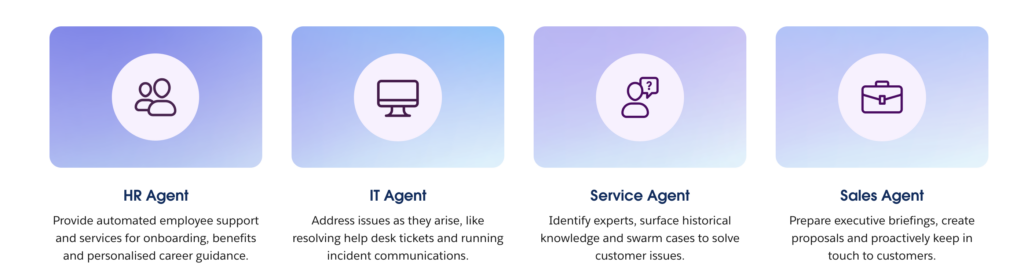
Client Summary Agent: Generates instant, compliant, and comprehensive pre-meeting briefs from unified data.
Onboarding Agent: Orchestrates document intake, tracks task management, and provides status updates to accelerate the client onboarding lifecycle. By suggesting next-best actions and automating task orchestration, Agentforce enables advisors to deliver personalized engagement at scale and make faster, data-driven decisions.
Delivery Lessons from Current Wealth Management Projects
Deploying this technology requires hard-won delivery discipline. Implementations at leading wealth management firms reveal several core lessons for successful digital transformation.
Lesson 1: AI is only as good as data quality.
Before introducing intelligent agents, firms must build a trusted data foundation. Household and account normalization matters deeply, and duplicate contacts will quickly kill user trust in AI insights. Navirum’s engagement with a Montreal-based wealth management firm focused heavily on FSC data quality and UX. This meant engaging in insurance data remediation, rationalizing page layouts, and aligning back-office integrations with custodians like iA Private Wealth before expanding AI functionalities. AI agents must be connected to custodians, portfolio systems (e.g., Schwab Advisor Center, Orion, Addepar), and e-signature platforms to function accurately.
Lesson 2: Slack must align to the service model.
Firms should not simply create Slack channels without governance; collaboration must be deliberately mapped to advisor workflows. In wealth management, Slack acts as an incident-to-insight loop. When data issues or integration failures happen, Slack channels aggregate the logs, notify the owners, and establish next actions. For this client, Slack package installations were specifically planned to streamline notifications directly from core FSC events, ensuring cross-team collaboration was tied to actual business processes. Firms extending this further can see how Slackbot unifies the Salesforce-Slack ecosystem for financial services teams.
Lesson 3: Start with high-frequency use cases.
Firms should avoid trying to automate everything at once. The most successful deployments land a narrow, high-value use case first, such as meeting prep, client onboarding, or service requests. Another recent client, a multi-team RIA, focused on an automation-first program when moving from Redtail to FSC. They started with lifecycle builds like lead routing, nurture cadences, and Opportunity scoring. By replacing a third-party appointment reminder tool with native Salesforce email and SMS automation, they proved immediate value before pacing integrations with platforms like Schwab Advisor Center and Orion.
A practical phased migration guide for wealth management and RIA firms.
Free Resource
Download the Agentforce Readiness Checklist
A practical checklist to assess your data, FSC setup, Slack governance, and AI readiness before you scale Agentforce.
No commitment. For financial services firms only.
Lesson 4: Compliance must be designed in from day one.
In a regulated industry, trust and compliance are non-negotiable. Audit trails, prompt governance, and approved knowledge sources must be integrated into the system’s DNA. Profiles, permission sets, human-in-the-loop approvals, and data lineage must be documented during the Discovery and Design phases to de-risk AI and satisfy SEC/FINRA examination requirements. Another client, focused initially on digitizing client paperwork and approvals. By validating e-signature flows and mapped data logic in a sandbox environment, they ensured compliance before moving to full production.
Enterprise-grade security, compliance infrastructure, and scalability for Agentforce deployments in regulated markets.
Context Engineering: The Foundation for Explainable AI in Wealth Management
Context engineering is the practice of feeding Agentforce only governed, verified business context.the right household record, the right account permissions, the right compliance flags.rather than letting agents infer from ungoverned or stale data. In wealth management, explainable AI is not optional: regulators and clients alike expect to understand why an agent surfaced a recommendation.
By constraining agent input to clean, audited FSC data and limiting agent actions to pre-approved workflows, you achieve two outcomes: (1) agents provide explainable, defensible recommendations, and (2) compliance teams can point to exactly what data informed each decision. This deterministic approach to AI governance is what separates compliant Agentforce deployments from experimental proof-of-concepts.
Lesson 5: Change management determines adoption.
Advisors will enthusiastically adopt tools that demonstrably save them immediate time, but they require continuous support. Firms benefit from “Operate-to-own” models rather than static handovers. Through models like Navirum’s Orbit Managed Services, wealth-advisor firms receive predictable, ongoing optimization. This continuous enhancement allows for low-hour monthly cadences focused on production tweaks, adoption training, and action plan improvements, ensuring the technology scales safely over time.
Post-Go-Live Support
Agentforce needs more than implementation
To keep AI useful, safe, and adopted after launch, wealth firms need ongoing support for Salesforce data quality, governance, integrations, releases, and user adoption.
Quantifiable Value for Wealth Management Firms
When Agentforce, FSC, and Slack are correctly orchestrated, the business outcomes are directional and tied to concrete metrics, drop-off rates, retention, and AUM pipeline health . rather than vague promises. Our Agentforce for Wealth Management service page details typical engagement models for firms at this stage. Potential outcomes include:
Meeting Preparation: Reduced meeting prep time as AI-generated briefs replace a manual crawl across disconnected systems.
Client Onboarding: Faster onboarding time-to-active through digital workflows and FSC Action Plans.
Fewer Manual Handoffs: Less duplicated work between advisors, service teams, and compliance as data and tasks flow through one system.
Operational Efficiency and Cost: Reduced tool fragmentation as native Salesforce and Slack automations replace duplicative third-party point tools.
Compliance and Risk: Stronger service visibility and improved compliance oversight through automated KYC/AML workflows and audit-ready records embedded in the platform.
Communication: Better confidence in AI-enabled workflows as internal collaboration shifts from fragmented email chains to streamlined Slack channels.
Actual results vary by firm, data quality, and scope of rollout. Ask us for benchmarks from comparable implementations.
Why Delivery Expertise Matters
Technology alone doesn’t create transformation; the difference between mere experimentation and true digital transformation is delivery discipline. Simply turning on software licenses is insufficient to realize ROI.
Executing this vision requires deep expertise in workflow design, integration architecture, advisor journey mapping, and phased rollouts. Navirum’s specialized operating model executes this through an 8-step process: Plan, Discovery, Design, Build, Test, Deploy, Iterate, and Maintain. By running sprint-based phases with a mandatory “Sprint 0” for discovery, scope, and data design, firms receive high-fidelity blueprints before a single line of code or automation is written. Each small, durable release increment comes equipped with complete documentation (user stories, process maps), rigid controls (deployment steps, rollback paths), and comprehensive role-based enablement training.
What must be ready before Agentforce can create value?
AI does not solve a messy data problem. It makes the mess faster. Before scaling Agentforce across a wealth management firm, five foundational elements need to be in place.
The Agentforce Readiness Model
Data Foundation . clean, normalized household and account data in FSC, free of duplicate contacts and reconciled against custodian records.
Workflow Fit . Agentforce mapped to actual advisor workflows (meeting prep, onboarding, service requests), not bolted onto generic processes.
Collaboration Model . Slack channels deliberately aligned to the service model, not created ad hoc.
Governance and Guardrails . documented permissions, human-in-the-loop approvals, and audit trails built in before agents go live.
Ongoing Support . a managed-services cadence (such as Orbit) that keeps data quality, adoption, and governance current after go-live.
How can Agentforce help wealth management firms?
Agentforce reduces the administrative load on advisors. Meeting prep, client summaries, onboarding orchestration . so advisors spend more time on client relationships and less on system navigation. The gains only materialize once the five readiness elements above are in place.
Why does Agentforce need Salesforce FSC?
FSC provides the household and relationship data model Agentforce depends on. Without a unified FSC data foundation, Agentforce has no reliable source of client context to reason over.
What governance does Agentforce need in financial services?
Financial services firms need deterministic guardrails: explicit, rule-based limits on what an agent can access, summarize, recommend, or trigger, layered underneath the AI’s language capabilities. In plain terms, every action an agent can take is pre-approved and bounded, not inferred at run time. So a compliance officer can point to exactly what an agent is and is not allowed to do. Context engineering is the practice of feeding Agentforce only governed, verified business context. The right household record, the right account permissions, the right compliance flags . rather than letting it pull from ungoverned or stale data. In a wealth management setting, this means the data FSC exposes to Agentforce has already been normalized, deduplicated, and permissioned, so the agent’s output is only as good as the governed data foundation beneath it.
Key Takeaways for Wealth Management Firms
Wealth management firms don’t need more disconnected tools. They need an operational fabric that intimately connects client data, team collaboration, and AI-driven action. The strategic combination of Salesforce Financial Services Cloud, Agentforce, and Slack offers a revolutionary opportunity to eliminate operational bottlenecks, enforce stringent compliance, and deliver superior, personalized client experiences at unprecedented scale.
The age of AI agents is here, and it is reshaping the financial industry. By treating your technology stack as a unified, collaborative ecosystem, your firm can empower advisors to focus on what truly matters: building lasting relationships and growing client wealth.
Adoption patterns and high-impact use cases from firms that have already deployed Agentforce.
This comprehensive guide explores how financial institutions can transition into ‘agentic enterprises’ using Salesforce Financial Services Cloud (FSC) and Agentforce. With Navirum as your transformation partner, learn why unified data is the non-negotiable foundation for scalable AI, and discover the core FSC features that empower AI to move from merely assisting work to executing it autonomously.
A critical insight: AI does not solve a messy data problem. It makes the mess faster. The firms that unlock Agentforce value are those that first build a trusted, governed data foundation in FSC: normalized client records, deduplicated contacts, and compliant data lineage. This foundation is not optional. It's the prerequisite for any AI agent to operate safely and trustworthily.
Agentforce will not fix a fragmented wealth management operating model on its own. The firms that get value from AI are the ones that connect trusted client data, advisor workflows, collaboration, governance, and change management before they scale agents.We wrote a full breakdown of how to govern Claude, Slack and Salesforce together as one governed system.
Wealth Management’s Operational Bottleneck
Wealth management firms have invested heavily in CRM, portfolio systems, and digital channels, yet many advisors still spend more time preparing for client conversations than having them. In the fast-paced, highly regulated world of financial services, staying ahead of the curve is crucial, but many firms are held back by fragmented systems, manual processes, and disconnected communication.
Advisors and relationship managers are overwhelmed by data silos. They spend significant time on routine administrative tasks, such as meeting preparation, onboarding new clients, and navigating complex systems. This operational bottleneck leads to steep inefficiencies, increased costs-to-serve, and ultimately, a less-than-optimal client experience. While Artificial Intelligence presents a massive opportunity, AI alone is not enough to solve these systemic issues. True value comes from embedding intelligence directly into the daily workflows of advisors. Firms require a unified platform that acts as an “advisor operating system” to streamline workflows, scale personalization, and maintain strict compliance.
Agentforce Readiness
Planning Agentforce for your wealth firm?
Assess your Salesforce data, FSC setup, Slack operating model, governance, and AI readiness before scaling Agentforce.
Layer
Role
Function
Financial Services Cloud
System of Record
Household, relationship, and account data foundation
Automates meeting prep, onboarding, and next-best-action surfacing
Navirum Recommendations
1. Maximize your existing Salesforce investment Before adding new tools, focus on unlocking more value from Financial Services Cloud, Slack, and Agentforce to reduce complexity and accelerate ROI.
2. Prioritize advisor productivity Modernization should improve advisor workflows by automating manual tasks, centralizing client data, and enabling faster collaboration.
3. Start with targeted AI use cases Deploy Agentforce where it can drive immediate impact, such as meeting prep, client summaries, service automation, and next-best actions.
4. Make Slack part of your operating model Use Slack as more than messaging by embedding it into approvals, case management, and cross-team collaboration workflows.
5. Build with governance in mind Ensure your AI and technology strategy includes compliance, security, and scalable governance from the start.
Explore the future of wealth management technology
Ready to map out your Agentforce roadmap? Our specialists will walk you through use cases, delivery approach, and what’s achievable in your first 90 days.
All FAQsHow does AI risk governance differ from traditional compliance, and why does it matter for Agentforce?
Traditional compliance focuses on post-deployment audits. AI risk governance builds compliance into the system before agents go live. By designing deterministic guardrails, audit trails, and human-in-the-loop approvals into Agentforce workflows, you eliminate the retroactive scramble to prove compliance if a regulator asks. This proactive stance reduces the risk and cost of SEC/FINRA examination findings and positions your firm as a responsible adopter of AI in financial services.
What does "explainable AI" mean in the context of Agentforce for wealth management?
Explainable AI means you can answer: "Why did the agent recommend this action?" By constraining agent reasoning to governed data and pre-approved workflows, every recommendation is traceable to a specific client record, policy, or business rule. This explainability is critical in wealth management, where advisors and clients expect transparency about how AI-generated insights were derived. Context engineering ensures Agentforce operates only on data you've audited and validated, making its reasoning auditable.
How does the combined stack shift the advisor from a reactive service model to a proactive, AUM-growth-focused strategy?
The system uses Agentforce's intelligence to move beyond simple time-saving and to proactively surface Next-Best Actions directly within FSC. This shifts the advisor's capacity from administrative tasks to executing on identified opportunities. For example, it accelerates pipeline health by institutionalizing outreach for specific events (e.g., retirement milestones, inheritance) and ensuring every client interaction is designed to identify cross-sell opportunities or potential retention risks.
In what specific way does the FSC Household Model as the System of Record enable multi-generational and multi-product AUM growth?
FSC's architecture explicitly models complex relationships (e.g., family structures, trusts, external professional networks). This visibility allows advisors to quickly identify multi-generational wealth transfer opportunities and underserved relationships within a single client household. This institutionalizes relationship deepening and facilitates targeted cross-selling of different products (e.g., insurance, retirement planning) that were previously fragmented across disparate systems.
How does "designing compliance in from day one" minimize the future cost of regulatory non-compliance and systemic risk?
By integrating prompt governance, human-in-the-loop approvals, and audit trails directly into Agentforce workflows, the firm establishes a clear data lineage from the outset. This discipline reduces the long-term cost of mandatory compliance reviews and regulatory examinations. It provides ironclad documentation necessary to de-risk AI usage and ensures the firm can scale operations safely without incurring expensive fines or legal challenges due to incomplete records.
How does focusing on "high-frequency use cases" reduce the long-term cost of change management and training?
By targeting the most time-consuming, repetitive tasks (like meeting preparation), the stack delivers immediate, demonstrable value that advisors experience daily. This organic realization of time savings creates enthusiast adoption and overcomes inertia, which is the most costly barrier in any transformation. A successful quick-win strategy reduces the need for expensive, mandatory, and often-resisted firm-wide training programs.
What is the strategic benefit and cost justification for an "Operate-to-own" model over a traditional static project handover?
An "Operate-to-own" model, such as Orbit Managed Services, provides continuous, low-hour monthly cadences for optimization and production tweaks. This approach prevents technology decay (stale integrations, low adoption) that plagues static handovers. The cost is justified by avoiding the much higher cost and business disruption of a massive, one-time overhaul typically required to fix years of accumulated technical debt and operational misalignment.
How does replacing third-party point tools with native FSC/Slack automations reduce technical debt and simplify the application environment for growth?
Consolidating features into the native FSC and Slack platforms (like replacing external appointment reminders or client summary tools) simplifies the overall application environment. This reduces the number of vendors to manage, minimizes the complexity of API integrations, simplifies security patching, and frees up development resources that would otherwise be dedicated to maintaining disparate, non-core systems. This clean, simplified stack is crucial for faster, low-cost iteration and scaling.
Lavinia PicuAgentforce for Wealth Management: FSC & Slack Integration Guide