

Salesforce Marketing Cloud for Wealth Management
Salesforce Marketing Cloud enables wealth management firms to deliver highly personalized, compliant, and data-driven client engagement. By integrating with Financial Services Cloud, firms can unify client data, automate lifecycle journeys, and deliver targeted communications based on financial goals, life events, and engagement behavior. Successful implementation requires clear KPIs, strong data governance, and automated campaign workflows that support acquisition, onboarding, cross-selling, and retention. When properly deployed, Marketing Cloud helps wealth managers scale personalization, improve client experience, and drive measurable growth while maintaining regulatory compliance.
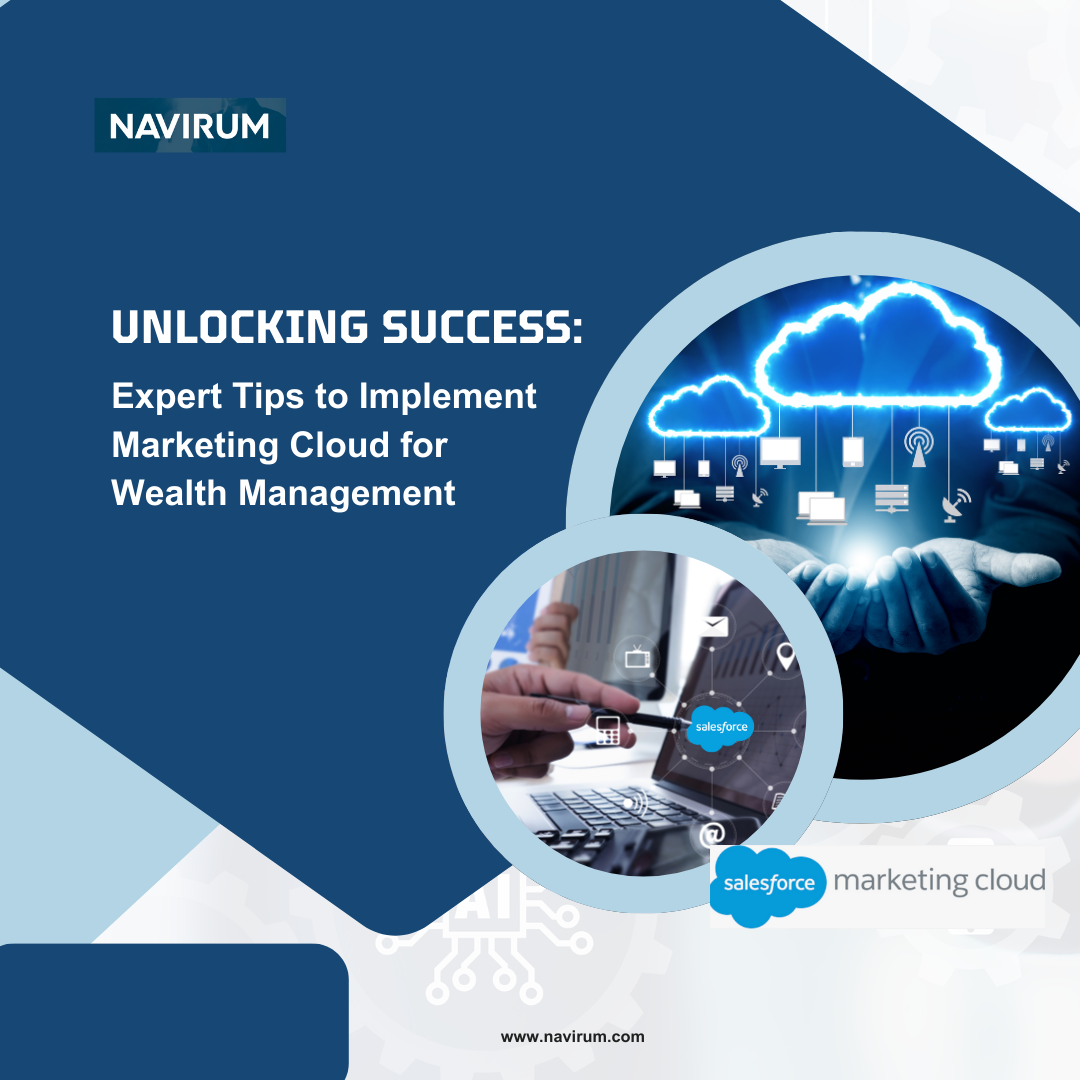
Unlocking Success: Expert Tips to Implement Marketing Cloud for Wealth Management
In the fast-paced world of wealth management, effective client engagement is paramount to success. With Salesforce Marketing Cloud, wealth management firms have a powerful tool at their disposal to personalize client interactions, drive engagement, and nurture lasting relationships. As a Senior Salesforce Consultant with extensive experience in implementing Marketing Cloud solutions for wealth management, I’m excited to share some expert tips to help firms harness the full potential of this transformative platform.
Define Clear Objectives and KPIs
Before diving into implementation, it’s crucial to define clear objectives and key performance indicators (KPIs) for your Marketing Cloud initiatives. Determine what you aim to achieve—whether it’s increasing client acquisition, driving cross-selling opportunities, or enhancing client retention—and establish metrics to measure success. This clarity ensures alignment across stakeholders and guides decision-making throughout the implementation process.
Leverage Client Data for Personalization and Customization
Wealth management is inherently personal, and clients expect tailored experiences that resonate with their individual needs and preferences. Utilize the wealth of client data available within your organization to drive personalization initiatives in Marketing Cloud. Segment clients based on demographics, financial goals, risk tolerance, and engagement history to deliver targeted messaging that speaks directly to their interests and concerns.
Integrate Marketing Cloud with Financial Services Cloud
Seamless integration between Marketing Cloud and Financial Services Cloud is key to unlocking the full potential of both platforms. By connecting client data, interactions, and insights across systems, you create a unified view of each client’s journey and enable personalized, omnichannel experiences. Leverage out-of-the-box connectors and custom integrations to ensure smooth data flow and synchronization between the two platforms.
Automate Campaign Workflows for Efficiency
Time is a precious commodity in wealth management, and automation is your ally in maximizing efficiency. Leverage Marketing Cloud’s automation capabilities to streamline campaign workflows, from lead nurturing and onboarding to re-engagement and retention. Set up automated journeys based on client triggers, such as account openings, life events, or engagement milestones, to deliver timely and relevant communications at scale.
Ensure Compliance and Data Security
In the highly regulated landscape of wealth management, compliance and data security are non-negotiable. Prioritize adherence to industry regulations, such as GDPR and FINRA guidelines, when implementing Marketing Cloud initiatives. Implement robust data governance policies, encryption measures, and access controls to safeguard sensitive client information and maintain trust and confidentiality.
Measure and Iterate for Continuous Improvement
Measurement is essential for optimizing performance and driving ROI in Marketing Cloud initiatives. Establish a framework for tracking and analyzing key metrics, such as open rates, click-through rates, conversion rates, and client engagement scores. Leverage Marketing Cloud’s analytics capabilities to gain insights into campaign effectiveness, client behavior, and trends, and use these insights to refine your strategies and iterate for continuous improvement.
Implementing Marketing Cloud for wealth management is a strategic investment in enhancing client engagement, driving growth, and differentiating your firm in a competitive landscape. By following these expert tips—defining clear objectives, leveraging client data for personalization, integrating with Financial Services Cloud, automating workflows for efficiency, ensuring compliance and data security, and measuring and iterating for continuous improvement—you can maximize the impact of Marketing Cloud and deliver exceptional experiences that resonate with your clients. If you’re ready to embark on your Marketing Cloud journey, our team of experienced consultants is here to guide you every step of the way. Together, we can unlock new opportunities for success and propel your firm to new heights in the world of wealth management.
Frequently Asked Questions: Marketing Cloud for Wealth Management
How does Salesforce Marketing Cloud improve client engagement in wealth management?
Salesforce Marketing Cloud enables wealth management firms to move beyond generic communications and deliver highly personalized, lifecycle-based client engagement. By using behavioral data, financial goals, and engagement history, firms can create targeted journeys that adapt to each client’s needs.
Key engagement improvements include:
- Personalized financial education campaigns
- Automated onboarding journeys for new clients
- Triggered communications based on life events or portfolio changes
- Segmented campaigns for different investor profiles
- Multi-channel engagement across email, SMS, and digital channels
This approach helps advisors maintain consistent, relevant communication with clients while scaling engagement across the entire client base.
Why is integration between Marketing Cloud and Financial Services Cloud critical?
Integration between Marketing Cloud and Financial Services Cloud creates a unified client view that allows firms to align marketing activities with advisor relationships and financial data.
This integration enables:
- Real-time synchronization of client profiles
- Marketing campaigns triggered by financial milestones
- Personalized communications based on account activity
- Improved collaboration between marketing and advisors
- Better tracking of client engagement within Salesforce
Without integration, marketing teams operate with fragmented data, reducing the effectiveness of personalization and automation.
What types of client journeys should wealth management firms automate in Marketing Cloud?
Common automated journeys include:
Wealth management firms can automate multiple client lifecycle journeys to improve engagement and operational efficiency.
- New client onboarding and welcome sequences
- Prospect nurturing for high-net-worth leads
- Retirement planning education journeys
- Market update and portfolio insights communications
- Re-engagement campaigns for inactive clients
- Life-event triggered communications (marriage, retirement, inheritance)
Automated journeys ensure clients receive timely, relevant communications without requiring manual intervention from advisors or marketing teams.
How can wealth management firms use Marketing Cloud for client segmentation?
Client segmentation allows firms to deliver highly relevant messaging based on financial, demographic, and behavioral data.
Segmentation strategies often include:
- Net worth tiers or investable assets
- Risk tolerance profiles
- Financial goals (retirement, wealth preservation, estate planning)
- Client life stage
- Engagement behavior with previous campaigns
- Product ownership or service usage
This level of segmentation allows firms to create marketing strategies that resonate with specific investor groups.
How can Marketing Cloud support compliant marketing in regulated financial environments?
Marketing Cloud can support compliance through governance frameworks, approval workflows, and data security controls designed for financial services organizations.
Compliance best practices include:
- Pre-approved content libraries for advisors
- Role-based access controls
- Campaign approval workflows
- Secure storage of client data
- Audit trails for communications
- Integration with compliance review processes
These controls help firms meet regulatory requirements while still maintaining effective client communication.
What data strategy should wealth management firms adopt before implementing Marketing Cloud?
A strong data foundation is essential for a successful Marketing Cloud implementation. Firms must ensure their client data is clean, structured, and accessible across systems.
Important data considerations include:
- Data quality and standardization
- Integration with CRM and financial systems
- Client consent and communication preferences
- Data governance policies
- Identity resolution across channels
Without a strong data strategy, personalization and automation initiatives will deliver limited results.
How can Marketing Cloud help advisors scale personalized communication?
One of the biggest challenges in wealth management is maintaining personal relationships as client books grow. Marketing Cloud allows advisors to scale personalization without losing the human touch.
Key capabilities include:
- Automated but personalized advisor-branded communications
- Dynamic content tailored to client segments
- Behavioral triggers that send timely messages
- Advisor-specific campaign templates
- AI-powered content recommendations
This allows advisors to maintain consistent engagement across hundreds or thousands of clients.
What metrics should wealth management firms track to measure Marketing Cloud success?
To evaluate ROI and campaign performance, firms should establish a measurement framework aligned with their strategic goals.
Key metrics include:
- Email open and click-through rates
- Client engagement scores
- Lead-to-client conversion rates
- Cross-sell and upsell campaign performance
- Client retention and loyalty metrics
- Campaign-attributed revenue
Tracking these metrics allows marketing teams to continuously optimize their engagement strategies.
How does Marketing Cloud support omnichannel engagement for wealth management clients?
Modern investors interact with financial institutions across multiple digital and physical channels. Marketing Cloud enables firms to orchestrate consistent messaging across these touchpoints.
Omnichannel capabilities include:
- Email marketing campaigns
- SMS and mobile notifications
- Personalized web experiences
- Social media engagement
- Event and webinar communications
- Advisor-driven outreach
By coordinating communications across channels, firms can create seamless client experiences.
What are the most common challenges when implementing Marketing Cloud in wealth management?
While Marketing Cloud offers significant benefits, implementation can be complex due to organizational, technical, and regulatory factors.
Common challenges include:
- Data silos across financial platforms
- Compliance and regulatory requirements
- Limited marketing automation expertise
- Integration complexity with CRM systems
- Aligning marketing teams with advisors
Working with experienced Salesforce consultants and establishing a clear implementation roadmap can significantly reduce these risks and accelerate time-to-value.
Navirum Recommendations: Practical SME Tips for a Successful Marketing Cloud Implementation
From our experience supporting wealth and asset management firms with Salesforce implementations, success with Marketing Cloud often depends on operational alignment—not just technology deployment. Below are a few practical recommendations that help firms accelerate value and avoid common pitfalls

Start with a focused pilot before scaling.
Align marketing and advisors early in the process.
Create a reusable campaign architecture.
Use Marketing Cloud to support thought leadership—not just promotions.
Plan for ongoing optimization and governance.
Start with a focused pilot before scaling.
Rather than launching multiple campaigns across all client segments, begin with one or two high-impact journeys—such as new client onboarding or prospect nurturing. This approach allows teams to validate data flows, test personalization strategies, and demonstrate early ROI before expanding the program.
Align marketing and advisors early in the process.
In many wealth firms, marketing teams operate separately from advisors, which can limit adoption. Establishing advisor input on messaging, campaign timing, and client segmentation ensures communications remain relevant and strengthens advisor buy-in.
Create a reusable campaign architecture.
Building standardized templates, data extensions, and automation frameworks allows marketing teams to launch campaigns faster and maintain consistency across regions, advisors, and client segments. A well-designed architecture significantly reduces operational complexity as programs scale.
Use Marketing Cloud to support thought leadership—not just promotions.
Wealth clients respond strongly to educational and market insight content. Structuring campaigns around financial education, market commentary, and planning guidance often drives higher engagement than purely promotional messaging.
Plan for ongoing optimization and governance.
Marketing Cloud is not a “set it and forget it” platform. Establish a cadence for reviewing campaign performance, refining segmentation strategies, and updating personalization rules to ensure the platform continues delivering measurable business value.
With the right strategy, governance framework, and advisor alignment, Marketing Cloud can become a powerful engine for scalable, personalized client engagement across the wealth management lifecycle.