Announcing Our New Partnership with TaskRay

Delivering Seamless Customer Onboarding with TaskRay

We’re excited to announce a new partnership between Navirum and TaskRay, the leading customer onboarding and project management solution built entirely on the Salesforce platform.

This partnership brings together TaskRay’s powerful, Salesforce-native onboarding tools with our deep expertise in Salesforce consulting, implementation, and process optimization. Together, we’re creating even more value for clients who want to streamline post-sale processes, drive retention, and scale efficiently within their Salesforce ecosystem.

What This Means for Our Clients

By partnering with TaskRay, we can help our clients take control of their onboarding and project delivery workflows like never before. Whether you need to operationalize customer handoffs, improve visibility across teams, or scale onboarding for long-term success, TaskRay paired with our Salesforce solutions delivers a complete, scalable system for customer success — all without leaving the Salesforce environment.

We’re proud to work with TaskRay to help our clients turn first impressions into lasting relationships.

👉 Want to learn how TaskRay can enhance your onboarding and project delivery process?

Contact us or book a free consultation to see how we can tailor a solution for your team.

Lavinia Picu Announcing Our New Partnership with TaskRay

 Announcing Our New Partnership with FormAssembly: Unlocking Smarter Salesforce Solutions

We’re excited to share that Navirum has officially partnered with FormAssembly, a leading web form and data collection platform trusted by organizations worldwide.

This strategic collaboration brings together our proven Salesforce consulting expertise with FormAssembly’s powerful form-building and data management capabilities. As a result, our clients will gain access to more seamless, secure, and scalable solutions within their Salesforce environments.

What This Means for Our Clients

By integrating FormAssembly into our Salesforce implementations, we can now offer advanced data collection workflows, simplified form creation, and automated processes — all within a secure, compliant framework. This means less manual work, faster turnaround times, and more reliable data — empowering our clients to focus on what matters most: driving results.

We’re thrilled to take this next step in enhancing our service offerings and look forward to helping our clients get even more value from their Salesforce investment.

Stay tuned for more updates, use cases, and tips on how this partnership will help transform the way you work with data.

👉 Want to see how FormAssembly can streamline your Salesforce processes?

Contact us today or book a free consultation to explore custom solutions for your business.

Lavinia Picu Announcing Our New Partnership with FormAssembly: Unlocking Smarter Salesforce Solutions

Financial Services CRM: Capture More Leads with Salesforce Integration & AI Tools

Listen to the deep dive:

Lead capture isn’t optional-it’s survival.

For financial services-where trust and timing are everything-AI is both the biggest threat and the greatest opportunity since the dawn of the internet. Organic Google traffic is shrinking, clients are arriving more informed and less patient, and digital-first service is now the baseline. Big fintech players like Wealthsimple, Koho, and SoFi know this and use it to their advantage. The question is: how can independent advisors and wealth managers compete?

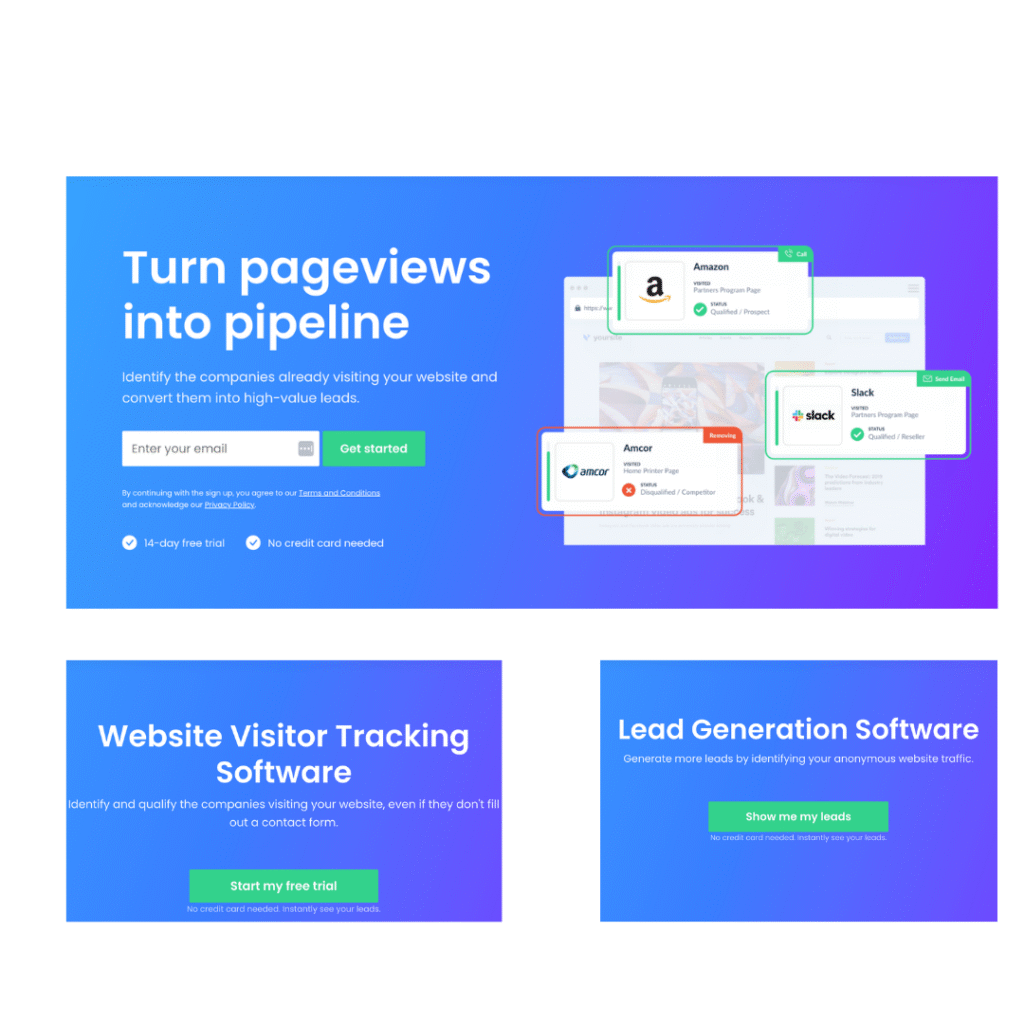
This article explores why capturing leads through your website has never been more critical, how AI and large language models (LLMs) are disrupting digital traffic, and which Salesforce-integrated tools – Dealfront, Brevo, Seamless and Apollo – can help turn anonymous visitors into loyal clients.

A Structural Shift Underway

Marketing: From SEO-First to AI-First

Google’s AI Overviews, ChatGPT, Perplexity, and other LLMs are rewriting the rules. AI summaries are cutting organic traffic-some firms report a staggering 60% drops (Forbes). For financial advisors, this means an AI-first digital strategy is essential.

Sales: Faster Cycles, Higher Stakes

Buyers arrive pre-informed via LLMs and expect precision and speed. Barron’s reports CRM http://Monday.com’s 26% share price drop, tied to AI disrupting SEO-driven pipelines.

Service: The Uber Effect

AI-powered, instant responses are now the baseline. Clunky forms and delayed replies erode trust. Just as Uber reshaped expectations in transportation, AI is transforming client service in financial services CRM systems.

The Hidden Cost of Inaction

Every unengaged visitor is a lost opportunity in this changing world:

  • ROI goes unmeasured. Without lead capture, marketing spend is wasted.
  • Leads vanish. Prospects browse and leave without engaging.
  • Loss compounds. No data → no proof of ROI → stalled growth.

A website without lead capture tools is like hosting a seminar where no one signs the guest book.

Turning Engagement Into Opportunity

Capturing leads is only step one-you also need to track, nurture, and integrate them into your systems. To address these challenges, here are some popular tools every growing financial firm can consider

  • Dealfront → See which companies are visiting your site and spot high-intent buying signals.
  • Brevo → Automate nurture campaigns with personalized emails, newsletters, and client journeys.
  • Apollo → Scale your marketing with advanced lead sourcing, marketing automation, segmentation, and testing.
  • Seamless.io → Real-time search engine for B2B Sales leads driven by AI
  • Salesforce Integration → All tools integrate seamlessly with Salesforce and financial services CRMs, ensuring every lead and prospect is captured, tracked, and acted upon.

Risk and Governance

AI adoption is outpacing regulation. From recorded AI assistants in meetings to synthetic identities fueling fraud, risks are rising.

As Timnit Gebru warns:

“We’re seeing a Wild West with AI regulation. Adoption is outpacing clear guidelines, leaving businesses exposed.”

For wealth managers, every lead capture workflow must be grounded in compliance, security, and trust-especially as digital engagement becomes the new norm in an AI-driven world. Executed properly, digital tools offer an authentic and human-centric front line to connect with clients.

This is particularly critical for investors aged 50 and above, who still rely heavily on websites, YouTube, and traditional email for financial communications. A global study found that 68% of those over 50 hold digital investments, and nearly 73% of retail investors of all ages turn to digital means for advice or information-underlining that far from being tech-adverse, older segments are increasingly active online according to Amundi

If your lead capture system doesn’t reflect these habits-while maintaining regulatory rigor and trust-you risk alienating precisely the audience that most needs reassurance.

Conclusion: Adapt or Be Disrupted

In today’s AI-driven market, SEO alone won’t cut it. Financial advisors and wealth managers must transform their websites into lead capture engines, track engagement with tools like Dealfront, nurture prospects with Brevo, Seamless and Apollo, and integrate everything into Salesforce. Success depends on combining AI-powered efficiency with compliance and trust. Those who adapt will grow – those who don’t risk losing leads to AI-driven search forever.

⭐⭐⭐ DISCOVER NAVIRUM ⭐⭐⭐

Lavinia PicuFinancial Services CRM: Capture More Leads with Salesforce Integration & AI Tools

AI Meeting Assistant Comparison for Wealth, Banking and Fintech Teams

TRUSTED BY · Salesforce Ridge Partner · ★★★★★5.0 on Salesforce AppExchange · 1,000+ Projects · 400+ Clients · Since ’18

The best AI meeting assistant depends on your firm type, regulatory environment, CRM and data requirements. Advisor-focused platforms such as Jump, Zocks and Vinton can support meeting capture and follow-up, while tools such as Focal AI and Fellow place greater emphasis on data residency, retention and enterprise controls. For firms operating on Salesforce, Agentforce for Financial Services provides a more contextual, CRM-native approach to preparing for meetings, organizing client information and automating follow-up.

No Single Tool Is Right for Every Financial Firm

This guide compares the options based on where they fit, how they integrate and what firms should verify before deploying them, whether or not Salesforce is part of your stack. Before picking a specific tool, it is worth taking a step back to assess whether the firm is ready for AI more broadly.

Why Navirum Wrote This

Navirum helps financial firms evaluate AI tools through the combined lenses of business workflow, CRM integration, data architecture, security and regulatory requirements. Our perspective comes from implementation, integration and advisory work across financial-services technology environments, on Salesforce and off it. This guide is built from that experience, not marketing copy.

Our Perspective

We look at each tool the way a firm actually has to live with it: how it fits your CRM, what it requires from a compliance standpoint, and what changes once it is deployed. Where we reference our own experience below, we say so explicitly rather than folding it into a headline statistic.

The best AI meeting assistant depends on your firm type, regulatory environment, CRM and data requirements. Answer a few quick questions below to find your shortlist, or view the full comparison for a detailed matrix.

Find your AI meeting assistant shortlist

Step 1 of 3

Answer three quick sets of questions to identify tools that may align with your firm, systems and priorities.

Firm type
Primary operating jurisdiction
Primary CRM
Data-hosting requirement
Top priorities Select up to 2
This rules-based tool compares your firm type, CRM, jurisdiction, hosting requirement and selected priorities against documented vendor capabilities. It provides an indicative shortlist and does not replace security, compliance, legal or procurement review.
View the full comparison

Find Your Firm Type

Jump straight to what applies to your firm, or scroll down for the full comparison.

Wealth Advisors & RIAs

Best for: Client meeting prep, portfolio-review summaries, action-item capture, CRM updates, supervision and recordkeeping.

Worth evaluating: Jump, Zocks, Vinton, Focal AI, or Agentforce for advisor productivity where Salesforce is already central.

Best fit depends on how central Salesforce already is to your workflow.

Banks, Insurance & Other Regulated Financial Firms

Best for: Strong governance, auditability, data-access controls, retention policies, integration with enterprise CRM and service workflows.

Worth evaluating: Fellow, Focal AI, Salesforce Agentforce, or other enterprise tools where controls can be demonstrated.

Ask any vendor to demonstrate controls directly rather than taking certifications at face value.
Fintech & Financial Ops Teams

Best for: Fast deployment, internal and external meeting support, cross-functional collaboration, task generation, flexible APIs.

Worth evaluating: Fellow, Jump, Zocks, or Salesforce Agentforce for Salesforce-based firms.

Prioritize deployment speed and API flexibility over advisor-specific features.

Accounting & Bookkeeping Firms

Best for: Client onboarding, tax-season meeting prep, document and task follow-up, engagement summaries, practice-management integration.

Worth evaluating: Tools worth evaluating based on wealth/tax advisory workflow and integration fit, not a leading pick, this segment is still emerging.

Possible options include broader meeting assistants alongside advisor-focused products, depending on your CRM and practice-management environment.

Canadian & Data-Residency-Sensitive Firms

Best for: Canadian data-hosting options, clear retention controls, privacy documentation, CIRO-related supervision, PIPEDA and provincial privacy considerations.

Worth evaluating: Vinton, Focal AI, or other vendors that can document their hosting and data-handling model.

Confirm current hosting regions directly with the vendor before relying on this for a compliance decision.

ToolBest suited toMeeting captureSalesforce integrationOther CRM integrationsFS focusData residencyRetention / deletion controlsCompliance / security evidencePrimary strengthImportant limitationEvidence reviewed
JumpUS RIAs and wealth managers scaling client meetings on a Salesforce-centric CRM workflow.Records and transcribes live meetings; automates prep and note-taking; verbal-consent detection.NativeNot primarily built for non-Salesforce CRMs, per available information.Purpose-built for financial advisors.Not independently verified for this guide, confirm with vendor.?Vendor-definedConsent detectionDeep native Salesforce push-sync plus built-in consent detection.Data residency and retention specifics not independently verified for this guide.2026-07-24
ZocksBroker-dealers and RIAs that want to avoid retaining raw audio or video.No-recording architecture, captures meeting content without retaining raw audio.Managed connectorWealthbox, Redtail, Practifi, XLR8.Purpose-built for advisors.Not independently verified for this guide, confirm with vendor.No-recording modelNo-training (vendor-stated)Broadest non-Salesforce CRM coverage among the advisor-specific tools here, plus a documented no-training policy.“5,000+ firms” is a Zocks-reported figure, not independently verified.2026-07-24
Salesforce AgentforceFirms that already treat Salesforce as their primary client and operational system. See our Salesforce Financial Services Cloud implementation services.Depends on configured Salesforce or connected capture capability, not a standalone recorder by default.Native platformNot designed for non-Salesforce environments.Industry-specific when configured with Financial Services Cloud and financial-services workflows.Follows the firm’s existing Salesforce org configuration.Firm-governedInherits firm postureContextual Agentforce meeting prep & follow-up using existing client, household and case data.Requires more setup and architecture effort than installing a standalone meeting assistant, and depends on a connected capture source for the meeting audio or transcript itself.2026-07-24
VintonCanadian advisors and firms needing CIRO-related supervision support.Records and transcribes live meetings.API/automationConfirm with vendor.Purpose-built for Canadian financial advisors.Canadian hosting, confirm current regions with vendor.?Vendor-defined?Confirm with vendorCanadian-market focus and CIRO-aware design.Fewer independently verifiable technical specifics than some competitors as of this review.2026-07-24
Focal AICanadian firms needing in-country data residency alongside broad CRM and planning-tool coverage.Records and transcribes live meetings.API/automationRedtail, MS Dynamics 365, Conquest, eMoney, and 130+ other tools (vendor-stated).Purpose-built for Canadian financial advisors.Azure Canada Central (Toronto), corroborated by independent coverage (Investment Executive, Businesswire).SOC 2 Type IISOC 2 + SEC/FINRA/OPC/PIPEDABroadest verified CRM and planning-tool integration list, plus independently corroborated data residency.“10+ hours/week saved” is a Focal AI-reported figure, not independently verified.2026-07-24
FellowPE firms, hedge funds, RIAs and broker-dealers needing the strictest retention and redaction controls, per Fellow’s own site.Captures and transcribes meetings; not built exclusively for financial advisors.?Confirm with vendorGeneral meeting-productivity tool, not CRM-specific by design.Configurable for regulated industries rather than purpose-built exclusively for financial advisors.Confirm with vendor.Zero-day retentionSOC 2/HIPAA/GDPR + redactionStrictest documented redaction and retention controls among the tools in this guide.General-purpose meeting tool with regulated-industry controls layered on, rather than an advisor-specific workflow tool.2026-07-24

Note: Time-savings and adoption-rate figures in this guide are vendor-reported estimates, not independently verified by Navirum. For independently verified metrics, refer to each vendor’s SOC 2 or third-party audit documentation (see the compliance/security column above).

A note on general-purpose tools like Fireflies and Otter: they’re solid for everyday business meetings, but they weren’t built with financial services compliance in mind the way the tools above were. Before using one for client meetings, ask the vendor directly about training-data policies, retention controls, and whether their CRM integration is a native connector or a Zapier workaround, the answer varies by tool and can change without notice. If Jump is on your shortlist, see how firms are integrating Jump with the wider stack.

FREE DOWNLOAD

AI Meeting Assistant Evaluation Scorecard for Financial Firms

A single scorecard covering Salesforce integration, other CRM integrations, data residency, retention, consent, audit logs, security documentation, meeting capture, pre-meeting prep, post-meeting automation, implementation effort, vendor support, and estimated total cost, the same criteria used in this guide.

Delivered by email · Usually within a few minutes

AI Meeting Assistants Comparison

How to Choose the Right AI Meeting Assistant

There is no single “best” AI meeting assistant for financial firms, the right pick depends on your CRM, your regulatory environment and what you actually need the tool to do before, during and after a meeting. Here is how the tools above tend to sort by what a firm is optimizing for:

Best for advisor-specific workflows: Jump, Zocks
Best for firms already operating on Salesforce: Salesforce Agentforce
Best for Canadian data-residency requirements: Vinton, Focal AI
Best for strict retention and redaction controls: Fellow
Best for broad CRM flexibility beyond Salesforce: Zocks, Focal AI
Worth evaluating for accounting and bookkeeping workflows: Jump, Zocks, depending on your practice-management environment

If Salesforce is already central to your firm, our Agentforce consulting services can help you evaluate the fit.

What to Check Before You Choose

Recordkeeping, supervision, consent and retention obligations vary according to the firm, the employee’s role, the communication type and the applicable jurisdiction, this can include CIRO-related requirements for Canadian advisors, and SEC or FINRA obligations for US RIAs and broker-dealers. Map any proposed tool against your own policies and confirm the final configuration with compliance or legal counsel before deploying it. Ask any vendor for their compliance documentation, data residency options, and audit log access before deploying. For a deeper look at how this plays out on Salesforce specifically, see our guide to Salesforce FSC compliance & governance.

What About Claude, ChatGPT, Gemini, or Slack?

You’ll often see general-purpose AI assistants mentioned in the same breath as the tools above. They’re useful, but they’re solving a different problem, and it’s worth being clear on the difference before you shortlist anything. For a broader view beyond meeting assistants, see other Agentforce/AI use cases financial firms are adopting.

Claude, ChatGPT, and Cowork don’t join or transcribe live calls. They’re genuinely useful for pre-meeting prep (summarizing a client’s file, drafting an agenda) and post-meeting follow-up (turning your own notes into a task list or email), but they aren’t a substitute for a purpose-built meeting assistant. If you’re evaluating how AI fits into your firm’s broader data and security posture, our guide to putting AI to work on trusted data covers that ground. If Salesforce is already central to your firm, see our Agentforce consulting guide.

Google Gemini is the exception among general assistants: its “Take notes for me” feature genuinely transcribes live inside Google Meet for Google AI Pro/Ultra subscribers (as of April 2026, it requires all-participant consent). But it’s a generic Workspace feature, not an advisor-specific tool. It won’t sync structured notes to your CRM or flag compliance requirements the way the tools above do.

Slack’s AI Notes only covers internal Slack Huddles, not client meetings, and has no CRM sync. If your team is on Slack, it’s worth knowing about, but it doesn’t compete with the tools in the table above.

Navirum’s Perspective

This guide is built for financial services firms, RIAs, wealth managers, banks, and fintech operations teams evaluating AI meeting tools for client-facing and compliance-sensitive work. It isn’t written for individuals looking for a general-purpose note-taking app.

That distinction matters because the requirements are genuinely different. Your firm needs CRM sync (ideally native Salesforce), documented compliance controls (CIRO, SEC, FINRA depending on where you operate), and a vendor relationship you can point to during an audit. A tool built for consumer note-taking won’t hold up to that scrutiny, no matter how good its transcription is. If compliance documentation is part of your evaluation, our Salesforce FSC compliance guide is a useful companion to this page.

Switching From Your Current Assistant

If your firm adopted an AI meeting assistant back in 2024, it’s worth taking a fresh look. The market has matured a lot since then: several of the tools in this guide (Zocks, Focal AI, Fellow’s financial-services controls) either didn’t exist yet or weren’t mature enough to be a serious option two years ago.

Switching has real costs, and we won’t pretend otherwise: retraining your team, migrating historical notes, re-establishing CRM sync, and getting compliance sign-off on the new vendor all take time. But for most firms, that cost is smaller than the ongoing risk of staying on a tool that was never built for financial services compliance in the first place, especially if your original tool can’t answer basic questions about training-data policy or audit logging. If migration support would help, that’s a service Navirum provides directly, including CRM re-sync and compliance documentation as part of the switch.

Where Does Your Meeting Data Actually Live?

Once you’ve picked a tool, it’s worth asking a question most firms skip: where does the transcript, the notes, and everything the AI pulled out of the meeting actually end up, and can you find it again later?

Building on trusted, governed client data matters most for firms combining meeting information with CRM, service, portfolio, marketing and other customer data, Salesforce Data Cloud can provide a governed retrieval and activation layer for Agentforce. Smaller firms may be better served initially by writing structured summaries, tasks and follow-up actions directly to Salesforce records, and layering in Data Cloud later if their needs grow. This is a real Navirum practice area, not a hypothetical: it’s the same architecture behind our broader Agentforce work.

It also helps to separate two different jobs: operational storage (the notes and action items your team actively works from day to day) and archival storage (the recordkeeping copy you’re required to retain, whether or not anyone ever opens it again). Most firms end up needing both, and conflating them is a common source of both compliance gaps and unnecessary storage cost. Full retention specifics vary by record type and jurisdiction, see the references below for the detail.

Frequently Asked Questions

Wondering how these tools handle compliance? CRM sync? Which one fits a Canadian firm? Here’s what firms ask us most.

How do I choose the right AI meeting assistant for my firm?

Look for three things: compliance alignment (CIRO (formerly IIROC/MFDA) for Canada, SEC for US), CRM integration (native Salesforce is best), and your business model (RIAs need deep Salesforce integration, fintech needs speed). See our comparison table above.

Do AI meeting assistants integrate with Salesforce? +

Yes, but depth matters. Jump, Vinton, and Agentforce have native Salesforce connectors that auto-sync tasks and notes. Fireflies and OtterPilot use Zapier or API connections, which require manual setup and carry more failure risk. Salesforce is the industry standard for RIAs and advisory firms.

What are the compliance requirements for AI meeting assistants in financial services? +

Requirements vary by firm, role and jurisdiction: CIRO-related supervision and recordkeeping obligations for Canadian advisors, and SEC or FINRA obligations for US RIAs and broker-dealers, among others. Most tools offer SOC 2 certification, encryption, and audit logs, but a vendor’s certifications alone don’t make your firm compliant. Confirm the specific requirements that apply to your firm with compliance or legal counsel, and check with each vendor directly for their current certifications before deploying.

How much time can an AI meeting assistant save? +

Time savings depend on your current process. Firms moving from manual note-taking and CRM entry to an AI-assisted workflow typically see meaningful reductions in post-meeting admin time. Ask any vendor for time-tracking data from comparable deployments before you commit.

Which AI meeting assistant is best for Canadian advisors? +

Vinton and Focal AI are both built with Canadian data residency and CIRO-related supervision needs in mind. Jump also works for Canadian firms. Requirements differ by jurisdiction and firm type, so check with your compliance team on what specifically applies before choosing.

Can AI meeting assistants update my CRM automatically? +

Yes, if your tool has native CRM integration. Jump, Vinton, and Agentforce auto-sync tasks, notes, and action items to Salesforce. Fireflies and OtterPilot typically require Zapier or manual entry.

What if I don’t use Salesforce, can I still use an AI assistant? +

Yes. Fireflies works with most CRMs via Zapier, HubSpot, and Pipedrive. OtterPilot is largely CRM-agnostic. If you’re on Redtail, Wealthbox, or another advisor platform, check with your vendor about integration options.

How do I know if an AI meeting assistant meets my compliance needs? +

Ask the vendor for SOC 2 Type II certification, data residency options (Canada vs. US), audit log access, and encryption details (AES-256 minimum). Navirum can help you evaluate options across the tools we’ve deployed.

Navirum Client Success Stories in Financial Services

FREE CONSULTATION

Need help evaluating or integrating an AI meeting assistant?

Navirum can help you assess the options, connect the selected platform to Salesforce or another system, and design the governance and follow-up workflows around it. Prefer to just talk it through? discuss your AI-assistant requirements directly with our team.

No commitment · We follow up within one business day

References

  1. CIRO (Canadian Investment Regulatory Organization) was formed in 2023 from the merger of IIROC and the MFDA. Firm-level supervision and recordkeeping obligations that previously fell under IIROC/MFDA now fall under CIRO.
  2. SEC Rule 17a-4 historically required WORM (write-once, read-many) storage for broker-dealer records. The SEC amended the rule in 2022 (compliance date May 2023) to also permit an audit-trail alternative in place of strict WORM.
  3. Retention periods for financial services records commonly run around six years, but the exact period varies by record type, role (RIA vs. broker-dealer), and jurisdiction. Confirm specifics with your compliance counsel rather than treating any single number as universal.
  4. FINRA Rule 4511 sets parallel recordkeeping requirements for FINRA member firms.
  5. Archival storage examples (AWS S3 Glacier, Smarsh, Global Relay, and similar) are mentioned as illustrative categories of vendor, not as Navirum partnerships or endorsements.
Lavinia PicuAI Meeting Assistant Comparison for Wealth, Banking and Fintech Teams

Why Financial Services Firms Need to Be AI Ready

Why Financial Services Firms Need to Be AI Ready? Advisors, credit unions, and regional banks are all facing the same question: are we ready for AI? AI isn’t futuristic-it’s here, and it’s transforming financial services right now.

Much like the internet in the 1990s, AI is a permanent shift. Those who prepare today will win tomorrow.

“It’ll be unthinkable not to have intelligence integrated into every product and service. It’ll just be expected.” — Sam Altman, CEO, OpenAI

The Risks of Rushing In

AI isn’t just another app you plug in. Without a plan, you risk wasted time, spiraling costs, and compliance headaches

  • Privacy & Data – AI models don’t just process information, they learn from it. You need to know where your data lives, how it’s stored, and if it meets regulations.
  • Costs & Scale – Licenses are the easy part. The real costs come from storage, access, and security of the data AI creates.
  • Compatibility – If your AI doesn’t work with Microsoft, Google, Salesforce, or your banking platforms, adoption will stall.
  • Use Cases – Some AI apps deliver real value. Others are distractions. Focus is critical.

As Timnit Gebru, AI researcher, warns:

“We’re seeing a Wild West with AI regulation. Adoption is outpacing clear guidelines, leaving businesses exposed.”

Proven Wins Today

In the more conservative industry of financial services. The popular use cases are the practical ones. Leading firms are already using AI to:

  • Automate compliance notes and meeting prep (saving 8–10 hours per week).
  • Draft client communications and reports faster.
  • Process documents seamlessly.
  • Detect fraud, monitor AML, and speed up onboarding.

These aren’t experiments – they’re delivering real results today.

Why AI Readiness Matters

Without a strategy, AI becomes a liability. With one, it’s a growth engine. Readiness means:

  • Understanding your costs.
  • Planning for data growth.
  • Picking the right use cases.
  • Building on trusted platforms.

Don’t Get Left Behind

AI is moving fast. The firms that act now will lead; those that wait will struggle to catch up.

Navirum’s AI Readiness Program focuses on aligning the five areas that matter most:

  • Your Team – trained, equipped, and confident using AI.
  • Your Data – secure, structured, and compliant.
  • Your Processes – optimized to capture AI efficiency gains.
  • Your Partners – integrated across the platforms you rely on.
  • Your Clients – benefiting from smarter service and stronger trust.

When these pieces work together, your firm can unlock the full potential of this transformative technology.

🚀 Book your 20-minute AI readiness call today – and start building the foundation for growth.

⭐⭐⭐ DISCOVER NAVIRUM ⭐⭐⭐

CSAT 5/5 – Salesforce AppExchange

Customer Success Stories

Salesforce Expertise

Lavinia PicuWhy Financial Services Firms Need to Be AI Ready

Navirum Launches Premium Strategic Consulting to Help Financial Services Navigate Digital Transformation in the Era of AI

Montreal, Canada — August 18, 2025 

Premium Strategic Consulting to Help Financial Services Navigate Digital Transformation in the Era of AI

New consulting practice builds on client feedback, Salesforce expertise, and decades of industry experience in wealth, banking, and insurance

Navirum, a Salesforce consulting partner for financial services, today announced the launch of its Strategic Consulting practice, a premium offering designed for founders, executives, and managers who need clear direction to achieve their business goals.

Strategic Consulting builds on years of positive client feedback and focuses on the areas where Navirum has delivered the most impact: shaping strategy, guiding roadmaps, and providing trusted advisory at the executive level. The offering addresses growing pressures facing the financial services industry — including mounting compliance regulations, heightened competition, and the paradigm shift brought by AI, which represents the most significant transformation since the rise of the internet.

Deep Salesforce Expertise

At the core of Navirum’s Strategic Consulting practice is its deep expertise in building Salesforce solutions that empower financial services organizations. Navirum has extensive experience with Financial Services Cloud, Agentforce, Experience Cloud, and Marketing Cloud, and is recognized for its ability to integrate Salesforce seamlessly with financial systems across North America. This combination enables firms to unlock the full value of their Salesforce investment while improving compliance, operational efficiency, and client engagement.

Grounded in Industry Experience

Navirum has decades of expertise across wealth management, banking, and insurance, combined with proven experience architecting and designing enterprise solutions. Strategic Consulting consolidates this knowledge into a structured, outcome-focused approach for firms seeking to scale, innovate, and stay compliant.

Powered by Strategic Partnerships

Navirum’s strength is amplified by deep partnerships across the Salesforce ecosystem and the North American financial services landscape. These include collaborations with Salesforce, Addepar, Amazon Web Services, DocuSign, Google, and AI partners such as Vinton.AI. Together, these partnerships allow Navirum to deliver creative, strategically advantageous solutions that align technology and business strategy.

Guided by Client Feedback

Navirum’s Strategic Consulting practice was shaped directly by client input. “We’ve consistently heard from our clients that the most valuable part of our work is the strategic guidance — helping them define their architecture, chart their roadmaps, and make confident decisions” said Rory Galvin, CEO of Navirum. “This new practice is our way of doubling down on what clients value most while preparing them for the future.”

Customer Stories

For Further Information Contact Us

Navirum’s Strategic Consulting practice enables financial services leaders to navigate uncertainty, embrace innovation, and accelerate growth.

To learn more about Navirum Strategic Consulting, visit our website or contact Navirum.


About Navirum

Navirum is a Salesforce consulting partner specializing in digital transformation for financial services across North America. With deep expertise in Salesforce Financial Services Cloud, Experience Cloud, Marketing Cloud, and complex system integrations, Navirum helps wealth managers, banks, and insurers scale efficiently, stay compliant, and innovate with confidence. Through consulting, managed services, and strategic partnerships, Navirum transforms financial services companies with Salesforce and the broader technology ecosystem.

Lavinia PicuNavirum Launches Premium Strategic Consulting to Help Financial Services Navigate Digital Transformation in the Era of AI

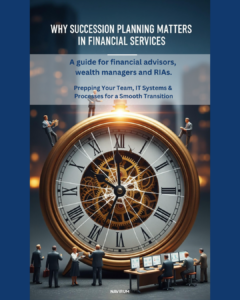
For Advisors, Succession Isn’t An Event – It’s a Strategy

At Navirum, we’ve partnered with thousands of advisors across North America, and succession planning consistently stands out as the most important – and most difficult – initiative they face. Not because of markets or products, but because it’s about legacy, clients, and the business built over decades.

Yet, 60% of Financial Advisors have no succession plan, even when they’re within 10 years of retirement? [Ref 1, Ref 2]

Some thoughts on what Advisors can do…

The Strategic Approach

Succession works best when it’s treated as a strategic goal, not an afterthought. Advisors who set a clear retirement horizon and work backwards build firms that are fit for today and resilient for tomorrow. A practical rule of thumb: allow at least one month of preparation for every year your practice has been in business. If your systems and processes are solid, plan to reinvest 1-5% of annual revenue to get succession-ready.

The Personal Reality

At Navirum, we’ve seen how personal these projects are – particularly for advisors nearing retirement, knowing they may be engaging in the last major initiative of their careers. Wealth management is fundamentally a people business. Succession is about building a platform so those client relationships can live on beyond any one advisor. Even when legacy isn’t the stated goal, every step taken is building one. A clear reality check on what you want – whether a clean exit, phased transition, or lasting platform – should guide your priorities and investments.

Capturing Institutional Knowledge

Succession isn’t just about the founder’s expertise. Long-time staff and managers also hold critical knowledge that must be captured and built into a living knowledge base. In many firms, consolidating the founder’s institutional knowledge – along with decades of physical and digital information – is the largest task. But it’s equally important to document the insights of other senior team members. Succession is the opportunity to bring all that knowledge into one central place, integrating it into systems and processes. This is one of the most strategic steps in the entire project

The Valuation Impact

Finally, succession is about valuation. Firms with clean data, documented processes, and modern systems don’t just transition smoothly – they also command higher multiples when buyers step in. Below this article I’ve provided answers to 20 FAQs and common questions I success from Advisors on their succession journey

So succession isn’t about leaving. It’s about what you leave behind – and how strong a foundation you create for the next chapter.

– Rory, Navirum Founder and CEO

Interested in discussing solutions further we would be delighted to help

Succession FAQs

How should an RIA name successors and build a real bench?

Name a primary successor and 1 – 2 deputies by function (lead advisor, ops, compliance), then publish a simple RACI so Day-1 decisions are unambiguous. Example: “Prospects → A, Planning → B, Trading → C.” This clarity cuts execution risk and keeps the team focused.

How do we communicate the change internally without drama?

Write a one-page “why now / what changes / how we’ll win,” attach a timeline, and schedule short touchpoints. Use a lightweight change model (e.g., awareness → adoption → reinforcement). Consistent messaging kills rumors and accelerates adoption.

How should we segment clients by retention risk during succession?

Tier households by risk (e.g., AUM, complexity, multiple relationships) and set outreach cadence by tier. Example: Tier-1 monthly touches, Tier-2 bi-monthly. Proactive communication reduces churn at inflection points.

Why clean the CRM before any hand-off?

Standardize fields, dedupe records, and fix ownership now; publish data standards. Clean data drives adoption and enables automation. It also boosts firm valuation in diligence.

How do we capture “how we do things here”

Build a knowledge base. This is critical! Write short SOPs for onboarding, KYC, trading, billing, complaints, and store them in a searchable hub. Include links, forms, and owners. This preserves institutional memory beyond any single person. Develop playbooks that bring these SOPs and FAQs together into usable tools

What makes a playbook usable in real life?

Keep it to one page with triggers, steps, owners, and “if/then” branches. Add screenshots and the top 3 pitfalls. Short, contextual guidance gets used—long manuals don’t.

Lead Magnet – 30 Succession Planning Tips

Download 30 Succession Planning Tips for Advisors, RIAs and Wealth Managers!

Name
Name
First Name
Last Name
RoryFor Advisors, Succession Isn’t An Event – It’s a Strategy

Navirum and Intercom Partner to Deliver AI-Powered Customer Support Solutions for Financial Services

Navirum and Intercom partner to deliver AI Customer Support in Financial Services

At Navirum, we’re excited to announce a strategic partnership with Intercom, the industry leader in AI-powered customer support platforms. Together, we’re bringing a new era of smart, automated, and compliant customer engagement to the wealth management, banking, and insurance sectors.

Through our strategic, solution implementation, and support services combined with Intercom’s market leading customer support platform, Navirum helps financial institutions streamline operations, resolve inquiries faster, and enhance engagement – driving productivity, compliance, and growth.

This collaboration empowers firms to deliver personalized, compliant, and scalable client experiences—built for the digital era.

We’re proud to be working alongside Intercom to transform how financial services engage with their customers through smart automation and intelligent support tools.

This partnership represents a major step forward in digital transformation for financial services. We’re committed to helping firms harness the power of AI to:

  • Future-proof client engagement
  • Improve customer satisfaction
  • Reduce friction and cost
  • Stay ahead in an increasingly competitive market

Let’s shape the future of financial services—together!

Ready to Transform Your Customer Support?
Learn how Navirum and Intercom can help your firm deliver faster, smarter, and more compliant service.

Lavinia PicuNavirum and Intercom Partner to Deliver AI-Powered Customer Support Solutions for Financial Services

5 Proven Ways Salesforce Support Empowers Wealth Advisors

As Signet Financial Management expanded its footprint in the competitive wealth management space, it became clear that unlocking the full potential of Salesforce was critical to their growth strategy. Yet, persistent system hiccups, time-consuming admin tasks, and limited internal resources were holding them back. To remain focused on delivering exceptional client experiences, Signet needed a smarter, more scalable approach to managing Salesforce, and that’s where Orbit Project Assist came in.

The Challenges

Signet Financial Management, a growing wealth management firm, was facing key operational roadblocks in its use of Salesforce:

⚠️ Persistent technical issues were disrupting daily workflows and advisor productivity

⚠️ Routine monthly Salesforce tasks were consuming valuable time better spent with clients

⚠️ Strategic initiatives needed expert Salesforce consulting, but internal bandwidth was limited

⚠️ New advisors and staff required structured, consistent onboarding and CRM training

These challenges were slowing down day-to-day operations and reducing the overall value Signet was receiving from their Salesforce investment.

The Solutions

Navirum delivered a comprehensive Salesforce service model tailored to the fast-paced, relationship-driven world of wealth management:

🛠️ Ongoing Support: Rapid resolution of technical issues to keep the platform running smoothly

🛠️ Managed Services: Handling of routine monthly tasks and administrative support

🛠️ On-Demand Consulting: Flexible access to expert guidance for strategic Salesforce projects

🛠️ Training: Regular onboarding and skills training for new and existing users

The Results

With Orbit’s end-to-end support and consulting services, Signet Financial Management experienced measurable improvements:

Reduced platform issues, freeing advisors to focus on client relationships

Improved CRM adoption, as users became more confident and efficient

Higher return on Salesforce investment, with more advisors fully leveraging the platform

Faster onboarding, ensuring new team members could engage clients sooner

Ready to get more from your Salesforce investment?

Let’s talk about how Navirum can help your advisory firm work smarter, scale faster, and stay focused on what matters most, your clients. Contact us today to get started.

📥 Download the Full Customer Success Story

Want to dive deeper into how Signet transformed their Salesforce operations?
Download the full customer success story as a PDF to explore the complete details of their journey, key outcomes, and how our Salesforce Support service made a lasting impact.

👉 Fill out the contact form below on this page to get instant access.

Curious what ongoing support like this actually includes? See the full breakdown on the Orbit Managed Services page.

Want more detail before reaching out? This companion piece is a deeper dive into Orbit, including our 60-Second Salesforce Platform Check to help you gauge your current managed service and support strategy.

Signet Financial: Empowering Wealth Advisors with smarter Salesforce Support

Download Your PDF Now!

Name
Name
First Name
Last Name
Lavinia Picu5 Proven Ways Salesforce Support Empowers Wealth Advisors

Salesforce for Insurance 2026: How to Match Salesforce Products to Your Insurance Model

Insurance

One platform. Different insurance models.

How Salesforce supports insurers across the full lifecycle, from lead to policyholder to renewal to claim to retention, not just one policy transaction and not just one claim.

Written by Rory Galvin, Founder, Navirum · 4x Salesforce Certified · Strategic Advisor, Insurance

Explore the Journey

Salesforce · Agentforce · Data 360 · MuleSoft, expertise built for insurers.

Salesforce Ridge Partner · ★★★★★ 5.0 on Salesforce AppExchange · 1,000+ Projects · 400+ Clients · Since ’18
By Rory Galvin · Published Aug 13, 2025 · Updated Jul 21, 2026 · 19 min read

What determines the right Salesforce fit for insurers?

Salesforce can support acquisition, service, renewals, claims coordination, and policyholder relationships across the insurance lifecycle, but the right foundation varies by insurer. High-volume personal-lines businesses may be better served by Sales Cloud and Service Cloud, life and specialty insurers with broader financial relationships often benefit from Financial Services Cloud, and complex carriers may need a wider architecture combining integration, data, collaboration, and AI. Insurers that match the platform to their business model typically see:

  • More connected policyholder information: policy, claims, and client data can unify on one record so underwriting, servicing, and claims teams work from the same picture.
  • Integration without rip-and-replace: FSC, Sales Cloud, and Service Cloud can all connect to core policy admin systems like Guidewire, Duck Creek, and Applied Epic via native connectors or MuleSoft, so insurers aren't forced to replace what already works.
  • More consistent service and renewal workflows: automated intake, case routing, and renewal reminders reduce manual handoffs across teams.
  • Governed data for AI: Einstein and Agentforce can surface lapse-risk and cross-sell signals, once policy, claims, and third-party data are unified and properly permissioned.
  • Compliance built for the industry: where FSC's insurance data model applies, KYC/AML workflows and audit trails come pre-built rather than custom-configured.
  • A foundation that scales with complexity: the right starting architecture keeps pace as an insurer adds lines of business, brokers, or AI use cases, rather than requiring a rebuild later.

Navirum is a Salesforce Ridge Partner rated 5.0 on the Salesforce AppExchange, and helps insurers choose and govern the right foundation for their specific business model.

The Insurance Customer Journey

Most conversations about Salesforce and insurance start with one piece, claims, or policy administration, or AI. Those all matter, but they sit inside a bigger relationship that runs from the first conversation with a prospect through years of renewals, service touches, and eventually claims. Salesforce’s role is to support that whole relationship, not just one transaction inside it.

A note on scope: Insurance is not a single operating model. A life insurer, a commercial carrier, a benefits provider, and a high-volume personal-lines insurer may all use Salesforce very differently. This guide considers the industry holistically to show how Salesforce’s different products can be combined around the needs of each business. Not every capability discussed here will be relevant to every insurer.

Each stage carries its own Salesforce value: acquisition and broker or advisor engagement at the lead stage, intake and workflow visibility at quote and submission, a unified customer view at bind and onboarding, case management and communications through service, retention signals and next-best-action at renewal, coordinated updates through a claim, and account expansion once the relationship is established.

The platform scales to fit the insurer, not just the policy type. Navirum’s quickstart implementation for Afton Insurance, a startup carrier, deployed a standard Sales Cloud setup with a custom-branded application layout and basic case-management queues and assignment rules, enough to track incoming service requests from day one. The same lifecycle that supports a national carrier’s full claims and renewal operation also supports a startup’s first service queue.

How the Journey Differs in Retail and Commercial Insurance

The lifecycle above is shared across retail and commercial insurance, but the complexity inside each stage is not. A personal auto policy and a multi-entity commercial account move through the same stages (quote, bind, service, renew, claim), but the number of stakeholders, approvals, and data points involved is very different.

Retail

Individual or household policies, faster intake, simpler servicing, more standardized claims, and high-volume renewals.

Navirum client example, Kelson Financial: a personal insurance provider (life, critical illness) where Navirum customized Financial Services Cloud across Opportunities, Cases, Accounts, and Contacts, then supported the relationship on an ongoing basis through Orbit managed services. That ongoing Orbit relationship is itself a retail-lane pattern: high-volume, standardized accounts benefit from continuous optimization more than one-time configuration.

Commercial

Broker-led relationships, multiple entities or locations, more approvals and stakeholders, higher-complexity claims, and deeper renewal review.

Navirum client example, a commercial insurance company based in New York City: Navirum’s engagement centered on a refined first phase optimizing usability, security, and data quality. The core of the work was remodeling the Insurance Policy object: six distinct record types, customized page layouts, and dynamic forms, including dynamic insurance-type selection across four categories, the ability to reflect multiple concurrent coverage options for complex client portfolios, and coverage field dependencies that render fields based on selected coverage type rather than cluttering every layout with every possible field. Alongside that, Navirum ran a full Salesforce Health Check, refactored org-wide access into three role-based user groups with field-level permissions across the Insurance, Account, and Contact objects, and led two discovery workshops to align the technology roadmap with the business’s goals. This is what commercial-lane complexity looks like in practice: not more features, but more precisely governed data. Want to see how this plays out across other insurers? Explore more insurance client success stories.

How Salesforce Connects the Journey

None of the stages above happen inside Salesforce alone. Insurers run on policy administration systems, claims platforms, billing applications, broker portals, data warehouses, and third-party providers, and Salesforce’s job is to connect the client relationship across all of them, not replace them. For more on why closing this integration gap matters directly to policyholders, see our take on transforming policyholder experience for North American insurers, and our insurance industry practice page covers how we lead this work end to end.


Salesforce Components by Capability

A breakdown of insurance capabilities and their corresponding Salesforce solutions.

CapabilityTypical Salesforce component
Client, household, and producer relationships
Financial Services Cloud
Insurance policy and claims data model
Insurance data model within FSC
Core policy administration (quoting, issuance, billing, renewals)
Policy Administration / Digital Insurance, or a connected PAS
Claims lifecycle management
Insurance Claims Management, or a connected claims platform
Unified third-party and cross-system data
Data 360
System integration
MuleSoft, APIs, or partner connectors
AI-assisted service and workflows
Agentforce for Financial Services

Inside the Salesforce FSC Insurance Data Model

FSC’s insurance data model ships with the objects insurers need out of the box: Policies (coverage terms, effective dates, product lines linked to the household or business account), Claims (FNOL through resolution, status tracking visible across underwriting, servicing, and claims teams in real time), Coverages (the specific protections within a policy, structured for cross-sell and lapse-risk analysis), and Insured Parties & Households (the 360° client record tying policies, claims, and referrals together). Insurers still need to configure the model, map source-system fields, and establish data ownership.

MuleSoft and Informatica: Connecting and Governing the Data

MuleSoft provides the integration layer, connecting Salesforce with core insurance platforms, legacy applications, payment systems, document repositories, and external data sources. Its API-led approach helps insurers reuse integrations, reduce point-to-point complexity, and support faster development of digital services for policyholders, brokers, underwriters, and claims teams.

Informatica focuses on data integration, quality, governance, and master data management, standardizing customer, policy, claims, and product information across systems so the business isn’t working from duplicate, incomplete, or inconsistent records. Used together, MuleSoft moves information between systems and enables real-time processes, while Informatica ensures that information is accurate, governed, and fit for use, supporting faster claims handling, more efficient underwriting, better broker service, improved regulatory reporting, and stronger analytics, without insurers having to abandon core legacy platforms to get there.

Once that data is connected and governed, Salesforce Data 360 (formerly Data Cloud) gives Agentforce access to unified, trusted customer and operational data from across the business, bringing together policy, claims, billing, broker, service, and interaction data in near real time. That is what allows AI agents to provide accurate answers, identify relevant next steps, and personalize service while respecting permissions, governance, and compliance requirements, the subject of the next section.

In practice, this integration layer typically spans policy administration systems, claims platforms, billing and payment systems, financial and accounting platforms, document repositories, broker and distributor systems, telephony and contact-centre platforms, identity and compliance services, and legacy databases and data warehouses, rarely just one or two of these for a medium-sized or large insurer. Getting it right determines whether the insurer ends up with a dependable, economically sustainable information architecture, not just a CRM bolted onto everything else.

Telephony and Contact-Centre Integration

Telephony deserves its own mention because it is operationally important for insurers running large service teams and call centres. Salesforce customers can integrate a range of contact-centre and telephony platforms, including services from Amazon Connect, Five9, Vonage, and other providers. The right choice depends on call volume, routing complexity, recording requirements, existing infrastructure, service processes, and regulatory obligations, another area where the platform decision should follow the operating model rather than the latest product trend.

Data and Storage Strategy

Not every piece of information belongs in Salesforce. A sound data strategy distinguishes between information needed immediately to serve the client, information that should be synchronized from core systems, information that can remain in a back-office system, historical information requiring occasional access, documents that should be processed, summarized, or extracted, and information that must be retained for compliance but does not need to sit directly in Salesforce.

A good insurance data strategy does not move everything into Salesforce. It makes the right information accessible at the right time, at an acceptable cost, with appropriate controls.

Storage volumes, API usage, synchronization frequency, and retention requirements all have financial consequences. These choices should be made as part of solution strategy, not after implementation begins.

Pricing and Platform Comparison

Total cost depends on the FSC edition, insurance capabilities selected, usage allocations, Data 360, MuleSoft, migration, and implementation scope. The drivers are consistent across implementations:

Cost Drivers

What to expect when pricing your Salesforce implementation.

Cost DriverWhat It Covers
FSC Edition (Enterprise vs. Unlimited)
Per-user licensing; Unlimited adds premium support, more sandboxes, and higher API limits
Implementation
Data migration from your PAS, configuration, and testing, typically the largest line item
Integration (MuleSoft)
Native connectors to Guidewire, Duck Creek, or Applied Epic where a pre-built connector isn't sufficient
Data 360 add-on
Unifies policy, claims, and third-party data for real-time AI and Agentforce use cases
Ongoing Managed Services
Continuous optimization and adoption support post-launch

Navirum scopes pricing against your specific PAS, line-of-business mix, and AI ambitions during a free FSC Readiness Assessment.

A common question is how Salesforce compares to a traditional agency management system like Applied Epic. Many insurers run both together rather than choosing one:

Applied Epic vs Salesforce

Comparing traditional agency management systems with Salesforce FSC for insurance.

RequirementApplied EpicSalesforce FSCTypical combined approach
Agency and policy administration
Core strengthMay support or connectEpic often remains the transactional system
Commission workflows
Core strengthUsually integratedCommission summaries surfaced in Salesforce
Sales and relationship CRM
Limited relative to SalesforceCore strengthSalesforce owns pipeline and relationships
Service workflows
AvailableHighly configurableSalesforce coordinates service; Epic retains policy data
AI and unified customer data
Depends on architectureAgentforce and Data 360Governed Epic data can feed the Salesforce AI layer

Which Salesforce Products Suit Which Insurers?

Financial Services Cloud is central to many of Navirum’s insurance engagements, particularly where household and financial relationships matter. But Salesforce for insurance is an ecosystem, not a single product, and FSC is not the right starting point for every insurer. The right foundation depends on the insurance line being served, the complexity of the customer relationship, the volume and repeatability of transactions, the importance of call-centre and service operations, the number and age of core systems, data and integration requirements, cross-sell and renewal strategy, and compliance, security, and AI ambitions.

The right Salesforce architecture is determined by the insurer’s business model and strategy, not simply by the fact that it operates in insurance.

The table below is a starting point, not a rulebook. Most insurers end up combining more than one of these foundations as their operations mature.

Which Products Fit?

Aligning Salesforce foundations with specific insurance models.

Insurance Model / RequirementLikely Salesforce FoundationWhy It Fits
High-volume personal lines, home or auto insurance
Sales Cloud and Service CloudSupports efficient acquisition, call-centre service, renewals, standardized processes, and cross-sell across a large book of business
Life, critical illness, and personal insurance linked to broader financial relationships
Financial Services CloudConnects insurance policies with households, investments, retirement needs, referrals, and the client's wider financial position
Large commercial insurance
Sales Cloud and/or Service CloudConfigured for commercial workflows. Supports complex opportunities, multiple stakeholders, approvals, account structures, renewals, and servicing processes
Group insurance and employee benefits
Sales Cloud and Service CloudOften with additional configuration. Supports employer, plan, member, renewal, and service relationships across B2B and B2B2C operating models
Health-related insurance or care delivery
Health Cloud (or other)The correct choice depends on whether the organization is acting primarily as an insurer, provider, care coordinator, or service organization
Broker, member, or policyholder communities
Experience CloudEnables secure digital experiences for brokers, employers, members, and policyholders
Marketing, renewals, and customer engagement
Marketing CloudSupports lifecycle communications, renewal journeys, education, brand development, cross-sell, and community engagement across insurance lines
Complex internal collaboration
SlackHelps underwriting, service, claims, operations, and leadership teams coordinate around renewals, exceptions, and complex client issues

The Navirum Complexity–Volume Framework

A simple two-axis framework helps explain why two insurers might make very different product choices:

  • High volume, lower relationship complexity: prioritize streamlined sales, service, automation, contact-centre efficiency, and repeatable renewals.
  • Lower volume, higher relationship complexity: prioritize household or account relationships, specialist workflows, collaboration, detailed data models, and long-term relationship management.
  • High volume and high complexity: requires a broader Salesforce architecture combining service, industry data models, integration, collaboration, data unification, and AI.
  • Lower volume and lower complexity: may benefit from a simpler initial implementation with room to expand.
In insurance, platform selection is often a trade-off between transaction volume and relationship complexity.

This framework reflects how Navirum approaches early-stage platform and architecture decisions for financial-services organizations.

Scaling the Journey for More Complex Insurers

As an insurer’s book of business grows, more sophisticated capabilities layer on top of the same journey, from what policyholders and employees experience, down to the controls that keep everything compliant. Getting this right as complexity grows starts with a disciplined rollout, our best practices for Salesforce implementation in insurance companies break down the steps that keep a scaling deployment on track.

Experience Layer

Policyholder, broker, service rep, claims team, the people the whole system exists to serve.

Workflow Layer

Agentforce acts as a digital workforce inside Salesforce, helping teams complete repetitive tasks, surface relevant information, and guide employees through defined processes: summarizing customer histories, preparing claim or policy updates, identifying missing information, and recommending next steps, all designed around approved workflows, permissions, and compliance requirements. Slack is the collaboration layer where people and AI work together, claims teams notified when a case needs escalation, underwriters receiving concise risk summaries, managers monitoring service bottlenecks, all inside the channels teams already use. A Slack bot gives employees a conversational front end to the same capabilities, checking claim status, reviewing a customer’s recent interactions, or routing a request to the right team without switching systems.

Intelligence Layer

Retention insights, risk signals, and AI recommendations turn policy renewal from a manual reminder into a coordinated retention journey, triggering communications based on policy expiration, client preferences, service history, and predicted lapse risk.

Platform update, June 2026: Salesforce has announced an agreement to acquire Fin (formerly Intercom) for approximately $3.6 billion. If completed, this could extend Agentforce to the external, policyholder-facing and broker-facing channel layer, automating routine policy questions, claims-status enquiries, payment support, and quote follow-ups. The transaction remains subject to closing conditions and is not yet part of the platform’s current capabilities.

Insurance may be one of the financial-services sectors with the most to gain from AI. Insurers operate with large document volumes, complex policy wording, diverse product information, fragmented legacy systems, long customer histories, claims documents and correspondence, renewals and service events, and sensitive personal and financial information. AI can help advisors, agents, underwriters, and service teams find, interpret, and act on that information more efficiently, through document classification and extraction, optical character recognition, policy and claim summaries, preparation for client conversations, renewal support, service-response assistance, knowledge retrieval, next-action recommendations, and identification of missing or inconsistent information. Optical character recognition and intelligent document processing are becoming particularly important where insurers receive large numbers of forms, statements, reports, applications, and supporting documents. Installing Agentforce alone does not solve these problems: effective insurance AI depends on connected systems, trustworthy and governed data, appropriate access permissions, defined business processes, human oversight, and security and compliance controls.

The value of insurance AI will be determined less by the sophistication of the model than by whether the insurer can give it secure access to accurate, relevant, and well-governed information.
Integration Layer

MuleSoft, APIs, and source-of-truth connections, covered in the previous section, are what keep this layer connected to the PAS, claims systems, and everything else without requiring a rip-and-replace.

Control Layer

Salesforce Shield, available as an add-on, extends native platform protections with Platform Encryption for selected sensitive data, Event Monitoring, and enhanced audit capabilities. Salesforce completed its acquisition of Own Company in November 2024 (source); now integrated into the product suite, Own provides automated backups, rapid data recovery, secure archiving, and data-seeding, protecting sensitive policy, claims, customer, and broker information and supporting recovery from accidental deletion, data corruption, or system disruption. Approval thresholds and audit rules for AI-assisted recommendations belong here too, set before rollout, not retrofitted after a compliance gap surfaces.

Insurers often hold extensive health, financial, household, and vulnerability-related information, sometimes concerning people in particularly sensitive circumstances. A complete compliance and security posture spans the full control environment: Salesforce Shield where appropriate, encryption and event monitoring, backup and recovery, Own or Salesforce-native backup options depending on the client’s requirements, profiles, permission sets, and role design, identity and access management, secure integration architecture, data-retention policies, AI access controls, monitoring and vulnerability management, and independent security expertise where appropriate.

Salesforce provides a strong enterprise platform, but each insurer remains responsible for configuring, governing, and operating it in line with its specific regulatory obligations and risk profile.
Navirum Perspective

Coexistence, not rip-and-replace, is the default architecture

Across Navirum’s recent insurance engagements, from a startup running a single Sales Cloud queue to a commercial carrier with a six-record-type policy model, the usual architecture has been coexistence: core policy and claims systems stay in place and connect to Salesforce, rather than being replaced. The lifecycle above only works end to end if the underlying systems stay connected, governed, and scaled to where the business actually is.

  • Scope integration before edition. Decide what MuleSoft or your PAS’s native connector needs to sync before comparing FSC editions, edition choice should follow integration scope, not the other way around.
  • Sequence Data 360 deliberately. If your first use case is a unified 360° client view, it earns its cost early. If you are starting with policy servicing alone, it can wait for phase two.
  • Set AI governance before Agentforce, not after. Approval thresholds for AI-assisted recommendations should exist before agents go live.

Curious who is behind this thinking? Meet the Navirum team. Prefer to keep researching before any conversation? Get ongoing insurance, Salesforce, and AI insights through FinSight.

Where This Leaves You

Choosing the Right Combination, Not the Largest One

Salesforce has become a popular platform across the insurance industry because it can support very different business models, from high-volume personal-lines service and renewal operations to complex commercial relationships, life insurance, employee benefits, and integrated financial planning.

The opportunity is not to select the largest possible collection of Salesforce products. It is to choose the right combination from the outset, align it with the insurer’s strategy, connect it to the systems and information that matter, and build a secure foundation that can evolve as AI becomes more deeply embedded in insurance operations.

A family office offering life insurance may gain substantial value from Financial Services Cloud and its household-based relationship model. A large home insurer focused on acquisition, servicing, renewals, and cross-sell may be better served by a combined Sales Cloud and Service Cloud architecture. A commercial insurer may require highly configured account, opportunity, policy, and renewal workflows supported by extensive integration and collaboration.

Each model is different. The strategic advantage of Salesforce is that the platform is flexible enough to support those differences across growing insurers, mid-sized organizations, and major North American enterprises. The implementation challenge is ensuring that flexibility is translated into an architecture that is economical, secure, and aligned with the business.

Curious where your book of business fits on this journey?

Discuss product fit and architecture with our insurance team. No commitment, we will respond within 1 business day.

Salesforce FSC for Insurance FAQ

Wondering how FSC integrates with your policy admin system, what it costs, or whether it is worth switching from general Salesforce CRM? Here is what insurers ask us most.

View all 15 questions

Fundamentals

What is Salesforce Financial Services Cloud (FSC) for Insurance, and how is it different from general Salesforce CRM?

Salesforce FSC is a cloud-based CRM platform tailored for life, P&C, and specialty insurers. It unifies policy, client, and claims data to streamline operations and deliver personalized, compliant customer experiences. Unlike general-purpose Salesforce CRM, FSC ships with insurance-specific data models, regulation-ready features, and Agentforce and Einstein AI built in, so you are not customizing a generic CRM from scratch.

What are the benefits of using FSC over traditional insurance CRM systems?

FSC offers automation, 3 insurance related releases per year, compliance readiness, AI-powered insights, and a 360° client view, delivering faster service, better client engagement, and reduced operational risk. It is used across the insurance industry, from large national carriers to regional and specialty insurers.

Integration & AI

Can FSC integrate with my existing policy administration system?

Salesforce can integrate with Applied Epic, Guidewire, Duck Creek and proprietary policy platforms through available APIs, MuleSoft, or purpose-built connectors. The complexity depends on the source system’s APIs, data quality, synchronization requirements, and which platform remains the system of record.

What AI features are built into Salesforce FSC for insurers?

Salesforce and Agentforce can support renewal reminders, service summaries, workflow recommendations, and claims triage. Predictive lapse scoring, fraud analysis, and personalized recommendations may require additional products, appropriate data, configuration, governance, and, in some cases, custom or third-party models. Navirum configures these capabilities to fit your existing systems and data quality.

Is Salesforce FSC secure and compliant for insurance firms?

FSC is built on Salesforce’s enterprise-grade security infrastructure and supports industry compliance frameworks such as KYC and AML, aligned with Salesforce’s Trust Commitment. Specific compliance obligations still depend on your configuration, licensing, and regulatory jurisdiction.

Getting Started

How do I get started with Salesforce FSC for my insurance business?

Request a free consultation with Navirum’s strategic consulting team. A Salesforce insurance implementation with Navirum is not just deploying software, it is sector-specific execution: we align FSC to your business goals, set up automation and AI (Agentforce, Einstein), integrate your existing policy systems via APIs or MuleSoft, and keep optimizing after go-live to preserve ROI.

I already use Salesforce, but not Financial Services Cloud. Should I switch?

It depends on your business model, not a default yes. FSC's insurance data model is worth the move when policy, household, and claims data need to work together, or when compliance and AI use cases require a purpose-built structure. If you are running high-volume, standardized personal lines with lighter data-model needs, a well-configured Sales Cloud and Service Cloud setup may serve you just as well without the migration. The right call depends on your current architecture, data model requirements, maintenance burden, and where AI fits into your roadmap, exactly what a Readiness Assessment is built to clarify.

I have already implemented Salesforce Financial Services Cloud, but I am unhappy with the results. What can I do?

You are not alone. Navirum offers a free 30-minute strategic review, our Compass service, to assess your current configuration, identify gaps, and recommend practical fixes to get your platform back on track fast.

Can I use Salesforce FSC for just one line of business, like life or commercial insurance?

Yes. Salesforce FSC is modular, so you can deploy it for one business unit, life, commercial, or specialty insurance, and scale later. Navirum helps insurers start fast and expand FSC over time to reduce disruption and maximize ROI.

Navirum & Results

What makes Navirum different from other Salesforce implementation partners?

Navirum combines deep insurance expertise, strategic consulting, and technical excellence. Our clients rate us 5/5 on the Salesforce AppExchange for delivering high-impact, scalable FSC solutions.

What is the typical ROI from implementing Salesforce FSC with Navirum?

The most common pattern we see: faster policy servicing, quicker claims turnaround, and more consistent cross-sell follow-through once policy, claims, and client data sit in one governed system instead of several disconnected ones. Actual results vary by book of business and starting PAS setup, which is exactly what a Readiness Assessment scopes out before you commit.

Use Cases

What insurance lines can be managed using Salesforce Financial Services Cloud?

Many personal and commercial lines. Within FSC’s core policy, claims, and household data model, Salesforce Financial Services Cloud can be configured to manage:

  • Car insurance
  • Life insurance
  • Travel insurance
  • Health insurance
  • Commercial insurance
  • Personal insurance
  • Pet insurance
  • Home insurance
  • Marine insurance
  • Title insurance
  • Mortgage insurance
Can Salesforce FSC help insurers cross-sell wealth or lending products?

Yes. This is one of the most powerful use cases for growing insurers. FSC enables brokers, agents, and underwriters to track referrals and identify cross-sell opportunities across insurance and adjacent services like wealth or lending. Navirum builds strategies that increase policyholder value and wallet share.

How does FSC help agents and brokers collaborate and manage their day-to-day workflow?

FSC provides dashboards, real-time communication tools, mobile access, and shared workspaces so agents and brokers can manage workflows, track referrals, and collaborate across underwriting and claims, all in one system. It is purpose-built for insurance agents to focus on selling and servicing, not data wrangling.

Integrations

Does Marketing Cloud integrate with Salesforce FSC, and how is it used?

Yes, via Marketing Cloud Connect, which syncs client data between the two platforms for:

  • Personalized onboarding and policy renewal journeys
  • Claims management and compliance communications
  • Partner communication, retention, and cross-sell or upsell campaigns

Engagement insights feed back into FSC so advisors see the full picture.

Sources and Editorial Review

This guide draws on Salesforce product documentation, official acquisition announcements, and Navirum’s experience delivering Salesforce projects for North American insurance organizations. Client examples are named where permission has been provided; other details are anonymized to protect confidentiality.

Thought Leadership Series

Join the FinSight Series

FinSight is Navirum’s thought leadership series on financial services technology, with deep dives into insurance, compliance, AI, and much more.

  • Insurance technology deep dives
  • Compliance and AI governance sessions
  • Live Q&A with Navirum experts
  • Early access to session recordings

RorySalesforce for Insurance 2026: How to Match Salesforce Products to Your Insurance Model