How LPL Advisors save hours weekly with 5 Salesforce Automations?
Discover the top 5 Salesforce automations every LPL advisor should implement to save hours, improve compliance, and deliver a better client experience. Get actionable workflow ideas that boost efficiency fast.
Salesforce for financial advisors is powerful—but most LPL advisors use only a fraction of what the CRM can do. These quick automations deliver immediate time savings and better compliance.
LPL advisors are spending more time than ever on client reviews, follow-up tasks, onboarding, and compliance documentation. Salesforce can streamline all of this—but only when it’s set up correctly.
The good news? You don’t need a huge CRM overhaul. These five high-impact Salesforce automations can transform an advisory practice in days, not months.
This article covers the best Salesforce automations for LPL advisors, why they matter, and how to implement them.
# 1 Automated Client Review Meeting Prep (A Must-Have for LPL Advisors)
Client review meetings shouldn’t require hours of prep. Salesforce can automatically launch a prep workflow 30 days before a scheduled review by generating:
A tailored prep checklist
A summary of assets, last contact, and pending tasks
Notes reminders for ClientWorks
Questions and agenda items based on client tier
Outcome: ✔ Consistent client experience ✔ Better prep with less effort ✔ No more last-minute scrambling
Discover our complete LPL Guide to Integrating Advisory Tools in Salesforce
Connecting Planning, Portfolio, and Marketing Tools Into One Hub With Salesforce
Financial advisors today rely on a growing number of tools—planning platforms, portfolio reporting systems, proposal tools, marketing software, document storage solutions, and client communication channels. While each tool serves a purpose, the result is often disconnected systems, duplicated data, and inefficient workflows.
This fragmentation is especially challenging for advisors who want to scale. Teams spend unnecessary time updating multiple systems, hunting for data, or switching between platforms to complete even simple tasks.
Salesforce offers a powerful solution: turning your CRM into a centralized hub for your entire advisory technology stack.
In this comprehensive guide, we’ll explore how advisors—particularly LPL advisors—can connect planning, portfolio, and marketing tools into a single, unified hub using Salesforce, creating a more efficient, scalable, and client-centric practice.
1. Why Integration Matters for Modern Advisory Firms
Before diving into specific tools and strategies, it’s important to understand why integration is such a critical component of a modern advisory practice.
1.1 Eliminate Redundant Data Entry
Most advisory teams waste hours each week manually entering the same client information into multiple platforms—CRMs, planning software, account opening tools, and marketing systems. Integration removes this duplication entirely.
1.2 Reduce Errors and Inconsistencies
When data lives in multiple places, it inevitably becomes inconsistent. Integrating systems ensures data flows smoothly and remains accurate across the entire tech stack.
1.3 Improve Client Experience
Clients expect timely follow-ups, organized meetings, and personalized insights. Integration makes this automatic.
1.4 Scale More Easily
A tightly connected tech stack reduces administrative work, allowing firms to grow without constantly adding staff.
1.5 Gain Real-Time Data Across the Practice
When planning, portfolio, and marketing data feed into Salesforce, advisors get a complete picture of every client’s journey—financially, behaviorally, and relationally.
Get Your Salesforce FSC Readiness Checklist | Navirum
Implementation Resource
Assess Your Readiness for Implementing Salesforce FSC
Ensure your organization is fully aligned before migrating. Use our comprehensive, free readiness checklist to audit your data architecture, evaluate custodian integrations, and fast-track execution.
2. Building Salesforce as the Hub of Your Advisory Tech Stack
Salesforce is uniquely positioned to act as the central operating system for financial advisors due to its flexibility, automation capabilities, and large integration ecosystem.
Here’s what makes Salesforce a powerful hub:
Configurable data model designed around households and relationships
Customizable workflows for onboarding, reviews, and service models
Industry-grade automation tools like flows, triggers, and process automation
A massive marketplace of prebuilt integrations
API flexibility for firms that want custom integrations
Role-based permissioning for compliance-friendly data access
Most importantly, Salesforce can pull data from various systems and use it to trigger actions, creating a truly dynamic and automated practice.
3. Integrating Planning Tools Into Salesforce
Financial planning tools are foundational to most advisory practices. Integrating these tools into Salesforce creates a smoother planning workflow and provides advisors with more context when preparing for reviews or meetings.
3.1 Benefits of Planning Tool Integration
Access household financial plans directly from Salesforce
Automatically sync client demographics and financial data
Automate reminders for updates, milestones, and review cycles
Track planning progress and action items
Improve meeting preparation
Standardize planning workflows across the team
3.2 Typical Use Cases
• Automatically Trigger Planning Updates
When Salesforce detects a change—such as income, new household member, or major life event—it can generate planning-related tasks for the advisor.
• Sync Risk Profiles Back Into Salesforce
Risk tolerance questionnaires from planning tools can populate Salesforce records, ensuring alignment across systems.
• Create Planning Milestone Reminders
Plan approval, annual updates, retirement readiness checks, and insurance reviews can all be pushed into Salesforce tasks or flows.
4. Integrating Portfolio Management Tools Into Salesforce
Portfolio management and performance reporting solutions contain critical data that advisors need at their fingertips. Integrating these systems with Salesforce creates a seamless view of household finances and investment performance.
4.1 Benefits of Portfolio Tool Integration
Real-time or nightly updates on positions, balances, and performance
Centralized household asset views
Visibility into allocation, risk, and account structure
Triggerable tasks when accounts drift from targets
Improved review prep reports
A more complete, actionable data picture
4.2 Typical Use Cases
• Portfolio Drift Alerts
When a portfolio exceeds drift thresholds, Salesforce can notify advisors to rebalance or review.
• Review Meeting Prep Automation
Pull portfolio data into automated prep packets, saving hours monthly.
• Household Asset Dashboards
Advisors can visualize total AUM, asset allocation, account types, and trends directly in Salesforce.
• TOA / Transfer Tracking
Track incoming and outgoing transfers inside Salesforce for smoother onboarding and compliance recordkeeping.
How LPL Advisors Save Hours Weekly | Navirum
Advisory Automation Resource
How LPL Advisors save hours weekly with 5 High-Impact Salesforce Automations
Eliminate manual administrative bottlenecks and streamline your back-office workflows. Read our comprehensive guide to explore the 5 high-impact Salesforce automations designed specifically to unlock advisor productivity, accelerate client onboarding, and scale your LPL practice.
Marketing automation is one of the most overlooked integration opportunities for advisors. When marketing tools sync properly with Salesforce, advisors gain deeper insight into client interests, engagement patterns, and referral activity.
5.1 Benefits of Marketing Integration
Unified email lists and segmentation
Automated nurture sequences
Event and webinar tracking
Lead scoring for prospects
ROI reporting on campaigns
Seamless client onboarding journeys
5.2 Typical Use Cases
• Automated Prospect Nurture Sequences
Prospects who complete a form or attend an event can be automatically enrolled in nurture journeys.
• COI Referral Tracking
Salesforce can track which COIs generate the most referrals and how engaged they are with your content.
• Personalized Client Communications
Client segmentation inside Salesforce powers more tailored messaging.
• Marketing-to-Sales Handoff Automation
Prospects who meet certain engagement thresholds can automatically move to the next stage of the pipeline.
LPL Salesforce Migration Success Story | Navirum
LPL Advisor Case Study
How to Boost Operational Efficiency for LPL Advisors with a Smooth Salesforce Migration
Discover how we helped LPL financial advisors streamline back-office workflows, reduce manual administrative overhead, and unlock scalable growth by transitioning their systems seamlessly to Salesforce Financial Services Cloud.
Integrating tools isn’t just about connecting systems—it’s about designing a clean, logical flow of information that supports scalability.
6.1 Key Data Flow Principles
• Salesforce should be the “source of truth” for client data
Demographics, preferences, and household structures are best maintained in Salesforce.
• Planning tools should feed planning outputs back into Salesforce
Planning assumptions, goals, and milestones should appear in Salesforce records.
• Portfolio tools push holding, balance, and performance data into Salesforce
This enables dashboards, workflows, and richer review prep.
• Marketing tools should push engagement and activity into Salesforce
This includes opens, clicks, webinar attendance, and form fills.
Good integration isn’t about syncing everything—it’s about syncing the right things.
7. Automating Workflows Across Systems
Once integrations are in place, advisors can use Salesforce automation to streamline operations at a level unattainable in disconnected environments.
7.1 Examples of Cross-System Automation
• Automated Review Meeting Workflow
When it’s time for a review, Salesforce can:
pull planning milestones
pull portfolio performance
generate prep tasks
send reminders
create a meeting packet
• Automated New Client Onboarding
When a prospect becomes a client, Salesforce can:
send welcome emails
create paperwork checklists
schedule onboarding calls
alert operations to start TOAs
enroll the client in email campaigns
• Automated Risk Profile Alerts
When a risk profile changes in planning software, Salesforce can alert advisors to review allocation.
• Lead Nurture Trigger Based on Engagement
Marketing engagement can move prospects forward in the pipeline automatically.
Tap Growth with Salesforce and ClientWorks | Navirum
Ecosystem Integration Spotlight
Tap Growth with Salesforce and ClientWorks Integration
Eliminate manual processes and bridge your advisor experience. Connect LPL ClientWorks portfolio data, client records, and compliance tracking seamlessly into Salesforce Financial Services Cloud (FSC) to scale your assets under management.
A fully integrated Salesforce hub allows advisors to build dashboards that provide unprecedented visibility.
8.1 Common High-Value Dashboards
AUM by household or segment
Client engagement and activity
Planning milestone tracker
Review meeting pipeline
COI referral performance
Marketing campaign ROI
New client onboarding progress
These dashboards eliminate guesswork and make the practice more proactive.
9. Best Practices for Building a Connected Salesforce Hub
To ensure your integrations work smoothly, follow these tips:
✔ Keep your data clean
✔ Map your workflow before connecting systems
✔ Avoid syncing unnecessary data
✔ Maintain consistent household structures
✔ Use automation to reduce—not create—work
✔ Review your integrations quarterly
10. The Bottom Line: Salesforce Becomes Your Firm’s Operational Nerve Center
By connecting planning tools, portfolio systems, and marketing platforms into Salesforce, LPL advisors and independent firms can create a scalable, modern, and highly efficient practice.
A unified hub enables:
✔ Faster onboarding
✔ Better client service
✔ Automatic workflows
✔ Improved compliance
✔ Cleaner data
✔ Time savings for advisors and staff
✔ A superior client experience
Salesforce becomes the single source of truth and the engine that drives growth.
Book Your Salesforce Hub Strategy Session | Navirum
Ecosystem Integration
Want to Build a Fully Connected Salesforce Hub?
We specialize in Salesforce consulting for financial advisors and LPL practices, including integrations, workflow design, data clean-up, and automation builds. If you’d like a free integration and workflow audit, we’d love to help.
What systems can LPL advisors integrate with Salesforce?
LPL advisors can integrate a wide range of tools including financial planning solutions, portfolio reporting platforms, proposal tools, marketing automation systems, custodial data feeds, and document management tools. Salesforce’s flexible API ecosystem makes it possible to connect most advisor technology platforms.
Do I need Financial Services Cloud (FSC) to build an integrated Salesforce hub?
While it’s not mandatory, Financial Services Cloud provides a data model tailored for households, assets, financial accounts, and relationships—making integrations significantly smoother and more scalable for wealth management firms.
How long does it take to integrate multiple advisory tools into Salesforce?
Integration timelines vary based on the number of systems, data quality, and whether prebuilt connectors exist. Many firms can implement core integrations within 6–12 weeks, while more complex setups may take longer.
What are the most important data points to sync into Salesforce?
For advisors, the highest-value data includes:
Service or review schedules Syncing only relevant, actionable data keeps Salesforce fast and clean.
Household demographics
Account balances and holdings
Planning milestones and goals
Risk profiles
Marketing engagement activity
How does Salesforce improve the client review meeting process?
Salesforce can automatically gather planning data, portfolio performance, household notes, and recent engagement history into a single review prep workflow. It can also trigger tasks, generate prep documents, and notify advisors when meetings are due.
Can Salesforce automate new client onboarding for financial advisors?
Yes. Salesforce can automate nearly every step of onboarding—from welcome emails and paperwork checklists to transfer tracking, account setup reminders, and marketing journey enrollment—creating a consistent and compliant process.
What planning tools commonly integrate with Salesforce?
Most leading financial planning platforms support Salesforce through APIs or prebuilt connectors. These integrations can sync client details, planning assumptions, goals, risk scores, and update reminders.
How does integrating marketing tools with Salesforce help advisors grow?
Marketing integrations allow advisors to run segmented campaigns, automate nurture sequences, track COI referrals, score leads, and measure ROI. This creates a more predictable and efficient growth pipeline.
Is Salesforce secure enough for financial advisory firms?
Yes. Salesforce is used globally by enterprise-level financial institutions and offers advanced security features including data encryption, role-based access, audit trails, and compliance-friendly permission structures.
What’s the first step to building a connected Salesforce hub?
Start by auditing your current advisor tech stack, mapping your workflows, and identifying your “source of truth” data. From there, prioritize integrations that reduce manual work and support scale. A consulting partner can help evaluate your readiness and design the optimal architecture.
Book Your LPL Salesforce Migration Consultation | Navirum
Ecosystem Transition Audit
Ready to Migrate? Book Your LPL Salesforce Migration Consultation Now
Accelerate your firm’s growth by moving your operations seamlessly from LPL platforms to Salesforce Financial Services Cloud. Speak with our certified financial technology architects to scope your transition roadmap, audit data dependencies, and secure a seamless integration.
Implementing Salesforce in private equity firms enhances relationship management and improves deal flow, fundraising, and reporting.
Define strategic objectives around the private equity lifecycle to ensure all functionalities within Salesforce support investment phases.
Design a comprehensive data model mapping complex relationships within firm data for effective CRM use.
Integrate Salesforce with fund administration systems to maintain data consistency and eliminate silos.
Prioritize user adoption and training to ensure high engagement and successful implementation of Salesforce as an Investment Relationship Management platform.
Discover 10 Best Practices For Implementing Salesforce In Private Equity Firms
Private equity firms live and breathe relationships — with investors (LPs), portfolio companies, deal sources, intermediaries, and co-investors. Managing these relationships efficiently, tracking deal flow, and providing transparent reporting are all mission-critical.
Yet, many PE firms still rely on spreadsheets, email threads, and disconnected databases to manage capital raising, deal pipelines, and LP communications. The result? Fragmented data, compliance risk, and lost opportunities.
Implementing Salesforce can solve these challenges — but only when done with a clear, tailored strategy. Unlike generic CRM rollouts, Salesforce for private equity demands a deep understanding of the fund lifecycle, investor relations, portfolio management, and regulatory nuances.
This guide outlines proven best practices for implementing Salesforce in private equity firms, helping you achieve high adoption, scalability, and measurable ROI.
Discover how leading wealth management practices partnered with Navirum to implement Financial Services Cloud, streamline advisor operations, and accelerate growth.
# 1 Define Strategic Objectives Around the PE Lifecycle
Why it Matters
A private equity firm’s CRM is not just a contact database — it’s the backbone of the entire investment lifecycle. From deal sourcing and fundraising to portfolio management and exits, Salesforce must support each phase.
Best Practices
Map your firm’s strategic goals: Are you focused on accelerating fundraising, improving LP transparency, or streamlining deal sourcing? Define 3–5 strategic outcomes.
Align stakeholders: Include partners, deal teams, IR (Investor Relations), compliance, and operations. A common pitfall in PE CRM projects is designing the system for one function only.
Create a phased roadmap: Start with a core focus (e.g., deal flow management), then expand to fundraising, LP engagement, and portfolio monitoring.
Define success metrics: Track KPIs like deal-conversion rate, capital raised per quarter, LP engagement score, or portfolio value growth.
Key Takeaway
Your Salesforce implementation should mirror the PE value chain — from deal origination through to exit — ensuring every stakeholder sees value.
# 2 Map the Private Equity Data Model Before Building
Why it Matters
Private equity firms manage complex, interconnected data — deals, funds, portfolio companies, LPs, commitments, and distributions. Mapping these relationships early avoids rework and integration chaos later.
Establish relationships: Link each portfolio company to a deal record, each LP to commitments, and each fund to investments.
Define your “single source of truth”: Decide whether Salesforce or your fund-accounting platform (like Investran, Allvue, or eFront) is the master for investor and fund data.
Plan data hygiene: Implement deduplication rules, mandatory fields, and validation logic from day one.
Key Takeaway
A well-structured data model is the foundation of an effective private equity CRM — don’t start configuration until your data relationships are clearly mapped.
# 3 Choose the Right Salesforce Solution and PE-Specific Enhancements
Why it Matters
Salesforce offers multiple products — but private equity firms gain the most value from Financial Services Cloud (FSC) combined with custom PE-specific extensions or AppExchange solutions.
Best Practices
Use Salesforce Financial Services Cloud (FSC): It offers relationship-centric data models, ideal for LPs, family offices, and institutions.
Enhance with PE-specific apps: Consider AppExchange solutions for fund lifecycle management, LP communication tracking, or deal-pipeline visualization.
Avoid over-customization: Configure before coding — use standard FSC objects (Accounts, Relationships, Opportunities) and tailor with minimal Apex logic.
Design scalable architecture: Plan for multiple funds, entities, and geographic regions.
Enable Experience Cloud for LP Portals: Provide investors secure access to performance dashboards, capital calls, and documents directly via Salesforce.
Key Takeaway
Leverage Salesforce’s native Financial Services capabilities and only build custom logic for the unique aspects of your fund operations.
Request Your Salesforce Readiness Assessment | Navirum
Readiness Assessment
Request Your Salesforce Readiness Assessment
Not sure if your tech stack is integration-ready? We’ll assess your current setup in one conversation. Designed exclusively for financial services firms.
# 4 Integrate Salesforce with Fund Administration and Portfolio Systems
Why it Matters
PE firms rely on multiple platforms — fund accounting (eFront, Allvue, Dynamo, Investran), data rooms, and portfolio management tools. Without integration, data becomes siloed and inconsistent.
Best Practices
Map data flows: Determine what data lives in which system — fund performance, investor commitments, IR communications, deal valuations.
Use APIs and middleware: Connect Salesforce with fund-admin systems for bi-directional data exchange (e.g., capital call data in Salesforce → LP portal → fund accounting system).
Integrate with Outlook or Gmail: Automatically log emails and calls with LPs, bankers, and advisors.
Include data warehouses or BI tools: Sync Salesforce data with Snowflake, Tableau, or Power BI for advanced analytics.
Automate portfolio updates: Integrate with ERP or portfolio-monitoring systems to pull KPIs and valuations directly into Salesforce dashboards.
Key Takeaway
Integrated systems eliminate data friction — giving deal teams and LP-relations a 360° view of investors, funds, and portfolio performance.
# 5 Design for Security, Compliance, and Auditability
Why it Matters
Private equity firms handle confidential financial data, material non-public information (MNPI), and sensitive investor details. Salesforce must enforce strong governance, access control, and compliance tracking.
Best Practices
Implement role-based security: Restrict access by role (Partners, Associates, IR, Compliance).
Use field-level and record-level security: Limit visibility of sensitive fields (e.g., deal valuations or investor commitments).
Enable Salesforce Shield: Add encryption, event monitoring, and audit trails.
Track MNPI activity: Log every access or modification of deal data for compliance review.
Audit trail dashboards: Provide compliance officers with automated reports on data access and modifications.
Regulatory readiness: Ensure processes align with SEC, FCA, MiFID II, or GDPR requirements for investor data handling and record retention.
Key Takeaway
Compliance isn’t optional — it must be embedded in the CRM’s design to protect investor trust and meet global regulatory standards.
Why Private Equity Firms Should Leverage Agentforce CTA | Navirum
Private Equity & Autonomous AI
Why Private Equity Firms Should Leverage Agentforce Now
Discover how autonomous AI agents inside Salesforce Financial Services Cloud are revolutionizing deal sourcing, LP communications, and portfolio monitoring for private equity practices.
# 6 Streamline Deal Sourcing and Pipeline Management
Why it Matters
Deal sourcing is the engine of a PE firm. Salesforce can transform deal flow tracking, helping teams prioritize high-quality opportunities and collaborate seamlessly across geographies.
Best Practices
Customize the deal lifecycle: Define standard deal stages — Sourced → Evaluating → LOI → Due Diligence → Investment Committee → Closed → Exited.
Use pipeline dashboards: Provide real-time visibility into active deals, deal owners, and stage-based metrics.
Integrate with deal-sourcing platforms: Sync with PitchBook, SourceScrub, or Axial for automated deal import and scoring.
Enable AI-driven scoring: Use Salesforce Einstein to prioritize opportunities based on success probability or strategic fit.
Automate notifications: Trigger alerts for follow-ups, NDAs, or deal-committee approvals.
Capture relationship intelligence: Use Salesforce Inbox or Revenue Intelligence to analyze communication trends with bankers and advisors.
Key Takeaway
A well-configured Salesforce pipeline gives partners actionable visibility into every deal — improving sourcing efficiency and conversion rates.
# 7 Enhance Fundraising and LP Relationship Management
Why it Matters
Fundraising and investor relations are core differentiators in PE. Managing LP relationships in Salesforce lets firms track commitments, communications, and investor preferences with precision.
Best Practices
Track the LP journey: From first contact to commitment, renewal, and reporting.
Segment LPs: By fund type, geography, vintage, and commitment size.
Centralize communications: Store all investor emails, calls, and meeting notes in Salesforce.
Automate fundraising workflows: Set reminders for follow-ups, document sends, or LP meetings.
Provide LP self-service: Use Experience Cloud portals for commitment tracking, document downloads, and reporting.
Build LP dashboards: Show total commitments, distributions, capital calls, and fund performance by LP.
Key Takeaway
Salesforce becomes your Investor Relations Command Center, ensuring LP engagement is personalized, proactive, and measurable.
# 8 Optimize Portfolio Monitoring and Value Creation
Why it Matters
After closing a deal, tracking portfolio company performance and operational improvements is key to generating value and preparing for exit.
Best Practices
Integrate with portfolio-monitoring tools: Automatically pull financial KPIs, operational metrics, and ESG data.
Set up performance dashboards: Monitor EBITDA growth, leverage ratios, and operational milestones at the portfolio level.
Track board meetings and action items: Log decisions, management changes, and initiatives in Salesforce.
Enable collaboration: Use Chatter or Slack integration for deal-team and operating-partner collaboration on portfolio improvements.
Link to exit pipelines: When a company is ready for divestment, seamlessly convert portfolio records into exit opportunities.
Key Takeaway
Salesforce helps PE firms move from reactive reporting to active value creation management — tracking KPIs, board activities, and exit readiness in one platform.
# 9 Prioritize Adoption, Training, and Change Management
Why it Matters
In many PE firms, partners and deal teams are accustomed to Excel and shared drives. Without deliberate adoption strategies, even the best CRM can fail.
Best Practices
Design role-based training: Create tailored modules for Partners, Associates, IR, and Operations.
Identify internal champions: Early adopters who can demonstrate success and influence peers.
Integrate CRM into daily workflow: Automate call logging and pipeline updates to reduce manual work.
Gamify adoption: Dashboards showing top users or fastest follow-ups can drive friendly competition.
Gather continuous feedback: Hold monthly review sessions to address user pain points.
Key Takeaway
Adoption success in private equity depends on making Salesforce a productivity enhancer, not a compliance task.
#10 Establish Governance, Iteration, and Continuous Improvement
Why it Matters
Salesforce is not a one-time project — it’s a living platform that evolves with your firm’s strategy and funds.
Best Practices
Set up a Salesforce Center of Excellence (CoE): Include IT, IR, deal teams, and compliance.
Implement a release management process: Test and document every new customization or integration.
Measure platform ROI: Track time saved, LP engagement improvements, and fundraising velocity.
Stay current with Salesforce releases: Leverage new automation, AI, and analytics features.
Schedule quarterly reviews: Update dashboards, workflows, and permission sets based on user feedback.
Key Takeaway
Governance ensures your Salesforce instance remains aligned with your evolving investment strategy and fund lifecycle.
Putting It All Together
Implementing Salesforce in a private equity firm is a strategic transformation — not just a technology deployment. Done correctly, it delivers:
A unified view of investors, deals, and portfolios
Improved collaboration between deal teams and IR
Enhanced compliance, auditability, and security
Data-driven fundraising and performance insights
Scalable processes for future funds and expansions
For private equity firms, Salesforce becomes far more than a CRM — it’s an Investment Relationship Management platform that connects fundraising, deal flow, portfolio performance, and investor engagement.
By following these best practices — from strategic planning and data modeling to compliance, integrations, and adoption — your firm can unlock the full potential of Salesforce to drive growth, operational excellence, and investor satisfaction.
Transform Your Salesforce Strategy CTA | Navirum
Private Equity & Alternative Investments
Ready to transform your firm’s Salesforce strategy?
At Navirum, we specialize in Salesforce solutions for private equity and alternative investment firms. Our consultants combine deep industry expertise with certified Salesforce architects to deliver systems that accelerate deal flow, strengthen LP relationships, and improve reporting transparency.
At Navirum, our people are at the center of everything we do.
The knowledge, creativity, and experience our team brings to every engagement allow us to deliver meaningful outcomes for our clients. From strategic guidance to complex Salesforce implementations and AI-powered innovation, our experts turn ideas into solutions that create lasting business value.
Whether you are getting to know our team, evaluating our Salesforce and AI offerings, or ready to discuss your firm's growth goals, we are here to guide your journey.
About Navirum
Discover our story, mission, and the experienced financial technology specialists guiding your digital transformation.
What Are The Best Practices for Implementing Salesforce in Investment Firms?
For investment firms—whether asset managers, private equity, wealth management or fund-administration businesses—implementing a CRM such as Salesforce (especially when configured for the financial-services domain) is not just about adopting a new tool. It’s about transforming how you manage client relationships, track investments, serve advisors, meet regulatory demands and leverage data for insight. Below is a comprehensive guide to best practices tailored to investment-industry firms, combining general CRM implementation principles with financial-services specifics.
# 1 Define the Strategic Why & Align Stakeholders
Why it matters
Before diving into configurations, dashboards or integrations, you must clearly define why your firm is implementing Salesforce. What business outcomes do you seek? What client-segments, advisor-workflows or investment-processes will this CRM support? Without clarity, projects drift, budgets balloon and adoption suffers. This is especially true in the investment world, where multiple domains (client servicing, portfolio management, compliance, reporting) intersect.
Best-practice steps
Engage senior leadership (CIO, Head of Advisors, COO) to articulate expected outcomes (e.g., improve advisor productivity, unify client data across funds, streamline investor reporting). Leadership buy-in improves adoption.
Map out and include all key stakeholder groups: front-office advisors, client-service teams, operations/back-office, compliance, IT. Their early involvement ensures processes are aligned and end-users feel heard.
Define short-term and long-term goals (e.g., initial rollout: client onboarding + investor communications; later: portfolio integrations and advanced analytics). Break into phases to manage scope.
Document your current state: what workflows, systems, data sources already exist (fund accounting, investor portals, deal-tracking, legacy CRMs). Having a baseline aids change management and scope definition.
Key takeaway
Clear strategic objectives and stakeholder alignment become your north-star. For the investment firm, this means linking Salesforce to advisor productivity, client segments, fund lifecycle, compliance-workflow and reporting—not simply “we need a CRM”.
# 2 Map Investment-Firm Processes & Data Before Configuration
Why it matters
Investment firms tend to have complex processes: investor onboarding, fund subscriptions/redemptions, portfolio asset tracking, advisor/client interactions, regulatory investor communications, risk compliance. Data often resides in multiple systems. So jumping into Salesforce without mapping these will cause gaps, mismatches and re-work.
Best-practice steps
Conduct a process audit: document how your firm currently does things—advisor meetings, new investor intake, KYC/AML workflows, investment-deal pipeline, investor reporting.
Identify required data entities: clients (investors/advisors), accounts, portfolios, investments, deals, share classes, communications, compliance records.
Map data sources: Which systems currently hold this data? What are the legacy systems, spreadsheets, fund-administration tools? You’ll need to know where data will come from and how it will be transformed.
Define data governance: assign data-owners, set naming conventions, decide on deduplication rules, workflows for data cleanup. The investment domain heightens the need for accuracy, auditability and completeness.
Design the future-state workflow: For example: Investor submits subscription → advisor reviews → portfolio asset allocation created → ongoing investor updates logged in Salesforce → dashboard triggers next communication. Visualize how Salesforce will sit within your value chain.
Key takeaway
For investment firms, process-and-data mapping is non-optional. It sets up structure for data hygiene, regulatory adherence and meaningful workflows inside Salesforce.
# 3 Leverage the Right Salesforce Industry Cloud & Modules
Why it matters
The standard Sales Cloud offering is powerful, but investment firms benefit from industry-specific modules—e.g., Financial Services Cloud (FSC) on Salesforce. These come with objects designed for wealth/account-management and investor use-cases. Choosing the right cloud or module means you spend less time re-inventing the wheel and more time focusing on your unique firm differentiators.
Best-practice steps
Evaluate whether FSC (or an investment-specific accelerator) meets much of your model out-of-the-box. Many of the client/household/portfolio/investment objects are built for you.
Use standard functionality where possible; custom code only when your firm’s process truly differs. This improves maintainability and lowers cost.
Plan for scalability: as your firm grows (new funds, new geographic markets, more client segments) the platform should scale with you.
Ensure integration readiness: If you’ll tie in portfolio-management systems, fund-administration software or investor-portals, pick modules that support these integrations.
Key takeaway
Selecting the right Salesforce edition and industry-module means faster time-to-value and better alignment with investment-firm workflows.
# 4 Design Integration and Data Migration Strategy
Why it matters
Investment firms often operate in heterogeneous IT environments: legacy CRM systems, fund-administration platforms, portfolio-management tools, compliance systems, BI solutions. To realize value from Salesforce, you must integrate these systems and migrate data effectively. Otherwise you’ll end up with disconnected silos, duplication, data quality issues and poor user adoption.
Best-practice steps
Perform a data-audit: list all systems holding relevant data (investor records, account history, investments, communications). Decide what to migrate, what to archive, what to retire.
Select middleware/integration pattern: Depending on volume and real-time requirement you might use ETL, API-based integration, or event-driven data sync.
Prioritise key integrations: For example, investor portal ↔ advisor records ↔ CRM; portfolio-management system ↔ CRM; marketing/communications system ↔ CRM.
Plan migration phases: It’s rarely advisable to move everything at once. A phased approach works better (e.g., migrate contacts/accounts first, then move investment data, then tie in deal/tracking).
Validate & test data: Before go-live, carry out thorough data quality checks, data reconciliation, duplicate checks, field-mapping validation.
Key takeaway
High-quality data and seamless integrations are foundational. For investment firms, you cannot treat CRM as isolated—you must connect the dots across portfolios, clients, advisors, operations.
Every business loves a custom solution but excessive customization (especially code‐heavy) increases complexity, maintenance cost, upgrade burden and risk of technical debt. Multiple practitioners note that one of the most common pitfalls in Salesforce implementations is over-engineering.
Best-practice steps
Start by maximising out-of-the-box features: use standard objects, standard flows, standard dashboards. Only when business needs truly deviate should you add complex custom code.
Maintain a “minimum viable solution” mindset for the first release: deploy core functionality (investor record, advisor activity tracking, client engagements) then iterate.
Adopt declarative automation (Flows, Process Builder) over Apex where possible.
Keep your custom logic documented and manage version control.
Design for maintainability and upgrades: avoid spaghetti triggers, keep naming conventions, user-friendly configurations.
Key takeaway
In an investment-firm context, the temptation to model every possible exception or fund-structure can lead to over-customization. Resist it—configure first, customise only when essential.
# 6 Security, Compliance & Regulatory Readiness
Why it matters
Investment firms handle highly sensitive financial, personal and regulatory-reporting information. Any CRM deployment must embed robust security, permissions, audit trails, encryption and compliance with applicable regulations (e.g., SEC, MiFID II, GDPR).
Best-practice steps
Define user-roles and permission-sets carefully: Advisors, analysts, compliance, operations, executives will have different access requirements.
Use field-level security, sharing rules, and role hierarchies to enforce data-segmentation (e.g., private client records vs. general fund data).
Enable platform encryption for sensitive data at rest and in transit.
Audit trail: Configure logging and change-tracking to record who did what, when (important for regulatory purposes).
Define policy for external/partner access, portals and experience-cloud usage.
Include compliance workflows in Salesforce: alerts for AML/KYC, escalation workflows, automated record-keeping.
Ensure regular review of security posture and update the Salesforce instance per Salesforce’s releases.
Key takeaway
For investment firms in particular, security & compliance are not optional—they must be baked into design. Salesforce offers the tools—but you must design appropriately.
A technically perfect Salesforce setup won’t deliver value if users don’t use it or circumvent it. Adoption is one of the largest determinants of success. Engaging users, providing training and embedding the new system into daily routines matters.
Best-practice steps
Create a change-management plan: communicate the “why”, identify champions among advisors and operations, set up feedback loops.
Provide tailored training—for each role (advisor, operations, compliance, marketing). Use hands-on sessions, documentation, role-based use-cases.
Use early adopters/champions: let them test, provide feedback, evangelise the platform.
Measure adoption: track login rates, record creation, user engagement, process completion.
Iterate and refine: Use feedback to improve UI/UX, dashboards, workflows.
Change management is especially key in investment firms where advisors are used to legacy systems or disparate processes. Make the CRM something they want to use, not feel forced to use.
# 8 Phased Roll-out & Continuous Improvement
Why it matters
Deploying everything at once (big-bang) is risky. A phased approach allows you to deliver value quickly, learn from early feedback, adjust processes, then expand. Continuous improvement ensures the system keeps delivering value as the firm evolves.
Phase 2: Integrations with portfolio/fund systems, investor-portal linking, deeper automation.
Phase 3: Advanced analytics (predictive, AI), cross-fund reporting, growth into new geographies or product lines.
After go-live: Establish governance (who owns the platform, who approves changes), set up feedback committees, plan periodic reviews of performance, data quality, user-satisfaction.
Use analytics and dashboards to evaluate KPIs: data-quality metrics, adoption metrics, business-outcome metrics (e.g., faster onboarding, higher cross-sell, improved client satisfaction).
Key takeaway
Treat Salesforce not as a “project” but as an evolving platform for your investment-firm ecosystem. Continuous review and improvement are essential.
One of the big strategic benefits of deploying Salesforce is the ability to gain real-time insights into your business: investor behaviour, advisor pipelines, fund flows, risk exposures, communication metrics. Especially in investment firms, dashboards and analytics can provide a competitive edge.
Best-practice steps
Define key performance indicators (KPIs) early: new-investor conversion rate, advisor calls per period, fund-flow by segment, portfolio-expansion rate, investor-satisfaction score.
Design dashboards for each role: e.g., a C-level view (fund-flow, AUM, new clients), advisor view (pipeline, next actions), operations view (client-onboarding status, pending tasks).
Leverage built-in analytics of Salesforce and AppExchange add-ons where needed.
Use data-driven workflows and alerts: e.g., if an investor hasn’t been contacted in X days, trigger an alert; if a portfolio hits a risk-threshold, escalate.
Plan for predictive-analytics/a-i: As your data maturity grows, deploy AI models to identify at-risk clients, cross-sell opportunities or advisor productivity bottlenecks.
Key takeaway
Reporting and analytics link the CRM to business outcomes. In investment firms, this is crucial—data drives both regulatory compliance and competitive advantage.
# 10 Maintenance & Governance
Why it matters
The CRM isn’t “done” at go-live—it requires ongoing governance, maintenance, monitoring and refinement. Without these, instances become stale, data decays, customisations accumulate and ROI diminishes.
Best-practice steps
Set up a governance committee: representatives from business, IT, compliance, operations. They meet regularly to review platform health, change-requests, data quality, user feedback.
Define change-management procedures: who can request changes, how are they evaluated, what’s the release schedule, how is testing done.
Plan upgrade readiness: Salesforce releases updates multiple times a year. Ensure you evaluate new features, test impact, roll out enhancements.
Archive unused customisations: Remove fields, objects, workflows no longer in use. Maintain a lean system.
Key takeaway
Governance and maintenance are ongoing investment-firm imperatives. They protect your CRM investment and ensure the system remains a driver of business value, not a liability.
Here are some nuances for investment-industry firms that deserve special attention:
Investor & Advisor segmentation: Investment firms often serve multiple client segments (high-net-worth, institutional, retail, family offices). Ensure your CRM supports segmentation, tailored journeys and differentiated servicing.
Fund lifecycle and deal-tracking: Beyond typical CRM objects, investment firms need to track fund setup, capital calls, subscriptions, redemptions, deal evaluation, exits. Map how Salesforce will accommodate or link to these workflows.
Regulatory / compliance reporting: Investment firms face stringent oversight (AML/KYC, investor disclosures, audit trails). Salesforce must support those compliance processes and integrate with compliance systems.
Integration to investment tools: CRM is rarely the primary system for portfolio management, risk analytics or fund-admin data. Plan how those systems will connect to Salesforce for unified views and workflows.
Investor portal / client experience: Many firms are now offering digital portals to investors or advisors. Consider how Salesforce (through Experience Cloud or similar) can feed into those portals, providing client-access to their data, performance reports, documents, etc.
Data sensitivity and confidentiality: Investment data is highly sensitive, so security, permission-segmentation, and auditability elevate in importance compared with many other industries.
Scalability across geographies and funds: Many investment firms expand over time—new funds, new geographies, new strategies. Ensure Salesforce architecture supports growth, multi-fund models, multilingual/localisation where required.
Summary & Final Thoughts
Deploying Salesforce in an investment-firm environment is a complex but incredibly rewarding initiative. When done right, it can transform how your advisors engage, how your firm manages investor relationships, how you gain insight into fund flows and how you stay compliant while scaling.
To recap the key best practices in order:
Define the strategic why and align stakeholders
Map your processes and data before configuration
Select the right Salesforce industry cloud or module
Design integration and data migration strategy
Configure, avoid over-customization
Embed security, compliance and regulatory readiness
Drive adoption, training and change management
Roll out in phases and commit to continuous improvement
Build meaningful reporting, analytics and insight-capability
Set up governance and maintenance for long-term success
For investment firms, arriving at a unified CRM platform is more than technology—it’s business transformation. You’re not just automating a few workflows, you’re enabling advisors, operators and clients to collaborate more efficiently, you’re providing visibility into fund-lifecycle activities and you’re positioning your firm to scale with confidence in a regulated world.
If your firm is considering Salesforce implementation—or looking to optimise an existing instance—these best practices will guide you in crafting a roadmap, picking the right partner, setting up for success and delivering value quickly.
At Navirum, we specialise in Salesforce for investment firms. We bring deep domain expertise in asset-management workflows, fund-administration integrations and advisor-experience design. If you’re ready to accelerate your Salesforce journey, let’s connect and build a tailored roadmap together.
How Salesforce Transforms Venture Capital Firms’ Operations: From Deal Sourcing to Portfolio Management
Lavinia Picu
Venture Capital’s New Operational Mandate
Venture capital has always been about identifying tomorrow’s winners today. But in today’s increasingly competitive and data-rich landscape, success demands more than instinct and networks—it requires visibility, speed, and operational precision.
Managing hundreds of relationships across LPs, startups, co-investors, and funds—while keeping tabs on performance metrics and fundraising—has become increasingly complex. Excel sheets and fragmented tools are no longer enough.
That’s where Salesforce enters the picture.
Salesforce for Venture Capital is more than just a CRM—it’s an end-to-end platform that connects deal sourcing, pipeline tracking, investor relations, and portfolio insights in one secure, customizable interface. Whether you’re a partner at a growth fund, an investor relations lead, or an operations executive, Salesforce helps you scale your firm’s impact while staying agile and data-driven.
In this article, we explore how Salesforce empowers VC firms to streamline operations, improve collaboration, and make faster, smarter investment decisions.
#1 Centralize Deal Flow and Relationship Intelligence
Venture capital is fundamentally a relationship business. But managing thousands of connections across founders, angels, accelerators, and other funds is nearly impossible without a system of record.
Salesforce allows you to capture every interaction—emails, meetings, notes, follow-ups—linked directly to contacts, startups, and deals. The result? A dynamic, living repository of institutional knowledge accessible across your team.
Benefits:
Eliminate duplicate efforts and lost opportunities
Instantly access a history of all touchpoints with a founder or startup
Customize scoring criteria and funnel stages for your firm’s investment thesis
VC Insight: Partners and investment professionals can instantly identify which team member has the strongest relationship with a founder and prioritize outreach accordingly.
#2 Accelerate Due Diligence and Internal Collaboration
When a high-potential deal hits your inbox, timing is everything. But vetting, collaborating, and coordinating across partners can quickly become a bottleneck—especially across remote teams.
With Salesforce, you can build deal-specific workspaces that integrate data rooms, diligence templates, and task assignments in one shared view. Use Slack for real-time updates and approval workflows to move faster from inbound to term sheet.
Benefits:
Centralize notes, documents, and investor memos
Automate reminders for follow-ups and stage transitions
Ensure consistent evaluation criteria across investment committee members
VC Insight: Associates and analysts save time and reduce context-switching; GPs stay informed and in control without micromanaging.
#3 Better Fundraising and LP Engagement
Managing Limited Partner relationships is just as critical as sourcing top-tier deals. With Salesforce, you can build a full picture of LP touchpoints, fundraising progress, and commitments—so your IR team is always prepared and proactive.
Track fund subscriptions, capital calls, side letters, and communications over time—whether you’re managing one fund or a dozen.
Benefits:
Segment LPs by geography, fund, commitment size, and interest
Automate capital call reminders and quarterly reporting
Use email journeys to keep LPs updated on performance and insights
VC Insight: IR teams can personalize outreach at scale, while partners gain clarity on fundraising cycles and LP sentiment ahead of renewal conversations.
Once you’ve invested, the real work begins. Tracking portfolio performance manually across dozens of startups leads to inconsistent data, missed red flags, and reactive rather than proactive support.
With Salesforce, you can build dashboards to track metrics like ARR, burn rate, headcount, and fundraising runway—automatically updated via integrated founder surveys or API connections to financial tools like QuickBooks, Xero, or Carta.
Benefits:
Get real-time visibility into portfolio health across sectors and stages
Identify companies that need support—or are ready to raise
Create investor-ready snapshots for reporting and board decks
VC Insight: Partners can quickly answer questions like “Which companies are at risk?” or “Who’s outperforming benchmarks?” without digging through spreadsheets.
#5 Streamlined Co-Investor Collaboration
In modern venture capital, deals are rarely done alone. Salesforce enables you to track syndicate participation, co-investor preferences, and collaboration history in one place.
Whether you’re co-investing with another firm or sharing deal memos, having a 360-degree view of the ecosystem helps you build trust, reduce friction, and find aligned opportunities faster.
Benefits:
Map and manage co-investor networks by focus, geography, and check size
Track who’s invested in which portfolio companies and when
Share diligence data securely through controlled permissions
VC Insight: Better co-investor visibility supports smoother syndication and faster capital deployment.
#6 Custom Workflows That Match Your Investment Strategy
No two venture firms operate the same way. Seed-focused firms track very different metrics than late-stage growth equity players. Salesforce’s flexibility allows your firm to create custom workflows, deal stages, fields, and dashboards that reflect your exact strategy and fund structure.
Whether you’re tracking SAFE vs. priced rounds, impact metrics, or token-based investments, Salesforce can be configured to your investment lens.
Benefits:
Avoid one-size-fits-all tools that limit innovation
Build automation into your existing process, not the other way around
Scale operations without sacrificing control or customization
VC Insight: Operations and platform teams get the structure they need, while partners retain the strategic flexibility to evolve over time.
#7 Built-In Security, Compliance, and Scalability
Security and data governance are non-negotiable for institutional VC firms. With Salesforce, your data is protected with enterprise-grade encryption, customizable access controls, and audit trails.
Salesforce also integrates easily with tools like DocuSign, Dropbox, ZoomInfo, and Gmail, creating a centralized ecosystem where your data and communications are fully secure and traceable.
Benefits:
Ensure full GDPR, SOC 2, and compliance alignment
Restrict access based on role, deal stage, or geography
Scale globally without introducing security risks
VC Insight: CIOs and compliance leaders can rest easy knowing every document, note, and action is traceable and secure.
Why Choose a Salesforce Consulting Partner for Venture Capital?
Salesforce is a powerful platform—but to unlock its full potential, you need an implementation tailored to the unique nuances of venture capital.
As a certified Salesforce consulting firm specialized in financial services, we bring:
Deep knowledge of VC operations and fund dynamics
Experience designing custom workflows for deal flow and fundraising
Expertise in integrating tools like Affinity, Carta, or PitchBook
A track record of successful implementations with 5/5 CSAT scores
We don’t just “install software”—we partner with your team to transform how you work.
Make Salesforce Your Competitive Edge in Venture
The future of venture capital belongs to firms that are not only great investors but also operationally excellent. Salesforce gives you the tools to amplify your edge—whether that’s sourcing better deals, supporting founders, or engaging LPs with clarity and confidence.
Don’t settle for outdated systems or disconnected data. Invest in a platform that grows with your firm.
Ready to See Salesforce for VC in Action?
Let’s talk about how Salesforce can give your venture firm a strategic advantage.
👉 Book a 30-minute discovery call with our VC solutions team We’ll share use cases and explore how Salesforce can fit your fund’s workflow.
Salesforce for private equity centralizes data, automates workflows, and enhances decision-making for investment firms.
Key features include relationship intelligence, deal pipeline management, investor relations automation, and performance tracking.
Salesforce Einstein provides AI insights for predicting outcomes and identifying risks in investor relationships.
Integration capabilities streamline operations by connecting various tools and automating manual processes.
Salesforce ensures compliance and data security, making it suitable for sensitive financial data management.
Salesforce Features for Private Equity Firms
In today’s fast-paced investment landscape, private equity (PE) firms must balance complex deal pipelines, investor relations, and portfolio management—all while ensuring compliance and data accuracy. The challenge is that many firms still rely on fragmented spreadsheets or disconnected CRMs that can’t scale with their growth.
That’s where Salesforce for Private Equity comes in. More than just a CRM, Salesforce is a complete ecosystem designed to centralize relationships, automate workflows, and surface insights that drive better investment decisions.
Whether your firm is focused on buyouts, growth capital, venture, or fund of funds, the right Salesforce features can give you a competitive edge. Below, we’ll explore the top seven Salesforce capabilities every private equity firm should leverage to optimize operations and enhance investor value.
# 1 Relationship Intelligence with Salesforce Financial Services Cloud
Relationships are the lifeblood of any private equity firm. Salesforce Financial Services Cloud (FSC) provides a unified view of all your contacts, investors, and portfolio companies.
With FSC, PE professionals can:
See a 360-degree view of each relationship, including communications, investments, and historical interactions.
Map complex relationship hierarchies across limited partners (LPs), general partners (GPs), and portfolio executives.
Use relationship insights to identify cross-sell opportunities or potential co-investors.
Instead of relying on static spreadsheets, your team gains real-time access to relationship data that evolves as your firm grows. This insight enables smarter networking and stronger deal sourcing.
Request Your Salesforce Readiness Assessment | Navirum
Readiness Assessment
Request Your Salesforce Readiness Assessment
Not sure if your tech stack is integration-ready? We’ll assess your current setup in one conversation. Designed exclusively for financial services firms.
Managing the deal pipeline can be one of the most complex parts of PE operations. Salesforce helps simplify this process with Deal Management capabilities that provide transparency and structure.
With Salesforce, you can:
Track every stage of the deal lifecycle—from sourcing and due diligence to closing and exit.
Automate task assignments, due diligence checklists, and approval workflows.
Gain real-time pipeline visibility across teams and funds.
Use customizable dashboards to monitor deal velocity, conversion rates, and pipeline value.
By standardizing your deal process within Salesforce, your firm can make faster, data-driven decisions while ensuring accountability across teams.
# 3 Investor Relations and Fundraising Automation
Investor relationships are critical for long-term success in private equity. Salesforce’s tools for Investor Relations (IR) allow you to manage communications, fundraising campaigns, and reporting—all from a single platform.
Key capabilities include:
Investor segmentation and personalized communications using Salesforce Marketing Cloud or Pardot.
Automated capital call and distribution notifications.
Centralized LP reporting with up-to-date performance data.
Integration with email and calendar tools to track all interactions.
With these features, IR teams can move from reactive relationship management to proactive engagement—improving LP satisfaction and streamlining fundraising efforts.
Why Private Equity Firms Should Leverage Agentforce CTA | Navirum
Private Equity & Autonomous AI
Why Private Equity Firms Should Leverage Agentforce Now
Discover how autonomous AI agents inside Salesforce Financial Services Cloud are revolutionizing deal sourcing, LP communications, and portfolio monitoring for private equity practices.
Salesforce isn’t just for fundraising and deal flow—it’s also a powerful platform for portfolio monitoring. PE firms can build or integrate dashboards that track operational and financial metrics across portfolio companies.
Using Salesforce dashboards and analytics, firms can:
Consolidate key performance indicators (KPIs) from portfolio companies in real-time.
Visualize value creation initiatives and performance trends.
Integrate with accounting and ERP systems (like NetSuite or QuickBooks) for unified reporting.
Automate portfolio reviews with alerts for underperforming metrics.
This centralized visibility helps deal and operations teams align around data, not assumptions—leading to better portfolio management and value creation.
# 5 Data Analytics and AI Insights with Salesforce Einstein
In a market where data drives decisions, Salesforce Einstein brings the power of artificial intelligence (AI) to private equity. Einstein analyzes your firm’s CRM data to identify patterns, predict outcomes, and recommend next steps.
For example, Einstein can:
Predict which deals are most likely to close based on historical patterns.
Score LP engagement levels to identify at-risk investors.
Recommend next best actions for follow-ups or relationship nurturing.
Surface hidden correlations between portfolio performance and operational metrics.
By embedding predictive analytics directly into your workflows, Salesforce transforms your firm’s data into a strategic advantage.
# 6 Seamless Integration and Automation
Private equity firms rely on a variety of tools—data rooms, Excel, DocuSign, and financial reporting systems. Salesforce’s integration ecosystem makes it easy to connect these systems and automate manual processes.
With Salesforce’s open API and tools like MuleSoft, you can:
Integrate with deal sourcing platforms such as PitchBook or Preqin.
Sync investor data with fund accounting systems.
Automate document workflows using DocuSign or Box integrations.
Streamline onboarding and compliance processes.
These integrations reduce data silos, eliminate duplicate work, and ensure that your teams operate from a single source of truth.
# 7 Enhanced Compliance and Data Security
Regulatory compliance is non-negotiable in private equity. Salesforce provides robust security and compliance controls designed for the financial services industry.
Firms benefit from:
Role-based access controls to manage sensitive investor and deal information.
Audit trails for every change made in the system.
Data encryption at rest and in transit.
Compliance with major standards such as SOC 2, GDPR, and FINRA.
This gives your firm the confidence that all data—whether investor details or portfolio metrics—is protected according to industry best practices.
Customization and Scalability for Growing Firms
Every private equity firm has unique workflows, strategies, and structures. Salesforce’s low-code customization tools let you tailor the platform to your specific needs.
As your firm grows—whether by launching new funds or expanding globally—Salesforce scales effortlessly. You can add new users, integrate new systems, and deploy new functionality without starting from scratch.
Turning Salesforce into a Competitive Advantage for Private Equity
Salesforce has evolved far beyond traditional CRM—it’s now a comprehensive platform that helps private equity firms strengthen relationships, accelerate deal cycles, and make data-driven investment decisions.
By leveraging the top seven features outlined above—Relationship Intelligence, Deal Management, Investor Relations, Portfolio Tracking, AI Insights, Integration, and Compliance—your firm can modernize operations, deepen investor trust, and unlock long-term value creation.
At Navirum, we specialize in Salesforce consulting for private equity and financial services firms. From implementation to optimization, we help firms harness the full potential of Salesforce to drive performance and scalability.
Ready to transform your firm’s Salesforce strategy? Use the button below to schedule a free consultation with one of our Salesforce for Private Equity experts.
Book Your Salesforce Private Equity FREE Consultation | Navirum
Private Equity Advisory
Accelerate deal flow and portfolio performance with Salesforce Financial Services Cloud.
Streamline fundraising, deal sourcing, portfolio monitoring, and LP reporting with a tailored Salesforce environment built for Private Equity firms.
<strong class="schema-faq-question">What makes Salesforce ideal for private equity firms?</strong>
Salesforce offers private equity firms a single platform to manage relationships, deal pipelines, and investor communications. Its flexibility, security, and scalability make it ideal for firms that need to centralize complex data while maintaining compliance and improving collaboration.
<strong class="schema-faq-question">Can Salesforce integrate with tools like Preqin, <a href="https://navirum.com/2024/04/17/3-advantages-to-integrating-pitchbook-with-salesforce/">PitchBook</a>, or fund accounting systems?</strong>
Yes. Salesforce integrates seamlessly with third-party platforms using APIs or middleware tools like MuleSoft. These integrations allow your firm to sync deal data, investor profiles, and fund performance metrics automatically—reducing manual entry and improving data accuracy.
<strong class="schema-faq-question">How long does it take to implement Salesforce for a private equity firm?<br></strong>
Implementation time varies depending on your firm’s size, data complexity, and customization needs. A typical Salesforce rollout for a PE firm can take anywhere from 8 to 16 weeks for a basic configuration, while more advanced deployments with automation and integrations may take longer.
<strong class="schema-faq-question">Is Salesforce secure enough for sensitive investor and deal data?<br></strong>
Absolutely. Salesforce is trusted by leading global financial institutions and complies with major regulatory standards such as SOC 2, GDPR, and FINRA. Features like role-based permissions, audit trails, and advanced encryption help ensure data protection at every level.
<strong class="schema-faq-question">How can a Salesforce consulting partner help private equity firms?</strong>
A certified Salesforce consulting partner—like navirum—helps private equity firms design, implement, and optimize their Salesforce environment. We tailor the platform to your workflows, integrate your existing tools, train your teams, and ensure ongoing ROI through continuous optimization.
Online Resources — Knowledge & Insights | Navirum
Knowledge & Insights
Online Resources
Explore strategic guides for private equity firms leveraging Salesforce FSC, AI-driven deal sourcing, fundraising features, and portfolio monitoring.
Discover real-world outcomes, learn about our collaborative company culture, and meet the financial technology specialists leading your digital transformation.
Proven Results & Impact
Explore Our Success Stories
See how we help financial institutions, wealth managers, and fintechs turn Salesforce and AI into measurable business outcomes and operational growth.
Build the Future of Trust Services with Confidence | Navirum
Ecosystem Modernization
Build the Future of Trust Services with Confidence
The most successful trust companies are not simply upgrading technology—they are creating connected, client-centric organizations equipped for the next generation of wealth management. With Salesforce Financial Services Cloud, you can unify client relationships, streamline operations, unlock AI-driven productivity, and position your firm for long-term growth.
Navirum helps trust companies navigate every stage of the transformation journey, from strategy and platform selection to implementation, integration, and adoption.
Let’s explore what’s possible for your organization.
See How Leading Wealth Management Firms Worldwide Succeed with Salesforce
In the evolving world of wealth management, client expectations are higher than ever. Forward-thinking firms are leveraging Salesforce Financial Services Cloud to deliver personalized client experiences, increase operational efficiency, and achieve measurable growth.
Our “Wealth Management Salesforce Success Stories” guide highlights real-world examples from Salesforce’s global clients — firms that have successfully transformed their business using Salesforce’s powerful tools and data-driven insights.
Download this free resource to discover how leading wealth management organizations are using Salesforce to:
Deepen client relationships with a 360° view of client data and interactions
Streamline advisor workflows to improve productivity and collaboration
Enhance compliance and transparency across all client engagements
Drive growth and retention with intelligent automation and analytics
Deliver personalized digital experiences through connected platforms
Whether you’re just starting your Salesforce journey or looking to expand your current implementation, these global success stories will inspire your firm’s next step in digital transformation.
Discover what’s possible with Salesforce for Wealth Management.
Download Now
Complete the form below to get your free copy and explore how wealth management firms around the world are achieving success with Salesforce.
Why Navirum?
As a Salesforce Consulting Partner, we help financial services organizations unlock the full potential of Salesforce — from strategy and implementation to optimization and support. While the success stories featured in this guide are from Salesforce’s global clients, we bring that same innovation and expertise to every project we deliver.
Let these success stories inspire your next transformation!
20 Insurance Salesforce Success Stories: How Industry Leaders Are Transforming Financial Services
The financial services and insurance industries are changing faster than ever. From increasing compliance demands to evolving client expectations, firms are under constant pressure to innovate, streamline operations, and deliver personalized client experiences.
Across the insurance and wealth management sectors, Salesforce is enabling companies to unify data, automate processes, strengthen compliance, and improve advisor productivity.
That’s why we created our latest free resource, “20 Insurance Salesforce Success Stories” , a collection of real-world examples showing how insurance and financial services organizations are driving measurable results with Salesforce.
Whether you’re in wealth management, insurance, or another area of financial services, this downloadable list of 20 Insurance Salesforce Success Stories provides actionable insights into how Salesforce can solve challenges just like yours.
Here’s a preview of what you’ll discover inside:
Boosting Advisor Efficiency – How top firms have automated client onboarding and reporting to free up time for relationship building.
Enhancing Compliance & Oversight – Learn how leading insurers use Salesforce to ensure data integrity, audit readiness, and regulatory alignment.
Delivering Personalized Client Experiences – See how wealth and insurance advisors leverage integrated data and AI insights to offer tailored advice at scale.
Driving Growth Through Data Visibility – Explore how firms are using analytics and dashboards to uncover new business opportunities.
Seamless Integration & Scalability – Find out how organizations connect Salesforce with existing systems for a 360° client view.
Each story highlights practical outcomes, increased productivity, stronger compliance, better client retention, and more efficient collaboration across teams.
Who This Is For
This list of Insurance Salesforce Success Stories is a must-read if you’re a:
Financial advisor or insurance professional looking to optimize your workflows
Operations or compliance leader aiming to streamline regulatory processes
Technology or CRM manager responsible for Salesforce enablement in financial services
Executive exploring new ways to drive digital transformation and growth
See What’s Possible with Salesforce
At Navirum, we’ve helped dozens of financial services and insurance organizations unlock the full potential of Salesforce. The success stories featured in this guide reflect the real-world transformations happening across the industry, and the opportunities waiting for your business.
Don’t miss the chance to learn from what’s working right now. Get your copy of“20 Insurance Salesforce Success Stories” and see how firms like yours are modernizing their operations, staying compliant, and delighting clients through the power of Salesforce.
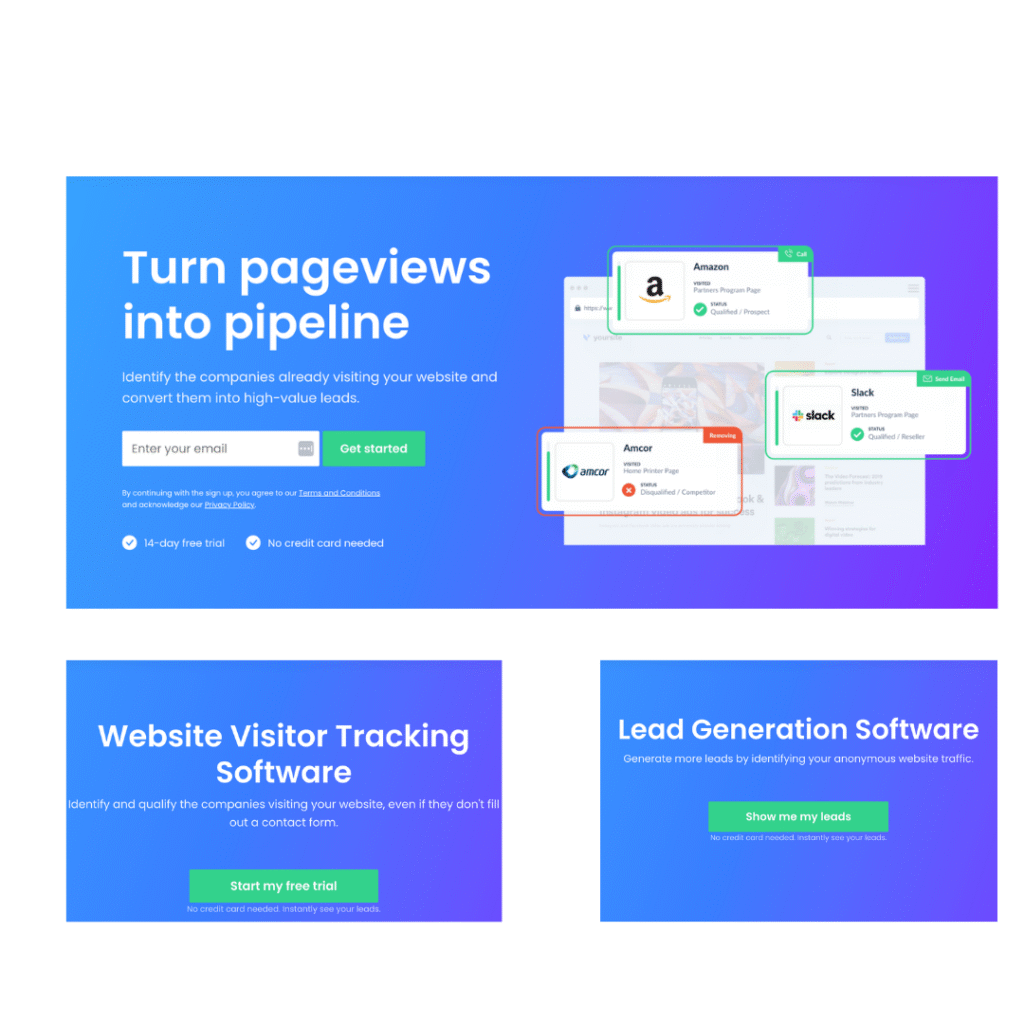
Discover Leadfeeder for Financial Services: Transforming Website Traffic Into Warm Leads
Key Takeaways
Leadfeeder for financial services turns anonymous website visitors into actionable leads, enhancing sales intelligence.
It integrates seamlessly with Salesforce, providing real-time visitor insights to improve conversion rates.
Key benefits include identifying anonymous visitors, better lead qualification, and privacy-friendly lead generation.
Leadfeeder helps unify sales and marketing efforts, aligning teams around website engagement data.
The tool is essential for financial firms to maximize lead quality, shorten sales cycles, and grow revenue.
In a highly competitive and regulation-driven industry, generating quality leads is a constant challenge. That’s where Leadfeederfor financial services steps in—helping firms transform anonymous website visitors into actionable sales intelligence.
Whether you’re a private equity firm, wealth advisor, fintech company, or commercial lender, Leadfeeder (now part of Dealfront) offers powerful website visitor tracking that integrates seamlessly with Salesforce to supercharge your lead generation and account-based marketing strategies.
In this guide, we’ll break down how Leadfeeder helps financial professionals identify intent, prioritize prospects, and close more deals—with data-backed confidence.
What Is Leadfeeder (Now Dealfront)?
Leadfeeder, now operating under the Dealfront platform, is a B2B website visitor identification tool that reveals which companies are visiting your site, what content they engage with, and how often they return. It empowers financial firms to understand buyer intent even when visitors don’t submit forms.
By integrating with your Salesforce CRM, Leadfeeder ensures that sales and marketing teams get real-time visibility into high-value visitor behavior—helping financial organizations improve conversion rates, shorten sales cycles, and increase pipeline visibility.
Why Leadfeeder Is a Game-Changer for Financial Services
Financial services firms face a unique set of challenges:
Long, relationship-driven sales cycles
Regulatory limitations on cold outreach
Limited insight into digital buyer behavior
High-value but low-volume deals
Leadfeeder for financial services solves these issues by uncovering invisible buying signals from your web traffic and turning them into prioritized leads your team can act on right away.
Key Benefits of Using Leadfeeder in Financial Services
1. Identify Anonymous Website Visitors
Over 95% of website visitors never fill out a form. For financial services professionals, that’s a lot of missed opportunities.
Leadfeeder identifies which companies are visiting your website—even if they remain anonymous—by matching IP addresses with its proprietary database. It surfaces company names, industries, employee counts, locations, and the specific pages they viewed.
Example: A mid-sized hedge fund visits the “investment strategy” page of your asset management firm’s website multiple times in one week. Leadfeeder flags the company, and your sales team is now empowered to reach out before competitors do.
2. Seamless Salesforce Integration
One of the biggest advantages of Leadfeeder for financial services is its native integration with Salesforce. This allows visitor data to flow directly into your CRM, providing:
Automatic lead or account creation
Lead scoring based on engagement
Workflow triggers and alerts for sales reps
This integration ensures that your business development and relationship managers are always equipped with real-time behavioral data when reaching out to prospects or nurturing existing clients.
3. Supercharge Account-Based Marketing (ABM)
For commercial banks, investment firms, and fintech vendors practicing ABM, Leadfeeder delivers laser-focused visibility into target account engagement.
You can segment site visitors by:
Industry (e.g., real estate, manufacturing, healthcare)
Company size (e.g., 100+ employees for mid-market deals)
Specific content viewed (e.g., case studies, whitepapers, pricing pages)
This allows financial marketers to tailor their outreach and sales enablement content to match the prospect’s interests and stage in the buying journey.
4. Better Lead Qualification and Sales Prioritization
Instead of chasing every visitor or contact, financial professionals can use Leadfeeder’s engagement filters and lead scoring to focus only on high-intent leads.
Sales reps can prioritize leads based on:
Number of visits
Time spent on critical product or service pages
Recent repeat visits
Specific financial product interest (e.g., “business lending” or “retirement planning”)
This improves sales efficiency and increases conversion rates across the board.
5. Compliant and Privacy-Friendly Lead Generation
Unlike tools that rely on cookies or capture personal data, Leadfeeder only tracks company-level information, keeping your lead generation efforts compliant with privacy laws like GDPR and CCPA—essential in the financial sector.
You can uncover warm prospects without invasive tactics or questionable data sources—an important consideration for regulated industries like finance, insurance, and banking.
6. Unify Sales and Marketing Teams Around Website Data
By feeding website intelligence into Salesforce dashboards and marketing automation platforms, Leadfeeder helps align sales and marketing on what’s actually working.
Both teams can track:
Which campaigns drive the most engagement
Which companies return frequently without converting
What kind of content correlates with closed deals
This helps marketing prove ROI while empowering sales with actionable, context-rich data.
Using Leadfeeder and Salesforce for Real-Time Prospecting
Let’s imagine for example that a commercial bank wants to expand into the healthcare sector in the Southeast. The process below describes how you can turn a lead into a qualified opportunity and eventually convert it.
Process:
A healthcare technology company visits the bank’s “business credit lines” and “industry expertise” pages.
Leadfeeder identifies the company and its location.
Salesforce updates the company’s record and notifies the assigned relationship manager.
An email or call is triggered with messaging focused on healthcare lending solutions.
The lead is nurtured into a qualified opportunity and eventually converted.
This kind of real-time, data-informed outreach is what sets financial leaders apart in a saturated market.
Why Choose a Salesforce Partner for Leadfeeder Integration?
While Leadfeeder for financial services is powerful on its own, integrating it with Salesforce and aligning it with your workflows is where the real magic happens.
As a Salesforce consulting company, we help financial institutions:
Integrate Leadfeeder with Salesforce seamlessly
Set up automated workflows and scoring models
Customize dashboards for marketing and sales
Ensure compliance with data handling standards
Our team ensures that your investment in intent data turns into pipeline growth, faster conversions, and measurable ROI.
Leadfeeder for Financial Services Is a Growth Catalyst
In an industry where trust, timing, and relevance are everything, Leadfeeder for financial services provides the data-driven insights needed to reach the right prospects at the right moment.
By combining website intent data with Salesforce CRM workflows, your financial services team can:
Maximize lead quality
Shorten the sales cycle
Improve team alignment
Grow revenue—faster and smarter
LEAD GENERATION STRATEGY
Get Started Today
Want to learn how Leadfeeder and Salesforce can transform your lead generation strategy? Use the button below to book your FREE Leadfeeder Salesforce consultation. We’ll help you integrate, optimize, and get results—fast.
Learn from 20 real-world success stories of financial institutions transforming operations, boosting customer loyalty, and accelerating digital innovation.
Unlock your free copy of “20 Salesforce Banking Success Stories” and see how the world’s leading banks are using Salesforce to deliver personalized customer experiences and increase ROI.
Inside this exclusive report, you’ll discover:
20 real Salesforce banking success stories — from regional banks to global financial leaders.
How financial institutions improved productivity and reduced operational costs using Salesforce Financial Services Cloud.
Strategies for deeper client relationships through personalized experiences powered by AI and automation.
Digital transformation insights tailored for retail, commercial, and investment banking.
Ready to Transform Your Bank with Salesforce?
Download “20 Salesforce Banking Success Stories” and see how top performers are achieving measurable success.
Why Download This Guide
Salesforce is reshaping the future of banking. Whether you’re modernizing legacy systems or optimizing customer journeys, these success stories show what’s possible. Learn how your peers are:
Unifying customer data for a 360° view.
Streamlining compliance and onboarding.
Enhancing digital engagement with AI-driven insights.
Building scalable, secure, and customer-centric banking ecosystems.