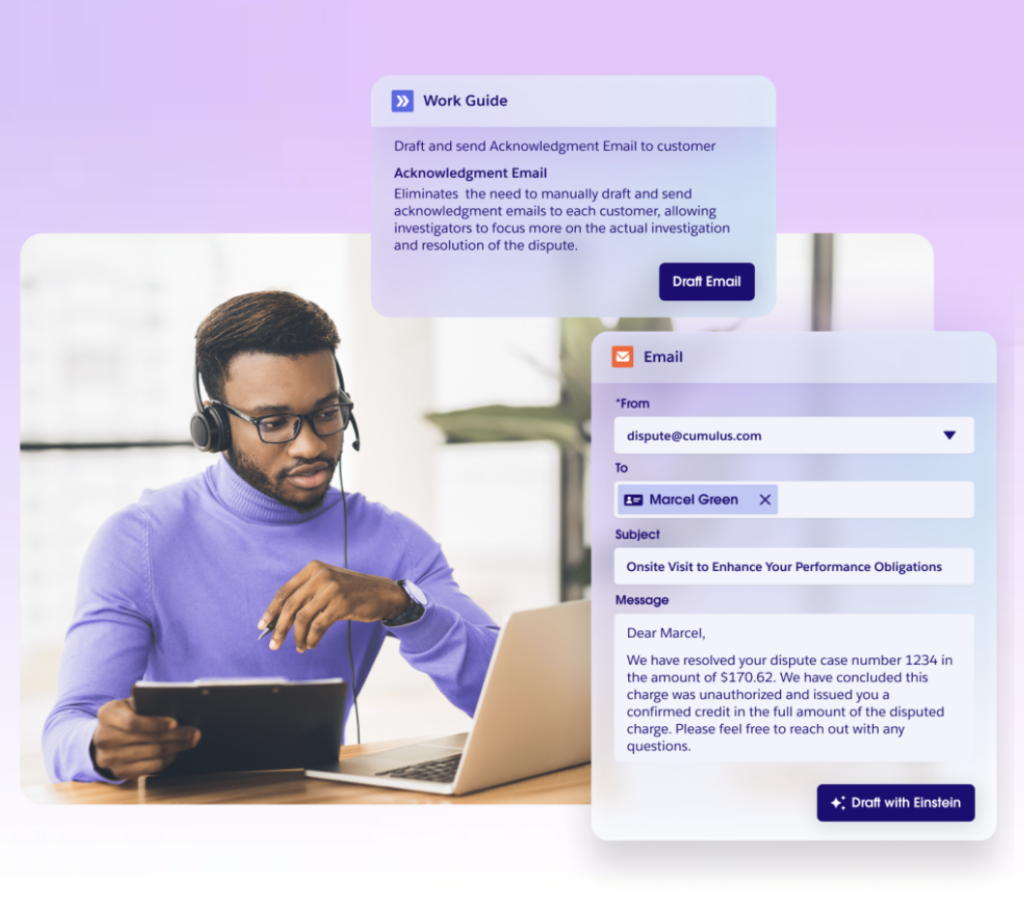
3 Powerful Reasons Why Financial Firms Implement Salesforce Agentforce

Why Financial Firms Implement Salesforce Agentforce

Listen to our Deep Dive here:

Building AI Client Support with Agentforce, CRM, and Data Cloud

or continue reading

Quicklinks To Key Sections

Why Financial Services Firms Need Virtual Client Assistants?

Clients no longer tolerate long wait times or generic responses. Whether they’re checking on a claim, updating an address, or asking about transaction limits, they want:

  • Instant access to accurate information
  • 24/7 support availability
  • Personalized, context-aware responses
  • Secure and compliant communication

Meanwhile, support teams face growing caseloads and rising pressure to reduce operating costs without compromising service quality. AI-driven assistants solve both sides of this equation by delivering seamless, self-service support for routine inquiries—freeing up human agents for more complex, high-value interactions.

What is the integrated technology stack required for an autonomous Salesforce AI Agent?

To get started with Agentforce, you need a solid Salesforce CRM foundation, Data Cloud, which acts as your company’s ‘center of meaning’ and knowledge base, and the appropriate Agentforce licenses. While the benefits are transformative, navigating the Salesforce stack requires understanding how these layers connect

1. Why is Salesforce CRM the essential for Agentforce success?

At the heart of your virtual assistant is your Salesforce Customer Relationship Management (CRM) platform. This is where all your structured client data lives – accounts, service history, communication logs, case records, and more.

But the effectiveness of your assistant depends heavily on data quality. The CRM must be:

  • Well-organized: Clean field structures, accurate records, and no duplicates
  • Integrated: Connected to other enterprise systems like policy management, loan origination, or investment platforms
  • Actionable: Designed with automation and workflows in mind

For example, if a wealth management client contacts the assistant to check the status of a portfolio transfer, your Salesforce CRM must already have a standardized process in place—so the assistant can reference accurate case data and provide a real-time update.

2. How Will Agentforce Work In Our Firm?

Agentforce is a Salesforce-native platform that allows you to build and deploy AI-driven digital agents within your existing Salesforce environment.

Unlike basic chatbots, Agentforce virtual assistants are:

  • Context-aware: They draw on CRM data to personalize every interaction
  • Process-oriented: Capable of managing multi-step service flows (e.g., onboarding, loan servicing, address updates)
  • Trainable: They learn from past interactions and continuously improve over time

For example, in an insurance context, an Agentforce-powered assistant could walk a client through a claims process by gathering documentation, submitting the claim, and updating the client on its progress – without a single phone call.

Agentforce also allows for omni-channel support – your assistant can interact via web chat, SMS, or in-app messaging, offering a consistent experience across platforms.

Agentforce Credit Union Success Story – PenFed Unlocks a Competitive Advantage with Agentforce

3. How Does Data Cloud Work With Agenforce?

Salesforce Data Cloud brings intelligence and context to your virtual assistant by unifying data across systems in real time.

While Salesforce CRM holds structured client records, Data Cloud:

  • Ingests real-time data from core banking systems, marketing platforms, compliance tools, and third-party APIs
  • Creates unified client profiles using identity resolution and data harmonization
  • Enables intelligent automation by identifying triggers and behavioral patterns

This means your virtual assistant doesn’t just “respond”—it can predict, personalize, and proactively assist.

Imagine a client logging into your mobile banking app to ask about recent overdraft fees. Data Cloud can analyze their account behavior, detect an unusual pattern, and trigger a tailored response such as waiving the fee or offering a low-balance alert subscription—all before the client even finishes typing.

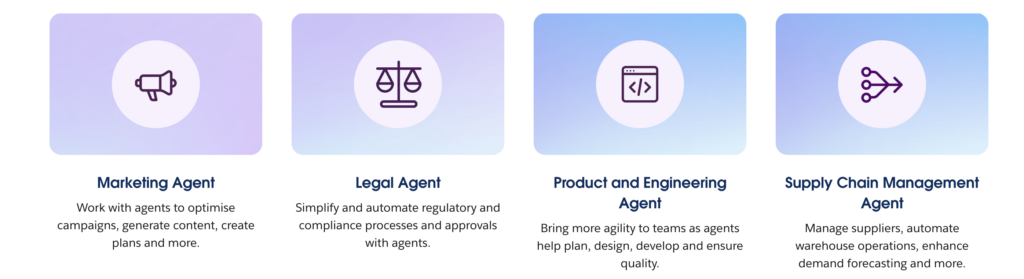
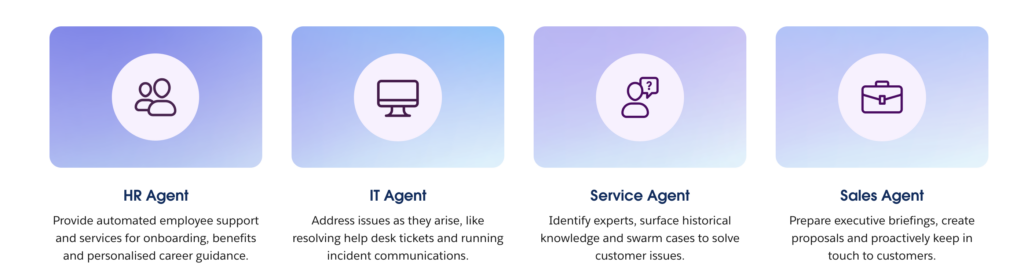
Agents and Agentforce - Key benefits
Agents and Agentforce – Key benefits

What Are The Steps To Build An Agent Solution?

Before diving in, we recommend financial services firms focus on three critical success factors:

1. Data Structure and Hygiene

Ensure your Salesforce CRM is clean, accurate, and integrated. Since poor data quality leads to incorrect responses and undermines user trust, a well-maintained CRM is your most critical asset. Success with Agentforce requires a foundation of enriched, up-to-date data that you can rely on; it isn’t just a preference – it is a prerequisite

2. Process Mapping

Document your common support journeys to identify automation opportunities, human handoff points, and success metrics. Think of Agentforce agents as digital employees: to operate effectively, they must understand your company’s unique workflows. Defining these processes and making them accessible – whether through your Knowledge Base or AI policies – is a critical investment. These documented processes are the ‘roads’ your agents will travel to deliver consistent results

3. Regulatory Review

To ensure your AI operates within the bounds of GDPR, FINRA, and local banking standards, you need a proactive framework. Collaborate with legal teams and Agentforce specialists like Navirum to establish a comprehensive AI policy

Agentforce key benefits for Financial Services

Why Choose Navirum for Your Agentforce Implementation?

At Navirum, we don’t just implement Salesforce – we design intelligent, compliant, and future-ready Agentforce solutions tailored for the unique demands of financial services.

With deep expertise across banking, insurance, and investment management, we know how to translate your processes and regulations into scalable AI-powered workflows.

Contact Us
First

Navirum Client Success Stories in Financial Services

Navirum on LinkedIn | Navirum on AppExchange| Navirum Newsletter Subscription

FAQs: Virtual Client Support Assistants

How do virtual client assistants built on Agentforce differ fundamentally from traditional chatbots?

Unlike rule-based chatbots, Agentforce-powered assistants are context-aware and process-driven. They can orchestrate multi-step workflows, reference structured client data from Salesforce Financial Services Cloud, and adapt interactions dynamically, delivering personalized guidance while adhering to regulatory compliance. This enables advisors to maintain high-touch relationships without sacrificing scalability.

In what ways does Salesforce CRM enable these virtual assistants to provide trusted financial guidance?

Salesforce CRM centralizes client profiles, account histories, and household relationships. Virtual assistants leverage this data to generate real-time responses, ensure consistency across channels, and escalate complex cases with complete context, thereby minimizing errors and reinforcing client trust.

How does Salesforce Data Cloud enhance predictive support capabilities?

Data Cloud unifies structured and unstructured client data from multiple sources, harmonizing it in real time. Its like giant knowledge base for your firm. It allows agents to understand the meaning of your firms data. This allows assistants to anticipate client needs, personalize recommendations, and trigger proactive alerts—transforming support interactions into predictive, high-value engagements rather than reactive responses.

How Do Wealth Manager Use Agentforce?

Advisor and wealth management use cases are unique. To find out more you can dive into these 5 scenarios here

Why is now the strategic moment for financial firms to invest in virtual client assistants?

Clients increasingly demand instant, 24/7, personalized service, while firms face operational cost pressures and compliance challenges. Virtual assistants offer a scalable solution, freeing human teams to focus on high-value advisory tasks while ensuring consistent, auditable support across touchpoints.

What are the critical data prerequisites for building a high-performing virtual assistant?

Success requires clean, normalized, and integrated CRM and external data. Redundant, incomplete, or siloed information can lead to incorrect guidance, compliance risk, and eroded client trust. Firms must also implement ongoing data quality monitoring and governance frameworks.

How should firms map workflows for automation without disrupting human-led processes?

Workflow mapping must identify end-to-end client journeys, pinpoint repetitive tasks, and define handoffs where human intervention is essential. This ensures the assistant augments rather than replaces human advisors, enabling efficiency gains without compromising service quality or regulatory adherence.

What governance and compliance measures are essential for AI-driven support in financial services?

Regulatory oversight includes role-based access control, logging every interaction, validating AI recommendations against compliance rules, and conducting periodic audits. Assistants should operate within defined limits to ensure risk exposure is controlled while maintaining a fully auditable trail.

How do virtual assistants contribute to advisor productivity and client retention?

By automating routine inquiries, scheduling, and alerts, assistants allow advisors to focus on strategic engagement. They can surface cross-sell or upsell opportunities based on predictive analytics and maintain proactive outreach, directly impacting client satisfaction and long-term retention.

Can these assistants support multi-channel, high-volume client interactions without losing personalization?

Yes. Agentforce-powered assistants integrate with email, chat, voice, and portal platforms while maintaining a unified client profile. They remember prior interactions, personalize content dynamically, and escalate only the complex or sensitive cases, preserving human attention where it matters most.

How can firms measure the ROI and effectiveness of a virtual client assistant?

Key metrics include:

  • Reduction in response times and operational costs
  • Advisor bandwidth freed for high-value activities
  • Client satisfaction and Net Promoter Scores
  • Compliance adherence and audit accuracy
  • Predictive engagement outcomes (e.g., cross-sell conversions)

Tracking these KPIs ensures firms optimize performance, refine workflows, and quantify the assistant’s strategic impact. Ongoing platform support is what keeps those KPIs trending the right direction.

Lavinia Picu3 Powerful Reasons Why Financial Firms Implement Salesforce Agentforce

The Role of AI in Salesforce: What Einstein GPT Means for Financial Services

What is The Role of AI in Salesforce: What Einstein GPT Means for Financial Services? Why Financial Services Can’t Afford to Miss the AI Wave?

Artificial Intelligence has shifted from a promising frontier to a foundational element of enterprise strategy—especially in financial services. From wealth management and commercial banking to insurance and capital markets, institutions are racing to deploy AI in ways that improve productivity, enhance customer experience, and unlock new insights.

But integrating AI isn’t just about algorithms. It’s about embedding intelligence into the workflows people already use every day.

That’s where Salesforce Einstein GPT comes in.

As the world’s first generative AI for CRM, Einstein GPT brings advanced machine learning and large language models directly into the Salesforce platform—enabling financial institutions to automate more, predict more, and personalize more, all within their existing systems.

In this article, we’ll explore the strategic implications of Einstein GPT for financial services CIOs, technology leaders, and AI/ML stakeholders—and why it matters now more than ever.

What Is Einstein GPT?

Einstein GPT is Salesforce’s next-generation AI engine that combines proprietary Salesforce AI models with public and private large language models (LLMs) like OpenAI’s GPT, enabling dynamic content generation across the entire Salesforce ecosystem.

Unlike traditional predictive AI (which is rules- and model-based), Einstein GPT is generative AI—capable of creating context-aware text, automating interactions, and suggesting actions in real time.

Key Capabilities:

  • Generate personalized emails, client reports, and outreach
  • Surface predictive insights like risk scores or churn likelihood
  • Enable conversational AI in service and sales channels
  • Integrate private customer data safely and securely

Why it matters:

Einstein GPT doesn’t live outside of Salesforce—it lives inside your CRM, working with your customer data, your workflows, and your business logic.

AI Tailored to Financial Services Workflows

Einstein GPT has been purpose-built to integrate with Salesforce Financial Services Cloud (FSC), making it immediately relevant for use cases in wealth, banking, insurance, and asset management.

Instead of manually compiling investor reports or writing follow-up messages, your advisors, relationship managers, and service teams can generate these assets dynamically—based on real-time customer data and AI recommendations.

Benefits for Financial Services:

  • Banking: Summarize loan application details, generate personalized loan offer emails, or surface next-best financial products
  • Wealth Management: Create custom performance summaries, automate follow-ups for market events, and assist with rebalancing insights
  • Insurance: Auto-generate policyholder responses or claims summaries with full context
  • Asset Management: Draft quarterly investment letters or market commentaries tailored by client segment

Einstein GPT bridges the gap between siloed AI projects and production-ready, ROI-focused applications across your front office.

Automate, Don’t Just Inform

Traditional CRM AI is great at surfacing insights, but it leaves the action to the user. Einstein GPT changes that by automating high-value tasks, so users spend less time typing and more time engaging.

For example:

  • Auto-draft prospecting emails for commercial clients based on engagement history
  • Generate compliance summaries or pre-filled forms based on prior disclosures
  • Suggest meeting agendas for client reviews using AI summaries of previous interactions

Business Impact:

  • Increase productivity by 30–40% for front-line teams
  • Reduce administrative load and manual data entry
  • Improve accuracy and consistency in client communications

AI/ML Stakeholder Insight:

The shift from predictive to generative AI is not incremental—it’s transformational. Generative AI creates usable output, not just recommendations.

Secure and Compliant AI for Regulated Environments

One of the top concerns for financial institutions deploying AI is data privacy and compliance. Einstein GPT was designed with these challenges in mind.

Salesforce enables enterprise-grade data governance with:

  • Grounded AI: Generative responses are anchored in your Salesforce data, ensuring accuracy and reducing hallucinations
  • Bring Your Own Model (BYOM): Firms can integrate their own private LLMs or use partner models via Salesforce’s AI Cloud
  • Zero Data Retention: When using external models like OpenAI via Salesforce, customer prompts and responses are not stored
  • Audit Trails: Every AI-generated suggestion is traceable, with human-in-the-loop governance

This approach balances AI innovation with the rigorous compliance standards of the financial industry—including GDPR, FINRA, and internal policy requirements.

Unified AI Strategy with Salesforce AI Cloud

Einstein GPT is part of the broader Salesforce AI Cloud, which offers a unified platform for deploying, managing, and scaling AI across your enterprise stack.

With AI Cloud, financial institutions can:

  • Deploy AI across Sales, Service, Marketing, and IT
  • Control AI access and usage by role or department
  • Integrate external data sources and third-party models securely
  • Monitor AI performance and compliance in real time

This gives CIOs and CTOs a central governance layer to orchestrate all AI activity inside the organization, avoiding shadow IT and siloed pilots.

AI/ML Stakeholder Insight:

AI Cloud creates a path for responsible AI at scale—moving from experiments to enterprise-wide impact.

Driving ROI: Where Einstein GPT Delivers Immediate Value

For financial institutions evaluating AI investments, the key question is: Where will we see ROI fastest?

Einstein GPT delivers measurable value in several core areas:

Top Use Cases:

  • Sales Acceleration: Reduce time to prepare outreach, follow-ups, and reports
  • Service Optimization: Shorten response time with pre-written, data-informed replies
  • Marketing Personalization: Auto-generate content aligned to client segments
  • Risk and Compliance: Draft and review summaries, detect anomalies, and automate documentation
  • Advisor Productivity: Automate routine tasks and enrich client interactions

Outcome:

More deals closed, higher client satisfaction, and greater operational efficiency—without increasing headcount.

Building AI Maturity: Start Smart, Scale Strategically

Einstein GPT is not a plug-and-play magic button. To unlock its full potential, financial services firms need to align AI deployment with business strategy and internal readiness.

As a Salesforce consulting firm with deep expertise in financial services and AI/ML integration, we help you:

  • Identify high-impact AI use cases tailored to your lines of business
  • Configure Salesforce and Einstein GPT to your specific workflows
  • Ensure data quality and model governance for accurate results
  • Train your teams to confidently adopt and trust generative AI

Implementation Insight:

Our 5/5 CSAT-rated delivery team works hand-in-hand with your AI leads and business stakeholders to create sustainable, scalable value.

Final Thoughts: Einstein GPT Is a Strategic Advantage, Not Just a Feature

AI will define the next decade of financial services—and the winners will be those who embed it into everyday operations, not just R&D.

Salesforce Einstein GPT offers CIOs and technology leaders a practical, powerful path to embed AI into your organization at scale—driving immediate productivity and long-term differentiation.

This is not just about automating tasks. It’s about transforming how your institution engages clients, manages risk, and scales operations.

Ready to Elevate Your AI Strategy with Salesforce?

Let’s explore how Einstein GPT can deliver measurable impact across your organization—from the front office to compliance to client experience.

👉 Schedule a strategy session with our financial services AI team
We’ll review your current setup, identify high-impact AI use cases, and map a practical path to value.

Explore More from Navirum:

Contact Us
First
Lavinia PicuThe Role of AI in Salesforce: What Einstein GPT Means for Financial Services

How Salesforce AI Revolutionizes the Insurance Industry

How Salesforce AI Revolutionizes the Insurance Industry?

Salesforce AI, through tools like Einstein and Financial Services Cloud, is revolutionizing the insurance industry by enabling insurers to leverage data for smarter decision-making, improved operational efficiency, and hyper-personalized customer experiences across the entire value chain.

Artificial intelligence (AI) and Salesforce help insurers face new challenges.

In a rapidly changing insurance landscape, digital transformation is no longer optional. Today’s policyholders expect fast, personalized, and seamless experiences at every touchpoint. Meanwhile, insurers must contend with rising operational costs, complex regulatory environments, and fierce competition.

To meet these challenges head-on, insurers are turning to artificial intelligence (AI) — and Salesforce is leading the charge. With tools like Salesforce Einstein and AI-driven automation built into Financial Services Cloud and Industry Cloud for Insurance, Salesforce AI is helping insurance companies modernize their operations, boost agent productivity, and deliver hyper-personalized service at scale.

In this post, we explore how Salesforce AI is transforming the insurance industry, review high-impact use cases and more.

Why AI Matters in Insurance Today

Insurance is a data-rich industry. Every quote, policy, claim, and customer interaction generates valuable data points. But without the right tools, this data often remains untapped.

AI enables insurers to:

  • Make sense of massive datasets in real-time
  • Predict risk and customer behavior more accurately
  • Personalize services to individual customer needs
  • Streamline internal workflows and reduce manual effort

Salesforce AI takes these capabilities a step further by embedding intelligence directly into the CRM and operational workflows that insurance professionals use every day. The result is smarter, faster, and more informed decision-making across the value chain. Salesforce integrates with most popular big data analytics platforms like Snowflake and Databricks as well its own solution Data Cloud – see the details here

AI is making huge changes to insurance and society

Key Capabilities of Salesforce AI for Insurance

Salesforce Einstein and Industry Cloud solutions bring AI-powered insights to insurers in a practical, accessible way. Here are some of the most impactful capabilities:

1. Intelligent Lead and Opportunity Scoring

Einstein analyzes lead behavior and historical data to score prospects based on their likelihood to convert. Agents can prioritize high-potential leads, respond faster, and tailor their outreach with recommended messaging.

2. Claims Prediction and Triage

AI models can analyze historical claims data to predict claim severity and flag anomalies. This helps adjusters prioritize claims, reduce fraud risk, and ensure faster settlements for low-risk claims.

3. Personalized Customer Engagement

Salesforce AI can recommend the next best action, timing, and channel for engaging each customer. Whether it’s a policy renewal reminder or a cross-sell opportunity, advisors receive intelligent prompts to engage clients more effectively.

4. Automated Service and Chatbots

Einstein Bots can handle routine service inquiries like policy lookups, billing questions, and document uploads. This reduces call center volume and ensures 24/7 support without compromising customer satisfaction.

5. Underwriting Efficiency

AI can assist underwriters by automatically gathering third-party data, checking application completeness, and providing risk scoring. This leads to faster application turnaround and more consistent decision-making.

Agentforce. Transforming Health Care and Health Insurance

Use Cases Across the Insurance Value Chain

Let’s look at how Salesforce AI delivers value across different functions within insurance companies:

A. Sales and Distribution

  • Automatically score and route leads to the right agent
  • Recommend products based on customer life stage and needs
  • Track agent performance and provide coaching recommendations

B. Customer Service

  • Use Einstein Bots to triage cases and escalate complex issues
  • Provide agents with AI-suggested responses and next steps
  • Reduce average handling time and improve customer satisfaction

C. Marketing and Engagement

  • Segment policyholders based on behavior and preferences
  • Personalize campaigns and outreach with predictive analytics
  • Optimize campaign timing and channels with AI recommendations

D. Claims and Underwriting

  • Predict claim cost and time-to-settlement for better resource allocation
  • Identify potentially fraudulent claims using anomaly detection
  • Assist underwriters with AI-powered risk assessment tools

E. Policyholder Retention

  • Flag customers likely to churn and suggest retention offers
  • Trigger proactive outreach based on key life events or policy usage
  • Track retention KPIs and fine-tune strategies in real time

Why Work with a Salesforce Consulting Partner

Implementing AI isn’t just about technology—it’s about aligning strategy, data, and user experience. That’s why many insurers partner with specialized Salesforce consulting firms to:

  • Design custom workflows aligned to insurance processes
  • Integrate Salesforce with policy admin, claims, and billing systems
  • Train agents and underwriters on how to use AI tools effectively
  • Ensure governance, compliance, and data security are built in from the start

A Salesforce consulting partner brings the industry knowledge and technical expertise required to ensure a successful, scalable AI implementation.

The Future of Insurance Is AI-Powered

As the insurance industry continues to evolve, the winners will be those who embrace intelligent automation, data-driven engagement, and real-time insights. Salesforce AI provides the foundation insurers need to:

  • Build stronger relationships with policyholders
  • Empower agents and advisors to work smarter
  • Streamline claims and underwriting workflows
  • Personalize every step of the customer journey

Whether you’re just starting your AI journey or looking to take your Salesforce investment to the next level, the time to act is now.

FAQ Salesforce AI in the Insurance Industry

What is the main driver for insurers to adopt AI and Salesforce?

The main driver is the rapidly changing insurance landscape where policyholders expect fast, personalized, and seamless experiences. Insurers also need to contend with rising operational costs, complex regulatory environments, and fierce competition, which AI and Salesforce help address.

What Salesforce tools are mentioned for driving AI in insurance?

The key tools mentioned are Salesforce Einstein (for AI-driven insights) and AI-driven automation built into Financial Services Cloud and Industry Cloud for Insurance.

Why does AI matter specifically in the insurance industry?

Insurance is a data-rich industry. AI enables insurers to make sense of massive datasets in real-time, predict risk and customer behavior more accurately, personalize services, and streamline internal workflows.

How does Salesforce AI enhance data utilization for insurers?

Salesforce AI embeds intelligence directly into the CRM and operational workflows that insurance professionals use daily, leading to smarter, faster, and more informed decision-making across the value chain.

Name two key capabilities of Salesforce AI for insurance companies.

Intelligent Lead and Opportunity Scoring: Einstein scores prospects based on their likelihood to convert.

Claims Prediction and Triage: AI models predict claim severity and flag anomalies, reducing fraud risk and speeding up low-risk settlements.

How is Salesforce AI used in Customer Service?

It is use in two ways: to employ Einstein Bots to handle routine service inquiries (policy lookups, billing) and triage cases and to provide agents with AI-suggested responses and next steps to reduce average handling time and improve satisfaction.

How does AI improve underwriting efficiency?

AI assists underwriters by automatically gathering third-party data, checking application completeness, and providing risk scoring, resulting in faster application turnaround and more consistent decision-making.

In which areas of the insurance value chain does Salesforce AI deliver value?

Salesforce AI delivers value across:

  • Policyholder Retention
  • Sales and Distribution
  • Customer Service
  • Marketing and Engagement
  • Claims and Underwriting

How does Salesforce AI help with policyholder retention?

It can flag customers likely to churn, suggest retention offers, and trigger proactive outreach based on key life events or policy usage.

Why should an insurer partner with a Salesforce consulting firm for AI implementation?

A consulting partner helps align strategy, data, and user experience. They assist with designing custom workflows, integrating Salesforce with other systems (like policy admin), training staff, and ensuring built-in governance and compliance.

Navirum’s Recommendation: Taking The Next Step With AI

Navirum Salesforce Partner since 2018

At Navirum, we understand that successful AI implementation in the insurance sector is more than just deploying technology—it’s a strategic overhaul of processes and data infrastructure. As a specialized Salesforce consulting partner with deep expertise in the Financial Services Cloud and numerous successful AI-driven projects, we guide insurers through every stage of their digital transformation.

If you are looking to leverage Salesforce AI to reduce operational costs, enhance customer engagement, or streamline complex workflows like claims and underwriting, partnering with an experienced firm is crucial. Navirum provides the industry-specific knowledge and technical rigor to ensure your AI investment is governed, compliant, and delivers scalable, measurable results.

Ready to explore how Salesforce AI can transform your insurance business?

Contact Us
First

Lavinia PicuHow Salesforce AI Revolutionizes the Insurance Industry

Salesforce AI in Credit Union technology

Salesforce AI in credit union technology: Enhance Member Services & Efficiency

Credit unions are at a pivotal point in their digital transformation journey. As member expectations rise and digital-first competitors grow, credit unions must find innovative ways to deliver exceptional service while maintaining their community-first values. Salesforce AI presents a unique opportunity to meet these challenges head-on, enhancing personalization, streamlining operations, and future-proofing member engagement. As a Salesforce consulting partner, we help credit unions harness this power responsibly and effectively.

The Unique Landscape of Credit Unions

Unlike traditional banks, credit unions operate with a member-first model. This distinction places added importance on trust, personalized service, and community involvement. However, many credit unions are still tied to legacy systems and face hurdles in adopting new technologies. Salesforce AI bridges this gap, offering tools that are not only powerful but also adaptable to the specific workflows and values of credit unions.

Unlocking AI Capabilities with Salesforce

Salesforce Einstein AI

Einstein AI, embedded throughout the Salesforce platform, delivers predictive analytics, automation, and insights directly within the CRM. For credit unions, this means:

  • Predicting member behavior and needs.
  • Automating member interactions.
  • Delivering next-best actions to frontline staff.
Financial Services Cloud

(FSC) Tailored for financial institutions, FSC provides

  • Prebuilt financial services workflows.
  • Unified member profiles with real-time data.
  • AI-driven insights for personalized member engagement.
Einstein GPT and the Trust Layer

Salesforce’s integration of generative AI (Einstein GPT) with real-time CRM data creates a powerful engine for automation and content generation. The Trust Layer ensures responsible AI usage by securing sensitive member data and maintaining compliance.

AI Use Cases for Credit Unions

Member Engagement
  • Personalized financial education and recommendations.
  • Predictive campaigns targeting members at key financial milestones.
  • Enhanced digital experiences for improved member retention.
Service Automation
  • AI-powered chatbots offering 24/7 support.
  • Intelligent routing of member inquiries to the right team.
  • Automated service summaries for faster case resolutions.
Risk Management and Compliance
  • Real-time anomaly detection for fraud prevention.
  • Automated compliance documentation and reporting.
  • AI-driven audit trails for regulatory accuracy.
Lending and Credit Decisioning
  • Predictive credit scoring to speed up approvals.
  • Personalized loan offers based on member behavior and history.
  • Enhanced underwriting workflows with AI insights.

Getting It Right: Implementation Tips

Successful AI adoption hinges on:

  • Clean, structured member data.
  • Seamless integration with core banking systems.
  • Training and change management for staff.
  • Ethical use of AI, focusing on fairness, transparency, and explainability.

Why Partner with a Salesforce Consultant?

A Salesforce consulting partner brings industry experience, technical expertise, and a tailored approach to implementation that can help you achieve the following:

  • Customize FSC to align with member-centric workflows.
  • Build and deploy predictive models with Einstein AI.
  • Train teams on using AI tools effectively.
  • Ensure compliance and ongoing optimization.
  • Provide continuous support for long-term AI success.

The Future is Smarter, and It’s Now

Salesforce AI offers credit unions the ability to serve members with greater intelligence, empathy, and efficiency. As your trusted consulting partner, we’re here to help you navigate this journey and unlock the full potential of AI.

Ready to transform your member experience?

Contact us today to schedule a consultation or download our free AI Readiness Checklist for Credit Unions.

Navirum on LinkedIn | Navirum on AppExchange

Download Your Free Copy of AI Readiness Checklist for Credit Unions

Download your copy of AI Readiness Checklist for Credit Unions!

Name
Name
First
Last
Lavinia PicuSalesforce AI in Credit Union technology

Vinton AI: Revolutionizing Salesforce for Financial Services with AI and Automation

Vinton.ai is a cutting-edge financial technology platform designed to elevate the functionality of Salesforce for financial services firms in Canada and the USA. The platform uses artificial intelligence (AI) and automation to streamline operations, optimize data management, and deliver personalized client experiences. By revitalizing the Activity Object in Salesforce, Vinton provides practical tools for capturing client interactions, automating administrative tasks, and ensuring compliance with data residency requirements.

Practical Benefits for Salesforce Customers in Financial Services

1. Seamless Integration with Salesforce Clouds:

  • Vinton integrates seamlessly with Sales Cloud, Service Cloud, and Financial Services Cloud, ensuring that financial services firms can leverage its capabilities across different areas of their business. Whether it’s enhancing sales activities, improving customer service, or streamlining financial services workflows, Vinton helps automate tasks, log interactions, and provide AI-driven insights that drive productivity.

2. Revitalized Activity Management in Salesforce:

  • Vinton breathes new life into the Salesforce Activity Object by making it much easier to log various types of client interactions, such as in-person meetings and virtual calls. The platform automatically recognizes participants and associates the meeting with relevant contacts, ensuring accurate records. This enhancement is especially valuable for financial advisors and professionals in wealth management, banking, and insurance who need to automate administrative tasks in financial services to stay efficient.

3. Boosts Efficiency for New Staff and Tenured Professionals:

  • For new financial advisors, Vinton helps automate routine tasks, enabling them to plan their day more effectively and manage meeting notes. The platform significantly reduces administrative work, allowing experienced professionals to focus on the client rather than data entry. This combination of activity management automation for financial advisors with practical use of AI-driven meeting notes automation makes Vinton an invaluable tool for all experience levels.
Image: courtesy of Vinton.ai

4. Data Residency Compliance and Secure Storage:

  • Vinton ensures data residency compliance by securely storing all interaction data within Salesforce. For financial services firms in Canada and the USA, addressing data residency and compliance is critical, especially under regulations such as PIPEDA (Personal Information Protection and Electronic Documents Act), CASL (Canada’s Anti-Spam Legislation), or the Gramm-Leach-Bliley Act in the USA. By keeping data within Salesforce, companies can meet these requirements while still benefiting from a seamless user experience.

5. Automated Meeting Notes and Follow-Up Tasks:

  • The platform leverages AI to automate note-taking during meetings and create follow-up tasks based on discussions, reducing the risk of missed follow-ups. By integrating this practical use directly into Salesforce workflows, Vinton ensures that all client interactions are recorded with precision, providing a reliable source for comprehensive data management in financial services.

6. Scalability for Financial Services Firms of All Sizes:

  • Whether for small advisory practices or large financial institutions, Vinton’s features support firms at all stages. The platform’s ability to scale as businesses grow ensures continued efficiency even as client bases expand, making it ideal for financial services firms in the USA and Canada.

Contact Navirum for a Demo

For financial services firms looking to unlock the full potential of Salesforce and Vinton.ai, contact Navirum for a demo to see how automating administrative tasks and enhancing data management can add significant value to your firm. Navirum specializes in Salesforce consulting and provides the expertise needed to implement Vinton successfully.

Lavinia PicuVinton AI: Revolutionizing Salesforce for Financial Services with AI and Automation

How Canadian Financial Advisors Get The Edge With AI

The genie is out of the bottle with AI, and financial advisors are embracing its full potential. At Navirum, we’re seeing AI requirements in virtually every Salesforce project, as advisors shift focus from admin-heavy tasks to delivering better client experiences. With so many AI tools available – like Otter.ai, Pilot, Fireflies, Jump, Vinton, Agentforce and more – advisors have a wide range of options to suit their unique needs. Here’s a comparison of some of the most popular

Here are five ways Canadian financial advisors are using AI to focus more on clients, not admin.

1. Automated Note-Taking and Meeting Summaries

AI tools like Jump and Firefly can automatically transcribe meetings, capture essential insights, and generate summaries. This allows advisors to focus on client engagement without worrying about taking notes. Afterward, AI ensures follow-ups and next steps are captured, creating action plans to keep advisors on track with client requests and reducing manual work.

2. Creation of Action Plans and Post-Meeting Follow-Ups

With tools like Microsoft Copilot, advisors can instantly create personalized action plans after client meetings. AI automates the process of assigning tasks, setting reminders, and tracking deadlines, ensuring that every client request is addressed efficiently. This reduces the burden of admin work and helps maintain a proactive approach, strengthening client relationships.

3. Personalized Investment Recommendations

AI can analyze a client’s financial portfolio, risk profile, and market trends in real-time to provide personalized investment recommendations. With tools like Pilot, advisors can automate this process, delivering data-driven insights and tailored strategies that fit each client’s unique needs. This frees up time for advisors to focus on high-value activities, like deepening client relationships and business growth.

4. Automated Compliance Monitoring

Compliance is a critical aspect for Canadian financial advisors, governed by IIROC and CSA. AI-powered systems help advisors stay compliant by automatically monitoring transactions, flagging potential issues, and generating reports. These tools ensure that advisors meet regulatory requirements without constant manual oversight, reducing compliance risks while allowing them to focus on serving clients. More cautious compliance friendly solutions like Agentforce and Vinton are popular for that reason

5. AI-Enhanced Client Communication

Advisors are increasingly using AI-powered communication tools like chatbots to handle routine client inquiries. AI allows advisors to provide instant responses 24/7, ensuring client satisfaction while freeing up their time for more complex conversations. This leads to improved client service, with AI handling routine tasks so advisors can focus on delivering personalized advice.

Conclusion

AI is now essential for Canadian financial advisors, offering tools that streamline admin work and enhance client service. With options like Agentforce, Jump, Otter Pilot, Vinton, Firefly, and Microsoft Copilot, there’s an AI solution for every need. At Navirum, we’ve integrated AI into nearly all Salesforce projects. If you’re ready to leverage AI to transform your practice, reach out to Navirum for expert guidance on the best tools and strategies for your business.

Need Help Choosing? Contact Us For Advice

Contact Us
First

Lavinia PicuHow Canadian Financial Advisors Get The Edge With AI

How Wall Street Private Equity Firms Can Leverage Salesforce and AI

How Manhattan Private Equity Firms Can Leverage Salesforce and AI

In the fast-paced world of private equity on Wall Street, firms are turning to Salesforce and AI to streamline operations, enhance deal flow, and strengthen investor relationships. With countless AI tools available—like Otter.ai – AI Meeting Note Taker & Real-time AI Transcription , Pilot, Firefly, Microsoft Copilot, and ChatGPT—firms in New York City have a range of solutions tailored to their specific needs. Here’s how Manhattan-based private equity firms are leveraging Salesforce AI solutions for maximum impact.

1. Smarter Deal Management

Salesforce provides a one-stop platform for managing deal flow, and with AI tools like Firefly and Pilot, firms can analyze market trends, previous deals, and competitor activity in real-time. By automating data entry and deal evaluation, AI reduces manual work, giving teams more time to focus on sourcing and closing the next big opportunity, whether it’s a new prospect from Midtown or a lead from downtown.

2. AI-Driven Note-Taking and Follow-Ups

Busy Manhattan firms don’t have time for endless admin. AI tools like Otter.ai – AI Meeting Note Taker & Real-time AI Transcription and Microsoft Copilot take care of meeting notes, automatically transcribing conversations and generating action items during investor or client meetings. These tools help keep your schedule organized, syncing directly with Salesforce to ensure follow-ups and tasks don’t slip through the cracks—whether you’re juggling meetings uptown, downtown, or across the river. This type of Salesforce integration for private equity allows for seamless follow-ups and deal progression.

3. Enhanced Investor Relationships

Private equity thrives on strong investor relations. Salesforce’s CRM capabilities, combined with AI, help firms track investor preferences and interactions. AI can even predict which deals are most likely to attract specific investors. Tools like ChatGPT offer voice solutions, answering routine investor inquiries quickly, keeping communications responsive and tailored to individual needs—whether you’re meeting in a downtown boardroom or catching up over lunch in the Upper East Side. With AI-powered Salesforce solutions, your investor communications stay efficient and personalized.

4. Portfolio Performance and Reporting Made Easy

AI integrated with Salesforce helps firms monitor portfolio companies in real-time. Predictive analytics highlight potential risks and opportunities for growth, while AI-generated reports streamline the compliance process. Whether you’re prepping for a quarterly report or investor meeting, AI ensures everything is accurate and delivered fast, keeping your firm agile and ahead of the game in a city that never sleeps. AI in financial services ensures that reporting and compliance are done with precision and speed.

5. Data-Driven Decision Making

With the speed of New York’s markets, having access to real-time insights is crucial. Combining Salesforce’s data with AI tools like Microsoft Copilot and Firefly gives firms the power to make smarter, faster decisions. Whether you’re dealing with volatility in the market or looking for the next big investment, AI provides the insights you need to act quickly and confidently. The use of AI tools for private equity firms allows for more accurate and data-driven strategies.

Conclusion

For Manhattan’s private equity firms, AI is a game-changer. With tools like Otter.ai – AI Meeting Note Taker & Real-time AI Transcription , Firefly, Microsoft Copilot, and ChatGPT, firms can streamline operations, enhance investor relationships, and make better, faster decisions. Salesforce consulting for private equity and AI-driven portfolio management give you the edge you need in the fast-paced, high-stakes world of New York finance. Want to learn more? Speak with Navirum today to see how we can help you leverage these powerful tools for your next big win.

Contact Us
First


Lavinia PicuHow Wall Street Private Equity Firms Can Leverage Salesforce and AI

5 Ways Bay Street Asset Managers Can Leverage Salesforce and AI to Scale and Grow

Discover Our Top 5

For Bay Street asset managers in Toronto, scaling operations requires smart tools that streamline workflows, enhance client relationships, and ensure compliance with Canadian regulations. By combining Salesforce with AI, asset managers can automate processes, boost productivity, and drive growth. Here’s how firms across Canada can leverage these technologies to scale effectively.

1. Centralized Client and Portfolio Management with AI

Using Salesforce for Canadian asset managers, firms can centralize client data and portfolio updates, ensuring all relevant information is easily accessible. AI automates tasks like portfolio tracking, client segmentation, and performance analysis, giving managers the ability to scale without being bogged down by administrative work. This allows firms in Toronto and across Canada to provide personalized services at scale.

2. AI for Note-Taking and Meeting Minutes

AI-powered tools like Vinton can be integrated with Salesforce to automatically transcribe meeting notes, capture action items, and generate summaries. This helps Bay Street asset managers stay organized without manual effort. AI can also suggest follow-up tasks and actions based on meeting discussions, ensuring nothing falls through the cracks. Automated meeting minutes and action tracking allow managers to focus on client relationships rather than admin tasks.

3. Automated Compliance and Reporting

Compliance is a major concern for asset managers under the regulations of IIROC and the OSC. Salesforce, integrated with AI, automates compliance reporting and tracking, ensuring that all regulatory requirements are met. This takes the administrative burden off Bay Street firms, allowing them to grow confidently while staying compliant. Salesforce compliance tools for Canadian asset managers help scale operations smoothly.

4. Improved Investor Relations with AI-Driven Communication

Salesforce’s CRM capabilities, enhanced by AI, automate personalized communications, allowing asset managers to deliver timely updates to investors. AI can also analyze investor behavior and preferences, predicting the types of opportunities they are most likely to invest in. By using AI for investor relations, managers can maintain stronger relationships and scale their client base across Toronto and Canada more efficiently.

5. AI for Calendar Organization and Task Management

AI-driven tools in Salesforce help asset managers stay organized by automatically scheduling meetings, prioritizing tasks, and managing calendars. With AI-powered calendar organization, asset managers can optimize their schedules, ensuring meetings and important tasks are handled efficiently. This boosts productivity and allows firms to focus on growth instead of getting lost in manual planning.

6. Data-Driven Decision Making with AI Insights

Salesforce analytics for asset managers integrated with AI offers real-time insights into portfolio performance, market trends, and client preferences. AI’s predictive analytics help managers anticipate market changes and adjust investment strategies, ensuring optimal portfolio growth. This enables Bay Street firms to make smarter, faster decisions, critical for scaling operations across Canada.

Conclusion

Bay Street asset managers in Toronto can leverage Salesforce and AI to scale operations by automating note-taking, compliance, investor communications, and task management. These tools not only increase productivity but also enhance client relationships and decision-making. To explore how Salesforce and AI solutions can drive growth for your firm, contact Navirum today for expert guidance on building scalable, AI-powered solutions across Canada.

Book A Consultation

Contact Us
First
Lavinia Picu5 Ways Bay Street Asset Managers Can Leverage Salesforce and AI to Scale and Grow

Ethical AI Use in Financial Services: Considerations for Salesforce Implementation

In recent years, the financial services industry has undergone a profound transformation driven by advancements in artificial intelligence (AI) and machine learning (ML). These technologies, particularly when integrated into platforms like Salesforce, offer immense potential for enhancing customer experience, operational efficiency, and decision-making processes. However, with this potential comes a responsibility to ensure that AI is implemented ethically and responsibly.

The Promise of AI in Financial Services

AI and ML technologies are revolutionizing how financial institutions operate. They enable predictive analytics, personalized customer interactions, fraud detection, risk assessment, and compliance monitoring at a scale and speed previously unimaginable. Salesforce, as a leading CRM platform, plays a pivotal role in harnessing these technologies to drive innovation and competitiveness in the financial sector.

Ethical Considerations in AI Implementation

  • Transparency and Explainability: One of the foremost ethical considerations in AI is ensuring transparency and explainability. Financial institutions must understand how AI algorithms make decisions and be able to explain those decisions to customers and regulatory authorities. When implementing AI solutions through Salesforce, it’s crucial to choose models that can provide insights into their decision-making process.
  • Fairness and Bias Mitigation: AI systems can inadvertently perpetuate biases present in historical data, leading to unfair outcomes. Financial services companies must proactively mitigate bias by regularly auditing data sources, refining algorithms, and ensuring diversity in the teams developing AI solutions. Salesforce’s AI capabilities should be leveraged with these considerations in mind to promote fairness and equity.
  • Data Privacy and Security: Financial data is highly sensitive, necessitating stringent data privacy and security measures. AI implementations must comply with regulations such as GDPR and CCPA. Salesforce provides robust data protection features and compliance tools that should be configured appropriately to safeguard customer information and ensure ethical use of AI.
  • Accountability and Governance: Establishing clear accountability and governance frameworks is essential for ethical AI use. Financial institutions using Salesforce for AI implementations should have policies in place for monitoring AI performance, handling errors or biases, and continuously assessing ethical implications. Regular audits and reviews can help maintain ethical standards over time.

Best Practices for Ethical AI Implementation with Salesforce

  • Cross-functional Collaboration: Involve stakeholders from compliance, legal, IT, and business units early in the AI implementation process to address ethical concerns comprehensively.
  • Continuous Monitoring and Evaluation: Implement mechanisms to monitor AI performance, detect biases, and evaluate outcomes regularly. Salesforce’s analytics and reporting tools can facilitate ongoing evaluation and adjustment of AI models.
  • Ethics Training: Provide ethics training to employees involved in AI development and deployment to raise awareness of ethical considerations and foster a culture of responsible AI use.
  • Customer-Centric Approach: Prioritize customer interests and expectations when designing AI-driven solutions on Salesforce. Seek feedback and ensure transparency about how AI is used to enhance customer trust.

As financial services organizations embrace AI technologies through platforms like Salesforce, they must navigate complex ethical considerations to foster trust, ensure fairness, and comply with regulatory requirements. By prioritizing transparency, fairness, data privacy, and accountability, companies can harness the full potential of AI while mitigating risks and promoting ethical practices. Ultimately, ethical AI implementation with Salesforce not only enhances operational efficiencies but also reinforces customer confidence and regulatory compliance in the financial services sector.

Interested in discussing solutions further ? We would be delighted to help!

Contact Us
First
Lavinia PicuEthical AI Use in Financial Services: Considerations for Salesforce Implementation

AI-Driven Insights for Investment Management: Salesforce Best Practices

In the fast-paced world of investment management, leveraging artificial intelligence (AI) to gain actionable insights has become a game-changer. Salesforce, a leader in CRM and cloud computing, offers robust AI capabilities that empower investment managers to make informed decisions, optimize portfolios, and enhance client relationships. This article delves into best practices for harnessing AI-driven insights through Salesforce, exploring how investment management firms can maximize their use of technology to drive performance and deliver value to clients.

The Power of AI-Driven Insights in Investment Management

AI has revolutionized traditional investment strategies by enabling data-driven decision-making and predictive analytics. Investment managers can now analyze vast amounts of data—from market trends and economic indicators to historical performance and client preferences—to identify patterns, predict outcomes, and optimize investment strategies in real-time. Salesforce’s AI capabilities provide the tools needed to transform raw data into actionable insights, giving investment firms a competitive edge in a volatile market environment.

Salesforce Best Practices for AI-Driven Insights

  • Data Integration and Management: Centralize all relevant data within Salesforce to create a single source of truth. This includes financial data, market data, client information, and external research sources. AI algorithms within Salesforce Einstein can then analyze this integrated data to uncover correlations, trends, and opportunities that inform investment decisions.
  • Predictive Analytics for Portfolio Optimization: Utilize Salesforce’s predictive analytics capabilities to optimize investment portfolios. AI models can forecast asset performance, assess risk factors, and recommend asset allocations based on historical data and market trends. Investment managers can leverage these insights to enhance portfolio diversification and maximize returns while managing risks effectively.
  • Client Segmentation and Personalization: Leverage AI to segment clients based on their investment goals, risk tolerance, and preferences. Salesforce allows for personalized client interactions through tailored investment recommendations, proactive communication, and timely updates on portfolio performance. This personalized approach enhances client satisfaction and strengthens relationships over time.
  • Automation of Routine Tasks: Streamline operational processes such as client onboarding, compliance reporting, and performance analysis through Salesforce’s automation capabilities. AI-powered workflows can automate repetitive tasks, allowing investment professionals to focus more on strategic decision-making and client engagement.

Implementing AI-Driven Insights with Salesforce

  • Define Use Cases and Goals: Identify specific use cases where AI-driven insights can add value, such as improving investment performance, enhancing client retention, or optimizing operational efficiency.
  • Data Quality Assurance: Ensure data accuracy and integrity by regularly auditing and cleansing data sources integrated into Salesforce. High-quality data is essential for generating reliable AI-driven insights.
  • Choose Appropriate AI Models: Select AI algorithms that align with the identified use cases, whether it’s predictive analytics, natural language processing for client sentiment analysis, or machine learning for risk assessment.
  • Continuous Learning and Adaptation: Implement a feedback loop to continuously refine AI models based on real-time data and evolving market conditions. Salesforce’s analytics tools enable ongoing optimization and adaptation of AI-driven insights to meet changing investment dynamics.

Benefits of AI-Driven Insights in Investment Management

  • Enhanced Decision-Making: AI-powered insights enable investment managers to make data-driven decisions with greater confidence and accuracy, leading to improved portfolio performance and risk management.
  • Client Satisfaction and Retention: Personalized recommendations and proactive communication based on AI insights enhance client satisfaction, loyalty, and retention rates.
  • Operational Efficiency: Automation of routine tasks through AI reduces manual effort, lowers operational costs, and improves overall efficiency within the investment management firm.

AI-driven insights powered by Salesforce represent a transformative opportunity for investment management firms to elevate their capabilities, drive performance, and deliver superior client outcomes. By harnessing the power of AI for predictive analytics, portfolio optimization, and personalized client engagement, investment managers can navigate market complexities with agility and precision.

Embracing AI-driven insights through Salesforce isn’t just about adopting cutting-edge technology—it’s about redefining how investment strategies are formulated and executed in an increasingly competitive global market. With Salesforce’s robust AI capabilities, investment management firms can lead the way in leveraging data-driven insights to achieve sustainable growth and client success.

Ready to unlock the power of Salesforce? Contact our Salesforce consulting team today to explore how we can support your organization in leveraging financial insights to accelerate business success and innovation.

Contact Us
First
Lavinia PicuAI-Driven Insights for Investment Management: Salesforce Best Practices