5 Key Benefits of Salesforce DocuSign Integration for Financial Services

Discover The Power of Salesforce Integration with DocuSign!

Are you evaluating the best way to streamline your organization’s document workflows? Here’s why choosing Salesforce and DocuSign integration stands out among leading document management solutions:

Salesforce DocuSign Integration – Credits to Salesforce Ben

1. Superior Efficiency Compared to Manual or Other Tools

Integrating DocuSign with Salesforce eliminates the need to print, sign, scan, or email documents back and forth. Unlike standalone e-signature tools or traditional methods, this integration lets users send, sign, and manage documents entirely within Salesforce. The result: shorter turnaround times and major productivity gains versus competing processes.

2. Best-In-Class Collaboration and User Experience

Salesforce and DocuSign enable multiple stakeholders—sales, legal, operations—to review, edit, and sign contracts or NDAs right from your CRM. This is much more efficient than file-based approaches or endless email threads. With real-time notifications and activity tracking, everyone stays aligned and projects move forward faster.

3. Unmatched Visibility and Real-Time Document Tracking

Unlike generic document platforms, DocuSign Salesforce integration gives users full transparency: track every document’s status (sent, signed, returned) directly in Salesforce. This live dashboard approach helps you spot delays, identify bottlenecks, and keep deals on track—advantages you won’t find in disconnected tools.

4. Enterprise-Grade Compliance and Security

DocuSign’s industry-leading security and compliance solutions (including robust audit trails and encryption) are embedded right into Salesforce workflows. This reduces risk compared to less-secure signing tools and supports regulatory requirements in finance, insurance, and other regulated sectors.

5. Seamless Digital Customer Journey

Customers today expect fast, hassle-free digital interactions. Salesforce and DocuSign deliver a seamless, branded experience—whether for onboarding, contracts, or order processing—improving satisfaction and giving your business a competitive edge over slower, less integrated processes.

How Does Salesforce + DocuSign Stack Up?

When compared to alternative document management strategies, Salesforce and DocuSign integration consistently delivers:

  • Faster document turnaround and approval cycles
  • Centralized tracking and transparency
  • Higher security and compliance (vs. email or simple e-signature apps)
  • Improved collaboration across teams and with clients

Ready to see how this integration outperforms other options for your organization? Contact our Salesforce–DocuSign certified consultants today for a personalized assessment and start unlocking the full potential of your business workflows.

Contact Us for Salesforce DocuSign Consultation Today

Contact Us
First

Navirum Client Success Stories

Salesforce DocuSign Integration FAQ

Where can I get the integration?

On the Salesforce AppExchange here

How long does the integration take to setup?


For a Salesforce professional, about 2-4 hours with testing. This doesn’t include template design, workflows, approvals. A proper implementation can be any from 20 to 50 hours so the RoI needs to start up!

Is the DocuSign Salesforce integration secure and compliant with regulatory requirements?


DocuSign provides robust security, encryption, and audit trails for all documents processed through its platform. The integration with Salesforce maintains these standards and helps you comply with industry regulations such as eIDAS, ESIGN Act, and GDPR, depending on your organizational needs.

What is a DocuSign implementation partner


A DocuSign implementation partner is a certified consulting firm or service provider that specializes in helping organizations successfully deploy and integrate DocuSign solutions – such as eSignature or DocuSign CLM – into their existing business systems, including Salesforce. These partners have expertise in configuration, technical integration, workflow customization, user training, and best practices to ensure a smooth and effective rollout of DocuSign products tailored to your organization’s needs.

What is a Salesforce partner?


A Salesforce partner is a company or organization that has been officially recognized by Salesforce for its expertise in delivering Salesforce-related services, solutions, or products. Salesforce partners may provide consulting, implementation, customization, integration, or third-party applications (AppExchange apps) to help clients maximize the value of the Salesforce platform. They are part of the Salesforce Partner Program, have access to specialized training and resources, and are recognized for meeting Salesforce’s standards for quality, technical capability, and customer success.

How do financial advisors use DocuSign within Salesforce?

Financial advisors send, track, and manage client agreements (such as onboarding forms, investment mandates, or compliance documents) for electronic signature directly from Salesforce, streamlining client interactions and accelerating paperwork.

How does the integration improve compliance?


The integration provides automated audit trails, status tracking, and secure storage of signed documents within Salesforce, ensuring that regulatory requirements are consistently met and easily verifiable.

Does the integration support mobile use for advisors and clients?

Absolutely. Both advisors and clients can initiate and complete signature processes from any device, providing the flexibility needed for remote or on-the-go client service.

Thanks for reading!!

Rory Galvin5 Key Benefits of Salesforce DocuSign Integration for Financial Services

Why Financial Services Firms Need to Be AI Ready

Why Financial Services Firms Need to Be AI Ready? Advisors, credit unions, and regional banks are all facing the same question: are we ready for AI? AI isn’t futuristic-it’s here, and it’s transforming financial services right now.

Much like the internet in the 1990s, AI is a permanent shift. Those who prepare today will win tomorrow.

“It’ll be unthinkable not to have intelligence integrated into every product and service. It’ll just be expected.” — Sam Altman, CEO, OpenAI

The Risks of Rushing In

AI isn’t just another app you plug in. Without a plan, you risk wasted time, spiraling costs, and compliance headaches

  • Privacy & Data – AI models don’t just process information, they learn from it. You need to know where your data lives, how it’s stored, and if it meets regulations.
  • Costs & Scale – Licenses are the easy part. The real costs come from storage, access, and security of the data AI creates.
  • Compatibility – If your AI doesn’t work with Microsoft, Google, Salesforce, or your banking platforms, adoption will stall.
  • Use Cases – Some AI apps deliver real value. Others are distractions. Focus is critical.

As Timnit Gebru, AI researcher, warns:

“We’re seeing a Wild West with AI regulation. Adoption is outpacing clear guidelines, leaving businesses exposed.”

Proven Wins Today

In the more conservative industry of financial services. The popular use cases are the practical ones. Leading firms are already using AI to:

  • Automate compliance notes and meeting prep (saving 8–10 hours per week).
  • Draft client communications and reports faster.
  • Process documents seamlessly.
  • Detect fraud, monitor AML, and speed up onboarding.

These aren’t experiments – they’re delivering real results today.

Why AI Readiness Matters

Without a strategy, AI becomes a liability. With one, it’s a growth engine. Readiness means:

  • Understanding your costs.
  • Planning for data growth.
  • Picking the right use cases.
  • Building on trusted platforms.

Don’t Get Left Behind

AI is moving fast. The firms that act now will lead; those that wait will struggle to catch up.

Navirum’s AI Readiness Program focuses on aligning the five areas that matter most:

  • Your Team – trained, equipped, and confident using AI.
  • Your Data – secure, structured, and compliant.
  • Your Processes – optimized to capture AI efficiency gains.
  • Your Partners – integrated across the platforms you rely on.
  • Your Clients – benefiting from smarter service and stronger trust.

When these pieces work together, your firm can unlock the full potential of this transformative technology.

🚀 Book your 20-minute AI readiness call today – and start building the foundation for growth.

⭐⭐⭐ DISCOVER NAVIRUM ⭐⭐⭐

CSAT 5/5 – Salesforce AppExchange

Customer Success Stories

Salesforce Expertise

Lavinia PicuWhy Financial Services Firms Need to Be AI Ready

Credit Unions 2025: Winning The Identity Fraud Battle In A New World

Identity fraud isn’t slowing down. In fact, it’s accelerating – and credit unions are finding themselves on the front line of this battle. Unlike large banks with extensive fraud budgets and dedicated security teams, credit unions often face unique vulnerabilities that sophisticated fraudsters are quick to exploit.

AI: A Double-Edged Sword in Fraud Prevention

Artificial Intelligence presents both opportunities and challenges in this fight. While AI helps credit unions strengthen identity verification and detect anomalies in real time, fraudsters are weaponizing the same technology to :

  • Create hyper-realistic fake IDs that fool traditional verification systems
  • Automate sophisticated phishing campaigns at unprecedented scale
  • Mimic legitimate customer behavior patterns to bypass security protocols

The Rise of Synthetic Identity Fraud: A Silent Epidemic

The threat landscape has evolved beyond simple identity theft. Fraudsters are now creating entirely synthetic identities by combining real data elements — like Social Security Numbers — with fabricated names and addresses. These phantom identities pass verification checks, establish credit histories, and then execute devastating “bust out” schemes with large loans before vanishing without a trace.

The numbers are staggering:

Data Breaches: Fueling the Fraud Engine

Recent data breaches have armed fraudsters with vast troves of Personally Identifiable Information, and credit unions aren’t immune to these attacks:

  • A September 2024 Massachusetts breach exposed Social Security Numbers and driver’s license details

  • A two-month breach in Maine compromised sensitive data for approximately 240,000 individuals

Adding to these concerns, credit unions using CRMs like Salesforce face risks from Scattered Spider attacks. This sophisticated threat group targets SaaS platforms to access member data and financial records, exploiting administrative permissions for lateral movement within credit union networks and establishing persistent backdoors for ongoing data theft and potential ransomware deployment.

The Path Forward

Credit unions must recognize that traditional fraud prevention methods are no longer sufficient. The combination of AI-powered fraud tools, synthetic identity creation, and massive data breaches requires a fundamental shift in how we approach member security and identity verification. Will members and their staff be the solution?

– Rory – Founder – NAVIRUM Helping financial services firms lead with CRM, AI, and digital transformation.

What strategies is your organization implementing to stay ahead of these evolving threats?

📩 Subscribe for more insights

Read More

Lavinia PicuCredit Unions 2025: Winning The Identity Fraud Battle In A New World

What is the right data platform for financial services?

Wondering what is the right data platform for financial services? Data Cloud, Snowflake and Databricks? Which one is a more suitable platform for your firm?

In the era of AI and data-driven personalization, financial services firms are under pressure to unify their data, derive insights quickly, and activate those insights across the business. But not all data platforms are created equal. Whether you’re modernizing client experiences, building predictive models, or preparing for tighter regulatory scrutiny, the right platform can make or break your digital transformation

Three names dominate the conversation right now: Salesforce Data Cloud, Snowflake, and Databricks. Each has its strengths—depending on what you’re trying to achieve. Let’s break it down.

What is Salesforce Data Cloud?

Salesforce Data Cloud: Powering Real-Time Personalization

If your business already runs on Salesforce, Data Cloud is a natural fit. It connects data from across your systems—banking platforms, marketing tools, third-party feeds—and creates real-time, unified customer profiles.

For financial services firms, this is a game-changer. Imagine a wealth advisor logging into Salesforce and seeing a client’s full history, preferences, risk level, and recent interactions in one place. Or an insurance agent triggering automated outreach when a policyholder’s data suggests a change in life circumstances.

Because it’s fully embedded in the Salesforce ecosystem, Data Cloud doesn’t just analyze data—it acts on it. You can personalize emails, trigger service actions, or alert advisors instantly, all within the same platform.

Snowflake: The Scalable, Secure Data Backbone

What is Snowflake?

Snowflake excels as a centralized data warehouse—especially for highly regulated industries like banking and asset management. It’s designed for organizations that need to consolidate massive volumes of structured data, enforce tight governance, and power analytics across departments.

Think of a large bank that wants to bring together customer data from branches, mobile apps, trading desks, and third-party partners. With Snowflake, they can create a single source of truth and ensure access is controlled by role, geography, or compliance status.

It’s also a favorite for enterprise reporting and integrates smoothly with tools like Tableau, making it ideal for CDOs and compliance teams.

Databricks: The Powerhouse for Advanced Analytics and AI

What is Databricks?

Databricks is built for the most ambitious use cases. If your institution is investing heavily in machine learning, predictive analytics, or real-time decisioning, this is where you want to be.

Databricks combines the flexibility of data lakes with the performance of data warehouses—what it calls a “lakehouse” architecture. It handles both structured and unstructured data and is designed for data science teams.

An insurance firm might use Databricks to build fraud detection algorithms using claims data, emails, call transcripts, and even images. An investment management company could use it to model trading strategies based on market signals, news feeds, and client sentiment.

So, Which One?

It depends on your goals:

  • Use Data Cloud if you want to unify data for sales, service, and marketing teams—and trigger real-time action.
  • Use Snowflake if you’re building a secure, scalable enterprise data warehouse that feeds analytics and reporting.
  • Use Databricks if you’re investing in AI, machine learning, or advanced analytics across complex, diverse datasets.

At Navirum, we help financial services leaders build out data strategies that align with where they are—and where they’re going. Often, it’s not about choosing just one of these platforms, but connecting them strategically.

If you’re rethinking your data architecture, let’s talk. The right data foundation today is your AI advantage tomorrow.

Book a strategy session with our Salesforce consultants today!

Contact Us
First

Navirum on LinkedIn | Navirum on AppExchange

Lavinia PicuWhat is the right data platform for financial services?

3 Powerful Reasons Why Financial Firms Implement Salesforce Agentforce

Why Financial Firms Implement Salesforce Agentforce

Listen to our Deep Dive here:

Building AI Client Support with Agentforce, CRM, and Data Cloud

or continue reading

Quicklinks To Key Sections

Why Financial Services Firms Need Virtual Client Assistants?

Clients no longer tolerate long wait times or generic responses. Whether they’re checking on a claim, updating an address, or asking about transaction limits, they want:

  • Instant access to accurate information
  • 24/7 support availability
  • Personalized, context-aware responses
  • Secure and compliant communication

Meanwhile, support teams face growing caseloads and rising pressure to reduce operating costs without compromising service quality. AI-driven assistants solve both sides of this equation by delivering seamless, self-service support for routine inquiries—freeing up human agents for more complex, high-value interactions.

What is the integrated technology stack required for an autonomous Salesforce AI Agent?

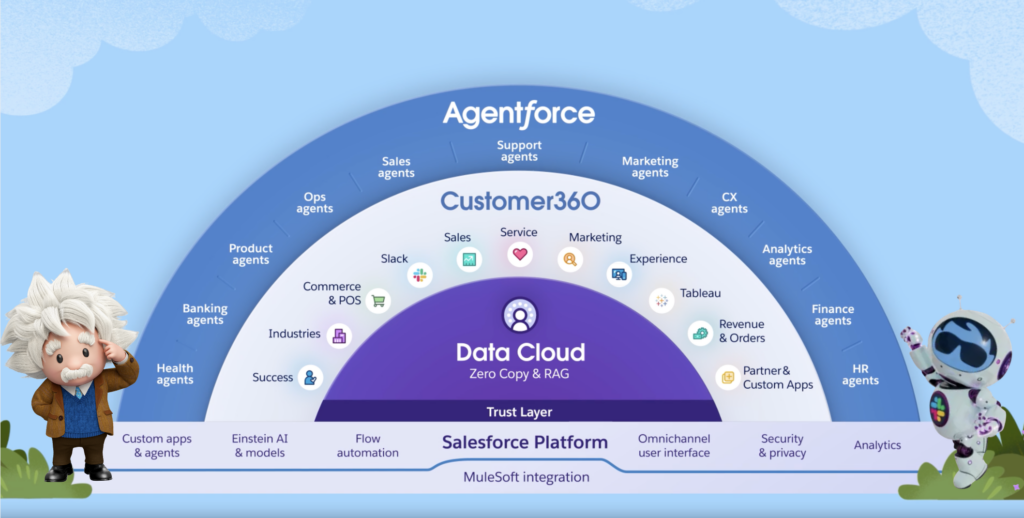
To get started with Agentforce, you need a solid Salesforce CRM foundation, Data Cloud, which acts as your company’s ‘center of meaning’ and knowledge base, and the appropriate Agentforce licenses. While the benefits are transformative, navigating the Salesforce stack requires understanding how these layers connect

1. Why is Salesforce CRM the essential for Agentforce success?

At the heart of your virtual assistant is your Salesforce Customer Relationship Management (CRM) platform. This is where all your structured client data lives – accounts, service history, communication logs, case records, and more.

But the effectiveness of your assistant depends heavily on data quality. The CRM must be:

  • Well-organized: Clean field structures, accurate records, and no duplicates
  • Integrated: Connected to other enterprise systems like policy management, loan origination, or investment platforms
  • Actionable: Designed with automation and workflows in mind

For example, if a wealth management client contacts the assistant to check the status of a portfolio transfer, your Salesforce CRM must already have a standardized process in place—so the assistant can reference accurate case data and provide a real-time update.

2. How Will Agentforce Work In Our Firm?

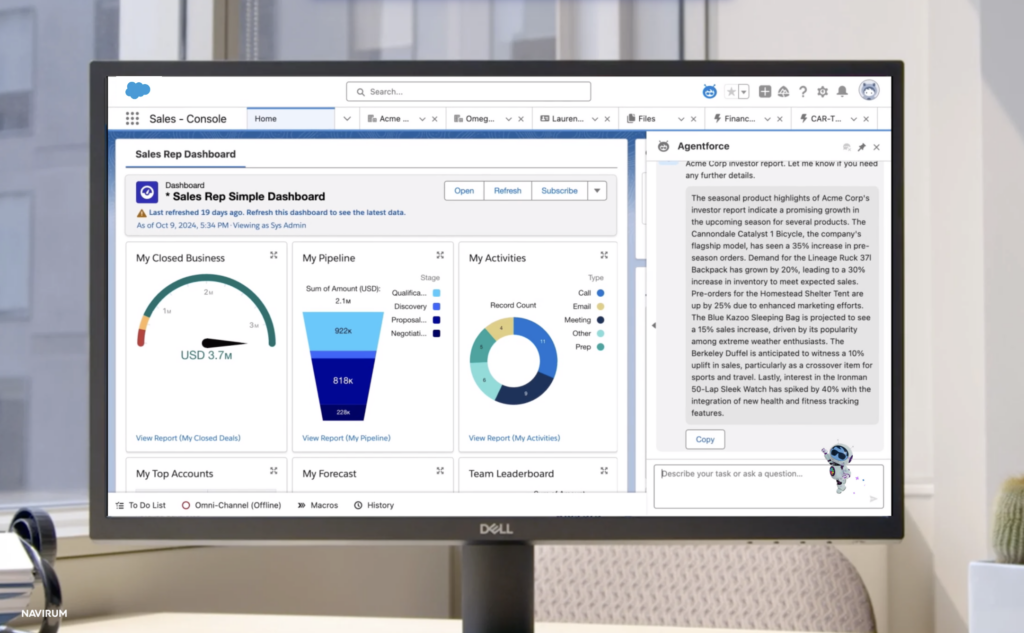
Agentforce is a Salesforce-native platform that allows you to build and deploy AI-driven digital agents within your existing Salesforce environment.

Unlike basic chatbots, Agentforce virtual assistants are:

  • Context-aware: They draw on CRM data to personalize every interaction
  • Process-oriented: Capable of managing multi-step service flows (e.g., onboarding, loan servicing, address updates)
  • Trainable: They learn from past interactions and continuously improve over time

For example, in an insurance context, an Agentforce-powered assistant could walk a client through a claims process by gathering documentation, submitting the claim, and updating the client on its progress – without a single phone call.

Agentforce also allows for omni-channel support – your assistant can interact via web chat, SMS, or in-app messaging, offering a consistent experience across platforms.

Agentforce Credit Union Success Story – PenFed Unlocks a Competitive Advantage with Agentforce

3. How Does Data Cloud Work With Agenforce?

Salesforce Data Cloud brings intelligence and context to your virtual assistant by unifying data across systems in real time.

While Salesforce CRM holds structured client records, Data Cloud:

  • Ingests real-time data from core banking systems, marketing platforms, compliance tools, and third-party APIs
  • Creates unified client profiles using identity resolution and data harmonization
  • Enables intelligent automation by identifying triggers and behavioral patterns

This means your virtual assistant doesn’t just “respond”—it can predict, personalize, and proactively assist.

Imagine a client logging into your mobile banking app to ask about recent overdraft fees. Data Cloud can analyze their account behavior, detect an unusual pattern, and trigger a tailored response such as waiving the fee or offering a low-balance alert subscription—all before the client even finishes typing.

Agents and Agentforce - Key benefits
Agents and Agentforce – Key benefits

What Are The Steps To Build An Agent Solution?

Before diving in, we recommend financial services firms focus on three critical success factors:

1. Data Structure and Hygiene

Ensure your Salesforce CRM is clean, accurate, and integrated. Since poor data quality leads to incorrect responses and undermines user trust, a well-maintained CRM is your most critical asset. Success with Agentforce requires a foundation of enriched, up-to-date data that you can rely on; it isn’t just a preference – it is a prerequisite

2. Process Mapping

Document your common support journeys to identify automation opportunities, human handoff points, and success metrics. Think of Agentforce agents as digital employees: to operate effectively, they must understand your company’s unique workflows. Defining these processes and making them accessible – whether through your Knowledge Base or AI policies – is a critical investment. These documented processes are the ‘roads’ your agents will travel to deliver consistent results

3. Regulatory Review

To ensure your AI operates within the bounds of GDPR, FINRA, and local banking standards, you need a proactive framework. Collaborate with legal teams and Agentforce specialists like Navirum to establish a comprehensive AI policy

Agentforce key benefits for Financial Services

Why Choose Navirum for Your Agentforce Implementation?

At Navirum, we don’t just implement Salesforce – we design intelligent, compliant, and future-ready Agentforce solutions tailored for the unique demands of financial services.

With deep expertise across banking, insurance, and investment management, we know how to translate your processes and regulations into scalable AI-powered workflows.

Contact Us
First

Navirum Client Success Stories in Financial Services

Navirum on LinkedIn | Navirum on AppExchange| Navirum Newsletter Subscription

FAQs: Virtual Client Support Assistants

How do virtual client assistants built on Agentforce differ fundamentally from traditional chatbots?

Unlike rule-based chatbots, Agentforce-powered assistants are context-aware and process-driven. They can orchestrate multi-step workflows, reference structured client data from Salesforce Financial Services Cloud, and adapt interactions dynamically, delivering personalized guidance while adhering to regulatory compliance. This enables advisors to maintain high-touch relationships without sacrificing scalability.

In what ways does Salesforce CRM enable these virtual assistants to provide trusted financial guidance?

Salesforce CRM centralizes client profiles, account histories, and household relationships. Virtual assistants leverage this data to generate real-time responses, ensure consistency across channels, and escalate complex cases with complete context, thereby minimizing errors and reinforcing client trust.

How does Salesforce Data Cloud enhance predictive support capabilities?

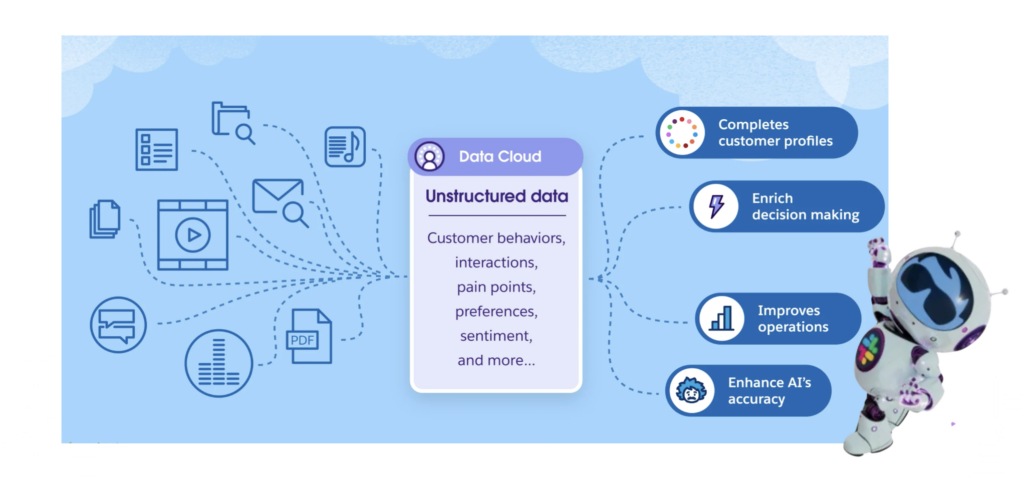
Data Cloud unifies structured and unstructured client data from multiple sources, harmonizing it in real time. Its like giant knowledge base for your firm. It allows agents to understand the meaning of your firms data. This allows assistants to anticipate client needs, personalize recommendations, and trigger proactive alerts—transforming support interactions into predictive, high-value engagements rather than reactive responses.

How Do Wealth Manager Use Agentforce?

Advisor and wealth management use cases are unique. To find out more you can dive into these 5 scenarios here

Why is now the strategic moment for financial firms to invest in virtual client assistants?

Clients increasingly demand instant, 24/7, personalized service, while firms face operational cost pressures and compliance challenges. Virtual assistants offer a scalable solution, freeing human teams to focus on high-value advisory tasks while ensuring consistent, auditable support across touchpoints.

What are the critical data prerequisites for building a high-performing virtual assistant?

Success requires clean, normalized, and integrated CRM and external data. Redundant, incomplete, or siloed information can lead to incorrect guidance, compliance risk, and eroded client trust. Firms must also implement ongoing data quality monitoring and governance frameworks.

How should firms map workflows for automation without disrupting human-led processes?

Workflow mapping must identify end-to-end client journeys, pinpoint repetitive tasks, and define handoffs where human intervention is essential. This ensures the assistant augments rather than replaces human advisors, enabling efficiency gains without compromising service quality or regulatory adherence.

What governance and compliance measures are essential for AI-driven support in financial services?

Regulatory oversight includes role-based access control, logging every interaction, validating AI recommendations against compliance rules, and conducting periodic audits. Assistants should operate within defined limits to ensure risk exposure is controlled while maintaining a fully auditable trail.

How do virtual assistants contribute to advisor productivity and client retention?

By automating routine inquiries, scheduling, and alerts, assistants allow advisors to focus on strategic engagement. They can surface cross-sell or upsell opportunities based on predictive analytics and maintain proactive outreach, directly impacting client satisfaction and long-term retention.

Can these assistants support multi-channel, high-volume client interactions without losing personalization?

Yes. Agentforce-powered assistants integrate with email, chat, voice, and portal platforms while maintaining a unified client profile. They remember prior interactions, personalize content dynamically, and escalate only the complex or sensitive cases, preserving human attention where it matters most.

How can firms measure the ROI and effectiveness of a virtual client assistant?

Key metrics include:

  • Reduction in response times and operational costs
  • Advisor bandwidth freed for high-value activities
  • Client satisfaction and Net Promoter Scores
  • Compliance adherence and audit accuracy
  • Predictive engagement outcomes (e.g., cross-sell conversions)

Tracking these KPIs ensures firms optimize performance, refine workflows, and quantify the assistant’s strategic impact.

Lavinia Picu3 Powerful Reasons Why Financial Firms Implement Salesforce Agentforce

The Role of AI in Salesforce: What Einstein GPT Means for Financial Services

What is The Role of AI in Salesforce: What Einstein GPT Means for Financial Services? Why Financial Services Can’t Afford to Miss the AI Wave?

Artificial Intelligence has shifted from a promising frontier to a foundational element of enterprise strategy—especially in financial services. From wealth management and commercial banking to insurance and capital markets, institutions are racing to deploy AI in ways that improve productivity, enhance customer experience, and unlock new insights.

But integrating AI isn’t just about algorithms. It’s about embedding intelligence into the workflows people already use every day.

That’s where Salesforce Einstein GPT comes in.

As the world’s first generative AI for CRM, Einstein GPT brings advanced machine learning and large language models directly into the Salesforce platform—enabling financial institutions to automate more, predict more, and personalize more, all within their existing systems.

In this article, we’ll explore the strategic implications of Einstein GPT for financial services CIOs, technology leaders, and AI/ML stakeholders—and why it matters now more than ever.

What Is Einstein GPT?

Einstein GPT is Salesforce’s next-generation AI engine that combines proprietary Salesforce AI models with public and private large language models (LLMs) like OpenAI’s GPT, enabling dynamic content generation across the entire Salesforce ecosystem.

Unlike traditional predictive AI (which is rules- and model-based), Einstein GPT is generative AI—capable of creating context-aware text, automating interactions, and suggesting actions in real time.

Key Capabilities:

  • Generate personalized emails, client reports, and outreach
  • Surface predictive insights like risk scores or churn likelihood
  • Enable conversational AI in service and sales channels
  • Integrate private customer data safely and securely

Why it matters:

Einstein GPT doesn’t live outside of Salesforce—it lives inside your CRM, working with your customer data, your workflows, and your business logic.

AI Tailored to Financial Services Workflows

Einstein GPT has been purpose-built to integrate with Salesforce Financial Services Cloud (FSC), making it immediately relevant for use cases in wealth, banking, insurance, and asset management.

Instead of manually compiling investor reports or writing follow-up messages, your advisors, relationship managers, and service teams can generate these assets dynamically—based on real-time customer data and AI recommendations.

Benefits for Financial Services:

  • Banking: Summarize loan application details, generate personalized loan offer emails, or surface next-best financial products
  • Wealth Management: Create custom performance summaries, automate follow-ups for market events, and assist with rebalancing insights
  • Insurance: Auto-generate policyholder responses or claims summaries with full context
  • Asset Management: Draft quarterly investment letters or market commentaries tailored by client segment

Einstein GPT bridges the gap between siloed AI projects and production-ready, ROI-focused applications across your front office.

Automate, Don’t Just Inform

Traditional CRM AI is great at surfacing insights, but it leaves the action to the user. Einstein GPT changes that by automating high-value tasks, so users spend less time typing and more time engaging.

For example:

  • Auto-draft prospecting emails for commercial clients based on engagement history
  • Generate compliance summaries or pre-filled forms based on prior disclosures
  • Suggest meeting agendas for client reviews using AI summaries of previous interactions

Business Impact:

  • Increase productivity by 30–40% for front-line teams
  • Reduce administrative load and manual data entry
  • Improve accuracy and consistency in client communications

AI/ML Stakeholder Insight:

The shift from predictive to generative AI is not incremental—it’s transformational. Generative AI creates usable output, not just recommendations.

Secure and Compliant AI for Regulated Environments

One of the top concerns for financial institutions deploying AI is data privacy and compliance. Einstein GPT was designed with these challenges in mind.

Salesforce enables enterprise-grade data governance with:

  • Grounded AI: Generative responses are anchored in your Salesforce data, ensuring accuracy and reducing hallucinations
  • Bring Your Own Model (BYOM): Firms can integrate their own private LLMs or use partner models via Salesforce’s AI Cloud
  • Zero Data Retention: When using external models like OpenAI via Salesforce, customer prompts and responses are not stored
  • Audit Trails: Every AI-generated suggestion is traceable, with human-in-the-loop governance

This approach balances AI innovation with the rigorous compliance standards of the financial industry—including GDPR, FINRA, and internal policy requirements.

Unified AI Strategy with Salesforce AI Cloud

Einstein GPT is part of the broader Salesforce AI Cloud, which offers a unified platform for deploying, managing, and scaling AI across your enterprise stack.

With AI Cloud, financial institutions can:

  • Deploy AI across Sales, Service, Marketing, and IT
  • Control AI access and usage by role or department
  • Integrate external data sources and third-party models securely
  • Monitor AI performance and compliance in real time

This gives CIOs and CTOs a central governance layer to orchestrate all AI activity inside the organization, avoiding shadow IT and siloed pilots.

AI/ML Stakeholder Insight:

AI Cloud creates a path for responsible AI at scale—moving from experiments to enterprise-wide impact.

Driving ROI: Where Einstein GPT Delivers Immediate Value

For financial institutions evaluating AI investments, the key question is: Where will we see ROI fastest?

Einstein GPT delivers measurable value in several core areas:

Top Use Cases:

  • Sales Acceleration: Reduce time to prepare outreach, follow-ups, and reports
  • Service Optimization: Shorten response time with pre-written, data-informed replies
  • Marketing Personalization: Auto-generate content aligned to client segments
  • Risk and Compliance: Draft and review summaries, detect anomalies, and automate documentation
  • Advisor Productivity: Automate routine tasks and enrich client interactions

Outcome:

More deals closed, higher client satisfaction, and greater operational efficiency—without increasing headcount.

Building AI Maturity: Start Smart, Scale Strategically

Einstein GPT is not a plug-and-play magic button. To unlock its full potential, financial services firms need to align AI deployment with business strategy and internal readiness.

As a Salesforce consulting firm with deep expertise in financial services and AI/ML integration, we help you:

  • Identify high-impact AI use cases tailored to your lines of business
  • Configure Salesforce and Einstein GPT to your specific workflows
  • Ensure data quality and model governance for accurate results
  • Train your teams to confidently adopt and trust generative AI

Implementation Insight:

Our 5/5 CSAT-rated delivery team works hand-in-hand with your AI leads and business stakeholders to create sustainable, scalable value.

Final Thoughts: Einstein GPT Is a Strategic Advantage, Not Just a Feature

AI will define the next decade of financial services—and the winners will be those who embed it into everyday operations, not just R&D.

Salesforce Einstein GPT offers CIOs and technology leaders a practical, powerful path to embed AI into your organization at scale—driving immediate productivity and long-term differentiation.

This is not just about automating tasks. It’s about transforming how your institution engages clients, manages risk, and scales operations.

Ready to Elevate Your AI Strategy with Salesforce?

Let’s explore how Einstein GPT can deliver measurable impact across your organization—from the front office to compliance to client experience.

👉 Schedule a strategy session with our financial services AI team
We’ll review your current setup, identify high-impact AI use cases, and map a practical path to value.

Explore More from Navirum:

Contact Us
First
Lavinia PicuThe Role of AI in Salesforce: What Einstein GPT Means for Financial Services

How Salesforce AI Revolutionizes the Insurance Industry

How Salesforce AI Revolutionizes the Insurance Industry?

Salesforce AI, through tools like Einstein and Financial Services Cloud, is revolutionizing the insurance industry by enabling insurers to leverage data for smarter decision-making, improved operational efficiency, and hyper-personalized customer experiences across the entire value chain.

Artificial intelligence (AI) and Salesforce help insurers face new challenges.

In a rapidly changing insurance landscape, digital transformation is no longer optional. Today’s policyholders expect fast, personalized, and seamless experiences at every touchpoint. Meanwhile, insurers must contend with rising operational costs, complex regulatory environments, and fierce competition.

To meet these challenges head-on, insurers are turning to artificial intelligence (AI) — and Salesforce is leading the charge. With tools like Salesforce Einstein and AI-driven automation built into Financial Services Cloud and Industry Cloud for Insurance, Salesforce AI is helping insurance companies modernize their operations, boost agent productivity, and deliver hyper-personalized service at scale.

In this post, we explore how Salesforce AI is transforming the insurance industry, review high-impact use cases and more.

Why AI Matters in Insurance Today

Insurance is a data-rich industry. Every quote, policy, claim, and customer interaction generates valuable data points. But without the right tools, this data often remains untapped.

AI enables insurers to:

  • Make sense of massive datasets in real-time
  • Predict risk and customer behavior more accurately
  • Personalize services to individual customer needs
  • Streamline internal workflows and reduce manual effort

Salesforce AI takes these capabilities a step further by embedding intelligence directly into the CRM and operational workflows that insurance professionals use every day. The result is smarter, faster, and more informed decision-making across the value chain. Salesforce integrates with most popular big data analytics platforms like Snowflake and Databricks as well its own solution Data Cloud – see the details here

AI is making huge changes to insurance and society

Key Capabilities of Salesforce AI for Insurance

Salesforce Einstein and Industry Cloud solutions bring AI-powered insights to insurers in a practical, accessible way. Here are some of the most impactful capabilities:

1. Intelligent Lead and Opportunity Scoring

Einstein analyzes lead behavior and historical data to score prospects based on their likelihood to convert. Agents can prioritize high-potential leads, respond faster, and tailor their outreach with recommended messaging.

2. Claims Prediction and Triage

AI models can analyze historical claims data to predict claim severity and flag anomalies. This helps adjusters prioritize claims, reduce fraud risk, and ensure faster settlements for low-risk claims.

3. Personalized Customer Engagement

Salesforce AI can recommend the next best action, timing, and channel for engaging each customer. Whether it’s a policy renewal reminder or a cross-sell opportunity, advisors receive intelligent prompts to engage clients more effectively.

4. Automated Service and Chatbots

Einstein Bots can handle routine service inquiries like policy lookups, billing questions, and document uploads. This reduces call center volume and ensures 24/7 support without compromising customer satisfaction.

5. Underwriting Efficiency

AI can assist underwriters by automatically gathering third-party data, checking application completeness, and providing risk scoring. This leads to faster application turnaround and more consistent decision-making.

Agentforce. Transforming Health Care and Health Insurance

Use Cases Across the Insurance Value Chain

Let’s look at how Salesforce AI delivers value across different functions within insurance companies:

A. Sales and Distribution

  • Automatically score and route leads to the right agent
  • Recommend products based on customer life stage and needs
  • Track agent performance and provide coaching recommendations

B. Customer Service

  • Use Einstein Bots to triage cases and escalate complex issues
  • Provide agents with AI-suggested responses and next steps
  • Reduce average handling time and improve customer satisfaction

C. Marketing and Engagement

  • Segment policyholders based on behavior and preferences
  • Personalize campaigns and outreach with predictive analytics
  • Optimize campaign timing and channels with AI recommendations

D. Claims and Underwriting

  • Predict claim cost and time-to-settlement for better resource allocation
  • Identify potentially fraudulent claims using anomaly detection
  • Assist underwriters with AI-powered risk assessment tools

E. Policyholder Retention

  • Flag customers likely to churn and suggest retention offers
  • Trigger proactive outreach based on key life events or policy usage
  • Track retention KPIs and fine-tune strategies in real time

Why Work with a Salesforce Consulting Partner

Implementing AI isn’t just about technology—it’s about aligning strategy, data, and user experience. That’s why many insurers partner with specialized Salesforce consulting firms to:

  • Design custom workflows aligned to insurance processes
  • Integrate Salesforce with policy admin, claims, and billing systems
  • Train agents and underwriters on how to use AI tools effectively
  • Ensure governance, compliance, and data security are built in from the start

A Salesforce consulting partner brings the industry knowledge and technical expertise required to ensure a successful, scalable AI implementation.

The Future of Insurance Is AI-Powered

As the insurance industry continues to evolve, the winners will be those who embrace intelligent automation, data-driven engagement, and real-time insights. Salesforce AI provides the foundation insurers need to:

  • Build stronger relationships with policyholders
  • Empower agents and advisors to work smarter
  • Streamline claims and underwriting workflows
  • Personalize every step of the customer journey

Whether you’re just starting your AI journey or looking to take your Salesforce investment to the next level, the time to act is now.

FAQ Salesforce AI in the Insurance Industry

What is the main driver for insurers to adopt AI and Salesforce?

The main driver is the rapidly changing insurance landscape where policyholders expect fast, personalized, and seamless experiences. Insurers also need to contend with rising operational costs, complex regulatory environments, and fierce competition, which AI and Salesforce help address.

What Salesforce tools are mentioned for driving AI in insurance?

The key tools mentioned are Salesforce Einstein (for AI-driven insights) and AI-driven automation built into Financial Services Cloud and Industry Cloud for Insurance.

Why does AI matter specifically in the insurance industry?

Insurance is a data-rich industry. AI enables insurers to make sense of massive datasets in real-time, predict risk and customer behavior more accurately, personalize services, and streamline internal workflows.

How does Salesforce AI enhance data utilization for insurers?

Salesforce AI embeds intelligence directly into the CRM and operational workflows that insurance professionals use daily, leading to smarter, faster, and more informed decision-making across the value chain.

Name two key capabilities of Salesforce AI for insurance companies.

Intelligent Lead and Opportunity Scoring: Einstein scores prospects based on their likelihood to convert.

Claims Prediction and Triage: AI models predict claim severity and flag anomalies, reducing fraud risk and speeding up low-risk settlements.

How is Salesforce AI used in Customer Service?

It is use in two ways: to employ Einstein Bots to handle routine service inquiries (policy lookups, billing) and triage cases and to provide agents with AI-suggested responses and next steps to reduce average handling time and improve satisfaction.

How does AI improve underwriting efficiency?

AI assists underwriters by automatically gathering third-party data, checking application completeness, and providing risk scoring, resulting in faster application turnaround and more consistent decision-making.

In which areas of the insurance value chain does Salesforce AI deliver value?

Salesforce AI delivers value across:

  • Policyholder Retention
  • Sales and Distribution
  • Customer Service
  • Marketing and Engagement
  • Claims and Underwriting

How does Salesforce AI help with policyholder retention?

It can flag customers likely to churn, suggest retention offers, and trigger proactive outreach based on key life events or policy usage.

Why should an insurer partner with a Salesforce consulting firm for AI implementation?

A consulting partner helps align strategy, data, and user experience. They assist with designing custom workflows, integrating Salesforce with other systems (like policy admin), training staff, and ensuring built-in governance and compliance.

Navirum’s Recommendation: Taking The Next Step With AI

Navirum Salesforce Partner since 2018

At Navirum, we understand that successful AI implementation in the insurance sector is more than just deploying technology—it’s a strategic overhaul of processes and data infrastructure. As a specialized Salesforce consulting partner with deep expertise in the Financial Services Cloud and numerous successful AI-driven projects, we guide insurers through every stage of their digital transformation.

If you are looking to leverage Salesforce AI to reduce operational costs, enhance customer engagement, or streamline complex workflows like claims and underwriting, partnering with an experienced firm is crucial. Navirum provides the industry-specific knowledge and technical rigor to ensure your AI investment is governed, compliant, and delivers scalable, measurable results.

Ready to explore how Salesforce AI can transform your insurance business?

Contact Us
First

Lavinia PicuHow Salesforce AI Revolutionizes the Insurance Industry

Salesforce AI in Credit Union technology

Salesforce AI in credit union technology: Enhance Member Services & Efficiency

Credit unions are at a pivotal point in their digital transformation journey. As member expectations rise and digital-first competitors grow, credit unions must find innovative ways to deliver exceptional service while maintaining their community-first values. Salesforce AI presents a unique opportunity to meet these challenges head-on, enhancing personalization, streamlining operations, and future-proofing member engagement. As a Salesforce consulting partner, we help credit unions harness this power responsibly and effectively.

The Unique Landscape of Credit Unions

Unlike traditional banks, credit unions operate with a member-first model. This distinction places added importance on trust, personalized service, and community involvement. However, many credit unions are still tied to legacy systems and face hurdles in adopting new technologies. Salesforce AI bridges this gap, offering tools that are not only powerful but also adaptable to the specific workflows and values of credit unions.

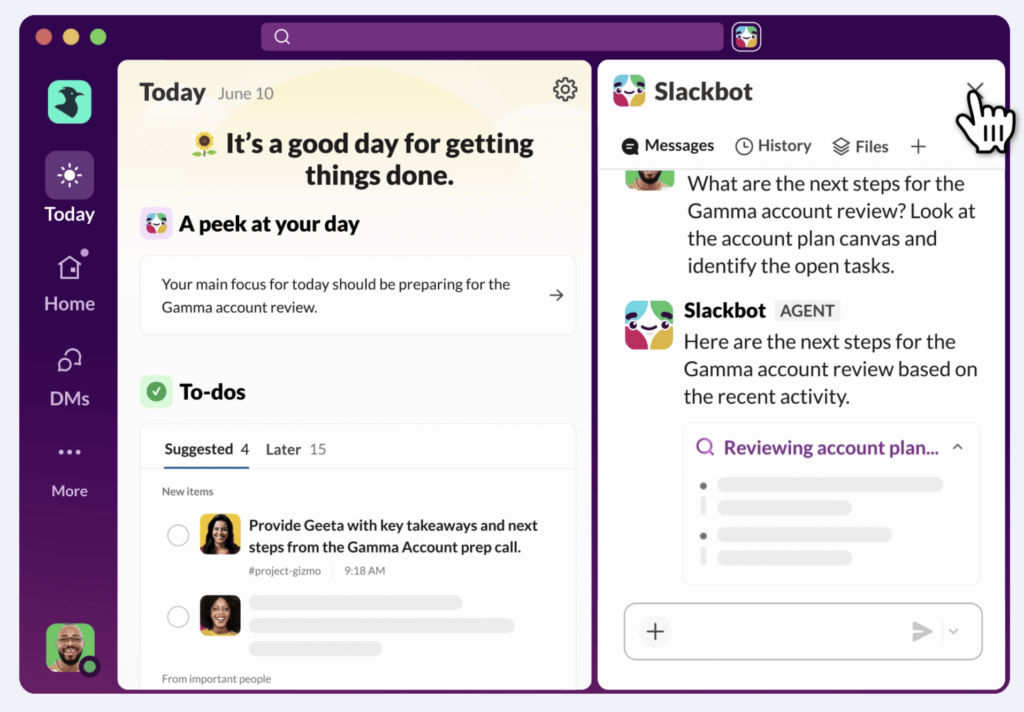
Unlocking AI Capabilities with Salesforce

Salesforce Einstein AI

Einstein AI, embedded throughout the Salesforce platform, delivers predictive analytics, automation, and insights directly within the CRM. For credit unions, this means:

  • Predicting member behavior and needs.
  • Automating member interactions.
  • Delivering next-best actions to frontline staff.
Financial Services Cloud

(FSC) Tailored for financial institutions, FSC provides

  • Prebuilt financial services workflows.
  • Unified member profiles with real-time data.
  • AI-driven insights for personalized member engagement.
Einstein GPT and the Trust Layer

Salesforce’s integration of generative AI (Einstein GPT) with real-time CRM data creates a powerful engine for automation and content generation. The Trust Layer ensures responsible AI usage by securing sensitive member data and maintaining compliance.

AI Use Cases for Credit Unions

Member Engagement
  • Personalized financial education and recommendations.
  • Predictive campaigns targeting members at key financial milestones.
  • Enhanced digital experiences for improved member retention.
Service Automation
  • AI-powered chatbots offering 24/7 support.
  • Intelligent routing of member inquiries to the right team.
  • Automated service summaries for faster case resolutions.
Risk Management and Compliance
  • Real-time anomaly detection for fraud prevention.
  • Automated compliance documentation and reporting.
  • AI-driven audit trails for regulatory accuracy.
Lending and Credit Decisioning
  • Predictive credit scoring to speed up approvals.
  • Personalized loan offers based on member behavior and history.
  • Enhanced underwriting workflows with AI insights.

Getting It Right: Implementation Tips

Successful AI adoption hinges on:

  • Clean, structured member data.
  • Seamless integration with core banking systems.
  • Training and change management for staff.
  • Ethical use of AI, focusing on fairness, transparency, and explainability.

Why Partner with a Salesforce Consultant?

A Salesforce consulting partner brings industry experience, technical expertise, and a tailored approach to implementation that can help you achieve the following:

  • Customize FSC to align with member-centric workflows.
  • Build and deploy predictive models with Einstein AI.
  • Train teams on using AI tools effectively.
  • Ensure compliance and ongoing optimization.
  • Provide continuous support for long-term AI success.

The Future is Smarter, and It’s Now

Salesforce AI offers credit unions the ability to serve members with greater intelligence, empathy, and efficiency. As your trusted consulting partner, we’re here to help you navigate this journey and unlock the full potential of AI.
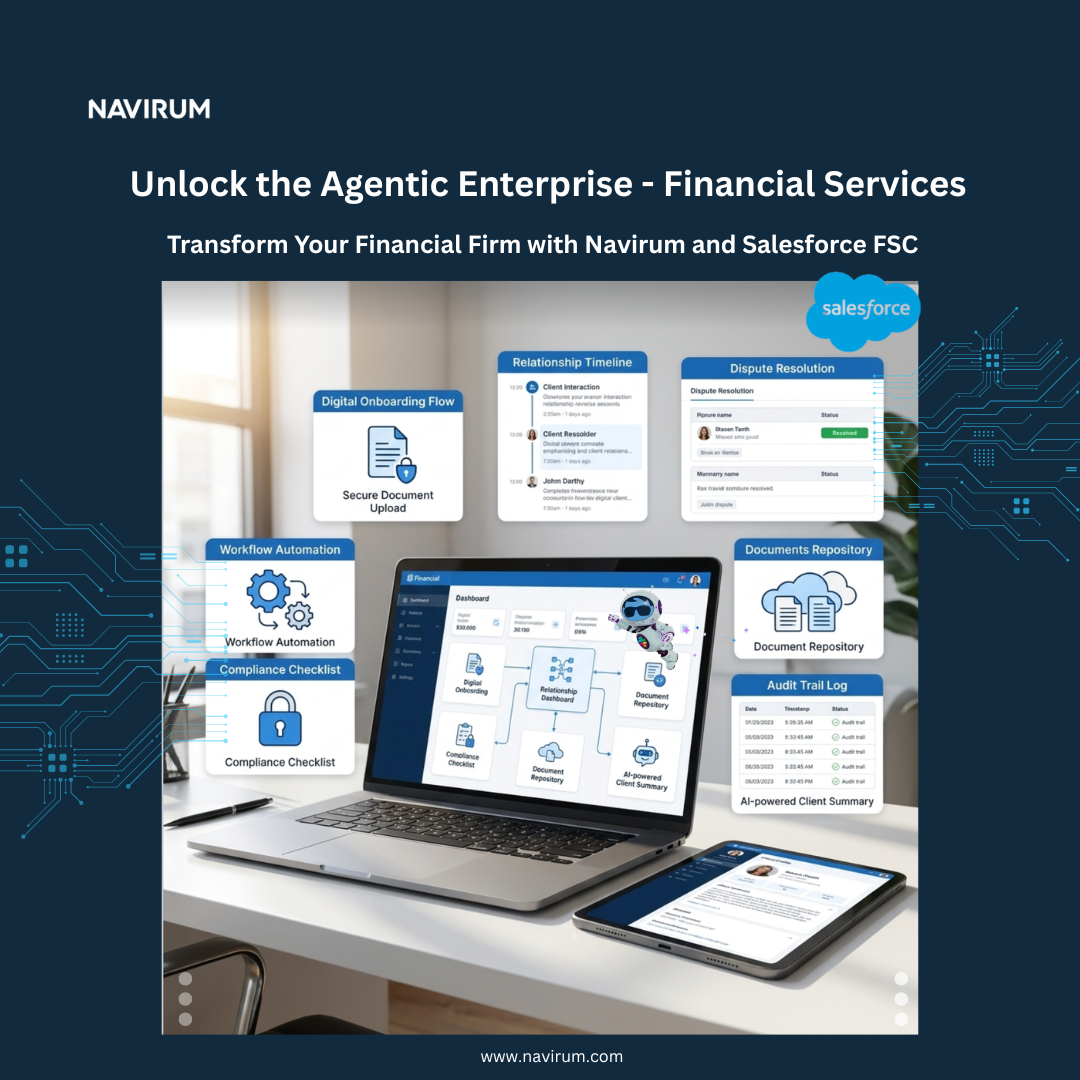
Ready to transform your member experience?

Contact us today to schedule a consultation or download our free AI Readiness Checklist for Credit Unions.

Navirum on LinkedIn | Navirum on AppExchange

Download Your Free Copy of AI Readiness Checklist for Credit Unions

Download your copy of AI Readiness Checklist for Credit Unions!

Name
Name
First
Last
Lavinia PicuSalesforce AI in Credit Union technology

Vinton AI: Revolutionizing Salesforce for Financial Services with AI and Automation

Vinton.ai is a cutting-edge financial technology platform designed to elevate the functionality of Salesforce for financial services firms in Canada and the USA. The platform uses artificial intelligence (AI) and automation to streamline operations, optimize data management, and deliver personalized client experiences. By revitalizing the Activity Object in Salesforce, Vinton provides practical tools for capturing client interactions, automating administrative tasks, and ensuring compliance with data residency requirements.

Practical Benefits for Salesforce Customers in Financial Services

1. Seamless Integration with Salesforce Clouds:

  • Vinton integrates seamlessly with Sales Cloud, Service Cloud, and Financial Services Cloud, ensuring that financial services firms can leverage its capabilities across different areas of their business. Whether it’s enhancing sales activities, improving customer service, or streamlining financial services workflows, Vinton helps automate tasks, log interactions, and provide AI-driven insights that drive productivity.

2. Revitalized Activity Management in Salesforce:

  • Vinton breathes new life into the Salesforce Activity Object by making it much easier to log various types of client interactions, such as in-person meetings and virtual calls. The platform automatically recognizes participants and associates the meeting with relevant contacts, ensuring accurate records. This enhancement is especially valuable for financial advisors and professionals in wealth management, banking, and insurance who need to automate administrative tasks in financial services to stay efficient.

3. Boosts Efficiency for New Staff and Tenured Professionals:

  • For new financial advisors, Vinton helps automate routine tasks, enabling them to plan their day more effectively and manage meeting notes. The platform significantly reduces administrative work, allowing experienced professionals to focus on the client rather than data entry. This combination of activity management automation for financial advisors with practical use of AI-driven meeting notes automation makes Vinton an invaluable tool for all experience levels.
Image: courtesy of Vinton.ai

4. Data Residency Compliance and Secure Storage:

  • Vinton ensures data residency compliance by securely storing all interaction data within Salesforce. For financial services firms in Canada and the USA, addressing data residency and compliance is critical, especially under regulations such as PIPEDA (Personal Information Protection and Electronic Documents Act), CASL (Canada’s Anti-Spam Legislation), or the Gramm-Leach-Bliley Act in the USA. By keeping data within Salesforce, companies can meet these requirements while still benefiting from a seamless user experience.

5. Automated Meeting Notes and Follow-Up Tasks:

  • The platform leverages AI to automate note-taking during meetings and create follow-up tasks based on discussions, reducing the risk of missed follow-ups. By integrating this practical use directly into Salesforce workflows, Vinton ensures that all client interactions are recorded with precision, providing a reliable source for comprehensive data management in financial services.

6. Scalability for Financial Services Firms of All Sizes:

  • Whether for small advisory practices or large financial institutions, Vinton’s features support firms at all stages. The platform’s ability to scale as businesses grow ensures continued efficiency even as client bases expand, making it ideal for financial services firms in the USA and Canada.

Contact Navirum for a Demo

For financial services firms looking to unlock the full potential of Salesforce and Vinton.ai, contact Navirum for a demo to see how automating administrative tasks and enhancing data management can add significant value to your firm. Navirum specializes in Salesforce consulting and provides the expertise needed to implement Vinton successfully.

Lavinia PicuVinton AI: Revolutionizing Salesforce for Financial Services with AI and Automation

How Canadian Financial Advisors Get The Edge With AI

The genie is out of the bottle with AI, and financial advisors are embracing its full potential. At Navirum, we’re seeing AI requirements in virtually every Salesforce project, as advisors shift focus from admin-heavy tasks to delivering better client experiences. With so many AI tools available – like Otter.ai, Pilot, Fireflies, Jump, Vinton, Agentforce and more – advisors have a wide range of options to suit their unique needs. Here’s a comparison of some of the most popular

Here are five ways Canadian financial advisors are using AI to focus more on clients, not admin.

1. Automated Note-Taking and Meeting Summaries

AI tools like Jump and Firefly can automatically transcribe meetings, capture essential insights, and generate summaries. This allows advisors to focus on client engagement without worrying about taking notes. Afterward, AI ensures follow-ups and next steps are captured, creating action plans to keep advisors on track with client requests and reducing manual work.

2. Creation of Action Plans and Post-Meeting Follow-Ups

With tools like Microsoft Copilot, advisors can instantly create personalized action plans after client meetings. AI automates the process of assigning tasks, setting reminders, and tracking deadlines, ensuring that every client request is addressed efficiently. This reduces the burden of admin work and helps maintain a proactive approach, strengthening client relationships.

3. Personalized Investment Recommendations

AI can analyze a client’s financial portfolio, risk profile, and market trends in real-time to provide personalized investment recommendations. With tools like Pilot, advisors can automate this process, delivering data-driven insights and tailored strategies that fit each client’s unique needs. This frees up time for advisors to focus on high-value activities, like deepening client relationships and business growth.

4. Automated Compliance Monitoring

Compliance is a critical aspect for Canadian financial advisors, governed by IIROC and CSA. AI-powered systems help advisors stay compliant by automatically monitoring transactions, flagging potential issues, and generating reports. These tools ensure that advisors meet regulatory requirements without constant manual oversight, reducing compliance risks while allowing them to focus on serving clients. More cautious compliance friendly solutions like Agentforce and Vinton are popular for that reason

5. AI-Enhanced Client Communication

Advisors are increasingly using AI-powered communication tools like chatbots to handle routine client inquiries. AI allows advisors to provide instant responses 24/7, ensuring client satisfaction while freeing up their time for more complex conversations. This leads to improved client service, with AI handling routine tasks so advisors can focus on delivering personalized advice.

Conclusion

AI is now essential for Canadian financial advisors, offering tools that streamline admin work and enhance client service. With options like Agentforce, Jump, Otter Pilot, Vinton, Firefly, and Microsoft Copilot, there’s an AI solution for every need. At Navirum, we’ve integrated AI into nearly all Salesforce projects. If you’re ready to leverage AI to transform your practice, reach out to Navirum for expert guidance on the best tools and strategies for your business.

Need Help Choosing? Contact Us For Advice

Contact Us
First

Lavinia PicuHow Canadian Financial Advisors Get The Edge With AI