What is the right data platform for financial services?

What is the right data platform for financial services?

AI is transforming financial services, but success depends on having the right data foundation. This guide compares Salesforce Data Cloud, Snowflake, and Databricks, helping financial institutions understand how each platform supports customer engagement, enterprise data management, analytics, and AI initiatives—and how to choose the right architecture for long-term growth and competitive advantage.

Financial services firms are entering a new era—one where competitive advantage increasingly depends on the ability to turn data into intelligence, and intelligence into action.

From personalized wealth management experiences and AI-powered customer service to fraud detection, risk management, and regulatory compliance, data has become the foundation of modern financial institutions. Yet many banks, credit unions, insurers, wealth management firms, and asset managers still struggle with fragmented systems, disconnected customer records, and data architectures that were never designed for today’s AI-driven environment.

As organizations modernize their technology stacks, one question continues to emerge:

What is the right data platform for financial services? Data Cloud, Snowflake and Databricks? Which one is a more suitable platform for your firm?

Schedule Your Session

Let’s find a time to chat about your Salesforce strategy and AUM growth.

Continue to Calendar

Overview

The answer is not always straightforward. Three platforms dominate the conversation today:

Three names dominate the conversation right now: Salesforce Data Cloud, Snowflake, and Databricks. Each platform solves different business challenges. Each offers unique capabilities. And each can play an important role in a modern financial services data strategy.

This guide explores the strengths, use cases, and considerations for each platform, helping financial services leaders determine which solution best aligns with their goals.

What is Salesforce Data Cloud?

Salesforce Data Cloud: Powering Real-Time Personalization

If your business already runs on Salesforce, Data Cloud is a natural fit. It connects data from across your systems—banking platforms, marketing tools, third-party feeds—and creates real-time, unified customer profiles.

For financial services firms, this is a game-changer. Imagine a wealth advisor logging into Salesforce and seeing a client’s full history, preferences, risk level, and recent interactions in one place. Or an insurance agent triggering automated outreach when a policyholder’s data suggests a change in life circumstances.

Because it’s fully embedded in the Salesforce ecosystem, Data Cloud doesn’t just analyze data—it acts on it. You can personalize emails, trigger service actions, or alert advisors instantly, all within the same platform.

Snowflake: The Scalable, Secure Data Backbone

What is Snowflake?

Snowflake excels as a centralized data warehouse—especially for highly regulated industries like banking and asset management. It’s designed for organizations that need to consolidate massive volumes of structured data, enforce tight governance, and power analytics across departments.

Think of a large bank that wants to bring together customer data from branches, mobile apps, trading desks, and third-party partners. With Snowflake, they can create a single source of truth and ensure access is controlled by role, geography, or compliance status.

It’s also a favorite for enterprise reporting and integrates smoothly with tools like Tableau, making it ideal for CDOs and compliance teams.

Databricks: The Powerhouse for Advanced Analytics and AI

What is Databricks?

Databricks is built for the most ambitious use cases. If your institution is investing heavily in machine learning, predictive analytics, or real-time decisioning, this is where you want to be.

Databricks combines the flexibility of data lakes with the performance of data warehouses—what it calls a “lakehouse” architecture. It handles both structured and unstructured data and is designed for data science teams.

An insurance firm might use Databricks to build fraud detection algorithms using claims data, emails, call transcripts, and even images. An investment management company could use it to model trading strategies based on market signals, news feeds, and client sentiment.

So, Which One?

It depends on your goals:

  • Use Data Cloud if you want to unify data for sales, service, and marketing teams—and trigger real-time action.
  • Use Snowflake if you’re building a secure, scalable enterprise data warehouse that feeds analytics and reporting.
  • Use Databricks if you’re investing in AI, machine learning, or advanced analytics across complex, diverse datasets.

At Navirum, we help financial services leaders build out data strategies that align with where they are—and where they’re going. Often, it’s not about choosing just one of these platforms, but connecting them strategically.

If you’re rethinking your data architecture, let’s talk. The right data foundation today is your AI advantage tomorrow.

Why Data Platforms Matter More Than Ever in Financial Services

Financial institutions generate enormous volumes of data every day.

Customer transactions, portfolio activity, CRM records, market feeds, loan applications, policy data, service interactions, digital engagement metrics, compliance records, and third-party datasets all contribute to an increasingly complex information ecosystem.

At the same time, organizations face growing pressure to:

  • Deliver personalized customer experiences
  • Improve advisor and employee productivity
  • Strengthen regulatory compliance
  • Reduce operational costs
  • Accelerate AI initiatives
  • Improve decision-making in real time

The challenge is that data often remains trapped in silos.

Customer information may live in CRM systems. Transaction data may reside in core banking platforms. Marketing engagement data may be stored elsewhere. Compliance teams often maintain separate reporting environments. Data science teams frequently build their own isolated analytics platforms.

Without a unified approach, firms struggle to unlock the full value of their information assets.

This is where modern data platforms come in.

The right platform creates a foundation for:

  • Unified customer views
  • Real-time insights
  • Advanced analytics
  • AI and machine learning
  • Data governance and compliance
  • Operational efficiency

However, not all platforms are designed for the same purpose.

Let’s examine how Salesforce Data Cloud, Snowflake, and Databricks differ.

Salesforce Data Cloud: The Customer Intelligence Platform

What Is Salesforce Data Cloud?

Salesforce Data Cloud is a real-time customer data platform designed to unify information across systems and make it immediately actionable within the Salesforce ecosystem.

Unlike traditional data warehouses, Data Cloud focuses on creating comprehensive customer profiles that can be used directly by business teams.

Salesforce Data Cloud Connections | Navirum

Why Financial Services Firms Are Adopting Data Cloud

For financial institutions already invested in Salesforce, Data Cloud provides a powerful way to connect fragmented customer data without creating additional complexity.

Consider a wealth management firm.

An advisor preparing for a client meeting may need information from multiple systems:

  • Investment portfolios
  • Banking relationships
  • Service history
  • Marketing engagement
  • Risk tolerance assessments
  • Family or household relationships

Without a unified platform, gathering this information can be time-consuming. With Data Cloud, all relevant data becomes available within Salesforce, giving advisors a complete view of the client in real time. This enables more meaningful conversations and better outcomes.

Key Benefits of Salesforce Data Cloud

Real-Time Customer Profiles

Data Cloud continuously updates customer records as new information enters the system. This allows organizations to make decisions based on current conditions rather than outdated reports.

Embedded Activation

One of Data Cloud’s biggest advantages is that insights can immediately trigger action.

For example:

  • A banker receives an alert when a customer reaches a significant account milestone.
  • A wealth advisor is notified when a client’s investment behavior changes.
  • An insurer automatically initiates outreach after a life event is detected.

The platform bridges the gap between insight and execution.

Native Salesforce Integration

Organizations using Salesforce Financial Services Cloud, Sales Cloud, Service Cloud, Marketing Cloud, or Agentforce benefit from seamless integration. Business users can access data without switching between systems.

AI Readiness

Data Cloud serves as the foundation for Salesforce’s AI capabilities, including Agentforce. By providing trusted, unified data, organizations can deploy AI agents and predictive models with greater confidence.

Ideal Use Cases for Data Cloud

Data Cloud is particularly effective for:

  • Wealth management personalization
  • Relationship banking
  • Insurance customer engagement
  • Advisor productivity enhancement
  • Marketing segmentation
  • Service automation
  • Agentforce implementations

Potential Limitations

While Data Cloud excels at customer intelligence and activation, it is not intended to replace enterprise-scale data engineering platforms. Organizations with extensive data science requirements may require complementary technologies for advanced analytics and machine learning.

Snowflake: The Enterprise Data Foundation

What Is Snowflake?

Snowflake is a cloud-native data platform built primarily for enterprise data warehousing, analytics, governance, and data sharing.

It enables organizations to consolidate massive amounts of data into a centralized environment while maintaining strict security and compliance controls.

For many financial institutions, Snowflake serves as the foundation of their enterprise data architecture.

Why Snowflake Is Popular in Financial Services | Navirum

Financial services organizations face unique data challenges.

They must manage:

  • Large transaction volumes
  • Strict regulatory requirements
  • Complex reporting obligations
  • Multiple lines of business
  • Highly sensitive customer information

Snowflake was designed to address many of these challenges.

Its architecture allows organizations to scale storage and computing resources independently, improving performance while controlling costs.

Key Benefits of Snowflake

Centralized Data Management

Snowflake creates a single source of truth across the enterprise. Data from multiple systems can be consolidated into one governed environment. This reduces inconsistencies and improves reporting accuracy.

Strong Governance and Security

Financial institutions operate under intense regulatory scrutiny. Snowflake provides extensive governance capabilities, including:

  • Role-based access controls
  • Data masking
  • Auditing
  • Encryption
  • Compliance support

These features help organizations maintain security while enabling broader data access.

Scalability

Whether managing millions or billions of records, Snowflake scales efficiently. This makes it particularly attractive for large banks and multinational financial institutions.

Analytics Enablement

Snowflake integrates with leading business intelligence platforms, enabling organizations to deliver dashboards, reports, and analytics across departments.

Financial Services Use Cases

Snowflake is commonly used for:

  • Enterprise data warehousing
  • Regulatory reporting
  • Risk management analytics
  • Executive dashboards
  • Customer profitability analysis
  • Data sharing across business units
  • Enterprise-wide reporting initiatives

Example Scenario

Imagine a national bank operating retail, commercial, wealth management, and lending divisions. Each business unit generates large amounts of data. Snowflake enables the bank to consolidate information from all divisions into a centralized platform while maintaining strict access controls. Executives gain a unified view of performance, risk teams improve visibility, and compliance teams streamline reporting processes.

Potential Limitations

Snowflake is excellent for storing, governing, and analyzing data, but it is less focused on activating customer insights directly within business workflows.

Organizations often pair Snowflake with CRM platforms, customer engagement tools, or AI applications to operationalize insights.

Databricks: The AI and Advanced Analytics Platform

What Is Databricks?

Databricks is a unified analytics platform designed for data engineering, machine learning, and artificial intelligence.

It pioneered the concept of the “lakehouse” architecture, combining the flexibility of data lakes with the governance and performance capabilities of data warehouses.

Unlike traditional analytics platforms, Databricks was built with data scientists and AI teams in mind.

Why Financial Institutions Choose Databricks | Navirum

Why Financial Institutions Choose Databricks

As financial services firms accelerate AI initiatives, many discover that traditional reporting platforms cannot support advanced analytical workloads.

Databricks addresses this challenge by enabling organizations to work with:

  • Structured data
  • Unstructured data
  • Streaming data
  • Text documents
  • Images
  • Audio
  • Real-time data feeds

This flexibility makes it ideal for sophisticated AI use cases.

Key Benefits of Databricks

Advanced Machine Learning

Databricks provides a collaborative environment for developing, training, and deploying machine learning models. Teams can move from experimentation to production more efficiently.

Support for Diverse Data Types

Modern AI initiatives often require more than traditional tabular data. Databricks allows organizations to combine structured and unstructured data sources within a single platform.

Real-Time Analytics

The platform supports streaming data and real-time processing, enabling faster decision-making.

AI and Generative AI Development

Databricks has become a leading platform for organizations building generative AI applications, large language models, and intelligent automation solutions.

Financial Services Use Cases

Common use cases include:

  • Fraud Detection. Banks and insurers use Databricks to identify suspicious patterns across transactions, claims, communications, and digital interactions.
  • Risk Modeling. Financial institutions can build sophisticated predictive models to evaluate risk exposure and market scenarios.
  • Customer Churn Prediction. Organizations can identify customers at risk of leaving and proactively intervene.
  • Investment Analytics. Asset managers use Databricks to analyze market data, alternative datasets, and client behavior.
  • AI-Powered Decisioning. Real-time models can support lending decisions, underwriting processes, and portfolio recommendations.

Example Scenario

An insurance company wants to improve fraud detection. The organization combines:

  • Claims data
  • Call center transcripts
  • Email communications
  • Image submissions
  • Historical fraud records

Databricks allows data scientists to analyze all these data sources together and create AI models that identify suspicious claims more accurately.

Potential Limitations

Databricks is highly powerful but can be more complex than customer-focused platforms like Data Cloud. Organizations often require specialized data engineering and data science expertise to maximize value.

Data Cloud vs. Snowflake vs. Databricks: Which One Should You Choose?

The answer depends on your primary business objective.

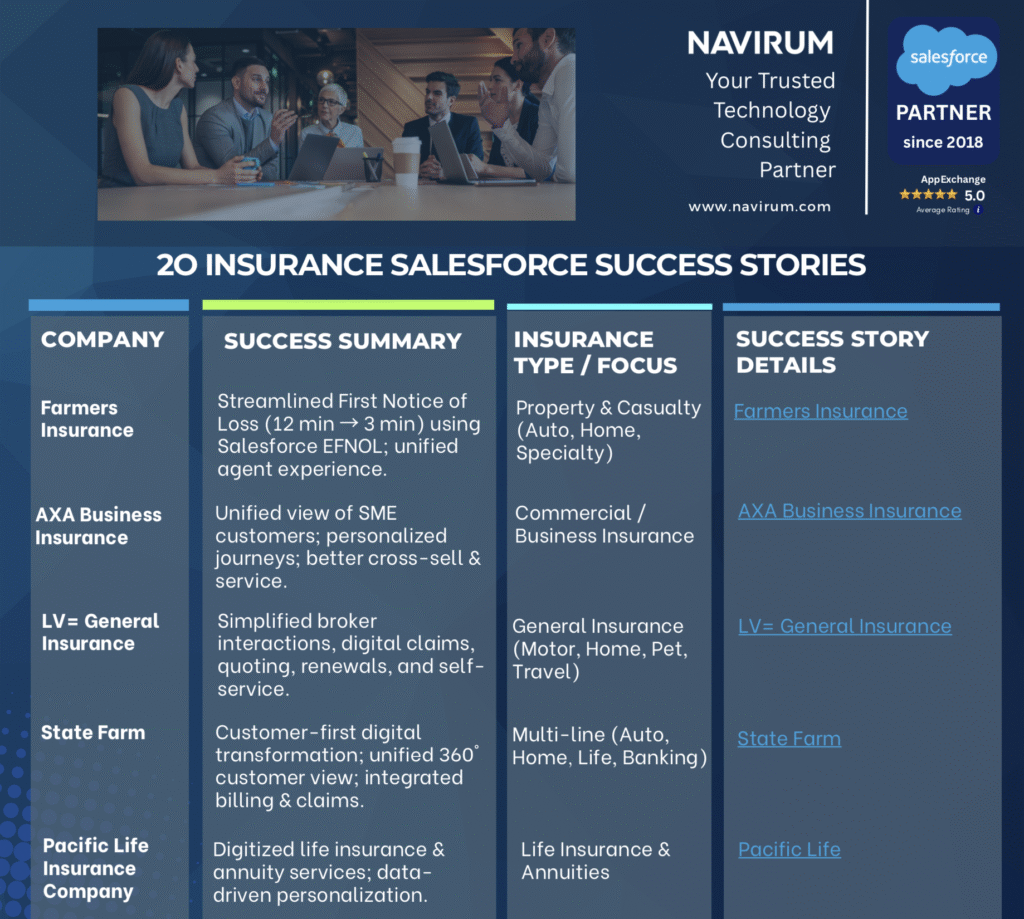
Salesforce vs. Snowflake vs. Databricks | Navirum

The Reality: Most Financial Institutions Need More Than One Platform

One of the biggest misconceptions in the market is that organizations must choose a single platform. In reality, many leading financial institutions use all three. A modern architecture might look like this:

  • Snowflake serves as the enterprise data foundation.
  • Databricks powers AI and machine learning initiatives.
  • Salesforce Data Cloud activates customer insights across sales, service, marketing, and advisor workflows.

Together, these platforms create an ecosystem where data is collected, governed, analyzed, and activated. The key is ensuring they work together strategically rather than operating as isolated technology investments.

Building Your AI-Ready Data Strategy

As AI adoption accelerates across financial services, the quality of your data architecture becomes increasingly important. The organizations seeing the greatest value from AI are not necessarily those with the most advanced algorithms. They are the ones with the most trusted, accessible, and actionable data.

Before selecting a platform, financial services leaders should ask:

  • What business outcomes are we trying to achieve?
  • Who will use the data?
  • How quickly do insights need to be activated?
  • What governance requirements must we support?
  • What AI capabilities do we plan to implement over the next three years?

The answers will help determine whether Data Cloud, Snowflake, Databricks—or a combination of all three—provides the strongest foundation.

At Navirum, we help banks, credit unions, insurers, wealth management firms, and asset managers design data strategies that align technology investments with measurable business outcomes.

Because when it comes to AI, personalization, and digital transformation, the right data foundation today becomes your competitive advantage tomorrow.

Takeaway

The future of financial services will be shaped by organizations that can turn data into actionable intelligence faster than their competitors.

Whether you’re pursuing personalized client experiences, operational efficiency, regulatory compliance, or AI-driven innovation, your data platform strategy will play a central role in determining success.

Salesforce Data Cloud, Snowflake, and Databricks each solve different challenges. The most successful firms understand how to leverage the strengths of each platform while creating a connected, scalable, and AI-ready data ecosystem.

At Navirum, we help financial institutions assess their current state, define their target architecture, and build a practical roadmap that aligns data investments with measurable business outcomes. The result is a stronger data foundation, more trusted AI, and a competitive advantage that scales with the business.

How Financial Services Leaders Should Evaluate Data Platforms?

Navirum Salesforce Ridge Partner

Choosing the right data platform is not simply a technology decision—it is a business strategy decision.

At Navirum, we frequently see organizations focus on platform features before clearly defining the business outcomes they want to achieve. The result is often a costly implementation that delivers limited value.

Before selecting Salesforce Data Cloud, Snowflake, Databricks, or a combination of platforms, we recommend financial services leaders consider the following:

Start With Business Outcomes, Not Technology

Ask yourself:

  • Are we trying to improve advisor productivity?
  • Do we need a single customer view?
  • Are we focused on regulatory reporting?
  • Are we investing in AI and predictive analytics?
  • Do we need better customer engagement and personalization?

Different objectives require different data capabilities. Organizations that begin with business goals typically achieve faster ROI than those that start with platform selection.

Don’t Build an AI Strategy Without a Data Strategy

Many firms are rushing to deploy AI tools and agents. However, AI is only as effective as the data behind it. Before launching AI initiatives, organizations should ensure they have:

  • Trusted data sources
  • Clear governance policies
  • Data quality controls
  • Unified customer records
  • Security and compliance frameworks

A strong data foundation reduces AI risk while improving outcomes.

Consider Your Existing Technology Investments

Financial institutions rarely start from scratch. If Salesforce is already central to your customer engagement strategy, Salesforce Data Cloud may provide faster time-to-value than introducing an entirely new ecosystem.

Similarly, organizations already invested in enterprise data warehousing may benefit from expanding Snowflake or Databricks rather than replacing existing infrastructure. Technology decisions should build upon existing strengths whenever possible.

Think Beyond Today’s Requirements

Many organizations evaluate platforms based on current needs. The better question is:

Where will your business be three years from now?

Consider future requirements such as:

  • Agentic AI
  • Hyper-personalization
  • Real-time decisioning
  • Digital servicing
  • Predictive customer engagement
  • Regulatory reporting automation

Your data architecture should support both current priorities and future growth.

Avoid Creating New Data Silos

One of the most common mistakes we see is implementing new platforms that create additional silos. Every technology decision should contribute to a connected ecosystem where data can move securely between platforms and teams. The most successful financial institutions focus on integration and interoperability from the beginning.

Recognize That the Answer Is Often “All Three”

The question isn’t always:

“Which platform should we choose?”

Instead, it may be:

“How should these platforms work together?”

Many leading banks, insurers, and wealth management firms use:

  • Snowflake for enterprise data management
  • Databricks for AI and machine learning
  • Salesforce Data Cloud for customer engagement and activation

The competitive advantage comes from connecting these technologies strategically.

Building an AI Strategy? | Navirum Banner CTA

Frequently Asked Questions

What is the best data platform for financial services?

There is no single best platform for every financial institution. Salesforce Data Cloud is ideal for customer engagement and personalization, Snowflake excels at enterprise data management and governance, and Databricks is best suited for advanced analytics and AI initiatives.

Is Salesforce Data Cloud a data warehouse?

No. Salesforce Data Cloud is not a traditional enterprise data warehouse.

Its primary purpose is to unify customer data and activate insights in real time across Salesforce applications such as Financial Services Cloud, Service Cloud, Marketing Cloud, and Agentforce.

What is the difference between Snowflake and Databricks?

Snowflake is primarily focused on data warehousing, governance, analytics, and data sharing. Databricks focuses on data engineering, machine learning, artificial intelligence, and advanced analytics. While there is overlap, Databricks generally provides greater flexibility for AI and data science workloads.

Can Salesforce Data Cloud work with Snowflake?

Yes. Many organizations integrate Salesforce Data Cloud with Snowflake to combine enterprise-grade data storage and governance with real-time customer engagement and activation capabilities. This approach enables a seamless flow of trusted customer data between systems.

Can Databricks and Snowflake be used together?

Absolutely. Many financial services firms use Snowflake as their centralized data repository and Databricks for advanced analytics, machine learning, and AI model development. The two platforms are often complementary rather than competitive.

Which platform is best for AI in financial services?

Databricks is typically the strongest choice for organizations focused on building machine learning models, predictive analytics solutions, and generative AI applications.

However, AI success also depends on data quality, governance, and accessibility, which may require platforms such as Snowflake and Data Cloud as part of the broader architecture.

Is Salesforce Data Cloud necessary for Agentforce?

While Agentforce can access information from multiple sources, Salesforce Data Cloud significantly improves Agentforce’s effectiveness by providing unified, trusted, real-time customer data.

For many organizations, Data Cloud becomes the foundation for scalable and trustworthy AI experiences.

What should banks prioritize when selecting a data platform?

Banks should evaluate platforms based on:

  • Regulatory requirements
  • Security needs
  • Scalability
  • Customer experience goals
  • Analytics requirements
  • AI strategy
  • Existing technology investments

The right platform should align with both operational and strategic objectives.

What data platform is best for wealth management firms?

For wealth management firms focused on advisor productivity, client personalization, and relationship management, Salesforce Data Cloud is often a strong fit.

Firms pursuing advanced analytics or AI-driven investment insights may also benefit from Snowflake and Databricks.

How do financial institutions create a future-proof data architecture?

A future-ready architecture typically includes:

  • Strong data governance
  • Unified customer data
  • Enterprise-scale storage
  • AI and analytics capabilities
  • Integration across systems
  • Real-time activation of insights

The goal is to create a flexible ecosystem that can evolve alongside business requirements and emerging technologies.

Ready to Build Your AI Strategy? | Navirum Final CTA
Lavinia PicuWhat is the right data platform for financial services?

3 Powerful Reasons Why Financial Firms Implement Salesforce Agentforce

Why Financial Firms Implement Salesforce Agentforce

Listen to our Deep Dive here:

Building AI Client Support with Agentforce, CRM, and Data Cloud

or continue reading

Quicklinks To Key Sections

Why Financial Services Firms Need Virtual Client Assistants?

Clients no longer tolerate long wait times or generic responses. Whether they’re checking on a claim, updating an address, or asking about transaction limits, they want:

  • Instant access to accurate information
  • 24/7 support availability
  • Personalized, context-aware responses
  • Secure and compliant communication

Meanwhile, support teams face growing caseloads and rising pressure to reduce operating costs without compromising service quality. AI-driven assistants solve both sides of this equation by delivering seamless, self-service support for routine inquiries—freeing up human agents for more complex, high-value interactions.

What is the integrated technology stack required for an autonomous Salesforce AI Agent?

To get started with Agentforce, you need a solid Salesforce CRM foundation, Data Cloud, which acts as your company’s ‘center of meaning’ and knowledge base, and the appropriate Agentforce licenses. While the benefits are transformative, navigating the Salesforce stack requires understanding how these layers connect

1. Why is Salesforce CRM the essential for Agentforce success?

At the heart of your virtual assistant is your Salesforce Customer Relationship Management (CRM) platform. This is where all your structured client data lives – accounts, service history, communication logs, case records, and more.

But the effectiveness of your assistant depends heavily on data quality. The CRM must be:

  • Well-organized: Clean field structures, accurate records, and no duplicates
  • Integrated: Connected to other enterprise systems like policy management, loan origination, or investment platforms
  • Actionable: Designed with automation and workflows in mind

For example, if a wealth management client contacts the assistant to check the status of a portfolio transfer, your Salesforce CRM must already have a standardized process in place—so the assistant can reference accurate case data and provide a real-time update.

2. How Will Agentforce Work In Our Firm?

Agentforce is a Salesforce-native platform that allows you to build and deploy AI-driven digital agents within your existing Salesforce environment.

Unlike basic chatbots, Agentforce virtual assistants are:

  • Context-aware: They draw on CRM data to personalize every interaction
  • Process-oriented: Capable of managing multi-step service flows (e.g., onboarding, loan servicing, address updates)
  • Trainable: They learn from past interactions and continuously improve over time

For example, in an insurance context, an Agentforce-powered assistant could walk a client through a claims process by gathering documentation, submitting the claim, and updating the client on its progress – without a single phone call.

Agentforce also allows for omni-channel support – your assistant can interact via web chat, SMS, or in-app messaging, offering a consistent experience across platforms.

Agentforce Credit Union Success Story – PenFed Unlocks a Competitive Advantage with Agentforce

3. How Does Data Cloud Work With Agenforce?

Salesforce Data Cloud brings intelligence and context to your virtual assistant by unifying data across systems in real time.

While Salesforce CRM holds structured client records, Data Cloud:

  • Ingests real-time data from core banking systems, marketing platforms, compliance tools, and third-party APIs
  • Creates unified client profiles using identity resolution and data harmonization
  • Enables intelligent automation by identifying triggers and behavioral patterns

This means your virtual assistant doesn’t just “respond”—it can predict, personalize, and proactively assist.

Imagine a client logging into your mobile banking app to ask about recent overdraft fees. Data Cloud can analyze their account behavior, detect an unusual pattern, and trigger a tailored response such as waiving the fee or offering a low-balance alert subscription—all before the client even finishes typing.

Agents and Agentforce - Key benefits
Agents and Agentforce – Key benefits

What Are The Steps To Build An Agent Solution?

Before diving in, we recommend financial services firms focus on three critical success factors:

1. Data Structure and Hygiene

Ensure your Salesforce CRM is clean, accurate, and integrated. Since poor data quality leads to incorrect responses and undermines user trust, a well-maintained CRM is your most critical asset. Success with Agentforce requires a foundation of enriched, up-to-date data that you can rely on; it isn’t just a preference – it is a prerequisite

2. Process Mapping

Document your common support journeys to identify automation opportunities, human handoff points, and success metrics. Think of Agentforce agents as digital employees: to operate effectively, they must understand your company’s unique workflows. Defining these processes and making them accessible – whether through your Knowledge Base or AI policies – is a critical investment. These documented processes are the ‘roads’ your agents will travel to deliver consistent results

3. Regulatory Review

To ensure your AI operates within the bounds of GDPR, FINRA, and local banking standards, you need a proactive framework. Collaborate with legal teams and Agentforce specialists like Navirum to establish a comprehensive AI policy

Agentforce key benefits for Financial Services

Why Choose Navirum for Your Agentforce Implementation?

At Navirum, we don’t just implement Salesforce – we design intelligent, compliant, and future-ready Agentforce solutions tailored for the unique demands of financial services.

With deep expertise across banking, insurance, and investment management, we know how to translate your processes and regulations into scalable AI-powered workflows.

Contact Us
First

Navirum Client Success Stories in Financial Services

Navirum on LinkedIn | Navirum on AppExchange| Navirum Newsletter Subscription

FAQs: Virtual Client Support Assistants

How do virtual client assistants built on Agentforce differ fundamentally from traditional chatbots?

Unlike rule-based chatbots, Agentforce-powered assistants are context-aware and process-driven. They can orchestrate multi-step workflows, reference structured client data from Salesforce Financial Services Cloud, and adapt interactions dynamically, delivering personalized guidance while adhering to regulatory compliance. This enables advisors to maintain high-touch relationships without sacrificing scalability.

In what ways does Salesforce CRM enable these virtual assistants to provide trusted financial guidance?

Salesforce CRM centralizes client profiles, account histories, and household relationships. Virtual assistants leverage this data to generate real-time responses, ensure consistency across channels, and escalate complex cases with complete context, thereby minimizing errors and reinforcing client trust.

How does Salesforce Data Cloud enhance predictive support capabilities?

Data Cloud unifies structured and unstructured client data from multiple sources, harmonizing it in real time. Its like giant knowledge base for your firm. It allows agents to understand the meaning of your firms data. This allows assistants to anticipate client needs, personalize recommendations, and trigger proactive alerts—transforming support interactions into predictive, high-value engagements rather than reactive responses.

How Do Wealth Manager Use Agentforce?

Advisor and wealth management use cases are unique. To find out more you can dive into these 5 scenarios here

Why is now the strategic moment for financial firms to invest in virtual client assistants?

Clients increasingly demand instant, 24/7, personalized service, while firms face operational cost pressures and compliance challenges. Virtual assistants offer a scalable solution, freeing human teams to focus on high-value advisory tasks while ensuring consistent, auditable support across touchpoints.

What are the critical data prerequisites for building a high-performing virtual assistant?

Success requires clean, normalized, and integrated CRM and external data. Redundant, incomplete, or siloed information can lead to incorrect guidance, compliance risk, and eroded client trust. Firms must also implement ongoing data quality monitoring and governance frameworks.

How should firms map workflows for automation without disrupting human-led processes?

Workflow mapping must identify end-to-end client journeys, pinpoint repetitive tasks, and define handoffs where human intervention is essential. This ensures the assistant augments rather than replaces human advisors, enabling efficiency gains without compromising service quality or regulatory adherence.

What governance and compliance measures are essential for AI-driven support in financial services?

Regulatory oversight includes role-based access control, logging every interaction, validating AI recommendations against compliance rules, and conducting periodic audits. Assistants should operate within defined limits to ensure risk exposure is controlled while maintaining a fully auditable trail.

How do virtual assistants contribute to advisor productivity and client retention?

By automating routine inquiries, scheduling, and alerts, assistants allow advisors to focus on strategic engagement. They can surface cross-sell or upsell opportunities based on predictive analytics and maintain proactive outreach, directly impacting client satisfaction and long-term retention.

Can these assistants support multi-channel, high-volume client interactions without losing personalization?

Yes. Agentforce-powered assistants integrate with email, chat, voice, and portal platforms while maintaining a unified client profile. They remember prior interactions, personalize content dynamically, and escalate only the complex or sensitive cases, preserving human attention where it matters most.

How can firms measure the ROI and effectiveness of a virtual client assistant?

Key metrics include:

  • Reduction in response times and operational costs
  • Advisor bandwidth freed for high-value activities
  • Client satisfaction and Net Promoter Scores
  • Compliance adherence and audit accuracy
  • Predictive engagement outcomes (e.g., cross-sell conversions)

Tracking these KPIs ensures firms optimize performance, refine workflows, and quantify the assistant’s strategic impact.

Lavinia Picu3 Powerful Reasons Why Financial Firms Implement Salesforce Agentforce

Aligning Sales and Marketing for Scalable Growth with Salesforce

Aligning Sales and Marketing for scalable growth means transforming sales productivity and marketing reach with Salesforce.

One of our clients, an investment management firm in San Francisco was facing several roadblocks that hindered sales productivity and marketing effectiveness.

Challenges

⚠️ Limited engagement with their CRM
⚠️ Inconsistent lead follow-up
⚠️ Siloed operations creating gaps in their pipeline—and in their growth strategy.

Solutions

By partnering with our Salesforce consulting team, they launched a digital transformation focused on unifying their sales and marketing operations. The impact was fast and measurable:

🛠️ CRM adoption surged across the sales team
🛠️ Manual marketing efforts were replaced with automated workflows
🛠️ Pipeline visibility improved dramatically

Results

✅ Streamlined operations
✅ Stronger internal alignment
✅ Built for scale, the new platform enables smarter client engagement and confident growth.

📥 Download the Full Customer Success Story

Download the full success story to see how Salesforce helped unify teams and accelerate performance.

👉 Fill out the contact form below on this page to get instant access.

Navirum on LinkedIn | Navirum on AppExchange

Main Management LLC: Aligning Sales and Marketing for Scalable Growth with Salesforce

Download Your PDF Now!

Name
Name
First Name
Last Name
Lavinia PicuAligning Sales and Marketing for Scalable Growth with Salesforce

Driving Growth in Wealth Management with Salesforce

Driving growth in Wealth Management with Salesforce is not a myth! From Pipeline gaps to Sales Success, here’s a new Salesforce transformation story from Navirum.

A fast-growing wealth and asset management firm based in North Dakota needed to overcome operational roadblocks that were limiting client engagement, slowing lead follow-up, and creating pipeline inefficiencies. Their existing tools couldn’t keep up—and it was costing them opportunities. creating pipeline gaps and reducing team productivity—ultimately limiting growth.

Challenges

⚠️ Fragmented platforms
⚠️ Inefficient processes
⚠️ Lack of CRM–Outlook integration

Solutions

After partnering with Navirum for a Salesforce Sales Cloud implementation, the transformation was swift and measurable.

🛠️ Seamless migration from HubSpot to Salesforce, a scalable CRM platform implemented across departments
🛠️ Improved pipeline visibility and lead management
🛠️ Rapid user adoption with minimal disruption to operations

Results

✅ Immediate improvement in sales performance
✅ Increased client engagement and stronger relationships
✅ Fewer missed opportunities in the sales pipeline

📥 Download the Full Customer Success Story


Download the full success story to see how a strategic Sales Cloud implementation can transform your CRM and drive growth.

Looking to scale your financial services business with Salesforce?

Talk to one of our Salesforce consultants to see how we can help your firm grow.

👉 Fill out the contact form below on this page to get instant access.

Navirum on LinkedIn | Navirum on AppExchange

Sterling Management LLC: Driving Growth in Wealth Management with Salesforce

Download Your PDF Now!

Name
Name
First Name
Last Name
Lavinia PicuDriving Growth in Wealth Management with Salesforce

Unlocking the Full Value of Salesforce Through Strategic Enablement

Transforming Sales Performance Through Strategic Enablement

A leading player in the telecommunications industry turned to us to help overcome persistent challenges with their Salesforce platform. Despite having invested heavily in Salesforce, the company wasn’t seeing the returns they expected. They trusted our team to lead a strategic enablement initiative—one that would align their sales and marketing operations, boost user engagement, and transform Salesforce into a high-impact growth engine.

Many organizations invest in Salesforce but struggle to realize its full potential. That was the case for this telecom provider.

Challenges

⚠️ Low Salesforce user adoption was limiting ROI and slowing productivity
⚠️ Disconnected sales and marketing teams led to misaligned efforts and missed opportunities
⚠️ Inefficient workflows made it difficult to scale or respond to business needs quickly
⚠️ Technical issues persisted, creating frustration and decreasing platform trust
⚠️ Siloed processes hindered collaboration and visibility across departments

Solutions

🛠️ Partnered with our Salesforce consulting team to develop a strategic enablement roadmap
🛠️ Rolled out customized training programs to boost user adoption and confidence
🛠️ Streamlined marketing operations with advanced automation tools
🛠️ Integrated sales and marketing systems for better alignment and data sharing
🛠️ Provided ongoing support to address technical challenges and improve system performance
🛠️ Fostered cross-team collaboration through a unified Salesforce environment

Results

✅ Salesforce adoption rates saw a measurable and sustained increase
✅ Marketing campaigns became more efficient and data-driven
✅ Sales and marketing teams operated with greater alignment and collaboration
✅ Technical issues were resolved, restoring platform trust and stability
✅ The organization shifted culturally—embracing Salesforce as a true growth enabler
✅ Positioned the company to scale operations and drive smarter performance

📥 Download the Full Customer Success Story

Download the full customer success story to learn more! Ready to see what strategic Salesforce enablement can do for your business? Contact Us!

👉 Fill out the contact form below on this page to get instant access.

Navirum on LinkedIn | Navirum on AppExchange

Ding: Transforming Sales Performance Through Strategic Enablement

Download Your PDF Now!

Name
Name
First Name
Last Name

Lavinia PicuUnlocking the Full Value of Salesforce Through Strategic Enablement

The Role of AI in Salesforce: What Einstein GPT Means for Financial Services

What is The Role of AI in Salesforce: What Einstein GPT Means for Financial Services? Why Financial Services Can’t Afford to Miss the AI Wave?

Artificial Intelligence has shifted from a promising frontier to a foundational element of enterprise strategy—especially in financial services. From wealth management and commercial banking to insurance and capital markets, institutions are racing to deploy AI in ways that improve productivity, enhance customer experience, and unlock new insights.

But integrating AI isn’t just about algorithms. It’s about embedding intelligence into the workflows people already use every day.

That’s where Salesforce Einstein GPT comes in.

As the world’s first generative AI for CRM, Einstein GPT brings advanced machine learning and large language models directly into the Salesforce platform—enabling financial institutions to automate more, predict more, and personalize more, all within their existing systems.

In this article, we’ll explore the strategic implications of Einstein GPT for financial services CIOs, technology leaders, and AI/ML stakeholders—and why it matters now more than ever.

What Is Einstein GPT?

Einstein GPT is Salesforce’s next-generation AI engine that combines proprietary Salesforce AI models with public and private large language models (LLMs) like OpenAI’s GPT, enabling dynamic content generation across the entire Salesforce ecosystem.

Unlike traditional predictive AI (which is rules- and model-based), Einstein GPT is generative AI—capable of creating context-aware text, automating interactions, and suggesting actions in real time.

Key Capabilities:

  • Generate personalized emails, client reports, and outreach
  • Surface predictive insights like risk scores or churn likelihood
  • Enable conversational AI in service and sales channels
  • Integrate private customer data safely and securely

Why it matters:

Einstein GPT doesn’t live outside of Salesforce—it lives inside your CRM, working with your customer data, your workflows, and your business logic.

AI Tailored to Financial Services Workflows

Einstein GPT has been purpose-built to integrate with Salesforce Financial Services Cloud (FSC), making it immediately relevant for use cases in wealth, banking, insurance, and asset management.

Instead of manually compiling investor reports or writing follow-up messages, your advisors, relationship managers, and service teams can generate these assets dynamically—based on real-time customer data and AI recommendations.

Benefits for Financial Services:

  • Banking: Summarize loan application details, generate personalized loan offer emails, or surface next-best financial products
  • Wealth Management: Create custom performance summaries, automate follow-ups for market events, and assist with rebalancing insights
  • Insurance: Auto-generate policyholder responses or claims summaries with full context
  • Asset Management: Draft quarterly investment letters or market commentaries tailored by client segment

Einstein GPT bridges the gap between siloed AI projects and production-ready, ROI-focused applications across your front office.

Automate, Don’t Just Inform

Traditional CRM AI is great at surfacing insights, but it leaves the action to the user. Einstein GPT changes that by automating high-value tasks, so users spend less time typing and more time engaging.

For example:

  • Auto-draft prospecting emails for commercial clients based on engagement history
  • Generate compliance summaries or pre-filled forms based on prior disclosures
  • Suggest meeting agendas for client reviews using AI summaries of previous interactions

Business Impact:

  • Increase productivity by 30–40% for front-line teams
  • Reduce administrative load and manual data entry
  • Improve accuracy and consistency in client communications

AI/ML Stakeholder Insight:

The shift from predictive to generative AI is not incremental—it’s transformational. Generative AI creates usable output, not just recommendations.

Secure and Compliant AI for Regulated Environments

One of the top concerns for financial institutions deploying AI is data privacy and compliance. Einstein GPT was designed with these challenges in mind.

Salesforce enables enterprise-grade data governance with:

  • Grounded AI: Generative responses are anchored in your Salesforce data, ensuring accuracy and reducing hallucinations
  • Bring Your Own Model (BYOM): Firms can integrate their own private LLMs or use partner models via Salesforce’s AI Cloud
  • Zero Data Retention: When using external models like OpenAI via Salesforce, customer prompts and responses are not stored
  • Audit Trails: Every AI-generated suggestion is traceable, with human-in-the-loop governance

This approach balances AI innovation with the rigorous compliance standards of the financial industry—including GDPR, FINRA, and internal policy requirements.

Unified AI Strategy with Salesforce AI Cloud

Einstein GPT is part of the broader Salesforce AI Cloud, which offers a unified platform for deploying, managing, and scaling AI across your enterprise stack.

With AI Cloud, financial institutions can:

  • Deploy AI across Sales, Service, Marketing, and IT
  • Control AI access and usage by role or department
  • Integrate external data sources and third-party models securely
  • Monitor AI performance and compliance in real time

This gives CIOs and CTOs a central governance layer to orchestrate all AI activity inside the organization, avoiding shadow IT and siloed pilots.

AI/ML Stakeholder Insight:

AI Cloud creates a path for responsible AI at scale—moving from experiments to enterprise-wide impact.

Driving ROI: Where Einstein GPT Delivers Immediate Value

For financial institutions evaluating AI investments, the key question is: Where will we see ROI fastest?

Einstein GPT delivers measurable value in several core areas:

Top Use Cases:

  • Sales Acceleration: Reduce time to prepare outreach, follow-ups, and reports
  • Service Optimization: Shorten response time with pre-written, data-informed replies
  • Marketing Personalization: Auto-generate content aligned to client segments
  • Risk and Compliance: Draft and review summaries, detect anomalies, and automate documentation
  • Advisor Productivity: Automate routine tasks and enrich client interactions

Outcome:

More deals closed, higher client satisfaction, and greater operational efficiency—without increasing headcount.

Building AI Maturity: Start Smart, Scale Strategically

Einstein GPT is not a plug-and-play magic button. To unlock its full potential, financial services firms need to align AI deployment with business strategy and internal readiness.

As a Salesforce consulting firm with deep expertise in financial services and AI/ML integration, we help you:

  • Identify high-impact AI use cases tailored to your lines of business
  • Configure Salesforce and Einstein GPT to your specific workflows
  • Ensure data quality and model governance for accurate results
  • Train your teams to confidently adopt and trust generative AI

Implementation Insight:

Our 5/5 CSAT-rated delivery team works hand-in-hand with your AI leads and business stakeholders to create sustainable, scalable value.

Final Thoughts: Einstein GPT Is a Strategic Advantage, Not Just a Feature

AI will define the next decade of financial services—and the winners will be those who embed it into everyday operations, not just R&D.

Salesforce Einstein GPT offers CIOs and technology leaders a practical, powerful path to embed AI into your organization at scale—driving immediate productivity and long-term differentiation.

This is not just about automating tasks. It’s about transforming how your institution engages clients, manages risk, and scales operations.

Ready to Elevate Your AI Strategy with Salesforce?

Let’s explore how Einstein GPT can deliver measurable impact across your organization—from the front office to compliance to client experience.

👉 Schedule a strategy session with our financial services AI team
We’ll review your current setup, identify high-impact AI use cases, and map a practical path to value.

Explore More from Navirum:

Contact Us
First
Lavinia PicuThe Role of AI in Salesforce: What Einstein GPT Means for Financial Services

How One Real Estate Firm Supercharged Its Growth and Investor Confidence with Salesforce

Thinking of scaling your real estate investment firm with Salesforce? Discover how a real estate investment firm transformed deal visibility with a Salesforce Sales Cloud Quickstart!

Project Summary

Many real estate investment firms struggle with disconnected tools, scattered data, and limited visibility into their deal pipeline. These inefficiencies can stall growth, reduce productivity, and make it difficult to maintain strong relationships with brokers, tenants, and partners.

One mid-sized U.S.-based real estate investment firm faced exactly these challenges. their team was struggling to manage deals, relationships, and property data using outdated tools. Relying on spreadsheets, email threads, and manual processes left them without a single source of truth—and without the real-time insights they needed to move quickly in a competitive market.

They turned to our Salesforce consulting team to implement a Sales Cloud Quickstart solution tailored to the unique needs of the real estate sector. The goal was simple but powerful: replace fragmented systems with a centralized CRM that could streamline operations, improve visibility, and lay a foundation for future growth.

Challenges

⚠️ Disconnected tools like spreadsheets and emails created data silos
⚠️ No centralized system to track deals, relationships, or property information
⚠️ Manual processes slowed down collaboration and decision-making
⚠️ Limited visibility into pipeline and team activities
⚠️ Inability to scale operations without a modern CRM in place

Solutions

🛠️ Deployed a customized Salesforce Sales Cloud Quickstart designed for real estate workflows
🛠️ Centralized deal, contact, and property data into a single CRM platform
🛠️ Integrated communication and task tracking to streamline team collaboration
🛠️ Configured dashboards and reports to provide real-time visibility into the sales pipeline
🛠️ Delivered training and enablement to ensure smooth adoption

Results

✅ Replaced fragmented tools with a single source of truth for all deal and client data
✅ Gained real-time insights into pipeline and relationship activity
✅ Improved team collaboration and reduced reliance on manual processes
✅ Enabled faster, more informed decision-making
✅ Positioned the firm for scalable, long-term growth in a competitive market

Get The Full Success Story!

Armada Capital Partners: Scaling Real Estate Investment with Salesforce

Download Your PDF Now!

Name
Name
First Name
Last Name

Lavinia PicuHow One Real Estate Firm Supercharged Its Growth and Investor Confidence with Salesforce

Agentforce for Financial Services: Unlock Growth with AI

Ready To Make the Move?

Agentforce is Salesforce’s next-generation AI platform, seamlessly built into Financial Services Cloud. It empowers financial firms to reduce administrative work, boost productivity, and enhance client engagement across advisory, service, and operations teams. Whether you’re managing a book of business, handling service inquiries, or preparing for client meetingsAgentforce helps you do it faster and smarter.

Leading financial companies using Agentforce

With Agentforce, teams can generate instant client summaries, automate meeting notes, draft compliant follow-ups, and resolve service cases more efficiently. These features are already driving measurable results across the industry. Just ask Prudential, RBC Wealth, AAA and many more -by using Agentforce to streamline activity capture, they’re freeing up hours each week for more meaningful client interactions.

Industry leading actions transform the experience

Rolling out Agentforce is fast and simple. Within two weeks, most firms are live with core use cases like email drafting, workflow suggestions, and AI-generated meeting prep. With Salesforce’s new Agentforce 3 release, clients benefit from greater transparency, AI governance, and over 100 prebuilt financial services actions ready to use out of the box.

How to Use AI and Financial Services Cloud 

At Navirum, we specialize in bringing AI to life within your Salesforce ecosystem. Our team combines deep industry and regulatory expertise with a practical, realistic approach to solution delivery. From boutique family offices to some of the world’s largest financial institutions, we’ve helped firms deploy Salesforce AI quickly and effectively—always with a strong focus on compliance, client value, and long-term ROI.

Scale your financial firm and reduce costs with Agentforce

Salesforce’s strategy has completely shifted over the past 18 months. The company now has its eyes fixed on a post-CRM world – one where smart agents, AI, and industry-specific solutions dominate the enterprise landscape. It’s a world where AI moves beyond insights to deliver real outcomes, and where software evolves into intelligent agents that drive entire business functions. This is the future, and it’s exactly what we’re passionate about at Navirum.

So if you’re considering a quickstart or a proof of concept for Agentforce, we’d love to talk. We recommend an education based approach – crawl, walk, run with this cutting edge technology. Whether it’s a small scoped pilot or a full multi-team rollout, Navirum has the methodology, Salesforce experience, and resources to help you succeed.

Book Your Agentforce Consultation Now!

Contact Us
First

Agentforce Implementation FAQs

What is Agentforce and how does it relate to Salesforce Financial Services Cloud?

Agentforce is Salesforce’s next-generation AI platform, embedded directly into Financial Services Cloud. It helps firms reduce administrative tasks, increase productivity, and deliver smarter, compliant client service.

Is Salesforce new to AI?

No. Salesforce has been investing in AI for over 20 years – from early machine learning models to the first wave of large language models. Along the way, it has inspired entrepreneurs such as Bret Taylor (founder of Sierra) and the team behind You.com. Today, Salesforce remains at the forefront of the AI revolution, bringing trusted AI directly into Financial Services Cloud through Agentforce.

Is Agentforce actually popular?

Yes. Agentforce and Data Cloud are Salesforce’s fastest-growing product lines. According to Salesforce’s 2025 financial results, these AI and data-driven solutions delivered over 100% year -over-year growth in recurring revenue – proof that adoption is accelerating across industries and financial services firms in particular. Source: Salesforce Investor Relations

Does Agentforce integrate with other AI apps?

Yes. Salesforce Agentforce is designed as a building-block AI platform – a bit like how CRM became the foundation of client engagement in the past. Firms can integrate it with popular AI-powered tools such as Jump, Vinton, Otter, and Firefly. These integrations extend productivity and compliance use cases across meetings, note-taking, and collaboration. Learn more in our guide on AI meeting assistants for financial firms.

How quickly can my firm get started with Agentforce?

Most firms are live within two weeks on core use cases like automated meeting prep, compliant email drafting, workflow suggestions, and service case resolution. Navirum’s Quickstart makes adoption fast, practical, and compliant.

What types of teams benefit most from Agentforce?

Advisory, service, and operations teams all see measurable gains. Advisors save time on admin, service reps resolve cases faster, and operations staff automate repetitive work – freeing up hours every week for higher-value client interactions.

What are some real-world results from firms using Agentforce?

Financial leaders such as Prudential, RBC Wealth, and AAA report that automating summaries, notes, and follow-ups with Agentforce frees up significant time each week – time that can be reinvested into growing relationships and client value.

How does Agentforce ensure compliance in financial services?

Agentforce 3 provides AI governance, transparency, and over 100 prebuilt financial services actions designed with compliance in mind. Navirum also tailors deployments to meet industry-specific regulatory requirements.

Does Navirum offer a pilot or proof of concept before a full rollout?

Yes. We recommend a phased “crawl, walk, run” approach – starting with a scoped pilot to prove value, then expanding to a full rollout as confidence and ROI build.

How does Navirum’s Quickstart differ from going direct with Salesforce?

Navirum combines Salesforce expertise with deep financial services and regulatory knowledge. We focus on delivering compliant, high-value solutions aligned with your firm’s unique workflows, not just technology deployment.

What specific tasks can Agentforce automate today?

Key use cases include instant client summaries, automated meeting notes, compliant follow-ups, AI-powered meeting prep, workflow recommendations, and faster service case resolution.

How is Salesforce’s strategy shifting with Agentforce?

Salesforce is moving beyond traditional CRM into an AI-powered, agent-driven future. Agentforce represents this shift – where intelligent software doesn’t just provide insights but delivers real business outcomes at scale. Salesforce is being rolled out heavily in Salesforce. Founder and CEO Marc Benioff announced 5000 jobs were cut in 2025 using the technology

“I would highly recommend that organized and focused project managers work with Navirum for their CRM transition projects.”Shelby Murphy, Chief Marketing Officer, Main Management

NAVIRUM Client Success Stories


Lavinia PicuAgentforce for Financial Services: Unlock Growth with AI

How to Build a Scalable Sales Process in Salesforce: A Guide for Revenue Teams in Financial Services

Discover how to build a scalable sales process in Salesforce. Read our guide for revenue teams in Financial Services.

Why Sales Teams in Financial Services Must Rethink Scale

Financial services firms are under more pressure than ever to grow revenue—faster, smarter, and with fewer resources. Yet many revenue teams still rely on fragmented tools, inconsistent processes, and anecdotal forecasting to drive their pipelines.

The result? Missed quotas, inefficient onboarding, poor pipeline visibility, and a sales process that doesn’t scale with growth.

Enter Salesforce: the world’s #1 CRM platform. When implemented strategically, Salesforce empowers financial institutions to standardize, automate, and optimize their sales processes—delivering predictable revenue growth, better client engagement, and complete pipeline visibility.

This article shows you how to design and implement a scalable sales process in Salesforce, tailored to the needs of sales ops and revenue teams in banking, wealth management, and institutional finance.

Define a Standardized Sales Framework Across Teams

The first step in building a scalable process is creating consistency.

In many firms, each sales rep has their own method of qualifying leads, managing deals, and reporting progress. This leads to chaotic pipelines and unreliable forecasts.

With Salesforce, you can:

  • Define clear sales stages (e.g., Prospecting → Discovery → Proposal → Negotiation → Closed Won/Lost)
  • Create stage-specific criteria and required fields to maintain data integrity
  • Build templates for discovery questions, proposal formats, and next steps

Revenue Impact:

  • Everyone speaks the same sales language
  • Managers can coach with greater clarity
  • Reporting is cleaner, faster, and more accurate

Sales Ops Insight:

A standardized framework reduces ramp time, improves win rates, and enables scalable onboarding.

Automate Lead Routing and Assignment

Manual lead assignment is one of the biggest blockers to speed. Whether you’re sourcing leads through events, referrals, or digital campaigns, Salesforce helps you automate lead assignment based on rules like region, product expertise, deal size, or workload.

Use Salesforce assignment rules and queues to:

  • Route leads instantly to the right rep
  • Notify teams via Slack or email
  • Create follow-up tasks automatically

For more advanced needs, Salesforce Flow or third-party apps like LeanData can manage complex round-robins or tier-based distribution.

Revenue Impact:

  • Respond to leads faster
  • Increase conversion rates
  • Avoid lead leakage and duplication

Sales Manager Insight:

Automation frees up time for selling and ensures your best reps are focused on the highest-value opportunities.

Align Sales Process to Buyer Journey

Financial services sales cycles are longer and more complex than most industries—especially for commercial banking, wealth, or institutional accounts. That’s why it’s critical your Salesforce process mirrors how buyers actually buy.

With Salesforce Opportunity Stages and custom fields, you can:

  • Align sales activities with buyer milestones (e.g., RFP received, committee approval, due diligence complete)
  • Track decision-makers, influencers, and approval processes using Account and Contact Roles
  • Surface next-best actions and playbooks using Sales Path

Revenue Impact:

  • Reduce friction in the buying process
  • Enable better forecasting by tying stages to real-world criteria
  • Improve close rates by staying one step ahead of the buyer

Sales Ops Insight:

A sales process built around the buyer builds trust—and accelerates deals.

Enable Real-Time Pipeline Visibility

Without real-time data, sales managers struggle to coach effectively, and leadership can’t forecast revenue with confidence.

With Salesforce dashboards and reports, you can create:

  • Pipeline coverage ratios (total pipeline vs. quota)
  • Win/loss trend reports by product, rep, or segment
  • Deal velocity metrics to identify bottlenecks
  • Forecast dashboards by region, manager, or team

Salesforce’s Collaborative Forecasting tool allows managers and execs to review pipeline projections, make overrides, and track forecast changes over time.

Revenue Impact:

  • Align GTM teams around shared metrics
  • Spot risks early and take corrective action
  • Make better decisions with confidence

Sales Ops Insight:

Real-time visibility replaces end-of-quarter scramble with proactive pipeline management.

Integrate Sales Tools for a Unified Workflow

Revenue teams often juggle 5–10 tools across CRM, email, calls, proposals, and analytics. The more disconnected your tools, the harder it is to scale.

Salesforce allows you to integrate your full sales tech stack:

  • Email: Log Gmail or Outlook interactions automatically
  • Calendars: Sync meetings and events
  • Dialers: Use tools like Outreach or Salesloft
  • Proposal & E-signatures: Integrate with DocuSign or Conga
  • Analytics: Connect Tableau or Salesforce CRM Analytics for deeper insights

Revenue Impact:

  • Sales reps stay in one platform
  • Less time on admin, more time selling
  • Stronger data integrity across systems

Sales Enablement Insight:

A unified workspace improves productivity and reduces tool fatigue.

Build Scalable Onboarding and Sales Playbooks

Fast-growing sales teams need to onboard reps quickly without compromising quality. With Salesforce, you can embed enablement into the CRM itself.

Use tools like:

  • Salesforce Sales Engagement to guide reps through best practices
  • In-app prompts for tips and policy reminders
  • Sales Path to display recommended actions at each deal stage
  • Knowledge Articles and Quip docs for on-demand playbooks

Revenue Impact:

  • Reduce ramp time for new hires
  • Improve consistency in client interactions
  • Make training repeatable and scalable

Sales Ops Insight:

Great onboarding is the foundation of scalable growth—and Salesforce makes it easy to operationalize.

Track Sales Productivity and Rep Performance

Scaling revenue isn’t just about hiring more reps—it’s about getting more from every rep.

With Salesforce activity tracking and dashboards, you can measure:

  • Calls, emails, and meetings per opportunity
  • Conversion rates by rep or segment
  • Time spent at each stage in the sales process
  • Forecast accuracy over time

This allows sales leaders to coach based on data, not instinct—improving both team performance and morale.

Revenue Impact:

  • Identify top performers and replicable behaviors
  • Spot reps who need support early
  • Hold teams accountable with transparent KPIs

Revenue Leader Insight:

What gets measured gets improved—and Salesforce gives you the full picture.

Prepare for Growth with Flexible, Future-Proof Architecture

As your organization grows, your sales process needs to evolve. Whether you’re expanding into new markets, launching new products, or acquiring teams, Salesforce is built to scale.

Key scalability features include:

  • Custom objects and fields for unique data
  • Record types for different sales motions (e.g., retail vs. commercial)
  • Validation rules to maintain data quality
  • User permissions and role hierarchies to protect sensitive information

Salesforce is also cloud-native and API-first, so it’s easy to integrate with ERP, billing, or onboarding systems down the road.

Revenue Impact:

  • Scale confidently without rearchitecting
  • Ensure compliance with data and user controls
  • Launch new revenue motions quickly

CIO/Sales Ops Insight:

Your CRM should never be a bottleneck to growth. With Salesforce, it becomes a launchpad.

A Scalable Sales Process Starts with the Right Foundation

Navirum Salesforce Ridge Partner

In financial services, where trust, timing, and compliance are critical, a scalable sales process isn’t optional—it’s essential.

With Salesforce, you can design a revenue engine that aligns teams, improves forecasting, and delivers repeatable growth—without losing the personal touch that financial services clients expect.

From lead to close, every step becomes faster, smarter, and more efficient.

F.A.Q.

How does Salesforce help financial services firms scale their sales process?

Salesforce helps financial services firms scale by standardizing workflows, automating repetitive tasks, improving pipeline visibility, and centralizing client data in one platform. Revenue teams can automate lead routing, track opportunities in real time, forecast more accurately, and create repeatable sales processes that support business growth without increasing operational complexity.

What are the key components of a scalable sales process in Salesforce?

A scalable sales process in Salesforce typically includes standardized opportunity stages, automated lead assignment, buyer journey alignment, real-time dashboards, CRM integrations, and sales enablement tools such as playbooks and onboarding workflows. These components help sales teams operate consistently while maintaining compliance and data quality.

Why is pipeline visibility important for revenue teams in financial services?

Pipeline visibility allows sales leaders to track deal progress, identify bottlenecks, forecast revenue accurately, and make proactive decisions. In financial services—where sales cycles are often long and involve multiple stakeholders—real-time reporting and dashboards are essential for reducing risk and improving close rates.

Can Salesforce integrate with other tools used by financial services sales teams?

Yes. Salesforce integrates with a wide range of tools commonly used by financial services firms, including email platforms like Outlook and Gmail, sales engagement tools, e-signature platforms, ERP systems, marketing automation tools, and analytics solutions. These integrations create a unified workflow and reduce manual data entry.

Is Salesforce Financial Services Cloud better than standard Salesforce Sales Cloud for banks and wealth firms?

For most financial institutions, Salesforce Financial Services Cloud offers advantages over standard Salesforce Sales Cloud because it includes industry-specific data models, compliance-friendly workflows, relationship mapping, household management, and financial account tracking. This makes implementation faster and better aligned with the needs of banks, wealth managers, insurers, and institutional firms.

Lavinia PicuHow to Build a Scalable Sales Process in Salesforce: A Guide for Revenue Teams in Financial Services

Wealth Manager Cuts Back-Office Waste with Navirum and Salesforce

Overview

Even with Salesforce already implemented as their core CRM platform, a mid-sized West Coast wealth management firm operating under the iA Private Wealth umbrella found themselves struggling to gain the efficiency and scalability they needed to grow. Like many wealth management firms, they faced a range of persistent obstacles.

iA Private Wealth, Financial Services Cloud, Navirum
iA Private Wealth

Challenges

⚠️ Limited operational efficiency due to fragmented systems and manual processes
⚠️ Lack of real-time data synchronization with back office, slowing decision-making
⚠️ Existing Salesforce implementation not customized for the specific needs of wealth management

Solutions

🛠️ Partnered with a Salesforce consulting team specialized in financial services and wealth management (more details here)
🛠️ Streamlined advisor tools within Salesforce to reduce manual effort and improve efficiency
🛠️ Established a scalable architecture to support future growth and innovation

Results

CSAT Results 5/5 ⭐⭐⭐⭐⭐

Significantly improved operational efficiency across the organization:
✅ Advisors freed from manual tasks, enabling deeper client engagement
Improved personalization and client experience for high-net-worth individuals

This success story is a great example of how clear client goals and team work create amazing outcomes, Rory Galvin, CEO, Navirum

Want the Full Story?

Noah Belcher Wealth Management Elevates Client Experiences

Download Your PDF Now!

Name
Name
First Name
Last Name

iA Private Wealth Advisor? Connect with us to unlock Salesforce done right – first-time implementations, strategic guidance, project rescues, and ongoing managed support. Learn More

Lavinia PicuWealth Manager Cuts Back-Office Waste with Navirum and Salesforce